
5+ Common Symptoms of Tonsillitis and When to See a Doctor
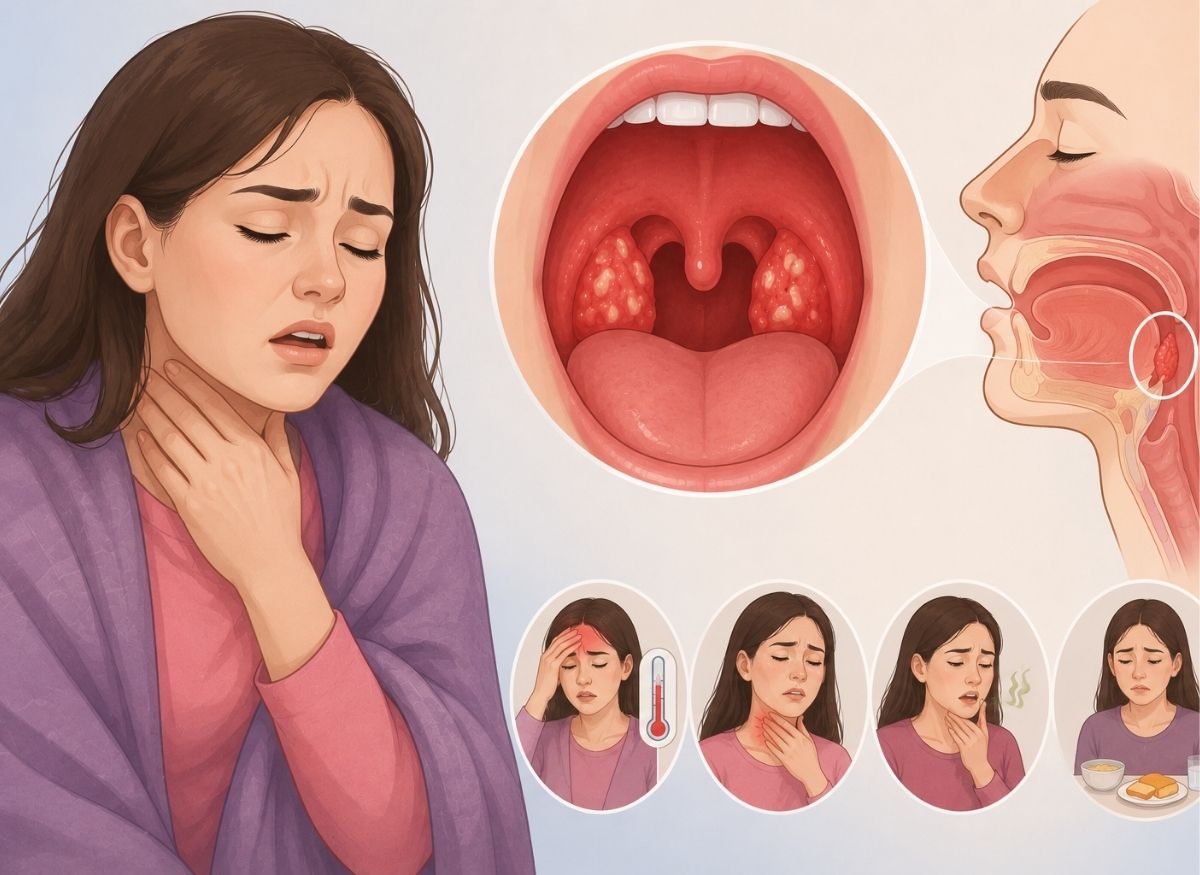
Tonsillitis occurs when the tonsils, two lymph nodes at the back of the throat that help protect the body from infection, become inflamed. Both viral and bacterial infections can cause tonsillitis, including infections involving streptococcal bacteria. Although it can affect people of any age, it is particularly common in children. Symptoms may range from mild throat discomfort to severe pain, difficulty swallowing, and fever that can interfere with everyday activities.
Recognizing the common signs of tonsillitis can help with early management, reduce the risk of complications, and make it easier to know when medical attention is needed.
Tonsillitis can spread through respiratory droplets, close contact, or sharing personal items with an infected person. Mild cases may improve without specific treatment, while bacterial infections may require antibiotics to reduce the risk of complications such as rheumatic fever or an abscess. This guide covers the major symptoms of tonsillitis and explains when it is important to speak with a healthcare professional.
What Is Tonsillitis?
Tonsillitis is inflammation of the tonsils, which are two oval-shaped lymph nodes positioned at the back of the throat. These tissues form part of the body’s immune system and help fight infections.
The condition is most often caused by viral or bacterial infections, including streptococcal bacteria, which are responsible for strep throat. Common symptoms include a sore throat, red and swollen tonsils, trouble swallowing, white or yellow patches on the tonsils, fever, and swollen lymph nodes in the neck.
The severity can vary. Some cases are mild and resolve on their own, while others may require antibiotics or additional medical care.
Tonsillitis can spread through coughing, sneezing, and close contact with someone who has an infection. Although children are affected more often, adults can develop tonsillitis as well. Recognizing the condition early can help relieve symptoms, limit transmission, and prevent complications.
5+ Key Symptoms of Tonsillitis
Tonsillitis causes inflammation of the tonsils, the two oval-shaped tissues at the back of the throat that are part of the immune system.
Because many throat infections can feel similar to a common cold, it is useful to recognize the symptoms that may point specifically toward tonsillitis. The condition can be caused by viruses or bacteria, including strep bacteria, and the symptoms may sometimes be severe.
The Primary Signal: A Severe, Sharp Sore Throat
A sore throat associated with tonsillitis can be much more intense than the mild irritation commonly experienced with a cold.
The Sensation: People with tonsillitis may experience strong, persistent throat pain that can make swallowing particularly uncomfortable. The discomfort may continue throughout the day and can interfere with eating, drinking, and normal activities.
Odynophagia (Painful Swallowing): Pain during swallowing is a common feature of tonsillitis. Because the tonsil tissues are inflamed, swallowing can become very uncomfortable, and some people may avoid eating or drinking because of the pain.
Referred Ear Pain (Otalgia): Throat inflammation can sometimes cause pain that seems to travel toward the ears. This is known as referred pain. In such cases, the ears may hurt even though there is no separate ear infection.
The Contrast with a Cold: A typical cold may involve symptoms such as a runny nose, sneezing, coughing, and general throat irritation. Tonsillitis tends to produce more noticeable inflammation and pain in the throat and tonsils and may also be accompanied by fever.
Visually Stark: Red and Swollen Tonsils
Healthy tonsils are generally small and pink. During tonsillitis, they may become noticeably red and enlarged.
Erythema and Hyperemia: The tonsil tissue can become intensely red as increased blood flow occurs in response to inflammation and infection.
Extreme Tissue Swelling: The tonsils may become significantly enlarged. In severe cases, they can become so swollen that they nearly touch or meet in the center of the throat. This can make swallowing more difficult and, in serious situations, may affect the airway.
The Appearance of Exudate: White or yellow patches may develop on the tonsils, particularly with some bacterial infections. These patches, known as tonsillar exudates, can contain white blood cells, cellular debris, and bacteria.
Halitosis (Severe Bad Breath): Infection and material trapped around the tonsils can contribute to persistent bad breath. This odor may continue even after brushing the teeth or using mouthwash.
Systemic Responses: High Fever and Malaise
Tonsillitis can trigger a broader immune response throughout the body. As a result, fever, tiredness, and a general feeling of illness may occur.
Significant swelling can also affect the way a person speaks. When the throat and surrounding tissues become very swollen, the voice may sound muffled or unusually thick. Doctors sometimes describe this as a “hot potato voice,” particularly when substantial swelling or an abscess is present.
Lymphatic Activation: Swollen Nodes in the Neck
The tonsils are connected to the body’s lymphatic system. When an infection develops in the throat, nearby lymph nodes in the neck and beneath the jaw may become active as they help respond to the infection.
These cervical lymph nodes can become enlarged and tender. They may feel like small, firm, painful lumps beneath the skin around the jawline or upper neck. Swollen lymph nodes are a common sign that the immune system is responding to an infection.
Beyond the Throat: Gastrointestinal and Neck Stiffness
Although tonsillitis primarily affects the throat, some people may experience symptoms elsewhere in the body.
Pediatric Stomach Aches and Nausea: Children with tonsillitis, particularly infections associated with Streptococcus bacteria, may develop stomach pain, nausea, or vomiting in addition to throat symptoms.
Muscular Neck Stiffness: Inflammation and swollen lymph nodes around the neck can sometimes contribute to discomfort or stiffness. However, severe or rigid neck stiffness should be taken seriously because it can also occur with other serious conditions and requires medical evaluation.
When Are Tonsillitis Symptoms a Sign You Need a Doctor?
Knowing when tonsillitis requires medical evaluation is important. Most mild viral cases improve with time, but some infections can become more serious or require specific treatment.
Although many cases are caused by viruses that resolve on their own, bacterial infections such as those caused by Streptococcus pyogenes may require medical treatment. Complications, including an abscess around the tonsil, can also require urgent care.
High-Alert Emergency Signs (Red Flags)
Certain symptoms indicate that you should seek urgent medical attention rather than simply waiting for the infection to improve.
These warning signs can indicate significant airway swelling, dehydration, or another complication.
Airway and Secretion Compromise
- Difficulty Breathing: Severe swelling that interferes with breathing is a medical emergency. A high-pitched or unusual breathing sound, known as stridor, can be a warning sign of airway narrowing.
- Inability to Swallow Saliva (Drooling): Drooling may occur when swallowing is extremely painful or difficult. This can indicate significant throat swelling and may increase the risk of dehydration or airway problems.
Signs of a Peritonsillar Abscess
A peritonsillar abscess occurs when an infection spreads into the tissue surrounding a tonsil and forms a pocket of pus. It requires medical evaluation and treatment.
Common warning signs include:
- Trismus: The jaw may become difficult to open because of muscle spasm.
- Asymmetrical, One-Sided Pain: One side of the throat may hurt much more than the other. One tonsil may become noticeably larger and can push the uvula toward the opposite side.
- “Hot Potato Voice”: Speech may become unusually muffled or thick because of swelling around the throat.
Uncontrolled Systemic Infection
A very high fever that does not improve with appropriate fever-reducing medication may indicate that the infection requires medical assessment, particularly when other severe symptoms are present.
The 48-to-72-Hour Rule: Assessing Trajectory
For mild to moderate symptoms, such as red and swollen tonsils with manageable pain and the ability to drink fluids, monitoring the illness for a short period may be reasonable.
The direction of your symptoms is important:
         [THE 48-TO-72-HOUR CLINICAL TIMELINE]
                                      │
         ┌────────────────────────────┴────────────────────────────┐
         ▼                                                         ▼
 [IMPROVING TRAJECTORY]                                   [STAGNANT OR WORSENING]
• Fever begins to break.                                 • Severe throat pain persists past Day 3.
• Swelling and pain scale down.                          • White spots expand; swallowing worsens.
• Origin: Likely self-limiting viral.                    • Origin: Likely bacterial strep or complication.
• Action: Continue home remedies.                        • Action: Schedule an immediate doctor's visit.
If symptoms are not beginning to improve after two to three days, or if they become worse, a healthcare professional can determine whether testing or treatment is needed. Untreated bacterial strep infections can sometimes lead to complications, including rheumatic fever or post-streptococcal glomerulonephritis.
Adult vs. Pediatric Warning Signs
Young children and toddlers may not be able to explain their throat symptoms clearly. Parents and caregivers should therefore pay attention to changes in behavior and eating or drinking habits.
| Patient Profile | Primary Warning Signs & Behavioral Red Flags |
|---|---|
| Children & Toddlers | |
| Total Refusal to Eat or Drink: Refusing fluids can increase the risk of dehydration. | |
| Dehydration Signals: Watch for fewer wet diapers, crying without tears, dry mouth, or a sunken soft spot in an infant. | |
| Excessive Drooling: This may indicate that swallowing has become very painful or difficult. | |
| Unusual Fussiness or Extreme Lethargy: Significant changes in energy or behavior should be taken seriously. | |
| Noisy Sleep Dynamics: Loud snoring or pauses in breathing during sleep may require medical evaluation. | |
| Neck Stiffness: Refusing to turn the head because of significant pain or swelling should be evaluated. | |
| Adults & Teens | |
| Direct Communication of Extreme Pain: Difficulty eating or drinking because of severe throat pain should be discussed with a healthcare professional. | |
| Abscess Metrics: Muffled speech, difficulty opening the mouth, and one-sided throat swelling can suggest a peritonsillar abscess. | |
| Loss of Daily Function: Severe exhaustion, dehydration, or pain that prevents normal daily activities warrants medical attention. |
Maximizing Your Appointment and Safe At-Home Care
If symptoms continue without improvement after about 48 to 72 hours, or if you develop white patches or other signs that suggest a bacterial infection, contact a healthcare professional.
- What the Doctor Will Do: A doctor may examine your throat and perform a rapid throat swab to check for bacterial infection. If a bacterial infection is confirmed, antibiotics may be prescribed. Take the medication exactly as directed and complete the prescribed course.
- How to Support Recovery Safely: While waiting for medical care or when a viral infection has been confirmed, supportive measures may help. Gargling with warm salt water, using a cool-mist humidifier, drinking soothing fluids, and choosing cold foods or drinks can help ease throat discomfort.
How does a doctor officially diagnose tonsillitis?
A sore throat by itself is not enough to determine the exact cause of tonsillitis. Several different infections can produce similar symptoms, so healthcare professionals may use a combination of a physical examination and targeted testing.
One important goal of the diagnostic process is to determine whether the infection is more consistent with a viral illness or a bacterial infection such as strep throat.
The Clinical Evaluation: Physical Examination
The doctor will first examine the throat and surrounding areas for signs that may help identify the cause.
- Visual Inspection of the Throat: Using a light and appropriate examination tools, the doctor will check for red or swollen tonsils, inflammation, swelling around the uvula, and other visible changes.
- Identifying Exudates: White or yellow patches on the tonsils may represent tonsillar exudates. These can occur with bacterial infections but may also be seen with certain viral illnesses.
- Palpating the Lymph Nodes: The doctor may gently feel the sides of the neck and beneath the jaw to check for enlarged or tender cervical lymph nodes.
- Checking for Asymmetry (Abscess Monitoring): If one tonsil appears significantly larger than the other or the uvula is pushed to one side, the doctor may evaluate for a peritonsillar abscess.
In-Office Diagnostics: The Rapid Strep Test
When a bacterial cause is suspected, a doctor may perform a Rapid Antigen Detection Test (RADT), commonly called a rapid strep test.
- The Swabbing Process: A sterile swab is gently used to collect a sample from the back of the throat and tonsils. The procedure can briefly trigger a gag reflex.
- The Analysis: The sample is tested for antigens associated with Group A Streptococcus bacteria.
- The Timeline: Results are often available within minutes. A positive result can help confirm a strep infection and guide treatment.
The Gold Standard: Throat Culture
Rapid strep tests are useful but can sometimes miss an infection. When clinical signs continue to suggest bacterial infection despite a negative rapid test, a healthcare professional may order a throat culture.
- The Methodology: A throat swab is collected and sent to a laboratory, where the sample is examined for bacterial growth.
- The Timeline: Results generally require more time than a rapid test, often around 24 to 48 hours.
- The Value: A throat culture can identify some infections that are not detected by rapid testing and can help guide appropriate treatment.
Navigating Your Recovery Safely
Treatment depends on the cause of the tonsillitis.
- If the Diagnosis is Bacterial: A confirmed bacterial infection may require prescription antibiotics. Take each dose exactly as instructed and follow the healthcare professional’s directions regarding the full course of treatment.
- If the Diagnosis is Viral: Antibiotics do not treat viral infections. Instead, treatment generally focuses on rest, fluids, symptom relief, warm salt-water gargles, humidified air, and cold foods or drinks that can soothe the throat.
What Else Should You Know About Throat Infections?
Understanding the difference between viral and bacterial throat infections can help explain why tonsillitis does not always require the same treatment.
Tonsillitis simply refers to inflammation of the tonsils. Different pathogens can cause that inflammation, so identifying the likely cause is important for choosing appropriate care and recognizing possible complications.
The Core Distinction: Viral vs. Bacterial Tonsillitis
The underlying cause of tonsillitis can influence the symptoms, expected course, and treatment.
Viral Tonsillitis (The Upper Respiratory Vector)
Many cases of tonsillitis are caused by viruses, including viruses associated with the common cold, adenovirus, influenza, and Epstein-Barr virus.
- Symptom Manifestation: Viral tonsillitis may cause red and swollen tonsils, throat pain, and difficulty swallowing. It can also occur alongside common respiratory symptoms such as coughing, a runny or congested nose, sneezing, and hoarseness.
- Clinical Treatment: Antibiotics do not work against viruses. Treatment generally involves supportive care, such as fluids, rest, warm salt-water gargles, humidified air, and appropriate over-the-counter pain relief.
Bacterial Tonsillitis (The Targeted Pathogen)
Bacterial tonsillitis is less common and can be caused by bacteria such as Streptococcus pyogenes.
- Symptom Manifestation: Bacterial infections may begin suddenly and can cause significant throat pain, fever, and tender lymph nodes in the neck. White or yellow patches may appear on the tonsils. A cough or runny nose may be less typical than with a viral respiratory infection.
- Clinical Treatment: When a bacterial infection such as strep throat is confirmed, prescription antibiotics may be used to treat the infection and reduce the risk of complications.
Clarifying the Terminology: Tonsillitis vs. Strep Throat
Tonsillitis and strep throat are related terms, but they do not mean exactly the same thing.
Tonsillitis is the broader term for inflammation of the tonsils, while strep throat refers specifically to an infection caused by Group A Streptococcus bacteria.
In other words, strep throat can cause tonsillitis, but not every case of tonsillitis is caused by strep bacteria. Because symptoms can overlap, a healthcare professional may use a rapid strep test or throat culture to determine whether Streptococcus pyogenes is present.
Using antibiotics for viral tonsillitis does not treat the virus and may cause unwanted side effects. Unnecessary antibiotic use also contributes to antibiotic resistance.
The Repercussions of Delay: Potential Complications
Most mild viral throat infections improve naturally, but untreated or severe bacterial infections can sometimes lead to complications.
Peritonsillar Abscess (Quinsy)
A peritonsillar abscess develops when an infection spreads into the tissues surrounding a tonsil and forms a collection of pus.
Possible signs include severe pain on one side of the throat, one-sided tonsil swelling, difficulty opening the mouth, and a muffled voice. The swelling may also push the uvula away from the affected side.
A peritonsillar abscess requires prompt medical treatment and may need drainage along with antibiotics.
Obstructive Sleep Apnea (OSA)
Repeated or chronic tonsil inflammation can sometimes contribute to persistently enlarged tonsils. When the airway becomes narrowed during sleep, this may contribute to episodes of obstructed breathing and poor sleep quality.
People experiencing loud snoring, repeated pauses in breathing, or significant daytime tiredness should discuss these symptoms with a healthcare professional.
Delayed Systemic Complications (The Strep Echo)
When a Group A Streptococcus infection is not appropriately treated, complications can sometimes develop after the initial throat infection.
- Rheumatic Fever: This is an inflammatory condition that can affect areas such as the joints, skin, brain, and heart. In some cases, it can result in lasting heart damage.
- Post-Streptococcal Glomerulonephritis: This is an inflammatory kidney condition that can develop after a streptococcal infection and may cause symptoms such as blood in the urine, high blood pressure, and swelling.
These potential complications are among the reasons healthcare professionals recommend appropriate treatment for confirmed strep infections.
Optimizing Recovery at Home
If a healthcare professional has determined that your tonsillitis is caused by a virus, or while you are waiting for test results, several comfort measures may help relieve symptoms:
- Osmotic Salt-Water Gargles: Mix about half a teaspoon of salt into a glass of warm water and gargle several times a day. This may help soothe an irritated throat and reduce discomfort.
- Thermal Therapy: Ice chips, cold popsicles, or other cool foods can provide temporary relief. Warm, caffeine-free drinks with honey may also soothe the throat.
- Airborne Hydration: A cool-mist humidifier can add moisture to the air and help prevent the throat from becoming overly dry while you rest.
Conclusion
Recognizing the symptoms of tonsillitis can help people seek appropriate care and avoid unnecessary discomfort or complications. Common signs include a sore throat, red or swollen tonsils, white or yellow patches, difficulty swallowing, and fever. Symptoms that become severe, persist, or worsen should receive medical attention.
A healthcare professional can determine whether the infection is more likely viral or bacterial and recommend suitable treatment. Depending on the cause, management may involve supportive care, antibiotics for confirmed bacterial infections, or, in cases of chronic or recurrent tonsillitis, consideration of procedures such as tonsillectomy.
Good hygiene, careful symptom monitoring, and timely medical evaluation can help manage tonsillitis and reduce the chance of spreading infection. Understanding the condition and recognizing warning signs can support safer and more effective recovery.
FAQ
What is tonsillitis?
Tonsillitis is inflammation of the tonsils, usually caused by a viral or bacterial infection. It can cause symptoms such as sore throat, swollen tonsils, difficulty swallowing, and fever. Because infections can spread through respiratory droplets, good hygiene is also important.
What are the most common symptoms of tonsillitis?
Common symptoms include a severe sore throat, red or swollen tonsils, white or yellow patches, difficulty swallowing, and fever. Some people may also experience headache, ear pain, bad breath, and fatigue.
How is tonsillitis diagnosed?
A doctor typically examines the throat and looks for swollen or inflamed tonsils and visible patches. A throat swab may be used to determine whether bacteria such as Group A Streptococcus are responsible. Additional testing may be considered in severe, unusual, or recurrent cases.
When should I see a doctor for tonsillitis?
Seek medical advice when symptoms are severe, persistent, or getting worse, especially when there is a high fever or difficulty breathing or swallowing. Children with repeated tonsillitis, significant dehydration, or concerning behavioral changes should also be evaluated promptly.
How is tonsillitis treated?
Treatment depends on the cause. Viral tonsillitis generally improves with rest, fluids, and symptom-relief measures, while confirmed bacterial infections may require antibiotics. Warm salt-water gargles, throat-soothing products, and appropriate pain relief may also help. Chronic or recurrent cases may sometimes require consideration of tonsil removal.