
7 Heart Attack Warning Signs You Should Never Ignore
A heart attack rarely comes out of nowhere. Most of the time, the body gives clues beforehand you just have to know what you’re looking at. In the U.S., someone has a heart attack roughly every 40 seconds, adding up to about 805,000 cases a year according to the CDC. What’s even more unsettling: roughly 1 in 5 heart attacks are “silent,” meaning the damage happens quietly, without the person ever realizing what’s going on.
None of this is meant to alarm you it’s meant to prepare you. Heart attacks don’t discriminate by age, gender, or fitness level. Sometimes the warning signs are dramatic and unmistakable. Other times they’re quiet: a wave of nausea, an ache in the jaw, exhaustion that doesn’t make sense, or a strange tightness that creeps into the back or arm.
The tricky part is that early symptoms often look like something else entirely indigestion, a stress headache, poor sleep, a strained muscle. Women especially tend to experience vaguer signs like fatigue, dizziness, or stomach discomfort rather than the classic sharp chest pain, which means it’s easy to brush off symptoms until it’s almost too late.
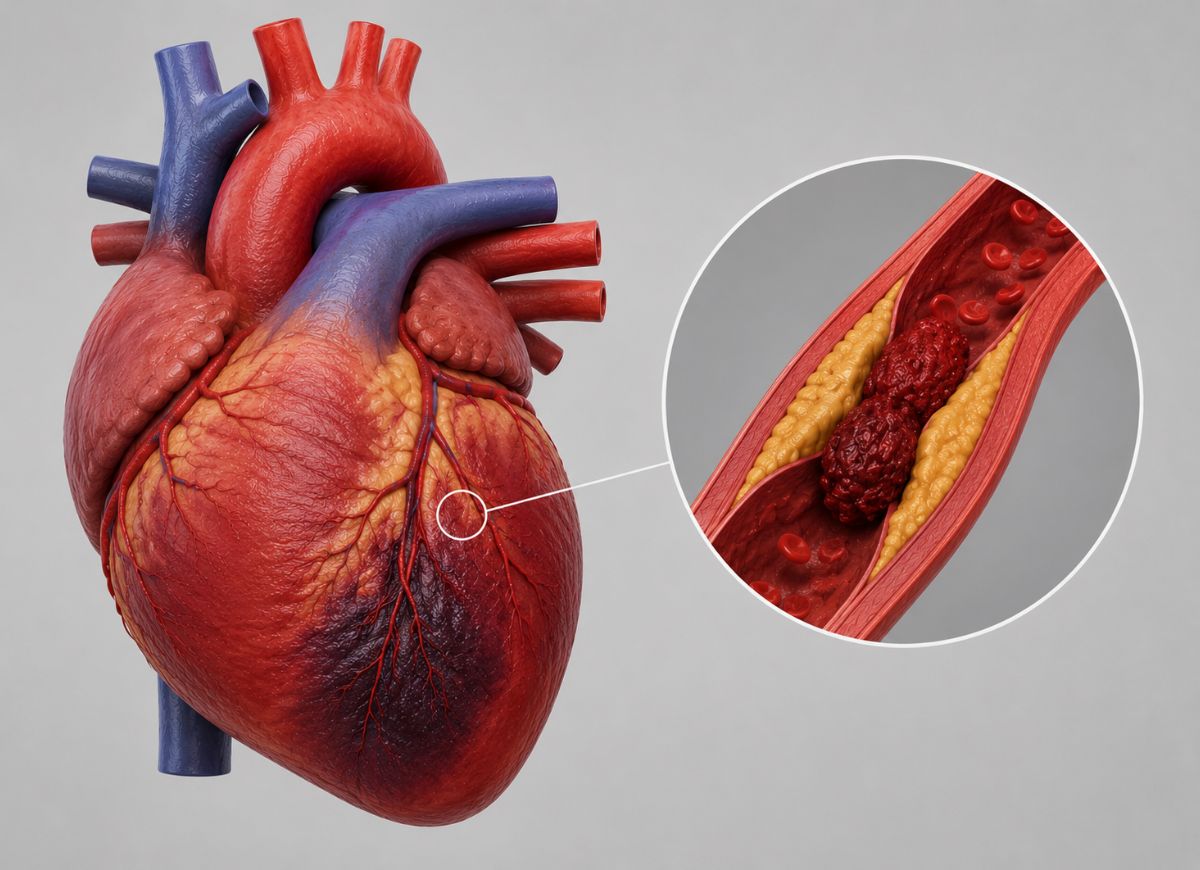
At its core, a heart attack happens when blood stops flowing properly to part of the heart. The longer that blockage lasts, the more damage is done so acting fast isn’t just helpful, it can be lifesaving. Below are seven warning signs worth knowing, some obvious and some easy to miss, so you can react quickly if you ever need to.
7 Key Heart Attack Symptoms and Warning Signs
Chest Pain
Chest discomfort is the symptom most people associate with a heart attack, and for good reason it’s the most common one. But it doesn’t always show up as the dramatic, movie-style pain people expect. It can feel like pressure, squeezing, tightness, or a dull ache across the center or left side of the chest, and it happens because the heart muscle isn’t getting enough oxygen-rich blood.
This discomfort might be mild, might come and go, or might simply linger for several minutes. Because it so often mimics heartburn or indigestion, people frequently wait it out instead of seeking help — which can be a costly mistake. As a rule of thumb: any unexplained chest discomfort lasting more than a few minutes deserves urgent attention.
The sensation itself varies from person to person. Some describe a heavy weight sitting on their chest; others feel a tight band wrapped around it, or a burning sensation instead of sharp pain. It usually centers behind the breastbone but can spread outward. Unlike a pulled muscle, which tends to hurt in one specific spot, heart-related chest pain is more spread out and doesn’t ease up on its own.
One useful clue: this kind of pain typically doesn’t get worse when you take a deep breath or press on your chest — those reactions point more toward muscular or lung-related issues. When chest discomfort shows up alongside sweating, breathlessness, or comes on without any clear trigger, it’s a strong signal that something cardiac may be happening.
Pain That Spreads to Other Parts of the Body
Heart attack pain doesn’t always stay in the chest. It often radiates to the arms, back, neck, jaw, or stomach — a phenomenon called referred pain. This happens because nerve signals from the heart travel along pathways shared with other parts of the body, so the brain sometimes “misreads” where the pain is coming from.
This kind of pain can show up with or without chest discomfort, and that combination is especially common in women. It might start in the chest and move down the left arm the classic pattern or it might affect the right arm, both arms, or skip the chest altogether. Rather than a sharp jab, it usually feels like a dull ache, heaviness, or numbness.
Arm pain is probably the most recognized version of this, often felt as pressure moving from the shoulder down the arm. Pain between the shoulder blades is another pattern, one reported more often by women, and it’s easy to mistake for a strained muscle. When it reaches the jaw or neck, it can feel like a toothache or sore throat, which is why people sometimes head to a dentist instead of the ER. And when it settles in the upper abdomen, it often gets mistaken for bad indigestion or heartburn, especially when paired with nausea.
Shortness of Breath
Struggling to catch your breath even while resting or doing something low-effort can be a major warning sign on its own, whether or not chest pain is present. This happens because a heart that isn’t pumping efficiently allows fluid to build up in the lungs. The key giveaway is that it happens without physical exertion to explain it.
Cold Sweat
Breaking into a clammy sweat with no obvious cause no exercise, no heat, nothing is another sign worth paying attention to. It’s triggered by the body’s stress response kicking in as the heart struggles. The skin can feel cool and damp even if the person doesn’t feel warm at all.
Nausea and Vomiting
Feeling sick to your stomach, sometimes to the point of vomiting, shows up frequently particularly in women — and gets mistaken for the flu or food poisoning more often than it should. When it’s paired with fatigue or breathlessness, it’s worth treating seriously rather than waiting it out.
Lightheadedness or Dizziness
Feeling faint, unsteady, or like the room is spinning can point to a sudden dip in blood pressure or an irregular heartbeat caused by the heart attack itself. Without enough oxygen reaching the brain, dizziness or even fainting can follow quickly.
Deep, Unexplained Exhaustion
A few lesser-known symptoms can appear days or even weeks before a heart attack: crushing fatigue, sudden anxiety, or an eerie sense that something is deeply wrong. These get dismissed constantly chalked up to stress, bad sleep, or “just being anxious” but they’re worth taking seriously.
This isn’t ordinary tiredness. It’s the kind of exhaustion that makes small tasks walking to the mailbox, climbing a few stairs — feel unexpectedly hard. It happens because the heart is already working overtime trying to keep up.
The psychological piece matters too. A sudden wave of anxiety or dread with no clear cause often described as a feeling of impending doom can be the body’s way of signaling danger before symptoms become obvious. If that feeling shows up alongside any other item on this list, even a mild one, don’t ignore it. Catching these subtler signs early can mean the difference between minor intervention and major heart damage.
How Do Heart Attack Symptoms Differ Between Men and Women?
Men and women don’t always experience heart attacks the same way. Men are more likely to get the “textbook” version intense chest pain while women often deal with subtler signs like fatigue, breathlessness, nausea, or back and jaw pain, sometimes without much chest discomfort at all. This gap matters because women’s symptoms are more easily mistaken for something minor, which can delay treatment when speed matters most.
Chest pain is still the most reported symptom across the board, but how it shows up and how prominent it is — can look very different depending on the person.
The Classic Pattern in Men
The stereotypical heart attack — sudden, crushing chest pressure with pain shooting down the left arm — is sometimes nicknamed the “Hollywood heart attack” because it matches what we’ve all seen on screen. And for many men, it plays out close to that script.
It’s often described as an elephant sitting on the chest, or a band tightening around the torso. The pain sits centrally, lasts several minutes, and doesn’t ease up with rest. While the left arm is the most typical spot for radiating pain, it can just as easily hit the right arm, both arms, the shoulders, neck, or jaw usually as a deep ache rather than anything sharp.
Alongside the chest pain, men often notice shortness of breath, cold sweating, and dizziness arriving at the same time. Because the symptoms tend to hit hard and fast, it’s usually pretty clear something serious is happening which often means faster action is taken.
The Less Obvious Pattern in Women
Women are more likely to experience shortness of breath, nausea, back or jaw pain, and unusual fatigue — sometimes with little to no chest pain at all. When chest discomfort does show up, it tends to feel like pressure or tightness rather than the classic crushing sensation.
This difference is a big reason heart attacks in women get missed or diagnosed late the symptoms mimic indigestion, anxiety, or muscle strain far more convincingly. Breathlessness can appear even at rest, sometimes weeks ahead of the actual event, with no chest pain involved whatsoever.
Nausea, vomiting, or indigestion-like pain in the upper stomach show up often. Instead of arm pain, women are more likely to feel it in the back (especially between the shoulder blades), neck, or jaw. And that overwhelming fatigue mentioned earlier? It’s one of the most overlooked warning signs in women, sometimes starting days or weeks before anything else.
What Should You Do if You Suspect a Heart Attack?
If you think you or someone nearby is having a heart attack, the single most important move is calling 911 (or your local emergency number) right away. Getting professional help moving is what actually restores blood flow and limits damage — everything else is secondary. While you wait, stay as still and calm as you can; dispatchers may also walk you through medication guidance based on medical history.
Skipping steps or hesitating can cost real time, and driving yourself to the hospital is one of the most dangerous choices you can make in this situation. Here’s what an actual response should look like.
Call for Emergency Help Immediately
Dial 911 the moment you suspect a heart attack no waiting to “see if it passes.” A lot of people hesitate out of embarrassment or uncertainty, worried they’re overreacting. But with something like this, overreacting is always the safer bet.
Calling emergency services isn’t just about getting a ride to the hospital paramedics are trained to start treatment on the spot. That can mean oxygen, aspirin, nitroglycerin, or even a defibrillator if things escalate to cardiac arrest, all happening before you even arrive at the ER.
Driving yourself (or letting someone drive you) is a serious risk your condition could worsen suddenly, and neither of you would be equipped to handle it mid-drive. Paramedics, on the other hand, can radio ahead so the hospital’s cardiac team is ready and waiting the moment you arrive. In this situation, every minute genuinely counts — the medical phrase for it is “time is muscle,” meaning delayed treatment equals more permanent heart damage.
What to Do While Waiting for Help
If a 911 dispatcher advises aspirin and confirms it’s safe for you chewing it (rather than swallowing it whole) helps it act faster. If you already have prescribed nitroglycerin for a known heart condition, take it exactly as directed, since it helps widen blood vessels and ease chest pain.
If the person loses consciousness and stops breathing, someone should begin hands-only CPR immediately it can keep things stable until paramedics arrive with a defibrillator.
In the meantime, stop all activity and get into a comfortable, semi-upright position (lying completely flat can make breathing harder if fluid is building up in the lungs). Loosen tight clothing, stay as calm as possible, and try not to let stress push your heart rate any higher than it already is.
The Differences Between a Heart Attack and Related Conditions
Heart Attack vs. Angina
Angina and a heart attack both involve reduced blood flow to the heart, but the outcomes are very different. Angina happens when narrowed arteries (from plaque buildup) temporarily restrict oxygen to the heart — usually triggered by exertion or stress and it typically eases with rest or medication like nitroglycerin. Crucially, angina doesn’t cause lasting damage.
A heart attack is different: blood flow gets completely and permanently blocked, usually by a clot forming on ruptured plaque. Without oxygen, heart tissue starts dying and that damage is irreversible. The pain tends to be more intense, lasts well beyond 15–20 minutes, and rest doesn’t help.
Heart Attack vs. Sudden Cardiac Arrest
These two get confused constantly, but they’re not the same thing. A heart attack is a circulation problem a blocked artery cuts off blood to part of the heart, but the heart keeps beating and the person usually stays conscious, able to describe what they’re feeling.
Sudden cardiac arrest is an electrical malfunction the heart’s rhythm goes haywire or stops altogether, and blood stops reaching the brain and organs almost instantly. The person collapses, stops breathing normally, and has no pulse.
The response differs too: a heart attack calls for emergency transport and hospital treatment to restore blood flow; cardiac arrest calls for immediate CPR and a defibrillator (AED) to reset the heart’s rhythm.
Heart Attack vs. Panic Attack
These can look alarmingly similar — chest pain, breathlessness, sweating, dizziness — but a few details set them apart. Heart attack pain tends to feel like crushing pressure or heaviness centered in the chest, often spreading to the jaw, arms, neck, or back. Panic attack pain, by contrast, is usually sharper, more localized, and gets worse with deep breathing.
Timing is another clue: panic attacks tend to peak fast (within about 10 minutes) and then fade, while heart attack symptoms build more gradually and don’t resolve on their own. And while both can bring a sense of dread, panic attacks are more likely to come with tingling in the hands and feet heart attacks lean more toward physical symptoms like nausea and cold sweats.
Main Risk Factors Leading to a Heart Attack
Heart attack risk comes down to a mix of things you can’t control and things you can. Both play into atherosclerosis the slow buildup of plaque in the arteries that sets the stage for a blockage.
On the “can’t control” side: age (risk climbs notably after 45 for men and 55 for women), being male (men carry higher risk than pre-menopausal women), and family history especially if a father or brother had heart disease before 55, or a mother or sister before 65.
On the “can control” side, the big ones are high blood pressure (which wears down artery walls over time), high LDL cholesterol (which fuels plaque buildup), and diabetes (high blood sugar damages blood vessels). Smoking is particularly damaging it directly harms vessel linings and encourages clotting. Add in obesity, inactivity, and a diet heavy in saturated fat, trans fat, or sodium, and the risk stacks further.
The good news: most of these modifiable factors respond well to medication, diet changes, exercise, and quitting smoking and regular checkups make it much easier to catch problems early.
FAQs
What does a mild heart attack feel like?
It can feel like pressure, tightness, heaviness, or burning in the chest — not necessarily the dramatic pain people picture. Many describe it as feeling like indigestion, heartburn, or a strained muscle. It can also show up as shortness of breath, cold sweats, nausea, dizziness, fatigue, or pain spreading to the arm, jaw, neck, or back — with or without chest discomfort. Even mild-feeling symptoms need urgent attention.
What are four unusual symptoms that can happen right before a heart attack?
Sudden nausea, jaw or tooth pain, unexplained exhaustion, and a cold sweat are four that often get overlooked because they don’t seem heart-related. Lightheadedness, anxiety, breathlessness, or unusual weakness can also show up. These are easy to blame on stress or poor sleep, but any unusual combination of them is worth taking seriously.
What is the “golden hour” for a heart attack?
It refers to the first 60 minutes after symptoms start the window where fast treatment does the most good in limiting heart damage and improving survival odds. This is exactly why waiting things out or driving yourself to the hospital is risky: calling emergency services immediately gives you the best shot at minimizing damage.
What counts as “Stage 1” of a heart attack?
Doctors don’t typically use numbered stages for heart attacks, but people sometimes use “Stage 1” informally to describe the early warning phase mild chest pressure, breathlessness, nausea, sweating, or dizziness that comes and goes. This phase is deceptive because symptoms can feel manageable, leading people to brush them off. If symptoms last more than a few minutes, keep returning, or come with weakness or radiating pain, it’s time to get help.
How can I lower my risk of a heart attack while sleeping?
You can’t eliminate the risk entirely, but keeping blood pressure, cholesterol, and blood sugar in check goes a long way. Avoid smoking, limit alcohol, stay active, and follow medical advice if you have existing heart issues, diabetes, or sleep apnea. Sleep quality matters too a consistent schedule and avoiding heavy late-night meals help. If chest pain, breathlessness, sweating, or arm/jaw pain wakes you up, treat it as an emergency.
How long does a “minor” heart attack typically last?
Symptoms can last a few minutes, come in waves over hours, or seem to fade and then return stronger. “Minor” usually refers to how much damage occurred or the type of blockage not how safe the situation is. Even a small heart attack can turn dangerous without prompt treatment, so any suspected case should be treated as an emergency.
Can heart attacks happen at night?
Yes — people can wake up with chest pressure, sweating, nausea, breathlessness, or pain in the arm, jaw, or back. It’s easy to mistake these for acid reflux, a bad dream, or a panic episode, but nighttime symptoms are just as serious and shouldn’t be brushed off because you were resting when they started.
What’s the single worst habit for heart health?
Smoking tops the list it damages blood vessels, raises blood pressure, lowers blood oxygen, and speeds up plaque buildup. Even secondhand smoke takes a toll. Other risky habits include excessive sitting, a diet heavy in processed food, ignoring high blood pressure, heavy drinking, poor sleep, and skipping checkups but quitting smoking remains one of the most powerful single changes anyone can make.
Conclusion
Heart attack warning signs don’t always announce themselves loudly. Sometimes it’s mild pressure, unexplained tiredness, a bit of nausea, or a cold sweat that’s easy to explain away. That’s exactly why awareness matters so much. Since blood flow to the heart is on the line, every minute of delay adds up acting fast can limit damage and save a life. If something feels off and lasts more than a few minutes, or keeps coming back, it’s always safer to call for help than to wait and hope it passes.
Knowing these signs isn’t about living on edge it’s about giving yourself, and the people around you, a real head start when it matters most.