

7 Signs of Ichthyosis Vulgaris and Dry Scaly Skin
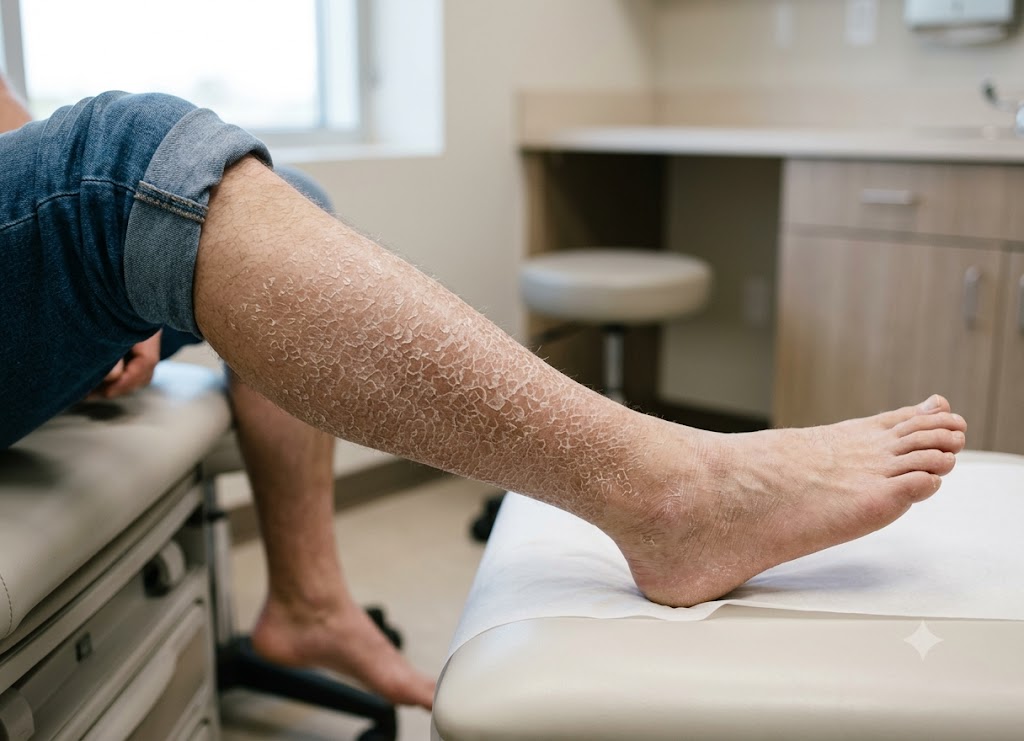
Ichthyosis vulgaris is a common inherited skin condition that causes dry, rough skin covered with fine, fish scale-like flakes. It happens when the skin does not shed dead cells properly, causing them to accumulate on the surface.
Symptoms often appear during early childhood, although some people may not notice them until later in life. The condition is not contagious and can range from mild dryness to more noticeable scaling that affects both comfort and appearance.
The symptoms of ichthyosis vulgaris often become worse during cold, dry weather and may improve in warm, humid conditions. Along with dry, scaly skin, some people may experience itching, cracking, or thickened skin on the palms and soles.
Ichthyosis vulgaris is also commonly associated with eczema, asthma, and allergies. This guide covers seven important signs that can help distinguish ichthyosis vulgaris from ordinary dry skin, along with its causes, diagnosis, and treatment options.
What Is Ichthyosis Vulgaris?
Ichthyosis vulgaris is the most common form of ichthyosis, a group of skin disorders characterized by dry, rough, and scaly skin. The condition develops when the skin cannot shed dead cells at its normal rate.
As these cells collect on the skin’s surface, they create scales that may look similar to fish scales. Symptoms commonly begin during infancy or childhood and are often linked to changes in the FLG (filaggrin) gene, which plays an important role in maintaining the skin barrier and keeping moisture inside the skin.
Although ichthyosis vulgaris is a lifelong condition, its severity can vary considerably. Some people have mild symptoms that respond well to regular moisturizing and appropriate skin care, while others experience more extensive scaling, itching, or cracking. The lower legs, arms, trunk, and scalp are commonly affected, while areas such as the armpits and groin are often spared.
Symptoms usually become more noticeable in cold, dry conditions and may improve when the weather is warm and humid. Although inherited ichthyosis vulgaris cannot currently be cured, regular treatment can help control scaling, improve comfort, and support healthier-looking skin.
7 Key Signs to Differentiate Ichthyosis Vulgaris from Dry Skin
The 7 key signs to differentiate ichthyosis vulgaris from dry skin include the pattern of scaling, level of discomfort, areas of the body affected, skin texture, response to moisturizers, appearance of the palms and soles, and connection with other atopic conditions.
Although ichthyosis vulgaris and ordinary dry skin can initially look similar, these features can help reveal important differences between the two. Paying attention to the pattern and persistence of symptoms can help determine when professional evaluation may be appropriate.
Skin Scaling Pattern: Fish Scales vs. Fine Flakes
The appearance of the scales can provide an important clue when distinguishing ichthyosis vulgaris from temporary dry skin.
Ichthyosis Vulgaris often produces larger, polygonal, or rhomboid-shaped scales that can resemble a mosaic or cracked pavement. The scales may fit closely together, with their centers attached to the skin while the edges lift slightly. Their color can range from white and gray to darker brown, sometimes making the skin appear dull or dirty. This scaling occurs because dead skin cells are not shed normally and instead remain on the surface.
Common Dry Skin (Xerosis) usually produces much finer and lighter flakes. The skin may appear powdery, flaky, ashy, or slightly cracked. These flakes are generally small, white, or translucent and tend to come away from the skin more easily. Ordinary dry skin does not typically produce the larger, rigid, geometric scales associated with ichthyosis vulgaris.
Itching and Discomfort: Chronic Armor vs. Mild Tightness
The severity and persistence of discomfort can also help distinguish the two conditions.
Ichthyosis Vulgaris may cause ongoing itching and discomfort. Significant scaling can make the skin feel stiff and less flexible. When thickened skin stretches during movement, cracks or fissures may develop, which can become painful and may sometimes bleed. Open cracks can also increase the risk of secondary infection.
Common Dry Skin generally causes mild and temporary itching or tightness. The sensation may become more noticeable after bathing or during cold weather. Although very dry skin can crack, these cracks are usually more superficial and often improve when the skin is properly moisturized.
Body Locations: Sparing the Folds vs. Widespread Dryness
The areas affected by each condition can provide useful clues during a skin examination.
Ichthyosis Vulgaris Distribution:
- Most Severe Areas: The shins are often among the most affected areas, with thicker and more noticeable scaling. The outer surfaces of the arms and thighs may also develop prominent scales.
- Commonly Affected Areas: The back, face, particularly the forehead and cheeks in children, and scalp may also be affected. Scaling on the scalp can sometimes look like persistent dandruff.
- Characteristically Spared Areas: Warm, moist skin folds such as the armpits and groin are usually less affected. The creases behind the knees and around the elbows may also remain relatively clear.
Common Dry Skin Distribution:
- Variable and Exposed Areas: Ordinary dry skin does not follow a specific inherited distribution. It can occur wherever environmental conditions, washing, friction, or reduced natural oils cause moisture to be lost.
- Commonly Affected Areas: The hands, knuckles, arms, lower legs, and abdomen are common locations. Unlike ichthyosis vulgaris, skin folds can also become dry or irritated when exposed to friction, soaps, or other irritants.
Skin Texture: Sandpaper Plates vs. Superficial Roughness
The way affected skin feels can reflect the differences between the two conditions.
Ichthyosis Vulgaris can make the skin feel thick, hardened, rough, and less flexible because dead skin cells remain attached to the surface. Areas such as the lower legs may feel coarse, almost like fine sandpaper. The raised edges of individual scales may also be noticeable when touching the skin.
Common Dry Skin usually remains relatively normal in thickness and flexibility. The surface may feel rough, dry, or slightly powdery, but it generally lacks the harder, more defined scale structure associated with ichthyosis vulgaris.
Response to Moisturizers: Lifelong Management vs. Simple Repair
How the skin responds to regular moisturizers can offer another useful distinction.
Ichthyosis Vulgaris is associated with an inherited problem involving filaggrin and the skin barrier. Standard moisturizers may provide temporary relief, but many people need consistent and more specialized topical care to manage scaling.
- Keratolytic Agents: Products containing ingredients such as urea, lactic acid, salicylic acid, or alpha-hydroxy acids (AHAs) can help soften and loosen accumulated dead skin cells.
- Heavy Occlusives: Thick moisturizers or ointments containing ingredients such as petrolatum, ceramides, or lanolin can help reduce water loss. Applying them after bathing can help retain moisture.
Common Dry Skin often improves with basic hydration and barrier-supporting products. Regular use of an over-the-counter lotion or cream may be enough to reduce flaking and restore moisture when environmental or lifestyle factors are responsible.
Palms and Soles: Hyperlinearity vs. Standard Creases
The appearance of the palms and soles can provide another helpful clue.
Ichthyosis Vulgaris may cause a feature known as hyperlinearity, in which the natural lines and creases of the palms and soles appear deeper and more numerous. The skin can have a heavily lined appearance and may also feel thicker or less flexible.
Common Dry Skin generally does not change the basic structure of the skin lines. Cold weather, frequent handwashing, or exposure to irritants can cause the knuckles, heels, or other areas to become red, cracked, or chapped, but the normal crease pattern usually remains unchanged.
Associated Skin Conditions: The Genetic Atopic Link
Other skin or allergic conditions can also help doctors determine whether persistent dryness may be associated with ichthyosis vulgaris.
Ichthyosis Vulgaris is commonly associated with atopic conditions because of changes involving the filaggrin (FLG) gene. A weakened skin barrier can make the skin more vulnerable to moisture loss, allergens, and irritants. Some people with ichthyosis vulgaris also have Atopic Dermatitis (Eczema), Keratosis Pilaris, asthma, or hay fever.
Common Dry Skin does not itself have an inherent genetic connection to allergies or specific gene mutations. A person with ordinary dry skin can also have eczema or allergies, but the dryness itself is usually related to environmental conditions, skin care habits, or other external factors.
What Causes Ichthyosis Vulgaris Compared to Common Dry Skin?
The main difference in cause is that ichthyosis vulgaris is generally linked to inherited genetic changes, while common dry skin is usually caused by environmental or lifestyle factors that reduce moisture in the skin.
Ichthyosis vulgaris is considered a disorder of keratinization, meaning the normal process of producing and shedding the outer layer of skin is affected. Common dry skin, also called xerosis, usually occurs when an otherwise normal skin barrier loses too much moisture because of external influences.
Because ichthyosis vulgaris is inherited, it tends to be a chronic condition that often begins during childhood and may run in families. Common dry skin can affect anyone at any age and often improves when the factors causing moisture loss are addressed.
The Genetic Basis of Ichthyosis Vulgaris
Ichthyosis vulgaris is an inherited skin disorder commonly associated with loss-of-function changes in the profilaggrin (FLG) gene. This gene provides instructions for producing profilaggrin, a protein that is later broken down into active filaggrin within the upper layers of the epidermis.
Filaggrin plays an important role in maintaining the skin barrier through two major functions:
- Cellular Structural Alignment: Filaggrin helps organize keratin fibers inside the outer skin cells. This supports the formation of a dense protective layer known as the stratum corneum.
- Natural Hydration Engine: As skin cells reach the surface, filaggrin is broken down into smaller components that contribute to Natural Moisturizing Factors (NMF). These substances help the skin retain water.
When the FLG gene does not produce enough functional filaggrin, several changes can occur:
- Leaky Skin Barrier: Reduced filaggrin can weaken the outer skin barrier and increase transepidermal water loss (TEWL), allowing moisture to escape more easily.
- Retention Hyperkeratosis: Dead skin cells may not separate and shed normally. Instead, they remain attached and build up into thicker layers that create the characteristic scaling.
The condition can follow an autosomal semi-dominant inheritance pattern. People with one altered copy of the gene may have milder symptoms, while those with changes affecting both copies can have a more pronounced presentation.
Environmental Triggers for Common Dry Skin (Xerosis)
Unlike ichthyosis vulgaris, common dry skin develops when external factors interfere with the skin’s ability to retain moisture.
The skin’s outer layer can be thought of as a protective brick-and-mortar system. Skin cells act as the bricks, while lipids such as ceramides, cholesterol, and fatty acids help hold the structure together. When these protective lipids are removed or disrupted, moisture can escape more easily.
Common triggers include:
- Arid Climates and Winter Weather: Cold air contains less moisture, and indoor heating can further reduce humidity. These conditions can increase moisture loss from the skin and contribute to winter dryness and itching.
- Chemical Stripping via Harsh Cleansers: Strong soaps and cleansers can remove natural oils from the skin and disrupt its protective barrier.
- Prolonged Hot Water Exposure: Long, hot showers and baths can remove natural surface oils. After bathing, water then evaporates from the skin, leaving it drier.
- The Biological Aging Process: As people age, the skin naturally produces less oil and may experience slower cellular turnover, making dryness more common.
- Medication Side Effects: Some medications and medical treatments can contribute to dry skin as a side effect, including certain diuretics, retinoids, and some cholesterol-lowering medicines.
Etiological Comparison: Genetic vs. Acquired
The core differences between these conditions help explain why they often require different management approaches:
| Feature | Ichthyosis Vulgaris | Common Dry Skin (Xerosis) |
|---|---|---|
| Primary Root Cause | Usually an inherited genetic change involving the FLG gene | Environmental factors and lifestyle habits |
| Cellular Mechanism | Filaggrin deficiency and impaired skin barrier function | Temporary loss of surface lipids and moisture |
| Onset and Timeline | Often begins during childhood and is chronic | Can occur at any age and may be temporary or seasonal |
| Cellular Turnover | Dead cells may remain attached and build up into scales | Normal shedding is affected mainly by surface dryness |
| Resolution Path | Requires ongoing symptom management | Often improves when triggers are removed and moisture is restored |
When Should You Seek a Diagnosis for Severe Dry Skin?
A professional evaluation may be appropriate when severe dry skin continues despite regular moisturizing, develops thick or plate-like scales, causes painful cracks, or occurs alongside significant eczema or a family history of skin disorders.
Occasional dry skin is common, especially during cold weather, but persistent or difficult-to-manage symptoms may point to an underlying condition such as ichthyosis vulgaris. Getting an accurate diagnosis can help ensure that the skin receives the appropriate treatment and can reduce the risk of complications such as secondary infections.
Understanding which symptoms to watch for can also make it easier to know when to schedule a dermatology appointment. A dermatologist can evaluate the pattern of scaling and consider other possible causes of persistent dry skin.
When to See a Dermatologist for Severe Dry Skin
Occasional dryness may improve after changing your skincare routine or reducing exposure to harsh soaps and dry weather. However, an appointment with a dermatologist may be appropriate if thick moisturizers used consistently for several weeks provide little improvement.
Another important sign is a distinct scaling pattern in which the scales are large, thick, polygonal, or plate-like instead of fine and flaky. These scales may be especially noticeable on the shins and can have a grayish or brown appearance.
Medical evaluation is also recommended when dryness is accompanied by severe itching that disrupts sleep or daily activities, or when deep cracks and fissures become painful or bleed.
A dermatologist may also look for a characteristic distribution of symptoms, including scaling on the front of the lower legs or outer arms while the armpits and groin remain relatively clear. A history of eczema, keratosis pilaris, or similar symptoms among close family members can also provide useful information.
What to Expect During a Dermatological Exam
During a dermatology appointment, the main goal is to determine whether the symptoms are related to severe dryness, ichthyosis vulgaris, or another skin condition. The evaluation generally involves a medical history, physical examination, and additional testing when necessary.
1. In-Depth Medical History Review
Your doctor may ask when the dryness first appeared and whether it was present during infancy or childhood or developed later in life. They may also ask whether symptoms become worse during winter and improve during humid weather.
Your personal and family history will also be important. The doctor may ask about eczema, asthma, allergies, or other skin conditions. You may also be asked which over-the-counter or prescription treatments you have already tried and how your skin responded.
2. Comprehensive Physical Examination
The dermatologist will examine the skin carefully to identify patterns that may help with diagnosis.
They may assess the shape and distribution of the scales, check whether skin folds are affected or spared, and examine the palms and soles for hyperlinearity, which refers to unusually prominent skin creases.
3. Advanced Diagnostic Testing
Many typical cases can be diagnosed based on the physical examination and medical history. If the presentation is unusual or another condition needs to be ruled out, additional tests may be recommended.
- Skin Biopsy: A small sample of skin may be removed under local anesthesia and examined under a microscope for changes associated with ichthyosis or other scaling disorders.
- Genetic Testing: Blood or saliva testing may be used to look for changes in the filaggrin (FLG) gene when genetic confirmation is needed.
What Else Should You Know About Managing Chronic Skin Conditions?
Managing a chronic skin condition involves more than treating visible dryness. It also requires understanding the appropriate treatment approach, how the condition is diagnosed, whether symptoms develop later in life, and which related conditions may occur alongside it.
Learning about these areas can help people understand what long-term management may involve and make it easier to work with a healthcare provider to develop an appropriate skincare routine.
Differences in Treatment: Ichthyosis Vulgaris vs. Dry Skin
Although both conditions can cause dry skin, their treatment approaches are different.
Treatment for common dry skin generally focuses on restoring moisture and strengthening the skin barrier. Standard over-the-counter products may contain humectants such as glycerin or hyaluronic acid to attract moisture, along with occlusive ingredients such as petrolatum or dimethicone to help reduce moisture loss.
With ichthyosis vulgaris, moisturizing alone may not be enough because the condition also involves abnormal shedding of dead skin cells. Management commonly focuses on softening and removing excess scales while restoring moisture.
Ichthyosis Vulgaris Treatment Cycle
Step 1: Keratolysis (Exfoliation)
- Helps loosen and break down excess scales
- Common ingredients include urea, lactic acid, and salicylic acid
Step 2: Occlusion (Moisturization)
- Helps support the skin barrier and reduce moisture loss
- Common options include petrolatum and ceramide-based moisturizers applied to damp skin
Keratolytic products can help loosen the material holding excess dead skin cells together. Ingredients such as urea, lactic acid, salicylic acid, and alpha-hydroxy acids (AHAs) may help reduce scaling when used appropriately.
Daily care can be important for people with ichthyosis vulgaris. Some routines include soaking the skin to soften scales, gently removing loosened skin, and applying a thick moisturizer or keratolytic cream while the skin is still damp. In more severe cases, a dermatologist may consider prescription treatments, including topical or oral retinoids.
How Ichthyosis Vulgaris is Officially Diagnosed
Ichthyosis vulgaris is primarily diagnosed through a clinical evaluation by a dermatologist. The diagnosis generally relies on the patient’s medical history and the appearance and distribution of the skin rather than complex testing.
During the examination, the doctor may look for the characteristic polygonal or fish scale-like pattern, particularly on the shins and outer surfaces of the limbs. They may also note whether the warm, moist skin folds remain relatively unaffected and check the palms and soles for hyperlinearity.
The timing of symptoms and family history can also be important. Because inherited ichthyosis vulgaris often begins during childhood, the dermatologist may ask when the symptoms first appeared and whether other family members have similar lifelong dry or scaly skin.
Additional tests may be considered when the presentation is unusual:
- Genetic Testing: Blood or saliva testing can identify changes in the filaggrin (FLG) gene and may help confirm the diagnosis.
- Skin Biopsy: A small skin sample may be examined under a microscope when other scaling disorders need to be ruled out.
Can You Develop Ichthyosis Vulgaris as an Adult?
Symptoms that resemble ichthyosis vulgaris can appear during adulthood, but newly developed scaling in an adult is generally considered acquired ichthyosis, which is different from inherited ichthyosis vulgaris.
Inherited ichthyosis vulgaris is linked to genetic changes and usually begins during childhood. Acquired ichthyosis develops later and may be associated with another medical condition, metabolic change, or medication.
Although acquired ichthyosis can look similar to the inherited form, identifying and treating the underlying cause may improve the skin symptoms. New, unexplained, or persistent ichthyosis-like scaling in adulthood should therefore be evaluated by a healthcare professional.
Possible associations include:
- Associated Malignancies: Acquired ichthyosis can sometimes occur alongside certain cancers, including some lymphomas and other malignancies.
- Systemic and Metabolic Diseases: Conditions such as hypothyroidism and chronic kidney disease may be associated with acquired ichthyosis. Other systemic illnesses can also contribute.
- Infections and Medications: Certain chronic infections and medications can cause acquired ichthyosis-like skin changes as a side effect.
Common Associated Atopic Conditions
Ichthyosis vulgaris is frequently associated with atopic conditions, partly because changes involving the filaggrin gene can weaken the skin barrier. A compromised barrier can allow moisture to escape more easily and make the skin more vulnerable to irritants and allergens.
This barrier problem can be associated with several conditions:
- Atopic Dermatitis (Eczema): Eczema is a common condition associated with ichthyosis vulgaris. A weakened skin barrier can contribute to dry, inflamed, and itchy patches.
- Keratosis Pilaris (KP): Often called “chicken skin,” keratosis pilaris causes small, rough bumps, commonly on the upper arms, thighs, and buttocks. It occurs when keratin builds up around hair follicles.
- The Atopic Triad: People with filaggrin-related skin barrier problems may also have a higher likelihood of respiratory allergies, including asthma and allergic rhinitis. The combination of eczema, asthma, and hay fever is commonly referred to as the atopic triad.
Conclusion
Ichthyosis vulgaris is a lifelong skin condition that commonly causes dry, rough, and scaly skin. Although there is no cure for the inherited form, symptoms can often be managed with consistent skincare and appropriate treatment.
Regular moisturizing, gentle exfoliation, and products containing ingredients such as urea, lactic acid, or salicylic acid may help soften scales and improve the appearance and comfort of the skin. Symptoms can also change with the seasons and may become more noticeable in cold, dry weather.
If persistent dry and scaly skin becomes painful, develops signs of infection, or does not improve with regular over-the-counter care, a healthcare provider or dermatologist can help determine the cause and recommend appropriate treatment.
Frequently Asked Questions
1. What is ichthyosis vulgaris?
Ichthyosis vulgaris is the most common type of inherited ichthyosis, a group of skin disorders that cause dry, rough, thickened, and scaly skin. It occurs when the skin does not shed dead cells efficiently, allowing them to accumulate on the surface. Symptoms often begin during childhood and can range from mild to more noticeable scaling. Although the condition is lifelong, many people can manage it effectively with consistent skincare.
2. What are the symptoms of ichthyosis vulgaris?
Common symptoms include dry skin, fine or thick scales, rough patches, itching, and cracking. Scaling often affects the lower legs, arms, back, and trunk while commonly sparing skin folds. Some people also develop more prominent lines on the palms and soles. Symptoms frequently become worse during cold, dry weather and may improve in warm, humid conditions.
3. What causes ichthyosis vulgaris?
Most cases of ichthyosis vulgaris are associated with inherited changes in the filaggrin (FLG) gene. Filaggrin helps maintain the skin barrier and supports moisture retention. A similar condition called acquired ichthyosis can develop later in life and may be linked to certain medical conditions or medications. The inherited form often runs in families and may occur alongside eczema and other allergic conditions.
4. Is ichthyosis vulgaris contagious?
No. Ichthyosis vulgaris is not contagious and cannot be passed from one person to another through skin contact or shared personal items. It is an inherited skin condition rather than an infection caused by bacteria, viruses, or fungi. People with ichthyosis vulgaris can take part in normal daily activities without spreading the condition to others.
5. How is ichthyosis vulgaris treated?
Treatment focuses on controlling dryness and reducing excess scaling rather than curing the inherited condition. Doctors may recommend daily moisturizers and products containing ingredients such as urea, lactic acid, glycolic acid, or salicylic acid to soften and loosen thickened skin. Gentle bathing, careful exfoliation, and avoiding harsh soaps can also help. For more severe symptoms, a dermatologist may prescribe stronger topical or oral treatments.
6. Can ichthyosis vulgaris be cured?
There is currently no cure for inherited ichthyosis vulgaris, but its symptoms can often be controlled with regular skincare and appropriate treatment. Many people experience noticeable improvement with consistent moisturizing and scale-reducing treatments. Symptoms may also fluctuate with weather and environmental conditions. Ongoing care can help reduce discomfort and support better skin health and quality of life.