
8 Liver Cyst Symptoms That Are Easy to Overlook
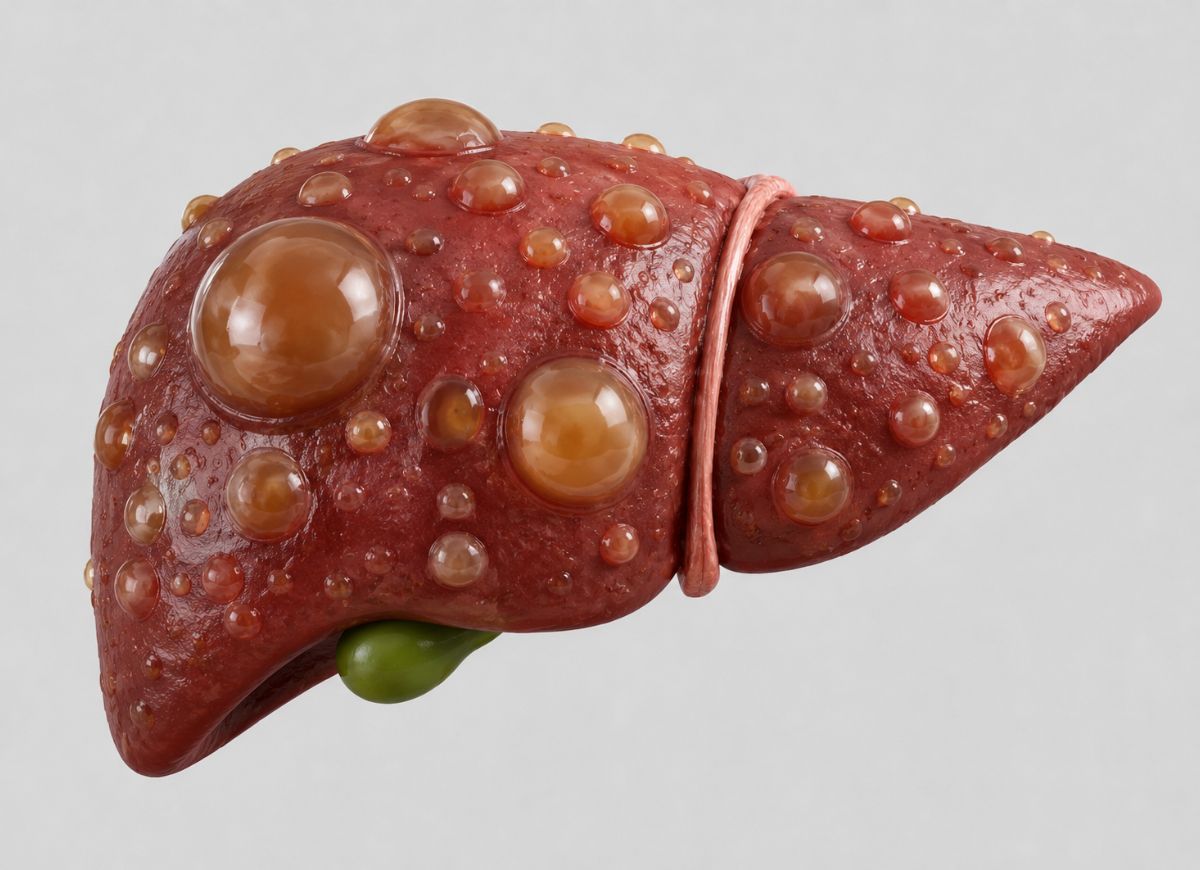
Finding out you have a liver cyst can feel unsettling at first, but the truth is that most of these growths are completely harmless and are usually stumbled upon by accident during an ultrasound, a CT scan, or a routine checkup for something else entirely. What makes them tricky is that they tend to develop silently over long stretches of time. Someone might feel perfectly fine for years, then slowly start noticing bloating, discomfort, or digestive changes that get chalked up to stress, diet, or just being busy.
That’s precisely why the signs of a liver cyst are so easy to dismiss. Tucked under the ribs on the right side of the body, the liver is constantly at work breaking down food, filtering toxins, storing energy, and keeping countless other systems running. When a cyst expands enough to push against nearby structures or irritate the surrounding tissue, the body starts sending out small signals. They rarely feel alarming right away, but they’re worth paying attention to.
Some people notice a dull ache below the right ribs. Others fill up fast at meals, feel their stomach swell, or deal with waves of nausea. On rare occasions, a cyst can bleed, get infected, or rupture situations that call for urgent care. That doesn’t mean every stomach twinge is a red flag, but symptoms that stick around are worth checking out.
The good news is that most liver cysts can simply be watched over time, especially when caught early and assessed properly. Understanding the warning signs helps you stay informed without spiraling into worry. Below are eight symptoms of a liver cyst that are commonly overlooked some subtle, some easily mistaken for everyday digestive trouble, and a couple that might genuinely catch you off guard.
8 Warning Signs of a Liver Cyst
Abdominal Pain or Discomfort
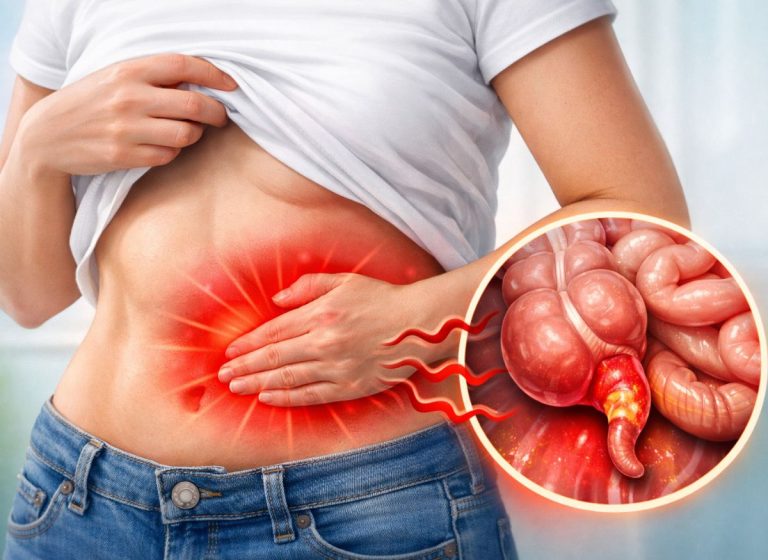
One of the more common signs of a large or complicated cyst is a dull ache or a sense of pressure sitting in the upper right side of the belly, right where the liver lives beneath the rib cage. This pain usually isn’t sharp or abrupt unless something has gone wrong, like bleeding or a rupture instead, it tends to be a low, nagging sensation that’s hard to pin down exactly.
The reason behind this discomfort comes down to simple physics: as the cyst fills with fluid and grows, it stretches Glisson’s capsule, the sensitive membrane wrapping the liver. That stretching irritates nerve endings, and the brain reads it as a dull, persistent ache.
A cyst that’s grown large enough can also physically crowd nearby organs the stomach, the first section of the small intestine, the diaphragm, even the abdominal wall creating a heavy or pressured feeling that often worsens after a big meal or in certain positions, like lying on one side. Because right-sided upper abdominal pain overlaps with so many other conditions gallstones, ulcers, pancreatitis, even kidney trouble it really does need a doctor’s eyes and an imaging test like an ultrasound to sort out what’s actually going on.
Feeling of Fullness or Bloating
Feeling stuffed after just a few bites, or dealing with ongoing bloating, can be a telling sign that a cyst has grown large enough to crowd the stomach. Since the liver and stomach sit so close together in the upper abdomen, a sizable cyst can shrink the stomach’s usable space and limit how much it can expand during a meal which is why the brain gets an early “I’m full” signal even after eating very little.
This often comes paired with a bloated, distended feeling. The added pressure can slow gastric emptying, meaning food lingers in the stomach longer than it should, leading to burping, discomfort, and that swollen, tight sensation. Over weeks or months, eating less because of this can quietly chip away at a person’s calorie intake, eventually contributing to unplanned weight loss. Since these complaints are so ordinary and so often blamed on other things, a liver cyst rarely comes to mind first which is exactly why lingering digestive symptoms deserve a proper medical look.
Nausea or Vomiting
Nausea that comes and goes or, less often, actual vomiting can trace back to a cyst that’s grown enough to press on the stomach and upper digestive tract. Much like the fullness and bloating described above, this happens because outside pressure interferes with the stomach’s normal rhythm of muscle contractions that move food along. That disruption can leave someone with a queasy, unsettled stomach that may worsen right after eating.
Vomiting is rarer, but it can happen if the pressure becomes severe enough to partially block food from moving out of the stomach. In that case, the body may vomit simply to relieve the buildup. When nausea shows up alongside right-sided pain and bloating, it’s worth getting checked out these combined symptoms usually mean the cyst has grown large enough to genuinely interfere with digestion, and imaging can confirm what’s happening.
Unexplained Weight Loss
Dropping weight without trying isn’t caused directly by the cyst itself it’s more of a ripple effect from the other symptoms. Constant early fullness, ongoing bloating, and recurring nausea make it hard to eat normally, so appetite naturally fades.
Over time, eating less consistently creates a calorie deficit, and the body starts drawing on fat and muscle reserves, leading to noticeable weight loss that has nothing to do with dieting or exercise. Because unintentional weight loss can point to so many different health issues not just liver cysts, but a wide range of gastrointestinal and systemic conditions it’s considered a symptom that always deserves medical attention, especially when it shows up alongside abdominal pain or bloating.
Pain in the Right Shoulder
It might sound strange, but a large liver cyst can trigger pain that shows up in the right shoulder a case of what’s called referred pain, where the brain misreads where a signal is actually coming from. This tends to happen when a cyst sitting near the top of the liver grows enough to irritate the diaphragm, the muscle separating the chest and abdominal cavities.
The diaphragm is controlled by the phrenic nerve, which branches out from the same spinal nerves (C3 through C5) that also supply sensation to the shoulder. So when the phrenic nerve gets irritated, the signals it sends up the spine get crossed with shoulder sensation, and the brain assumes the pain is coming from the shoulder itself. Odd as it sounds, this kind of referred pain especially paired with other abdominal symptoms can be a real clue that something’s going on with the liver or diaphragm.
Palpable Lump in the Abdomen
Occasionally, especially in leaner individuals, a very large cyst can actually be felt as a firm lump beneath the right ribs. For this to happen, the cyst usually needs to be quite sizable often more than 10 to 15 centimeters across. It may feel smooth and rounded, and it can even shift slightly with each breath as the diaphragm moves the liver up and down.
More often than not, a doctor discovers this during a physical exam rather than the person noticing it themselves, though self-discovery does happen. Any new lump in the abdomen is a finding that calls for immediate follow-up while it’s often just a large benign cyst, imaging is essential to rule out other possibilities like tumors or abnormal growths.
Jaundice
Jaundice the yellowing of skin and the whites of the eyes is an uncommon but serious sign that a cyst may be interfering with normal liver function. It happens when bilirubin, a yellow pigment produced from broken-down red blood cells, isn’t properly processed and excreted. Normally the liver sends bilirubin into bile, which flows into the intestines but if a cyst is positioned in a way that blocks the bile ducts, that flow gets backed up.
When bile can’t drain properly, bilirubin builds up in the bloodstream and eventually shows up as yellowing in the skin and eyes. This is often accompanied by dark urine, pale stools, and intense itching. Jaundice is never something to brush off it signals a real disruption in liver or bile duct function and needs prompt medical attention to prevent infection or further liver damage.
Heartburn or Indigestion
Ongoing heartburn or indigestion can also stem from a cyst pressing on the stomach and disrupting its normal position. That added pressure can weaken the lower esophageal sphincter the valve that normally keeps stomach acid where it belongs allowing acid to creep back up into the esophagus and cause that familiar burning sensation.
The same pressure can slow how quickly food leaves the stomach, adding to the feeling of indigestion, burping, and general discomfort after eating. Because heartburn is such a common complaint on its own, people rarely suspect a liver cyst is behind it but if reflux symptoms are persistent, resistant to typical treatments, and paired with fullness or right-sided pain, it’s worth investigating further.
What are the Primary Causes of a Liver Cyst?
Most liver cysts trace back to something that happened before birth, though some form later due to parasites, and others are part of an inherited condition called Polycystic Liver Disease (PLD). While the overwhelming majority are simple, harmless, and congenital, a smaller number come from causes that require closer attention and different treatment approaches.
Liver Cysts Are Typically Congenital
Most simple liver cysts trace their origin back to fetal development. The leading explanation is that they form from tiny clusters of bile duct cells called biliary microhamartomas that never properly connected to the liver’s main bile duct network while the organ was forming in the womb. Cut off from normal drainage, these isolated pockets slowly fill with the fluid they naturally produce.
Over decades, that trapped fluid causes the pocket to gradually expand into a thin-walled, fluid-filled sac. This is why these cysts, despite technically existing since birth, often aren’t discovered until middle age or later, once they’ve had enough time to grow noticeable or start causing symptoms. They’re almost always benign, filled with clear fluid, and carry no cancer risk whether a person has just one or several. Recognizing that they’re congenital and harmless is why simple observation, rather than treatment, is usually the standard approach.
Infection Can Lead to the Formation of a Liver Cyst
Parasites can also cause liver cysts, most notably through hydatid disease (cystic echinococcosis), caused by the larval form of the tapeworm Echinococcus granulosus. Dogs and other canines are the natural hosts for this parasite, and people typically get infected accidentally by consuming food, water, or soil contaminated with feces from an infected animal, or through close contact with the animal itself.
Once swallowed, the parasite eggs hatch in the intestines, and the larvae make their way into the bloodstream. Because the liver filters blood coming from the gut, it’s the organ where these larvae most often settle and develop into a hydatid cyst. Unlike a simple congenital cyst, this type has a thick, layered wall and often contains numerous smaller daughter cysts along with infectious material. These cysts are considerably more dangerous a rupture can trigger a severe allergic reaction or spread the infection elsewhere in the abdomen. Treatment usually combines antiparasitic medication with carefully planned surgery to avoid any spillage.
Polycystic Liver Disease (PLD) Is an Inherited Cause
PLD is a rare genetic condition that leads to the growth of many cysts sometimes hundreds or even thousands throughout the liver. It stems from mutations in genes like PRKCSH or SEC63, which play a role in how cells process proteins. Because PLD follows an autosomal dominant inheritance pattern, a person only needs one copy of the faulty gene from a parent to develop it. It’s often linked with Autosomal Dominant Polycystic Kidney Disease (ADPKD), and roughly half of people with ADPKD go on to develop liver cysts as well.
In PLD, the genetic mutation causes abnormal growth in the bile ducts and surrounding tissue, leading to cysts of every size scattered throughout the liver. Over the years, this can cause the liver to become significantly enlarged a condition called hepatomegaly. Interestingly, liver function usually stays intact despite the sheer number of cysts, and liver failure is uncommon. The bigger issue is the sheer size the liver can reach, which can cause chronic pain, severe bloating, breathing difficulty from pressure on the diaphragm, and malnutrition from a compressed stomach. In extreme cases, treatment may require removing part of the liver or a full transplant.
When to Seek Medical Help
Persistent or worsening symptoms ongoing pain, bloating, or nausea call for a doctor’s visit, while severe warning signs like sudden sharp pain, jaundice, or a new abdominal lump require urgent care. Most liver cysts are harmless, but these particular symptoms can mean a cyst has grown large enough to cause real problems, or that a rare complication has developed. Since none of this can be safely self-diagnosed, professional evaluation is essential.
Persistent Abdominal Pain
Ongoing or unexplained pain, discomfort, or bloating particularly in the upper right belly is worth bringing to a doctor’s attention. Lingering symptoms are the body’s way of flagging something that needs investigating. While a benign cyst is one possibility, this kind of pain overlaps with several other conditions, some of which need prompt treatment: gallstones, gallbladder inflammation, ulcers, gastritis, pancreatitis, or hepatitis. Trying to push through the pain or guess at the cause can delay the care that’s actually needed.
Before the appointment, it helps to track the details where exactly the pain sits, what it feels like, how often it happens, and what makes it better or worse. Mentioning related symptoms like nausea or appetite changes helps too. A doctor will likely start with a physical exam and an abdominal ultrasound, which is a safe, non-invasive way to get a clear look at the liver and nearby organs.
Sudden, Severe Pain
A sudden, sharp, and intense abdominal pain that doesn’t let up is a sign to get emergency care right away. This kind of pain can point to a rare but serious cyst complication like internal bleeding, where a blood vessel inside the cyst ruptures and causes rapid, painful swelling as the liver’s outer lining stretches.
Another possibility is the cyst wall tearing open, spilling fluid into the abdominal cavity and causing painful inflammation of the abdominal lining. In very rare cases, a cyst attached by a stalk can twist on itself, cutting off its own blood supply. All of these situations are medical emergencies, and a CT scan can quickly help doctors figure out what’s happening and decide on the right treatment whether that’s pain relief, monitoring, or a procedure to address bleeding or rupture. Sudden severe abdominal pain should never be waited out.
Check for Jaundice or a Palpable Mass
Yellowing of the skin or eyes, or discovering a new lump in the abdomen, both call for immediate medical evaluation. Jaundice is never a normal finding it points to a bilirubin problem that, in the context of a cyst, usually means a blocked bile duct. That blockage needs to be found and relieved quickly to avoid infection or ongoing liver damage.
A new abdominal lump also deserves prompt attention. While it might just be a large, harmless cyst, a doctor needs to rule out other causes, including liver cancer or tumors from nearby organs. Expect a physical exam, blood work to check liver function and bilirubin levels, and imaging like an ultrasound, CT, or MRI to get a clear picture of what’s going on. Putting off evaluation for these symptoms can carry real consequences.
Different Types of Liver Cysts
Liver cysts generally fall into two categories: simple and complex, based on how they look on imaging. Simple cysts are by far the most common benign, thin-walled sacs filled with clear fluid. They’re usually congenital, even if they aren’t discovered until adulthood, and they appear on imaging as smooth, round, and free of any internal structures. These rarely cause problems and typically don’t need treatment unless they grow large enough to press on nearby organs.
Complex cysts look different thicker or irregular walls, internal dividers, calcium deposits, or debris inside and these features call for a closer look to rule out something more serious. Polycystic Liver Disease produces many cysts scattered throughout the liver, sometimes causing major enlargement. Hydatid cysts, caused by a tapeworm parasite, often contain smaller daughter cysts and a distinctive appearance on imaging known as the “water lily sign.” Cystadenomas and cystadenocarcinomas are rare cystic growths the former benign, the latter cancerous and both require careful evaluation, often including surgery.
Liver Cysts Diagnosis
Doctors rely mainly on imaging to confirm a liver cyst. An abdominal ultrasound is usually the first step since it’s widely available, affordable, and doesn’t involve radiation. It’s very effective at spotting fluid-filled structures, showing simple cysts as clearly defined dark circles with thin walls.
If the ultrasound shows something more complicated, or the diagnosis isn’t clear, a CT scan can provide sharper, more detailed images of the cyst’s size, shape, and relationship to nearby blood vessels and bile ducts. For the most detailed picture, an MRI is often used, since it’s especially good at telling apart a simple cyst from a complex one, a cyst with internal bleeding, or a solid tumor.
Potential Complications of an Untreated Liver Cyst
Most simple cysts stay harmless for life, but a small number can lead to complications, especially as they grow larger. Bleeding inside the cyst is one of the more common issues, often causing sudden, severe pain and making the fluid appear denser on imaging.
A ruptured cyst wall is rarer but more serious, spilling fluid into the abdominal cavity and potentially causing dangerous inflammation that needs urgent treatment. Infection is another risk, turning the cyst into a pus-filled abscess that brings fever, chills, and pain, and usually requires drainage plus antibiotics. Very large cysts can also cause trouble simply through their size, pressing on whatever happens to be nearby.
Where the cyst sits matters a lot. One pressing on the major bile ducts can block bile flow, leading to jaundice, dark urine, and pale stools. In rare cases, a massive cyst can compress major blood vessels, causing symptoms like leg swelling, or press on the stomach and cause fullness, nausea, or vomiting.
Liver Cysts Management
How a liver cyst is treated depends on its type, size, and whether it’s causing symptoms ranging from simply keeping an eye on it to draining it or removing it surgically. The core idea is that treatment is only needed when the cyst is actually causing a problem, and since most simple cysts are harmless, no action is required at all.
Watchful Waiting
For the vast majority of simple cysts found by accident and causing no symptoms, watchful waiting is the standard approach. Since these cysts are almost always benign, carry no cancer risk, and tend to grow very slowly if at all, there’s no real benefit to intervening only unnecessary risk and cost.
This usually means a follow-up ultrasound sometime in the 6-to-12-month range after the initial finding, just to make sure nothing has changed. If the cyst stays stable and the person remains symptom-free, future scans may be spaced out further or stopped altogether. Patients are also told what to watch for new pain, bloating, or nausea so they know when it’s time to come back for another look.
Percutaneous Aspiration
This minimally invasive procedure involves an interventional radiologist guiding a thin needle into the cyst using ultrasound or CT imaging, then draining the fluid out. It’s often paired with sclerotherapy to reduce the odds of the cyst refilling.
Draining alone tends to be a temporary fix, since the cyst lining keeps producing fluid and the cyst often comes back. That’s why a sclerosing agent like concentrated ethanol is frequently injected afterward to irritate and scar the lining, closing off the cavity for good. This approach works well for a single, large, easily reached simple cyst, but it isn’t suitable for parasitic hydatid cysts (due to the risk of a severe reaction) or for someone with Polycystic Liver Disease, given how many cysts they have.
Surgical Removal (Cyst Fenestration)
For large, symptomatic cysts especially ones that keep coming back after drainage surgical removal, known as fenestration or deroofing, is often the definitive fix. Rather than removing the whole cyst, surgeons cut away a large section of its wall, creating an opening that lets fluid drain permanently into the abdominal cavity, where the body absorbs it naturally.
This is almost always done laparoscopically today, using small incisions, a camera, and specialized tools, which means less pain, shorter hospital stays, and quicker recovery compared to open surgery. It’s the go-to option for people whose quality of life is genuinely affected by a large cyst. In extreme, rare cases of Polycystic Liver Disease, a partial liver removal or transplant may be the only real solution.
How Does a Liver Cyst Differ from a Liver Tumor?
The biggest difference comes down to content: a cyst is a sac of fluid, while a tumor is a solid mass of tissue. On imaging, this usually shows up clearly a simple cyst appears smooth, well-defined, and dark, without lighting up when contrast dye is used.
A tumor, by contrast, has an irregular shape and tends to have a strong blood supply, which causes it to light up on a CT or MRI scan when contrast is given. Cysts, especially simple ones, are almost always benign. Tumors can go either way some are benign, like hemangiomas, while others, like hepatocellular carcinoma, are cancerous.
Both can turn up unexpectedly on a scan, but a solid mass typically triggers a more thorough workup specialized imaging, blood tests for tumor markers, and sometimes a biopsy steps that are rarely needed for a simple cyst.
FAQs
1. How serious is a cyst on your liver?
Most liver cysts aren’t serious at all. Simple cysts are typically fluid-filled and symptom-free, often needing no treatment whatsoever many people only find out they have one during an unrelated scan. That said, a cyst becomes more of a concern if it grows, causes pain, presses on nearby structures, gets infected, bleeds, or shows unusual features on imaging. Rarer types, like parasitic or cystic tumor variations, need closer follow-up, which is why checking in with a doctor still matters even if the cyst seems harmless.
2. What does a cyst mean in your liver?
It generally means there’s a fluid-filled pocket somewhere in or on the liver. Most of the time, it’s a simple hepatic cyst benign and unrelated to cancer. Some are present from birth, while others tie back to conditions like polycystic liver disease or a parasitic infection, or in rare cases, a cystic tumor. How concerning it is depends on its size, shape, number, and appearance on a scan a small, smooth, simple cyst is far less worrying than one with thick walls or internal material.
3. What foods should you avoid if you have a liver cyst?
There’s no specific diet known to shrink a simple cyst, but eating in a way that supports overall liver health is still worthwhile, especially if other issues like fatty liver, diabetes, or high cholesterol are in the picture. Cutting back on alcohol, fried food, sugary drinks, processed snacks, refined carbs, and heavily processed meats can ease the load on the liver. Leaning into vegetables, fruit, whole grains, lean protein, beans, nuts, olive oil, and plenty of water is generally a solid approach. Anyone with a parasitic cyst, polycystic liver disease, or another liver condition should get more tailored dietary guidance from their doctor.
4. Can a liver cyst go away naturally?
Not usually most simple cysts stick around, but they tend to stay stable and cause no trouble for years. Many people live with one indefinitely without ever needing treatment, and monitoring alone is often enough when it’s small and uncomplicated. If a cyst starts causing pressure, pain, or bloating, drainage or surgical removal may become necessary. There’s no evidence that home remedies, detox drinks, or supplements can make a liver cyst disappear.
5. How fast does a liver cyst grow?
It varies quite a bit. Many simple cysts grow slowly or don’t change much for years, while others particularly those tied to polycystic liver disease, hormones, bleeding, infection, or parasites can grow more noticeably. Because growth patterns differ so much from person to person, doctors typically compare scans over time rather than relying on a single snapshot. A cyst that grows quickly, changes shape, or starts causing symptoms is worth a closer look.
6. What is the largest liver cyst ever recorded?
Reports vary depending on the type of cyst involved. One case report described a giant hydatid cyst the parasitic kind measuring roughly 45 by 35 by 25 centimeters, reportedly the largest documented at the time. For non-parasitic simple cysts, there have also been extreme cases recorded, including one containing around 17 liters of fluid. These are exceptionally rare outliers most liver cysts are far smaller, silent, and found by chance.
7. How many people have a liver cyst?
More people than you might expect. Estimates vary depending on the type of imaging used and the population studied, ranging anywhere from about 2% to over 20% in different reports. Modern imaging is sensitive enough to pick up even tiny cysts, which is part of why the numbers vary so widely. Most people never even realize they have one, since it typically causes no pain and needs no treatment it only becomes relevant if it grows, causes symptoms, or looks unusual on a scan.
8. How often do liver cysts become cancerous?
Almost never, when it comes to simple cysts the overwhelming majority are entirely benign. Concern usually arises only when a cyst isn’t truly “simple,” showing complex features like thick walls, solid areas, internal divisions, or changes over time. Some rare cystic tumors can be precancerous or cancerous, but these are a different category altogether from ordinary simple cysts. This is why the details on imaging matter so much doctors may order additional scans or tests if a cyst looks complex, or if symptoms like unexplained weight loss, jaundice, fever, or worsening pain show up.
Conclusion
Liver cysts can sound scarier than they usually are most are quiet, harmless, and found completely by accident. The real challenge is knowing when one deserves a closer look. Mild bloating, discomfort under the right ribs, early fullness, nausea, or unexplained swelling can all seem like everyday complaints, but symptoms that persist shouldn’t be ignored.
Most simple cysts only need periodic monitoring, while larger or unusual ones may call for treatment. What matters most is understanding exactly what type of cyst you have and whether it’s changing over time something imaging can reveal far more clearly than symptoms alone. If pain becomes severe, fever sets in, your skin or eyes turn yellow, or your abdomen visibly swells, it’s time to get checked. The liver works hard without complaint, but it’s worth listening when something feels off early evaluation brings clarity and better peace of mind.