
3rd Degree Burns vs 2nd Degree Burns: How to Tell the Difference
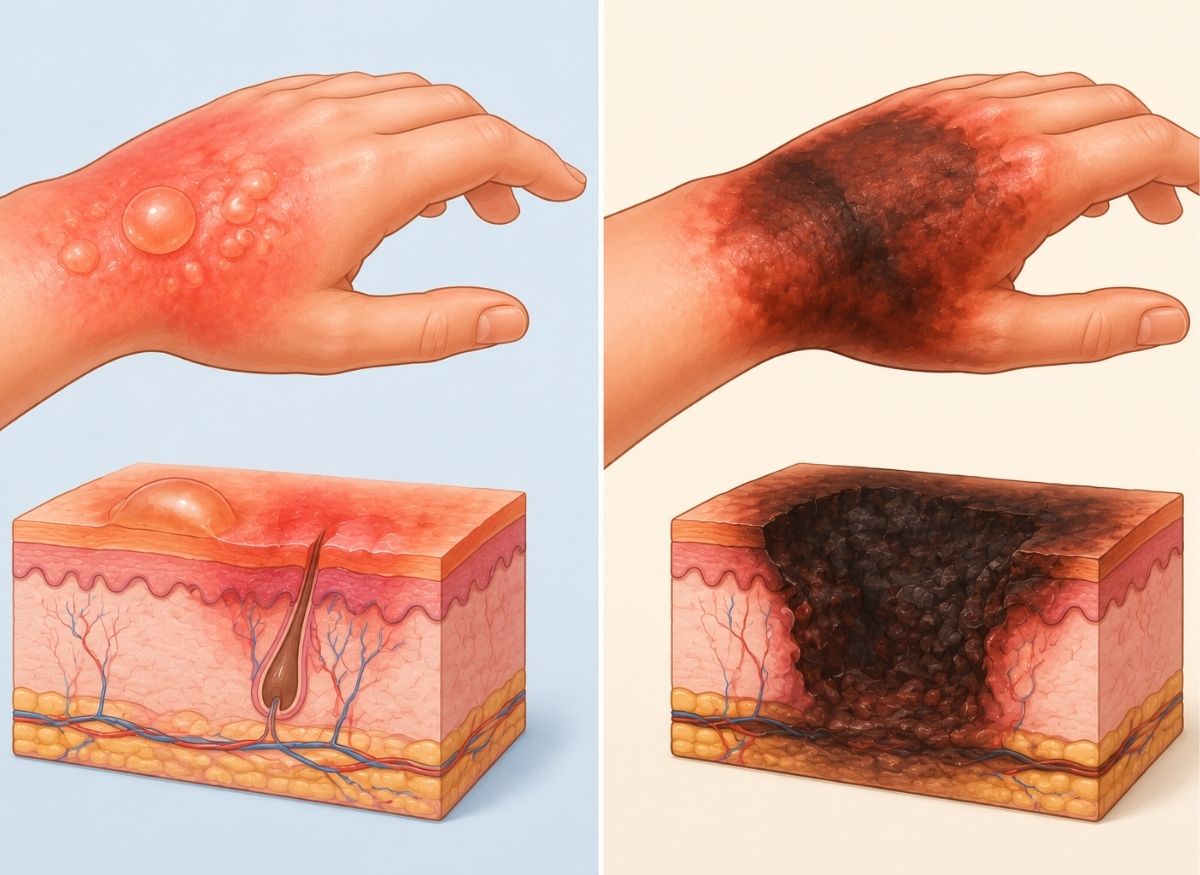
A 3rd degree burn is a serious injury that destroys all layers of the skin and may also affect deeper tissues such as fat, muscle, or bone. In comparison, 2nd degree burns affect the outer and middle layers of the skin and commonly cause redness, swelling, blisters, and significant pain. Third-degree burns may look white, brown, black, or leathery and can be numb because the nerves have been damaged.
Burns can result from heat, chemicals, electricity, friction, or other sources. Knowing how serious a burn is can help determine whether basic first aid is enough or whether emergency medical care is needed. In this article, we will explain the main differences between 2nd and 3rd degree burns, their common symptoms, and the appropriate steps for treatment and recovery.
Understanding the Degrees of Burns
Burns are generally classified into four degrees according to how deeply they damage the skin and underlying tissues:
First-Degree Burns: These are superficial injuries that affect only the epidermis, or outermost layer of the skin. They usually cause redness, mild swelling, tenderness, and pain similar to a sunburn. Most heal within a few days without leaving scars.
Second-Degree Burns: These burns damage the epidermis and part of the dermis beneath it. Typical signs include blisters, intense redness, swelling, and considerable pain. Healing can take several weeks, and deeper burns may cause scarring or changes in skin color.
3rd Degree Burns: These are full-thickness burns that destroy the epidermis and dermis and may extend into the underlying fat or deeper tissues. The skin may become white, brown, black, or leathery. Because nerve endings can be destroyed, the burned center may feel numb. These injuries require urgent medical treatment and may need surgery or skin grafts.
Fourth-Degree Burns: These are the deepest and most severe burns. They extend beyond the skin into muscles, tendons, and bones. They can cause permanent tissue damage and require emergency medical care and extensive treatment.
Understanding burn severity is important because treatment depends on the depth and size of the injury. Some first- and small second-degree burns can receive appropriate first aid, while third- and fourth-degree burns require immediate professional attention.
Key Differences Between a 2nd Degree and 3rd Degree Burn
Knowing the difference between a second degree burn and a 3rd degree burn is important because the two injuries damage tissue at very different depths. Their appearance, pain levels, healing potential, and treatment requirements can vary considerably.
Depth of Skin Layers Affected
The depth of a burn determines how much tissue has been damaged and how well the skin can repair itself.
Second-Degree Burn (Partial-Thickness): A second-degree burn destroys the epidermis and damages part of the dermis. Some deeper structures within the dermis, including parts of hair follicles and sweat glands, may remain intact. These surviving structures can help the skin regenerate during healing.
3rd Degree Burn (Full-Thickness): A third-degree burn destroys the entire epidermis and dermis. It can extend into the subcutaneous fat and, in particularly deep injuries, affect fascia, muscle, or bone. Since the skin’s regenerative structures have been destroyed, the wound cannot normally heal by itself.
The Paradox of Pain Levels
Pain does not always indicate how deep a burn is. In fact, a less extensive second-degree burn can sometimes hurt much more than the center of a full-thickness burn.
Second-Degree Burn Sensation: These burns can be extremely painful because many nerve endings in the dermis remain alive and exposed. Air, temperature changes, and even light contact can cause sharp, stinging, or throbbing pain.
Third-Degree Burn Sensation: The center of a third-degree burn may be numb because the heat has destroyed the nerve endings. However, this does not mean the person has no pain. Burns often contain different depths, so surrounding areas with second-degree or superficial burns can remain extremely painful.
A Vital Clinical Reality: A severe burn may contain a painless full-thickness center surrounded by painful partial-thickness tissue. Therefore, the absence of pain in the center should never be taken as a sign that the injury is minor.
Physical Appearance and Blistering
The appearance of a burn can provide useful clues about its depth. Second-degree and third-degree burns usually look very different because the underlying tissues respond differently to the injury.
Second-Degree Burn Appearance
A second-degree burn may appear deep red, raw, swollen, or uneven in color. Fluid can leak from damaged blood vessels, causing the surface to look wet, shiny, or moist.
Blisters are one of the most common features of second-degree burns. They develop when the damaged epidermis separates from the underlying dermis and fluid collects between the layers.
3rd Degree Burn Appearance
A full-thickness burn is usually dry, stiff, and less flexible than normal skin. It may appear:
- White, pale, smooth, or waxy.
- Tan, brown, or leathery.
- Dark brown or copper-colored.
- Black and charred in severe flame or electrical injuries.
Third-degree burns generally do not form typical blisters because the skin structures needed to create and maintain them have been destroyed.
Healing Potential and Medical Pathways
The depth of a burn has a major effect on how it heals and what type of treatment is required.
2nd Degree Burn Healing: Because some structures within the dermis can survive, many superficial second-degree burns can heal with proper wound care. Keeping the area clean, protecting it with an appropriate dressing, and avoiding popping blisters can support recovery. Many superficial burns heal within a few weeks, although deeper burns may cause scarring or changes in skin color.
3rd Degree Burns Treatment: Third-degree burns cannot normally heal without medical treatment because the skin’s regenerative structures have been destroyed. Treatment may include hospital care, fluid replacement, removal of damaged tissue, specialized wound dressings, and skin grafting. Severe burns also carry risks such as infection, fluid loss, scarring, and other complications.
Telltale Signs of a 2nd-Degree Burn
A second-degree burn, also known as a partial-thickness burn, damages the epidermis and extends into the dermis. Because the dermis contains blood vessels and nerve endings, these injuries often cause noticeable swelling, blistering, and pain.
Recognizing these signs can help you provide appropriate first aid and understand when professional medical care may be necessary.
The Common Visual Signs
Second-degree burns usually have a more dramatic appearance than first-degree burns because deeper skin tissue has been affected.
The Formation of Fluid-Filled Blisters
Blisters are a common and recognizable sign of second-degree burns. Heat or another source of injury can cause the epidermis to separate from the dermis. Fluid then collects in the space between the damaged layers.
Critical First Aid Rule: Do not intentionally pop or puncture burn blisters. The intact skin can provide a protective barrier over the damaged tissue underneath. Opening the blister can increase the risk of infection and interfere with healing.
A Deep Red, Mottled, and Weeping Surface
The affected skin may appear deep red, uneven, or mottled. Some areas may look darker while others remain lighter. Because damaged blood vessels can leak fluid, the surface may appear wet, shiny, or weeping.
Significant Localized Swelling (Edema)
Swelling can develop within minutes or hours as damaged blood vessels release fluid into nearby tissues. The skin may become puffy, tight, and stretched. When a burn affects an area around a joint, swelling may also make movement difficult.
The Sensory Experience: What It Feels Like
Second-degree burns can be extremely painful because the injury exposes and irritates living nerve endings in the dermis.
Exposed and Irritated Nerve Endings: The epidermis normally protects the sensitive nerves underneath. When that protective layer is damaged, the exposed nerves can react strongly to touch, air, and temperature.
The Sensation Profile: Pain may feel sharp, burning, stinging, throbbing, or piercing. The discomfort can continue while the wound remains inflamed.
Extreme Hyperalgesia (Over-sensitivity): The injured area may become highly sensitive. Even light contact from clothing or a small change in temperature can increase the pain.
Telltale Signs of a 3rd Degree Burn
A 3rd degree burn, medically known as a full-thickness burn, is a serious injury requiring urgent medical evaluation. It destroys the epidermis and dermis and can extend into the tissue beneath the skin.
Because much of the living skin tissue has been destroyed, the wound may look very different from a superficial or second-degree burn.
Common Visual Signs: Textures and Discoloration
The appearance of a third-degree burn can indicate extensive tissue damage. Instead of looking red and moist, the area may be dry, stiff, pale, brown, or black.
A Leathery, Stiff, and Dry Surface
Severe heat can damage collagen and other structural proteins in the skin. As a result, the skin can become firm, rigid, dry, and leathery. This dead tissue is commonly called eschar.
The Complete Absence of Blisters
Third-degree burns usually do not produce typical blisters. The epidermis and deeper skin structures have been destroyed, leaving no intact layers to form and contain blister fluid.
Coagulated, Waxy White Skin
Some deep burns, especially certain scald injuries, can appear pale white, waxy, or pearly. This can happen when blood vessels within the damaged tissue are destroyed and circulation is lost.
Charred, Blackened, or Mottled Coloration
Flames, explosions, and high-voltage electrical injuries can cause tissue to become blackened or charred. The affected skin may also have dark brown, tan, or copper-colored areas.
The Sensory Paradox: Realities of Numbness
One of the important characteristics of a third-degree burn is that the most severely damaged center may be numb.
Epicenter Numbness (Anesthesia)
When the burn destroys the nerve endings in the dermis, the center of the wound may not respond normally to light touch or a pinprick. A lack of pain in this area does not mean the injury is less serious.
The Peripheral Zone of Agony
Burns often contain areas of different depths. The center may be full-thickness, while the surrounding tissue may contain second-degree or superficial burns.
- The Epicenter: Full-thickness injury that may be numb.
- The Perimeter: Partial-thickness tissue that can be extremely painful.
- The Outer Ring: More superficial injury that may remain red and painful.
This combination of a numb center and painful surrounding tissue can occur with severe burns.
The Long-Term Complications of Severe Burns like 3rd Degree Burns
Recovery from a severe burn can continue long after the initial wound has closed. Deep burns can affect the skin, movement, nerves, and emotional well-being.
Hypertrophic Scarring and Keloids
When the dermis is seriously damaged, the body produces collagen to repair the wound. This can result in thick or raised scars.
Hypertrophic Scars: These scars are raised, thick, and sometimes red or firm. They generally remain within the original boundaries of the burn.
Keloid Scars: Keloids can grow beyond the original wound area into nearby healthy skin. They can be raised, itchy, uncomfortable, and difficult to treat.
Joint Contractures and Mobility Restrictions
Severe burns that cross joints such as the fingers, wrists, elbows, knees, or neck can lead to contractures. As scar tissue forms and tightens, it may restrict normal movement.
Treatment may include physical therapy, stretching, compression garments, and, in some cases, additional surgery to release tight scar tissue.
Chronic Infections and Systemic Vulnerability
Healthy skin protects the body from outside bacteria and other harmful organisms. Serious burns damage this protective barrier and can increase the risk of infection.
Local Wound Colonization: Healing burn wounds can provide an environment where bacteria may grow. Careful wound cleaning, dressings, and medical monitoring can help reduce this risk.
Sepsis: In some cases, an infection can spread into the bloodstream and lead to sepsis, a potentially life-threatening condition that requires urgent treatment.
Chronic Neurological Pain and Itching
Nerves can remain altered even after a severe burn has healed.
Neuropathic Pain: As damaged nerves recover, they may send abnormal signals that feel like burning, shooting, tingling, or electric pain.
Chronic Pruritus (Itching): Severe burns can also cause persistent itching during recovery. Scratching can damage fragile new skin and interfere with healing.
Psychological and Emotional Impact
Serious burns can have emotional effects as well as physical consequences. A traumatic accident, extended treatment, scarring, and changes in appearance may be difficult to cope with.
Some burn survivors experience anxiety, depression, post-traumatic stress symptoms, or concerns about body image. Burn rehabilitation may therefore include emotional support and counseling along with physical treatment.
Should You Ever Put Ice on A Severe Burn?
You should not place ice or ice water directly on a burn. Although extreme cold may seem like a natural way to cool an injury, it can damage already injured tissue and may make the burn worse.
Why Ice Worsens the Burn Injury
Direct exposure to ice can cause additional tissue injury rather than improving the original burn.
Severe Vasoconstriction
Very cold temperatures cause blood vessels to narrow. This can reduce circulation to already damaged tissue and potentially increase tissue injury.
Frostbite and Tissue Necrosis
Ice placed directly against injured skin can freeze remaining living cells and cause additional tissue damage, including frostbite and tissue death.
The Systemic Risk: Rapid Hypothermia
Large burns can interfere with the body’s ability to regulate temperature. Applying ice or very cold water over a large burned area may increase heat loss and contribute to hypothermia.
The Correct Emergency First-Aid Protocol
First aid depends on the size, location, and suspected depth of the burn.
For Minor or Small Second-Degree Burns
For a small burn, cool running tap water can be used to cool the injured area. A common first-aid approach is to cool the burn under cool, running water for about 20 minutes. Avoid ice, very cold water, creams, or substances that can further irritate the wound.
Do not intentionally break blisters. Cover the area with a clean, non-stick dressing when appropriate and seek medical advice if the burn is large, deep, located on the face, hands, feet, genitals, or major joints, or if you are unsure about its severity.
For Severe or Large 3rd Degree Burns
If the burn looks white, leathery, charred, or covers a large area:
- Call emergency medical services immediately.
- Do not apply ice.
- Do not remove clothing that is stuck to the burned skin.
- Cover the area loosely with a clean, dry, non-fluffy cloth or sterile dressing while waiting for medical help.
- Keep the person warm without placing heat directly on the burn.
How Do 2nd and 3rd Degree Burns Compare to 1st and 4th-Degree Burns?
Understanding second- and third-degree burns becomes easier when they are viewed alongside the other burn classifications. Burn depth ranges from superficial skin damage to injuries involving deeper structures.
The Superficial Tier: 1st-Degree Burns
A first-degree burn affects only the epidermis, the outermost layer of skin.
Telltale Signs: The skin may become red, warm, tender, and mildly swollen.
Classic Example: A mild sunburn is a common example.
Blistering and Scarring: First-degree burns generally do not produce blisters or permanent scars.
Healing Potential: These burns often heal within several days with basic care.
The Moderate Tier: 2nd-Degree Burns (Partial-Thickness)
A second-degree burn damages the epidermis and part of the dermis.
Telltale Signs: The skin may be red, mottled, swollen, wet, and blistered.
The Defining Hallmark: Fluid-filled blisters are common.
The Pain Profile: These burns can be very painful because many nerve endings remain alive and exposed.
Healing Potential: Many superficial second-degree burns can heal within a few weeks, although deeper burns may leave scars or changes in pigmentation.
The Critical Tier: 3rdDegree Burns (Full-Thickness)
A third-degree burn destroys the epidermis and the entire dermis and may extend into deeper tissues.
Telltale Signs: The skin can be dry, stiff, leathery, waxy white, brown, or blackened. Blisters are generally absent.
The Sensation Profile: The center may be numb because the nerve endings have been destroyed, while surrounding areas can remain extremely painful.
Healing Potential: These burns require professional medical treatment and may require debridement and skin grafting.
The Catastrophic Tier: 4th-Degree Burns
A fourth-degree burn extends beyond the skin into deeper structures such as fat, muscle, tendons, or bone.
Telltale Signs: The affected area may be deeply charred or blackened, with extensive destruction of the skin and underlying tissue.
Sensation Profile: The most severely damaged center may be numb because nerves have been destroyed.
Systemic Complications: Extensive burns can lead to serious complications, including infection, heat loss, fluid imbalance, and loss of function.
Medical Intervention: These injuries require immediate emergency treatment and may involve multiple surgeries or reconstruction. In the most severe cases, amputation may be necessary.
Summary Comparison of Burn Degrees
To understand the main differences quickly:
1st-Degree: Superficial; red, tender, and usually without blisters. It affects only the epidermis and generally heals quickly.
2nd-Degree: Partial-thickness; often red, swollen, wet, blistered, and very painful. It affects the epidermis and part of the dermis.
3rd Degree Burn: Full-thickness; often dry, leathery, waxy white, brown, or charred, with possible numbness. It destroys the full thickness of the skin and requires urgent medical care.
4th-Degree: Extends beyond the skin into deeper tissues such as muscle or bone. It is a medical emergency requiring extensive treatment.
First Aid Reminder: For minor burns, cool the affected area with cool running tap water and never use ice. Suspected third- and fourth-degree burns require immediate emergency medical evaluation. Cover the injury loosely with a clean, dry dressing while waiting for professional help.
Conclusion
Understanding the difference between 2nd and 3rd degree burns is important because the two injuries differ significantly in depth, appearance, sensation, healing, and treatment. Third-degree burns are particularly serious because they destroy the full thickness of the skin and can affect deeper tissues.
Early medical treatment can help manage complications such as infection, fluid loss, scarring, and tissue damage. Knowing basic first aid, avoiding harmful treatments such as direct ice application, and getting professional care for serious burns can support safer recovery.
Education about burn severity helps people recognize when an injury needs urgent medical attention. With appropriate first aid, professional treatment, and follow-up care, patients can receive the support needed throughout the healing and rehabilitation process.
FAQ
What is a 3rd degree burn?
A 3rd degree burn is a severe full-thickness injury that destroys the epidermis and dermis and may damage deeper tissues such as fat, muscle, or bone. The skin may look white, brown, black, or leathery, and the center may be numb because of nerve damage. These burns require prompt medical attention.
How does a 2nd degree burn differ from a 3rd degree burn?
A 2nd degree burn damages the epidermis and part of the dermis and commonly causes redness, swelling, blisters, and significant pain. A 3rd degree burn destroys the full thickness of the skin and may appear dry, leathery, white, brown, or charred. The most severely damaged area may also be numb.
How should a 3rd degree burn be treated?
Third-degree burns need immediate professional medical care. Treatment may include specialized wound dressings, fluid replacement, pain control, removal of damaged tissue, and skin grafting or other surgery. They should not be managed at home without medical evaluation.
Can 3rd degree burns cause long-term complications?
Yes. Third-degree burns can result in permanent scarring, contractures, infection, reduced movement, nerve-related pain, and persistent itching. Depending on the injury and its location, emotional and psychological effects may also occur. Rehabilitation and follow-up care are often important.
How can 2nd and 3rd degree burns be prevented?
Burn prevention includes handling hot liquids carefully, using protective equipment around flames and chemicals, installing and maintaining smoke alarms, practicing fire safety, and supervising children around hot objects. Taking these precautions can reduce the risk of serious burn injuries.