8 Rotator Cuff Injury Symptoms That Require Medical Attention
It often begins as a small ache in the shoulder. You notice it when reaching overhead, lifting a bag, or lying on one side at night. At first it’s easy to brush off. But what if that ache is warning you about something bigger?
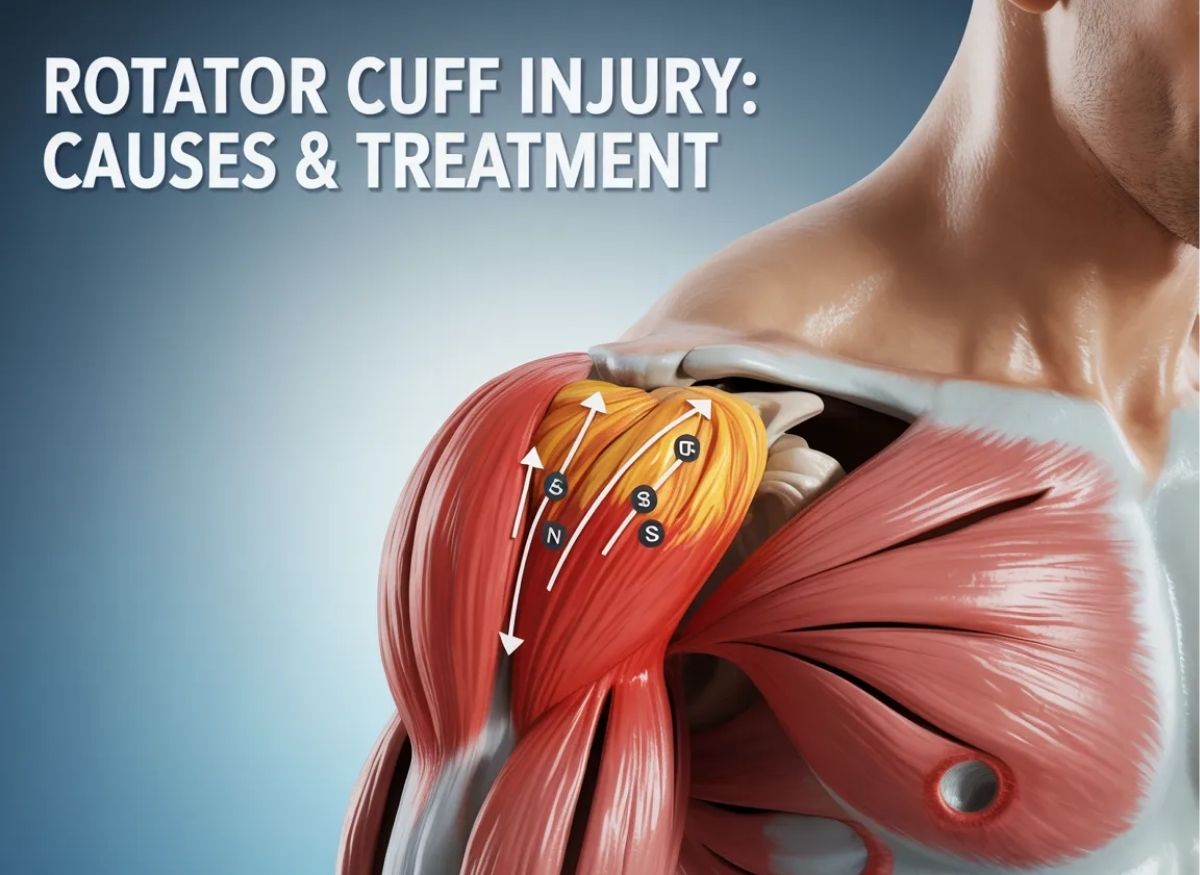
Rotator cuff injury symptoms can build up slowly or appear suddenly after a strain or accident. The rotator cuff is a group of muscles and tendons that keep your shoulder stable and let it move smoothly. When it becomes irritated, inflamed or torn, even ordinary tasks can turn painful.
The early signs are subtle and easy to dismiss, but over time they can worsen and cause lasting damage if left untreated. Spotting them early lets you act before the injury gets worse. This guide explains the key rotator cuff injury symptoms, how they progress, and when to see a doctor.
The Broader Contexts of Rotator Cuff Health
Shoulder health involves more than recognizing rotator cuff injury symptoms. It also includes prevention, telling similar conditions apart, understanding the types of injury, and knowing how daily habits and activity affect your tendons.
The rotator cuff both stabilizes the shoulder and helps it move. That double role makes it vulnerable to sudden trauma and long-term wear. Posture, repetitive overhead motion, muscle imbalance and even sleeping position all change how stress is spread across the tendons.
Looking at these factors explains why rotator cuff injury symptoms appear in the first place, and it supports earlier action, better prevention and stronger long-term shoulder function.
How Does a Rotator Cuff Injury Differ From Shoulder Bursitis?
The two conditions can feel alike, but the causes differ and so can the treatment. Knowing the difference is important when assessing rotator cuff injury symptoms.
A rotator cuff injury means structural damage to the tendons that stabilize and move the shoulder, from inflammation to partial or complete tears. Typical features are pain with movement, weakness and trouble lifting or rotating the arm.
Shoulder bursitis (subacromial bursitis) is inflammation of the bursa, a fluid-filled cushion that reduces friction between the rotator cuff and the acromion. The problem is swelling and irritation, not a failing tendon. The differences show up in four ways:
- Pain pattern: Rotator cuff pain is usually tied to activity, especially overhead or rotating movements. Bursitis tends to cause a constant ache, even at rest.
- Weakness: True weakness is a key sign of significant rotator cuff injury, especially tendon tears. Bursitis rarely reduces strength unless pain holds you back.
- Tenderness and irritation: Bursitis usually causes tenderness over the front or side of the shoulder. Tendon injuries produce pain that depends on which muscle is affected.
- Functional limitation: Rotator cuff injuries make lifting and rotating the arm hard. With bursitis, pain is what limits movement, not structural failure.
The two often occur together, so a careful exam and sometimes imaging are needed to tell them apart.
Different Types of Rotator Cuff Injuries
Rotator cuff injury symptoms can come from anything between mild inflammation and a complete tendon rupture. Each stage looks different and needs its own approach.
- Tendinitis (inflammation stage): The earliest, mildest form, where tendons become irritated from repetitive use. Symptoms are mostly pain with movement and slight discomfort.
- Tendinosis (degenerative stage): Repeated stress breaks down the tendon fibers, leaving the tendon weaker and more likely to tear. Pain becomes more constant and starts to affect daily life.
- Partial-thickness tear: The tendon is damaged but not fully severed, either on its surface or within its structure. Expect pain, weakness and poor endurance in shoulder movement.
- Full-thickness tear: The tendon completely separates from the bone. This brings major weakness, loss of function and the most severe rotator cuff injury symptoms, often needing advanced treatment.
Additional Classifications That Influence Rotator Cuff Injury Symptoms
Beyond severity, injuries are also classified by how they develop and behave over time:
- Acute vs. degenerative tears: Acute tears happen suddenly after trauma with immediate, severe symptoms. Degenerative tears develop gradually and start with mild symptoms that worsen.
- Tendon retraction: In full-thickness tears the tendon can pull back from where it attaches. How far it retracts affects both symptoms and treatment options.
- Associated shoulder conditions: Biceps tendon inflammation, labral injuries or joint degeneration often occur alongside a rotator cuff injury. They can intensify symptoms and complicate recovery.
The Warning Signs of a Rotator Cuff Injury
The most common signs are persistent shoulder pain, noticeable weakness in the arm, reduced range of motion, and clicking, popping or grinding in the joint. They point to damage in one or more tendons that stabilize the shoulder and control its movement.
Symptoms can start in two ways. Sometimes they appear suddenly after lifting something heavy or falling onto the shoulder. More often they emerge gradually from repetitive strain or age-related tendon wear. This gradual onset is common and delays recognition because early signs are mild or come and go.
Clinically, symptoms fall into three groups: pain-related symptoms, functional impairment, and mechanical or sensory changes in the joint. Their pattern gives diagnostic clues. Simple tendinitis may cause activity-related pain without much weakness, while a partial or full-thickness tear is more likely to cause both pain and loss of strength.
Understanding how symptoms evolve matters, because early recognition allows timely treatment and helps prevent further tendon damage or lasting loss of shoulder function.
What Are the Common Pain-Related Rotator Cuff Injury Symptoms?
Pain is the most prominent and usually the earliest symptom, and its character helps separate it from other shoulder problems. People typically describe a deep, dull, constant ache on the outer part of the shoulder. Unlike the sharp pain of a fracture or dislocation, it feels internal and diffuse, so it’s hard to pinpoint. It may be present at rest but gets worse with movement.
The pain often spreads down the outer side of the upper arm along the deltoid muscle, sometimes reaching the elbow but rarely going into the forearm or hand. This pattern matters because it can mimic neck (cervical spine) or nerve problems and lead to misdiagnosis if not evaluated carefully.
Movement and load strongly affect the pain. Raising the arm above shoulder level is a major trigger: reaching overhead, lifting, throwing, or even combing your hair can spike discomfort. Internal rotation, such as reaching behind your back, also hurts because it compresses the affected tendons.
Why Does Rotator Cuff Pain Often Worsen at Night?
Night pain is one of the most characteristic rotator cuff injury symptoms and can wreck your sleep. Many people can’t lie on the injured side because of direct pressure on the tendons. Even lying on the other side often doesn’t help, since the weight of the arm pulls downward on the shoulder and stresses the damaged cuff.
Physiology plays a part too. When you lie flat, inflammatory fluid tends to collect in the subacromial space above the tendons, raising joint pressure and intensifying pain signals.
At night there are also fewer distractions, so you become more aware of the discomfort. Mechanical stress plus inflammation explains why pain feels stronger after dark.
A deep, persistent ache that worsens with movement, travels down the upper arm and disturbs sleep strongly suggests rotator cuff involvement.
As the condition advances, rising pain intensity, poor response to rest or constant discomfort may signal worsening tendon damage or a tear.
The Symptoms Related to Weakness and Motion Loss in a Rotator Cuff Injury
Weakness and lost motion are among the most limiting rotator cuff injury symptoms. They show that the shoulder’s normal mechanics have broken down and the tendons can no longer stabilize and move the arm properly.
This isn’t ordinary tiredness. It is a real loss of strength and control. The rotator cuff starts arm movement and keeps the head of the humerus (upper arm bone) centered in the socket. When the tendons are inflamed or torn, the shoulder loses power and stability, and simple movements get hard.
Early on, weakness may only show during demanding tasks like lifting heavy objects or repeated overhead work. With progression, especially a partial or full-thickness tear, it becomes more pronounced and affects everyday life.
How Does Weakness Affect Daily Activities?
As symptoms worsen, routine tasks that need shoulder movement become harder. Common struggles include:
- Lifting the arm above shoulder height
- Reaching overhead or outward
- Carrying objects, even light ones
- Grooming tasks such as washing hair or dressing
The damaged tendon can no longer produce enough force to move the arm well. In advanced cases the arm may feel like it’s “giving out” or can’t hold weight.
Weakness is usually most obvious in abduction (raising the arm out to the side) and external rotation (turning the arm outward). These rely heavily on the rotator cuff, so they suffer first when it’s injured.
What Is the Difference Between Active and Passive Range of Motion?
A key diagnostic clue is the gap between active and passive range of motion.
- Active range of motion is how far you can move your arm using your own muscles.
- Passive range of motion is how far the arm moves when someone else, such as a doctor or physical therapist, moves it for you.
With a significant tear, active motion is often severely limited. You may be unable to raise the arm yourself, or only with great effort and pain.
Passive motion, however, is usually fairly well preserved. When someone else lifts the arm, it can often travel through a near-normal range, though it may still hurt. This helps separate rotator cuff injuries from conditions like adhesive capsulitis (frozen shoulder), where both active and passive movement are restricted.
Why Motion Loss Signals a More Serious Injury
Losing active motion is one of the most telling rotator cuff injury symptoms, particularly when lifting or rotating the arm becomes difficult. It suggests the tendon isn’t working properly because of heavy inflammation, structural damage or a tear. As the injury advances, other muscles try to take over. This leads to inefficient movement, extra strain on surrounding tissue and a higher risk of further injury.
A Popping Sound or Crackling Sensation
Unusual sounds and sensations, like a sudden “pop” or a persistent crackle, are among the more distinctive symptoms. These mechanical signs often reflect structural changes in the joint and help tell sudden trauma from chronic degeneration.
A sudden pop is most often linked to an acute tear. People describe a sharp, noticeable sensation at the moment of injury, followed by immediate pain, sudden weakness and trouble moving the arm. It is common after a fall, a forceful lift or a direct hit to the shoulder.
The pop is believed to occur when a tendon tears or pulls away from its attachment on the humerus. Reporting this event raises strong suspicion of a full-thickness tear, which usually needs prompt medical evaluation and often more aggressive treatment.
What Does a Crackling or Grinding Sensation (Crepitus) Mean?
Unlike a single pop, a crackling, grinding or clicking feeling, called crepitus, is a subtler symptom tied to long-term wear and inflammation.
It usually appears during movement, like lifting the arm, rotating the shoulder or reaching overhead. It repeats and persists, often feeling like grating or rubbing inside the joint.
It typically comes from rough or irregular surfaces interacting in the shoulder. Several mechanisms can contribute:
- Tendon inflammation and thickening cause friction as the rotator cuff glides beneath the acromion (the bone forming the top of the shoulder).
- Subacromial impingement happens when the space above the tendons narrows, causing repeated compression and irritation.
- Bone spurs (osteophytes) can form under the acromion, creating a rough surface that grinds on the tendons and speeds up damage.
Over time these stresses can fray and eventually tear the tendon, making crepitus an early sign of progressive degeneration.
When Are These Rotator Cuff Injury Symptoms Concerning?
Not every joint noise is a problem. Mild, painless clicking can be harmless. But when noises come with pain, weakness or limited motion, they matter far more.
A sudden pop followed by immediate weakness or loss of function should be treated as a possible acute tear and checked promptly. Likewise, persistent crepitus with pain and reduced mobility often means ongoing structural damage.
Popping and grinding reveal what’s happening inside the joint, whether sudden structural failure or chronic degeneration, and both can worsen without treatment. Catching these signs early allows timely diagnosis and helps preserve shoulder function.
The Common Causes of a Rotator Cuff Injury
The main causes fall into two groups: acute (traumatic) injuries and degenerative (wear-and-tear) injuries. Knowing which applies matters because the cause shapes how symptoms develop, how severe they get and which treatment is needed.
Acute injuries happen suddenly from an event that puts excessive force on the shoulder. Degenerative injuries develop gradually from repeated stress, aging and structural changes in the joint.
Both lead to similar symptoms such as pain, weakness and reduced mobility, but the onset differs. Acute injuries cause immediate, obvious dysfunction, while degenerative ones start subtly and worsen over weeks or months.
What Are the Acute Causes of a Rotator Cuff Injury?
Acute causes produce sudden-onset symptoms, usually after a clear incident. The tendon is rapidly overloaded, leading to a partial or complete tear.
- Fall onto an outstretched arm (FOOSH): The force travels through the arm into the shoulder. The rotator cuff tries to stabilize the joint, but the sudden load can exceed what the tendons can handle and tear them.
- Heavy, jerking lifts: Lifting with a sudden or jerky motion strains the cuff unexpectedly, especially if the load is uneven or poorly controlled. It is common in weightlifters, manual laborers and people doing physically demanding work.
- Direct trauma: A forceful blow, as in contact sports or car accidents, can damage the cuff and nearby structures. Sometimes it causes a shoulder dislocation, which is frequently linked to rotator cuff tears because of the force involved.
In all these cases symptoms appear right away. People report sudden pain, weakness and difficulty moving the arm, so the cause is usually easy to identify.
What Are the Degenerative Causes of a Rotator Cuff Injury?
Degenerative causes are the most common source of symptoms, particularly after age 40. They build slowly from long-term stress and biological changes in the tendon.
- Repetitive overhead motion: Painting, construction work, tennis, swimming and baseball all involve frequent arm elevation. The constant strain causes micro-damage in the tendon fibers, leading to inflammation and gradual weakening.
- Mechanical impingement: With age, bone spurs can form under the acromion and rub against the tendons during movement. This friction slowly wears the tissue down. Known as subacromial impingement, it is a major cause of chronic tendon damage.
- Natural aging: Blood supply to the tendons declines over time, reducing the oxygen and nutrients needed for repair. Tendons become less resilient, more prone to degeneration and slower to heal.
Because these changes are gradual, people with degenerative injuries often can’t name a moment when symptoms began. Discomfort starts mildly and slowly turns into persistent pain, weakness and limited mobility.
Why Understanding the Cause Matters
Acute and degenerative injuries produce similar symptoms, but the cause affects management. Acute tears may need more urgent intervention, while degenerative injuries often respond to early conservative treatment that prevents progression.
Knowing whether symptoms came on suddenly or over time reveals the nature of the injury and helps guide diagnosis, treatment decisions and long-term recovery.
The Best Ways to Prevent Rotator Cuff Injury Symptoms
Protecting the shoulder takes a proactive approach to both muscle strength and movement quality. Many cases start with minor strain and progress, so early attention to prevention greatly reduces the risk of persistent symptoms.
The best strategy combines targeted strengthening, flexibility training and good body mechanics. Together they keep the joint stable, reduce stress on the tendons and improve movement efficiency.
Strengthening the Shoulder Is Essential
A strong rotator cuff and surrounding muscles are vital for stability. The cuff keeps the humeral head properly aligned during movement. When these muscles are weak or unbalanced, the shoulder becomes unstable and more prone to irritation or tearing. Focus on:
- Internal and external rotation exercises: These target the rotator cuff tendons directly. With resistance bands, do external rotations (pull the band outward with the elbow at 90 degrees) and internal rotations (pull inward across the body) to build controlled strength.
- Upper back and scapular muscles: Strengthening the rhomboids, trapezius and serratus anterior improves shoulder blade positioning. Good scapular control gives the arm a stable base and reduces strain that leads to symptoms.
Balanced development keeps any one structure from being overloaded, a common cause of chronic shoulder trouble.
How Flexibility and Posture Protect the Rotator Cuff
Flexibility keeps joint mechanics healthy. Tight muscles can change shoulder position and increase friction where the tendons pass through.
- Stretch the chest (pectoral muscles) to prevent rounded shoulders, which narrow the subacromial space and contribute to impingement.
- Stretch the posterior shoulder capsule to improve mobility and reduce abnormal stress on the joint.
Posture matters just as much. Prolonged forward-rounded shoulders put the rotator cuff at a mechanical disadvantage and, over time, raise the chance of pain and limited motion.
Why Proper Movement and Technique Matter
Many injuries come not from one event but from repeated poor movement patterns, especially in people who do frequent overhead work.
- Use controlled, smooth movements instead of sudden or jerky ones.
- Keep objects close to your body when lifting to reduce shoulder strain.
- Avoid repeating overhead motions without rest, particularly in swimming, tennis or baseball.
For people in physically demanding jobs or sports, good technique is one of the best ways to prevent long-term damage.
Key Prevention Strategies to Reduce Risk
To protect the shoulder further, these habits are essential:
- Add scapular stability exercises: Rows, wall push-ups and scapular retractions strengthen the muscles that control shoulder blade movement and give the arm a stable foundation.
- Avoid improper lifting: Lifting heavy objects away from the body or with sudden force stresses the cuff. Controlled lifting with good alignment lowers the risk significantly.
- Allow adequate recovery time: Repetitive strain without rest causes cumulative tendon damage. Schedule breaks and alternate activities to prevent overuse.
- Listen to early warning signs: Mild discomfort, fatigue or reduced mobility often signal stress on the cuff. Addressing them early can stop progression to more serious symptoms.
Why Prevention Is More Effective Than Treatment
Once a rotator cuff injury develops, recovery can be slow and sometimes incomplete, especially in severe cases. Prevention lowers the risk of injury and protects long-term shoulder function and performance. Strengthening, flexibility and good movement habits can significantly reduce your chance of developing symptoms and needing intensive treatment later.
Can a Rotator Cuff Injury Be Managed at Home While Awaiting a Diagnosis?
Yes, a suspected shoulder injury can often be managed at home for a short time, especially when symptoms first appear. This is only temporary symptom control until you get a proper medical evaluation. The goals are to reduce inflammation, protect the tendon from more damage and keep basic mobility without making things worse.
Early symptoms like mild pain, stiffness or discomfort with movement may respond well to conservative care. More severe signs, such as marked weakness or being unable to lift the arm, need prompt medical attention.
What Is the Best Initial Approach at Home?
The most widely recommended method is the RICE protocol, which reduces pain and limits further strain.
- Rest: The most important step. Avoid anything that triggers pain, especially overhead movement, lifting or reaching behind your back. A sling can temporarily limit motion, but avoid long immobilization to prevent stiffness.
- Ice: Apply ice for 15-20 minutes at a time, several times a day, to reduce inflammation and numb pain. Ice constricts blood vessels, which can limit swelling in the injured tendon. Always put a thin barrier, like a towel, between ice and skin.
- Pain management (NSAIDs): Over-the-counter anti-inflammatories such as ibuprofen or naproxen can ease pain and inflammation. Use them cautiously and only if suitable for your health.
- Modified activity: Rather than total inactivity, avoid aggravating movements while keeping gentle, pain-free use of the shoulder. This prevents stiffness without stressing the tendon.
What Should You Avoid During Early Management?
While managing symptoms at home, these actions can make things worse:
- Avoid heat in the first 48-72 hours: Heat increases blood flow and can worsen inflammation during the acute phase.
- Don’t push through pain: Pain signals that the tendon is stressed. Continuing can cause further damage or progression.
- Avoid heavy lifting or sudden movements: Jerky motions or lifting weight away from the body overload the cuff and raise the risk of tearing.
Is Movement Still Important?
Yes, but it must be controlled. Gentle, pain-free movement maintains mobility and prevents stiffness. A commonly recommended exercise is the pendulum: lean forward, let the arm hang freely and move it in small circles. It boosts circulation without putting much load on the tendon. Stop any movement that increases pain, as it may aggravate the injury.
Why At-Home Care Is Only Temporary
These strategies can bring relief, but they don’t fix the underlying cause. Whether the problem is inflammation, degeneration or a tear, proper diagnosis is essential for effective treatment. Delay can worsen symptoms, including weakness and reduced mobility, and cause long-term damage. With significant tendon tears, waiting may allow tendon retraction and muscle atrophy, making recovery harder.
When Should You Seek Medical Attention?
Treat home care as a short-term measure only. Get evaluated if:
- Pain lasts beyond a few days
- Weakness is noticeable or getting worse
- You can’t lift your arm
- Symptoms interfere with sleep or daily activities
Knowing when symptoms need professional care is critical for preventing complications and ensuring proper recovery.
Conclusion
Rotator cuff injury symptoms should never be ignored, especially once they interfere with daily movement or keep getting worse. Mild discomfort can quickly turn into persistent pain, weakness and limited mobility if it isn’t addressed.
Recognizing early warning signs gives you the chance to act before the injury becomes serious. Pain with movement, trouble lifting your arm or discomfort that disturbs your sleep are all signals that something is wrong.
If symptoms persist, intensify or limit everyday tasks, see a doctor. Early diagnosis and proper treatment prevent further damage and support faster recovery. Understanding these symptoms helps you protect your shoulder, stay active and avoid long-term complications.
Frequently Asked Questions About Rotator Cuff Injury Symptoms
Can rotator cuff injury symptoms appear without a clear injury event?
Yes. Many people develop symptoms with no single traumatic event. These are degenerative tears, and they are especially common with age. According to the American Academy of Orthopaedic Surgeons, tears are significantly more common after 40, with prevalence rising steadily as people get older.
Studies show that over 50% of people above 60 may have a partial or complete tear, even without remembering an injury. That’s why gradual pain, weakness or stiffness can develop slowly.
Why do rotator cuff injuries often get worse at night?
Night pain is one of the most distinctive symptoms, with both mechanical and biological causes. Research referenced by Mayo Clinic suggests that when you lie down, inflammatory fluid can gather around the shoulder and raise pressure in the joint. Meanwhile, the weight of the arm pulls on the injured tendon. Fewer distractions at night also make pain more noticeable, which is why difficulty sleeping is often one of the earliest complaints.
Can untreated rotator cuff injury symptoms lead to permanent damage?
Yes. Delaying treatment can cause progressive tendon damage and lasting loss of function. According to Cleveland Clinic, untreated tears may grow over time, leading to muscle atrophy (wasting) and tendon retraction.
Once the tendon pulls away from its attachment, surgical repair becomes harder. This is why persistent symptoms shouldn’t be ignored, especially if weakness or limited motion develops.
Is shoulder weakness always a sign of a rotator cuff tear?
Not always, but it is one of the most important signs when present. Mild injuries like tendinitis may cause pain without much weakness. True strength loss, especially when lifting the arm or rotating it outward, is strongly linked to tendon damage. Guidelines from the National Institute of Arthritis and Musculoskeletal and Skin Diseases highlight weakness during specific resisted movements as a key indicator in diagnosing tears.
How common are rotator cuff injuries in athletes and active individuals?
Very common in sports and jobs involving repetitive overhead motion. Data from the National Institutes of Health shows athletes in baseball, tennis and swimming face significantly higher risk because of repeated shoulder stress. These movements cause microtrauma that builds up and eventually produces symptoms. That’s why proper technique and rest periods are essential for long-term shoulder health.