
8 Early Warning Signs of Appendicitis You Can’t Miss

Have you ever felt a sudden, sharp pain in your lower right abdomen and had no idea what was going on? Appendicitis is one of the most common abdominal emergencies and affects roughly 5% of people worldwide at some point. Anyone can get it, but it is most common between the ages of 10 and 30. Many people miss the early warning signs and delay treatment, which is what allows life-threatening complications to develop.
The appendix is a small, finger-shaped organ in the lower abdomen. When it becomes inflamed and infected, the pain builds quickly. Appendicitis is a medical emergency that usually requires surgery to remove the appendix before it ruptures. A burst appendix can spread infection through the abdomen and cause peritonitis, which can be fatal.
Early signs can be mild, such as vague discomfort near the navel or a loss of appetite. As inflammation grows, the pain usually moves to the lower right abdomen and turns sharp and intense. Nausea, vomiting and fever often follow. Catching these symptoms early greatly improves the chance of a full recovery.
This article walks through the key symptoms to watch for, so you can respond in time and lower the risks of this common but serious condition.
Early Signs of Appendicitis
The first signs are often subtle and easy to mistake for indigestion or a stomach virus. What gives appendicitis away is that the symptoms persist and progress. Below, each early sign is explained along with how they add up to signal the condition.
1. Dull, Aching Pain Around The Belly Button
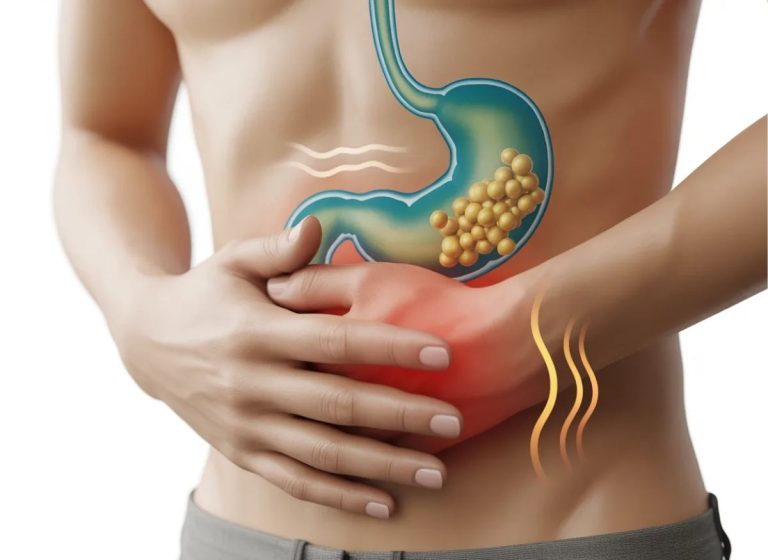
This is often the very first sign. At first it is diffuse and hard to pinpoint, feeling like general abdominal discomfort rather than sharp, localized pain. Many people describe a nagging ache that comes and goes before becoming constant.
This periumbilical pain happens because the appendix sends its early pain signals through nerves that enter the spinal cord at the same level as nerves from the navel area. This is called referred pain. The early inflammation irritates the visceral peritoneum, the membrane covering the abdominal organs, whose nerve fibers are poorly localized. That is why you feel it in the middle of the abdomen instead of at the appendix itself in the lower right.
- Pain character: Dull, cramping or aching. It is not usually severe yet but is persistent and bothersome, and may be constant or on and off during the first hours.
- Onset: Usually gradual. Someone can go to bed feeling fine and wake up with vague abdominal discomfort. This vagueness is why it gets dismissed as a simple upset stomach.
- Distinguishing feature: In a stomach bug, cramps and diarrhea usually come with the pain. In appendicitis, the pain is typically the main symptom, and nausea develops shortly after. If nausea or vomiting comes before the pain, another diagnosis is more likely.
Over time the pain migrates from around the navel to the lower right abdomen, becoming sharper, stronger and clearly localized. This classic migration is one of the most reliable signs of acute appendicitis and usually happens within 12 to 24 hours of the first symptoms.
The shift means inflammation has moved from the appendix’s inner lining to the parietal peritoneum, the membrane lining the abdominal wall. Its nerves are far more precise, so the brain can identify exactly where the pain is coming from. The pain moves through three phases:
- Phase 1, early stage (first 4-12 hours): Dull, vague pain centered on the navel. It can feel like a 7 or 8 out of 10 in discomfort but is poorly localized, and it is hard to get comfortable.
- Phase 2, migration (12-24 hours): The pain travels downward and to the right and turns from a dull ache into a sharp, stabbing sensation. It settles at McBurney’s point, roughly one-third of the way from the hip bone’s front prominence (anterior superior iliac spine) to the navel.
- Phase 3, localization (after 24 hours): The pain stays in the lower right abdomen, constant and severe. Walking, coughing, sneezing or even deep breathing makes it worse. Pressing on the area hurts, and releasing the pressure quickly (rebound tenderness) hurts even more, showing significant peritoneal irritation.
2. Anorexia
Loss of appetite is a classic and nearly universal symptom of acute appendicitis. Most patients have no desire to eat at all. An old surgical saying goes, “If a patient is hungry, they do not have appendicitis.” It is not an absolute rule, but it holds in most cases, making this symptom a key piece of the puzzle.
A sudden, deep disinterest in food, even favorite foods, is a major red flag alongside new abdominal pain. It is driven by the body’s systemic inflammatory response.
3. Nausea and Vomiting
Nausea usually begins a few hours after the pain starts. Some people vomit once or twice, but vomiting is generally not severe or prolonged early on. In classic appendicitis the pain almost always comes first. If vomiting comes before the abdominal pain, conditions like gastroenteritis should be considered.
4. Malaise
Malaise is a general feeling of being ill, tired or off. A person may feel sick without being able to describe any signs beyond the abdominal pain and nausea. It arises as the body diverts energy to fight the infection and inflammation in the appendix, and it adds to the picture of an acute illness rather than a minor, localized problem.
5. Low-Grade Fever
As appendicitis progresses, further signs of worsening inflammation appear. They typically emerge after the first 12 to 24 hours, as the infection intensifies and begins affecting nearby tissue and the peritoneum. These signs matter because they mean the condition is getting more serious and the risk of rupture is rising.
A low-grade fever is one of the key signs. It may be absent early on, but a temperature between 99°F and 100.5°F (37.2°C to 38°C) often develops as inflammation advances. A high fever above 101°F (38.3°C) may mean the appendix has ruptured, causing a wider infection such as an abscess or peritonitis. The fever is the immune system’s systemic response to the invading bacteria.
6. Increased Pain with Movement
A hallmark of worsening appendicitis is sharply increased pain with any jarring motion. Walking, hitting bumps in a car, coughing, sneezing or even taking a deep breath can cause severe pain. This is somatic pain, caused by irritation of the parietal peritoneum. Patients often prefer to lie still, frequently with knees drawn toward the chest, to ease tension on the abdominal muscles.
7. Abdominal Tenderness, Guarding, and Rebound Tenderness
These are physical signs a doctor checks for during an exam.
- Tenderness: The lower right abdomen becomes extremely sensitive, and even light pressure over McBurney’s point causes sharp pain.
- Guarding: The abdominal muscles tense involuntarily when the doctor presses. It is a protective reflex against further pain from the inflamed area.
- Rebound tenderness (Blumberg’s sign): Pressing slowly and then suddenly releasing causes sharp, stabbing pain. This points to significant peritoneal irritation and advanced inflammation.
8. Abdominal Bloating and Swelling
Some people feel bloated or full. Inflammation can disrupt normal bowel function, letting gas and fluid build up in the intestines. In more severe cases the swelling can be visible.
Acute Appendicitis vs. Chronic Appendicitis
The main differences are the severity, duration and progression of symptoms.
Acute appendicitis is the well-known, common form. Severe symptoms start rapidly and worsen over 24 to 48 hours. The pain is intense and constant and classically migrates from the navel area to the lower right abdomen, almost always with fever, nausea, vomiting and loss of appetite.
It is a medical emergency because an inflamed appendix that isn’t removed promptly by appendectomy is very likely to rupture. A rupture spills infectious material into the abdominal cavity, causing life-threatening peritonitis or a localized pocket of pus called an abscess. Treatment is almost always immediate surgery.
Chronic appendicitis is much rarer and less well understood. It involves long-term, low-grade inflammation that can last weeks, months or even years. The main symptom is a dull, nagging pain in the lower right abdomen that flares up and then eases. Symptoms are milder than in the acute form, and signs like high fever or significant nausea may be missing.
Because it is vague and recurrent, chronic appendicitis is hard to diagnose and is often mistaken for other causes of long-lasting abdominal pain. It is not an immediate emergency, but it can eventually turn into an acute flare-up. Diagnosis is often by exclusion and may only be confirmed after an appendectomy for persistent pain, when examination of the appendix shows chronic inflammation and scarring.
Appendicitis Affects Your Bowel Movements
Appendicitis can cause constipation, diarrhea or an inability to pass gas. The inflamed appendix can irritate nearby structures, including the cecum (the start of the large intestine) and the small intestine, disrupting their normal function and movement.
Bowel changes are not the main signs, but alongside the classic pain pattern they help complete the picture. The effect depends on where the inflamed appendix sits and how severe the inflammation is.
- Constipation: The more common bowel symptom. Inflammation can cause a localized ileus, a temporary paralysis of the intestinal muscles. Movement slows or stops, so stool and gas can’t pass, causing constipation and bloating. You may feel the urge to go but get no relief or be unable to go at all. This is crucial to know, because taking a laxative can be dangerous: it increases intestinal contractions and raises the risk of rupture.
- Diarrhea: Less common. It is more likely when the inflamed tip of the appendix lies near the rectum or sigmoid colon, where irritation increases secretions and motility. The loose stools are usually small in volume and may contain mucus. This can confuse the diagnosis and make appendicitis look like gastroenteritis.
- Inability to pass gas: Like constipation, local inflammation can make the bowel “freeze,” blocking gas and adding to bloating and discomfort. Severe abdominal pain with an inability to pass gas needs immediate evaluation, as it can signal significant intestinal disruption.
Causes of Appendicitis
Primary Cause of Appendicitis
The main cause is obstruction of the appendix’s lumen (its inner channel). This stops mucus from draining normally and lets bacteria multiply quickly, causing infection, inflammation and swelling. The appendix is a narrow, dead-end tube attached to the large intestine. It constantly produces mucus, which normally drains freely into the cecum.
When that outflow is blocked, mucus builds up and pressure inside the appendix rises. The pressure cuts off blood flow to the appendix wall, injuring tissue and creating an ideal breeding ground for bacteria. The sequence after a blockage defines how acute appendicitis develops:
- Obstruction and stasis: The blockage traps mucus and intestinal contents, letting resident bacteria such as E. coli and Bacteroides multiply exponentially.
- Increased intraluminal pressure: As bacteria multiply and mucus keeps being produced, pressure climbs. It exceeds the pressure in the veins supplying the appendix, causing congestion and ischemia (lack of oxygen) in the wall.
- Inflammation and infection: Oxygen-starved tissue is open to bacterial invasion. The immune system sends white blood cells, forming pus. The appendix becomes red, swollen and painful. If pressure keeps building past arterial pressure, tissue can die (necrosis), leading to gangrene and eventually perforation.
Other Common Things Block the Appendix
The most common blockers are a hardened lump of stool called a fecalith, swollen lymphoid tissue in the appendix wall, and, less often, foreign bodies, tumors or intestinal worms. Any of these can seal the lumen and start the inflammatory chain leading to appendicitis.
The most frequent cause varies with age: lymphoid hyperplasia is more common in children and teens, while fecaliths are more common in adults.
1. Fecalith
The single most common cause of obstruction in adults. A fecalith is a small, hard mass of stool that calcifies over time. It can lodge in the appendix opening and seal it, stopping mucus from draining. Its stone-like hardness makes it an effective plug, and pressure builds fast.
2. Lymphoid Hyperplasia
The appendix wall is rich in lymphoid tissue, part of the immune system. It can swell in response to gastrointestinal or body-wide infections such as viral gastroenteritis, measles or mononucleosis. In children and young adults it can enlarge enough to squeeze the lumen shut. This is why appendicitis is especially common in the teen and young adult years, when lymphoid tissue is most active.
3. Other Causes
Several less common factors can also cause a blockage:
- Tumors: Carcinoid tumors are rare but are the most common tumors of the appendix and can obstruct it. Other cancers, such as adenocarcinoma, can also block the lumen.
- Intestinal worms: In some regions, parasites such as roundworms (Ascaris lumbricoides) or pinworms can form a mass that physically blocks the appendix.
- Foreign bodies and seeds: Undigested objects such as grape, tomato or cucumber seeds can occasionally get trapped, though this is very rare.
- Traumatic injury: A direct blow to the abdomen can sometimes cause swelling or scarring that obstructs the appendix.
Distinguishing Appendicitis from Other Conditions
Telling appendicitis apart from other conditions is critical. Its symptoms overlap with many ailments, but the risk of rupture makes a fast, accurate diagnosis essential to prevent life-threatening complications like peritonitis. Signs can also look atypical in certain groups, such as children and pregnant women, which complicates diagnosis further.
A thorough medical evaluation with physical exams, lab tests and imaging is needed to rule out mimics such as gastroenteritis, ovarian cysts or kidney stones and to confirm appendix inflammation. This ensures patients get the right treatment promptly, whether emergency surgery for acute appendicitis or a different approach for another problem.
Signs of Appendicitis Between In Children and In Pregnant Women
In children, especially toddlers and infants, signs are often vague and easily mistaken for other childhood illnesses. Instead of sharp pain in the lower right abdomen, a young child may have a general stomachache, be unusually irritable, act differently or refuse to eat. Low-grade fever, vomiting and a swollen or distended abdomen are also possible.
Because children can’t clearly describe where or how it hurts, diagnosis is often delayed, raising the risk that the appendix ruptures before treatment. A ruptured appendix is far more dangerous in children, causing widespread infection and a harder recovery. Any persistent abdominal pain in a child needs immediate medical attention for careful observation and testing.
In pregnant women, anatomical changes alter the classic picture. As the uterus grows, it pushes the appendix out of its usual place in the lower right abdomen. Pain may therefore be felt much higher, sometimes near the right flank, under the ribs or closer to the back. This can lead to misdiagnosis as gallbladder problems, kidney stones or even normal pregnancy discomfort.
Nausea and vomiting are hallmarks of both early pregnancy and appendicitis, which muddies things further. To avoid exposing the fetus to radiation, doctors usually prefer ultrasound or MRI over CT. The priority remains a swift, accurate diagnosis to protect both mother and baby from the complications of a ruptured appendix.
Other Medical Conditions With The Similar Signs of Appendicitis
Many conditions can mimic appendicitis, so a professional diagnosis is essential. Abdominal pain, nausea and fever are non-specific and shared by numerous ailments.
- Gastroenteritis (stomach flu): One of the most common mimics. Both can cause cramping and vomiting, but gastroenteritis pain is usually spread across the abdomen and comes with watery diarrhea, which is less typical of appendicitis. Appendicitis pain characteristically starts at the navel and migrates to the lower right, becoming sharper and more localized.
- Gynecological problems: These are a major source of confusion in women. An ectopic pregnancy, a medical emergency where a fertilized egg implants outside the uterus, can cause severe one-sided lower abdominal pain. A ruptured ovarian cyst or ovarian torsion (twisting of the ovary) can cause sudden, intense pain in the same area.
- Kidney stones: They cause excruciating pain as they pass through the ureter, but it is usually colicky (coming in waves), radiates from the flank to the groin and often comes with blood in the urine.
- Crohn’s disease: Inflammatory bowel disease can inflame the terminal ileum, the part of the small intestine closest to the appendix, causing symptoms nearly indistinguishable from appendicitis.
- Other mimics: Urinary tract infections (UTIs), pelvic inflammatory disease (PID) and diverticulitis can also look similar.
Differences in onset, location, type of pain and accompanying symptoms guide the physician, which is why self-diagnosis is very risky and professional evaluation is essential.
Diagnosis of Appendicitis
Doctors confirm appendicitis by combining the patient’s history, a physical exam, lab tests and imaging. It starts with a detailed review of symptoms, focusing on the timeline, where the pain began and how it moved toward the lower right abdomen. During the exam, the doctor gently presses on the abdomen to find the exact area of tenderness.
Key clinical signs include localized pain at McBurney’s point (about two-thirds of the way from the navel to the hip bone by this description), rebound tenderness (sharp pain when pressure is quickly released) and guarding (involuntary muscle tensing). These strongly suggest peritoneal irritation, a hallmark of appendicitis. Doctors may also use scoring systems like the Alvarado score, which assigns points for signs, symptoms and lab results to estimate the likelihood of appendicitis.
Lab tests support the findings. A complete blood count (CBC) is standard, since a raised white blood cell count (leukocytosis) shows the body is fighting infection. Blood tests may also measure C-reactive protein (CRP), another inflammation marker. A urinalysis helps rule out a urinary tract infection or kidney stones.
If appendicitis is still suspected, imaging is usually next. A CT scan is highly accurate in adults for viewing an inflamed appendix and spotting complications such as an abscess or rupture. For children and pregnant women, ultrasound is the preferred first test to avoid radiation, and MRI may be used if ultrasound is inconclusive, particularly in pregnancy. In some unclear cases the diagnosis is only made through diagnostic laparoscopy, a minimally invasive procedure that lets the surgeon look inside the abdomen.
When to Seek for Medical Attention for Appendicitis
See a doctor immediately if you have persistent or worsening abdominal pain, especially if it starts around the navel and moves to the lower right side, a classic sign of appendicitis. Because it is a progressive condition that can become life-threatening, any suspicion calls for prompt medical evaluation.
Delay raises the risk of rupture, which can spread serious infection through the abdomen. It helps to understand why appendicitis is always treated as an emergency and which symptoms mean going straight to the ER.
Is Appendicitis Considered a Medical Emergency?
Yes, absolutely, because of the high risk of rupture if treatment is delayed. A ruptured (perforated) appendix is a life-threatening complication that can occur within 48 to 72 hours of the first symptoms.
When the appendix bursts, it spills pus, stool and bacteria into the abdominal cavity, causing a severe, widespread infection of the peritoneum called peritonitis. The consequences of rupture explain why immediate intervention is needed:
- Peritonitis: A serious and potentially fatal infection. Symptoms include severe constant abdominal pain, a rigid board-like abdomen, high fever, rapid heart rate and low blood pressure. It requires immediate surgery to clean the abdominal cavity plus intensive antibiotics. Without aggressive treatment it can lead to sepsis, a life-threatening whole-body response that can cause organ failure and death.
- Abscess formation: Sometimes the body walls off the infection from a ruptured appendix, forming a pocket of pus called an appendiceal abscess. This contains the infection locally but is still serious. It needs drainage, often done by an interventional radiologist using a CT-guided needle, followed by antibiotics. The appendix may then be removed later (interval appendectomy).
- Increased morbidity and recovery time: Treating a ruptured appendix is far more complex than an unruptured one. It often means a longer hospital stay, a more complicated operation (sometimes a larger incision instead of laparoscopy), a longer course of IV antibiotics and a higher risk of complications like wound infections and abdominal abscesses.
Signs of Appendicitis Warrant An Immediate ER Visit
Go to the ER right away if you have sudden or severe abdominal pain that keeps worsening, settles in the lower right abdomen, and comes with fever, vomiting and loss of appetite. This combination strongly suggests rapidly progressing acute appendicitis at risk of rupture.
Waiting to see if it improves can be dangerous. Prompt evaluation confirms the diagnosis and starts treatment, which is almost always surgical removal of the appendix (appendectomy).
Any single symptom might come from something less serious, but together they make a strong case for emergency care. Go immediately if you experience:
- Progressive and localizing pain: Pain that steadily worsens. A key red flag is a general ache around the navel that, over several hours, moves to the lower right and becomes sharp and constant.
- Pain aggravated by movement: Pain so severe that walking, coughing or riding in a car is unbearable, suggesting peritoneal irritation and advanced inflammation.
- Fever and chills: A low-grade fever (99-100.5°F) after the pain starts is common. A high fever (over 101°F) or chills could mean the appendix has already ruptured.
- Nausea and vomiting: Persistent nausea or vomiting, especially starting after the abdominal pain, strengthens suspicion of appendicitis.
- Inability to eat, drink or pass gas: Complete loss of appetite together with being unable to pass gas or stool points to a significant inflammatory process affecting the intestines.
While waiting for evaluation, avoid eating, drinking, or taking any pain relievers, antacids or laxatives. Painkillers can mask symptoms and make diagnosis harder, and laxatives can increase the risk of rupture.
FAQs
1. How do you rule out appendicitis at home?
You shouldn’t try, because it needs a medical diagnosis. Some signs can help tell it apart from other conditions, though. Pain localized to the lower right abdomen that worsens with movement or coughing may point to appendicitis, and pain that grows over time with nausea, vomiting and fever is a strong indicator. If you notice these signs, get medical help immediately, as it can worsen fast and require surgery.
2. What are the 4 stages of appendicitis?
Appendicitis generally progresses through four stages:
- Early (initial) stage: Pain around the belly button or upper abdomen with mild symptoms like nausea, loss of appetite and mild fever.
- Inflammatory stage: Pain shifts to the lower right abdomen and sharpens. Higher fever and worse nausea are common.
- Suppurative stage: The appendix fills with pus, causing severe pain, vomiting and fever, possibly with signs of infection.
- Perforation (rupture) stage: The appendix bursts and spreads infection through the abdomen, causing peritonitis. This is life-threatening and needs emergency treatment.
3. Can you have mild appendicitis?
Yes, especially early on. Pain may be less intense and symptoms can resemble other digestive problems, so mild appendicitis is sometimes mistaken for indigestion or a stomach virus. Even mild signs should not be ignored, because it can progress quickly and escalate to a life-threatening situation.
4. What can be mistaken for appendix pain?
Several conditions can be confused with it:
- Gastritis or indigestion: Both cause upper abdominal discomfort and nausea.
- Urinary tract infection (UTI): Pain when urinating and lower abdominal discomfort can resemble appendix pain.
- Ovarian cysts or pelvic inflammatory disease (PID): These can cause lower right abdominal pain in women, making them hard to separate from appendicitis.
- Gastroenteritis: A stomach virus with nausea, vomiting and cramps can mimic appendicitis, especially early on.
5. How long can appendicitis last?
Untreated, it typically progresses rapidly. The first pain can last from a few hours to a day before worsening. Once the appendix is inflamed, symptoms can intensify over the next 24 to 48 hours, and rupture may occur within 48 to 72 hours. Immediate medical attention is essential to avoid complications like perforation and infection.
Conclusion
Recognizing the early warning signs of appendicitis is crucial for preventing complications. The pain may start subtly, but untreated appendicitis can escalate quickly into a burst appendix and life-threatening infection. Knowing the symptoms helps you seek care before things worsen. Prompt diagnosis and treatment, typically surgery to remove the appendix, are the most effective ways to prevent severe complications. If you notice any warning signs, get medical help immediately, as early intervention is key to a full recovery.