
10 Warning Signs of Hunter Syndrome Parents Should Know
When a child misses milestones or looks different from other kids, it is natural for a parent to feel anxious. Most delays turn out to be minor and temporary. Sometimes, though, they point to a rare genetic condition that needs early medical care. Hunter Syndrome is one of them. Doctors also call it Mucopolysaccharidosis II, or MPS II. It is a progressive, X-linked lysosomal storage disorder that almost always affects boys, and it occurs in about 1 in 100,000 to 170,000 live births.
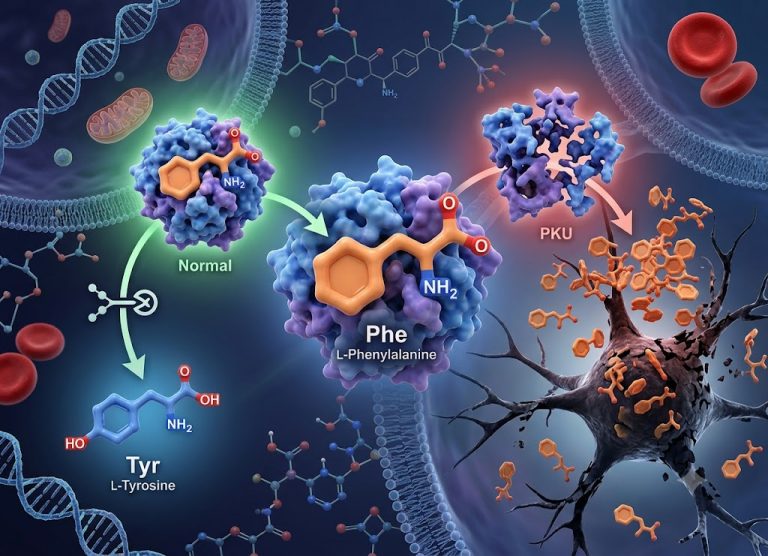
The cause is a missing or faulty enzyme called iduronate-2-sulfatase (I2S). Without it, the body cannot break down long sugar chains known as glycosaminoglycans (GAGs). These sugars pile up inside cells and slowly damage organs, joints, connective tissue and, in severe cases, the brain. The damage cannot be reversed.
Babies with Hunter Syndrome usually look healthy at birth. Signs tend to appear between ages 2 and 4, and that is what makes the condition hard to spot. A child may have repeated ear infections, a hernia that keeps coming back, stiff joints or slightly thicker facial features. Each of these looks ordinary on its own, but together they can point to something bigger.
Catching it early matters. Weekly enzyme replacement therapy (ERT) cannot cure Hunter Syndrome, but it can slow its progress and protect organ function. This article covers the 10 key warning signs, how the disease develops, and the tests used to diagnose it.
What is Hunter Syndrome (Mucopolysaccharidosis Type II)?
Hunter Syndrome (MPS II) is a rare inherited disorder. The body lacks the I2S enzyme, so complex sugar molecules build up inside cells all over the body.
Primary Cause of Hunter Syndrome
Hunter Syndrome is caused by a mutation in the IDS gene, which holds the instructions for making I2S. It follows an X-linked recessive pattern, which is why it mostly affects boys.
Girls have two X chromosomes (XX) and boys have one X and one Y (XY). The IDS gene sits on the X chromosome. A boy who inherits the faulty gene from his mother has no second X to make up for it, so he develops the condition.
Girls who inherit one faulty copy are usually carriers. Their other X chromosome carries a working gene that makes enough enzyme to prevent serious illness, although a few have very mild symptoms.
A carrier mother has a 50% chance of passing the faulty gene to each child. Each son has a 50% chance of having Hunter Syndrome, and each daughter has a 50% chance of being a carrier. In very rare cases a girl shows symptoms. This happens through skewed X-inactivation, where her healthy X chromosome is switched off in most of her cells.
The missing enzyme normally breaks down two GAGs, dermatan sulfate and heparan sulfate. When they are not cleared, they collect inside cell compartments called lysosomes and cause the tissue damage seen in this disease.
Body Systems Affected by the Buildup of GAGs
Lysosomes exist in almost every cell, so GAG buildup affects nearly the whole body. It causes inflammation, scarring and gradual organ damage, and the problems usually get worse as the child grows.
- Bones and joints: GAGs collect in cartilage and bone, causing dysostosis multiplex. This brings stiff joints, tight hands, short height, a short neck and a broad chest. It also contributes to the coarse facial look.
- Heart: GAGs thicken and stiffen the heart valves, so they may narrow (stenosis) or leak (regurgitation). The heart muscle can thicken too, and over time this raises the risk of heart failure.
- Airways: Storage in the throat, tongue and tonsils blocks airflow. This leads to noisy breathing, a constantly runny nose, sleep apnea and frequent chest infections. A weak windpipe can add to the problem.
- Brain and nerves: In the severe (neuronopathic) form, GAGs build up in the brain. This causes developmental delay, loss of skills, behavior problems and sometimes hydrocephalus (extra fluid in the brain). Nerves can also be squeezed, as in carpal tunnel syndrome.
- Liver and spleen: Both organs swell (hepatosplenomegaly) as they store excess GAGs, which makes the belly look round and full. Weak connective tissue also makes hernias in the groin and around the navel common.
- Hearing and vision: Almost everyone with Hunter Syndrome has some hearing loss. It can come from fluid in the ear, damage to the inner ear, or both. GAG deposits in the retina or pressure on the optic nerve can affect eyesight.
10 Telltale Signs of Hunter Syndrome
Coarse Facial Features
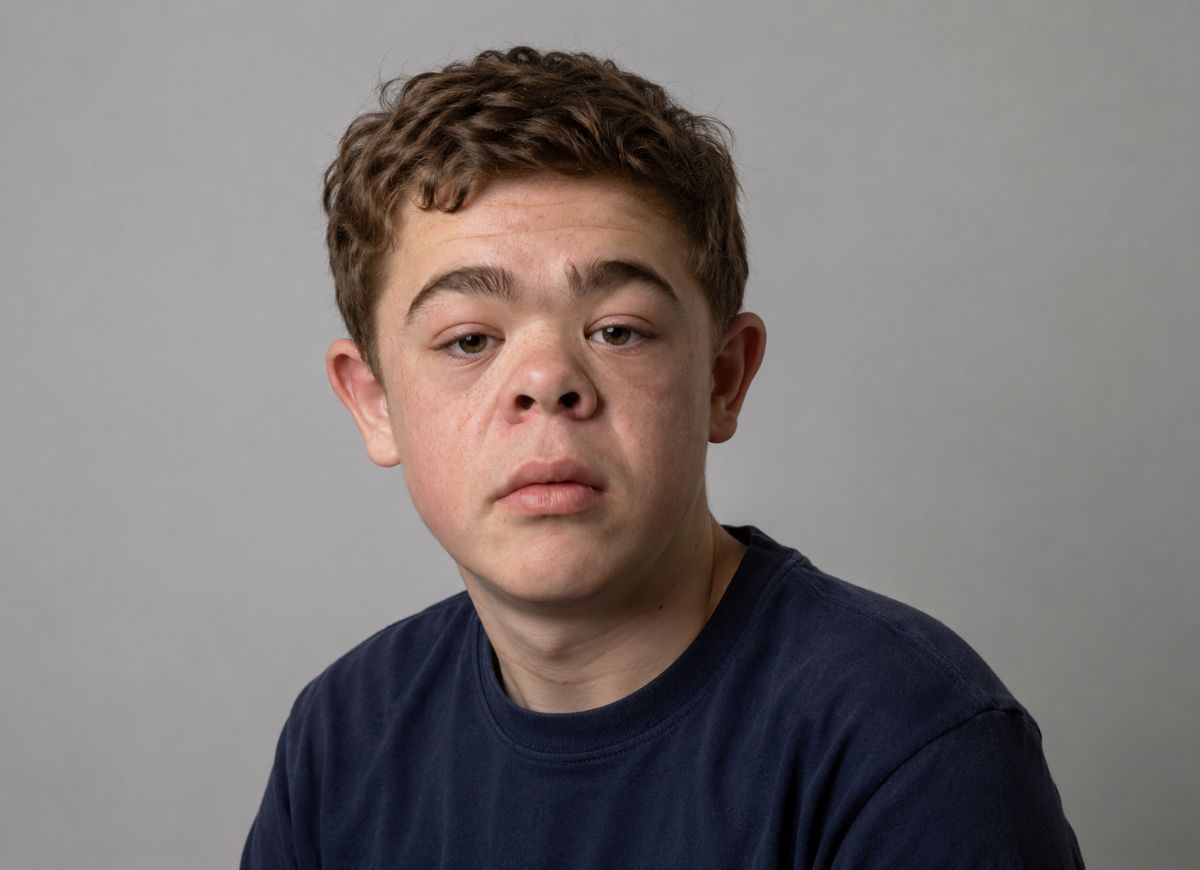
This is one of the best-known signs. The nose bridge becomes broad, the nostrils and lips look thick, the cheeks look full and the tongue grows large (macroglossia), sometimes sticking out of the mouth. The skin may feel thick and firm.
These changes come on slowly. A child can look typical at birth, and the features become clearer through early childhood as GAGs keep building up.
Enlarged Head (Macrocephaly)
Many children have a head that is larger than usual for their age. The skull bones thicken because of GAG deposits. In some children, communicating hydrocephalus adds to it. Here, cerebrospinal fluid (CSF) collects in the brain’s ventricles, raises pressure inside the skull and can make the head bigger.
Short Neck and Broad Chest
Dysostosis multiplex affects the whole skeleton. The neck becomes short and thick, which limits head movement. The chest often turns broad and barrel-shaped, with flared ribs. These changes are more than cosmetic. They can reduce breathing capacity and make the neck less mobile.
Joint Stiffness and Contractures
Stiff joints are often among the first signs. A child may struggle to straighten the arms or legs fully. This contracture gets worse over time and affects both large and small joints, such as the shoulders, elbows, hips, knees and fingers.
Walking, running and gripping things gradually become harder. Unlike arthritis, the stiffness usually does not hurt in the early stages, but it seriously limits movement and independence.
Claw-Like Hands
Tight small joints in the fingers give the hands a claw-like shape. The fingers stay bent and cannot straighten, which makes writing, buttoning clothes and picking up small objects difficult.
Carpal tunnel syndrome often comes along with this. GAGs press on the median nerve in the wrist and cause pain, numbness and tingling in the hand.
Short Stature (Dwarfism)
Children usually grow normally for the first few years. Growth then slows sharply around age 4 or 5 and often stops in early adolescence, so adult height ends up well below average.
Dysostosis multiplex is the reason. Poorly formed vertebrae, thick long bones and abnormal bone ends (epiphyses) stop the skeleton from reaching its full size.
Enlarged Liver and Spleen (Hepatosplenomegaly)
The liver and spleen filter blood and are very active organs, so they store a lot of GAGs. They become larger and firmer, and the belly looks swollen. This is very common in Hunter Syndrome.
It may cause no symptoms at first, but it clearly shows that the disease affects the whole body. Hernias in the groin or navel often appear because the abdominal wall is weak.
Recurrent Ear and Respiratory Infections
Children with Hunter Syndrome catch infections again and again. Ear infections (otitis media) are especially common. They leave fluid in the middle ear and can cause conductive hearing loss.
Colds, sinus infections and bronchitis also keep returning. GAGs narrow the airways by building up in the tongue, tonsils, adenoids and windpipe. Mucus gets trapped and bacteria grow easily. The result is a constant runny nose and noisy breathing.
Cardiovascular Complications
The heart is one of the most seriously affected organs, and heart disease is a leading cause of death in this condition. GAGs settle on the valves, mainly the mitral and aortic valves. They thicken and stiffen, and then leak (regurgitation) or narrow (stenosis).
The heart has to work harder, which can enlarge the heart muscle (cardiomyopathy) and eventually cause heart failure. Artery walls can thicken as well, which contributes to high blood pressure.
Developmental Delay and Cognitive Decline
Hunter Syndrome comes in two forms: attenuated (milder, without brain involvement) and severe (neuronopathic). In the severe form, children sit, crawl and walk on time at first. Between ages 2 and 6, their progress stalls and they begin to lose skills they had already learned.
Speech is usually the first skill to go, followed by thinking, memory and learning ability. Heparan sulfate collecting in brain cells causes this. Hyperactivity, aggression and poor impulse control are also common and can be hard to manage. In the attenuated form, intelligence is usually preserved.
Hearing loss is another almost universal feature and can greatly affect communication and learning. It often has more than one cause. It may be conductive, from long-term fluid in the middle ear and Eustachian tube problems, or sensorineural, from damage to the cochlea or auditory nerve. Many patients have a mix of both. Combined with cognitive decline, hearing loss makes communication very difficult.
Hunter Syndrome Diagnosis
Doctors reach a diagnosis step by step, starting with observation and ending with lab and genetic tests.
- Clinical exam: The doctor reviews the medical history and looks for signs such as coarse facial features, an enlarged liver and spleen, stiff joints and developmental delay.
- Urine test: If an MPS disorder seems likely, a urine sample is checked for high GAG levels. In Hunter Syndrome, dermatan sulfate and heparan sulfate are raised. A positive result is a strong hint but not proof.
- Enzyme assay: This test measures I2S activity in blood cells (leukocytes) or in skin cells from a biopsy (fibroblasts). Low or absent activity confirms Hunter Syndrome (MPS II).
- Genetic testing: The IDS gene on the X chromosome is analyzed to find the exact mutation. This gives final confirmation, helps with genetic counseling, shows whether female relatives are carriers, and can give clues about how severe the disease may be.
Treatment Options For Managing Hunter Syndrome
There is no cure. Treatment aims to control symptoms, slow the disease and improve quality of life.
The main treatment is Enzyme Replacement Therapy (ERT). The child receives a weekly intravenous infusion of idursulfase (sold as Elaprase), a lab-made version of the missing enzyme. ERT helps clear stored GAGs from the body. It can improve walking, shrink the liver and spleen, and support breathing.
Standard ERT has an important limit. It cannot cross the blood-brain barrier, so it does not treat the brain damage and mental decline of the severe form.
Care beyond ERT involves a team and is matched to each child’s needs:
- Therapy: Physical and occupational therapy keep joints moving and maintain function.
- Surgery: Operations are often needed for hernias, carpal tunnel syndrome and spinal cord compression (cervical stenosis).
- Hearing support: Hearing aids or cochlear implants may be required as hearing worsens.
- Specialist follow-up: Cardiologists monitor heart valves, pulmonologists manage breathing problems such as sleep apnea, and orthopedic surgeons handle bone issues.
- Palliative care: It helps control pain and keep the child comfortable, especially in the severe form.
Hunter Syndrome vs. Hurler Syndrome
Hunter Syndrome (MPS II) and Hurler Syndrome (MPS I) are both lysosomal storage disorders. Both involve GAG buildup and share many features, including coarse faces, bone changes and enlarged organs. They are still different conditions, and telling them apart matters for diagnosis and genetic counseling.
- Inheritance: Hunter Syndrome is X-linked recessive, so it almost only affects boys, who get the faulty gene from their mothers. Hurler Syndrome is autosomal recessive. A child needs a faulty gene from both parents, and boys and girls are affected equally.
- Enzyme involved: Hunter Syndrome comes from a lack of iduronate-2-sulfatase (I2S). Hurler Syndrome comes from a lack of alpha-L-iduronidase.
- Cornea: Clouding of the cornea is a hallmark of Hurler Syndrome and often harms vision. It is typically absent in Hunter Syndrome, which is a key clue for doctors.
Different Levels of Severity in Hunter Syndrome
Hunter Syndrome ranges from mild to severe. It is grouped into an attenuated (milder) form and a severe form, depending mainly on whether the brain is involved.
Severity often follows the type of IDS mutation. Large deletions or rearrangements usually cause the severe form, while smaller point mutations are more often linked to the attenuated form. Knowing which form a child has is important because it shapes the outlook, life expectancy and care plan.
- Severe (neuronopathic) form: This is the more common and faster-moving type. Symptoms usually start between ages 2 and 4. Children face major neurological decline, with serious cognitive impairment, loss of skills and behavior problems. Physical symptoms advance quickly, and life expectancy is greatly reduced, often not beyond the teenage years.
- Attenuated (non-neuronopathic) form: Symptoms develop more slowly, and intelligence is normal or close to normal. There is no deep cognitive decline. Physical challenges remain, including stiff joints, heart disease and breathing problems, but people live much longer. With good medical care, some reach adulthood and even their 50s or 60s.
FAQs
1. What is the life expectancy of someone with Hunter syndrome?
It depends on severity. People with the severe form, which includes progressive cognitive decline, usually have a shortened lifespan, often into their teens or early twenties. Those with the attenuated form keep their cognitive abilities and often live well into adulthood, into their fifties, sixties or longer, with proper care.
2. At what age is Hunter syndrome usually diagnosed?
Usually between ages 2 and 4. Babies look normal at birth, so the condition stays hidden until sugar buildup starts to cause visible changes, stiff joints or developmental delay in toddlerhood.
3. Does Hunter syndrome run in families?
Yes. It is inherited through an X-linked recessive pattern, with the altered gene on the X chromosome. Women can carry the gene without symptoms and pass it to their children. If a mother is a carrier, each son has a 50% chance of developing Hunter syndrome and each daughter has a 50% chance of being a carrier.
4. What is Stage 1 of Huntington’s disease?
Hunter syndrome and Huntington’s disease are often confused because the names sound alike, but they are completely unrelated. Huntington’s is a progressive neurological disorder that begins in adulthood. In Stage 1, the person still functions fully at home and at work. Symptoms are subtle and include mild muscle twitches (chorea), slight coordination problems, minor memory lapses, and small changes in personality or mood.
5. How does Hunter syndrome happen?
A mutation in the IDS gene stops the body from making the enzyme iduronate-2-sulfatase (I2S). Cells use this enzyme in their recycling centers (lysosomes) to break down complex sugars. Without it, the sugars keep piling up, crowd the cells and eventually damage organs throughout the body.
6. Is Hunter syndrome only in males?
Almost always. Boys have only one X chromosome, so one faulty copy of the gene means they will develop the condition. Girls have two X chromosomes, and the healthy one usually makes up for the faulty one, so they are carriers without symptoms. Cases in girls are extremely rare and happen only in unusual genetic situations.
7. Does Hunter syndrome cause intellectual disability?
Mainly in the severe form, which affects roughly two-thirds of diagnosed individuals. In these children, sugar buildup harms the central nervous system, leading to loss of milestones, behavior problems and cognitive decline. People with the mild form develop normal intelligence.
Conclusion
A rare genetic disorder like Hunter syndrome can feel overwhelming for any parent, but knowing the signs early is a real advantage. The condition hides behind everyday problems such as constant colds, ear infections and stubborn hernias, so it takes attentive parents and alert doctors to notice it.
The 10 warning signs above are connected pieces of one genetic puzzle, and seeing them together is the key to a timely diagnosis. There is no cure yet, but an early diagnosis lets doctors start enzyme replacement therapy quickly and slow the physical damage.
Advocate for your child’s development, trust your instincts when milestones stall, and ask for targeted genetic testing. That can turn uncertainty into a clear plan for care and long-term support.