
What Is the Whipple Procedure? Causes, Benefits, Risks, and Recovery
What happens when a serious disease requires a surgeon to remove and reconstruct part of the digestive system? One possible answer is the Whipple procedure, also called pancreaticoduodenectomy. It is one of the most complex operations performed in abdominal surgery and is commonly used for conditions involving the pancreas, bile duct, small intestine, and nearby organs.
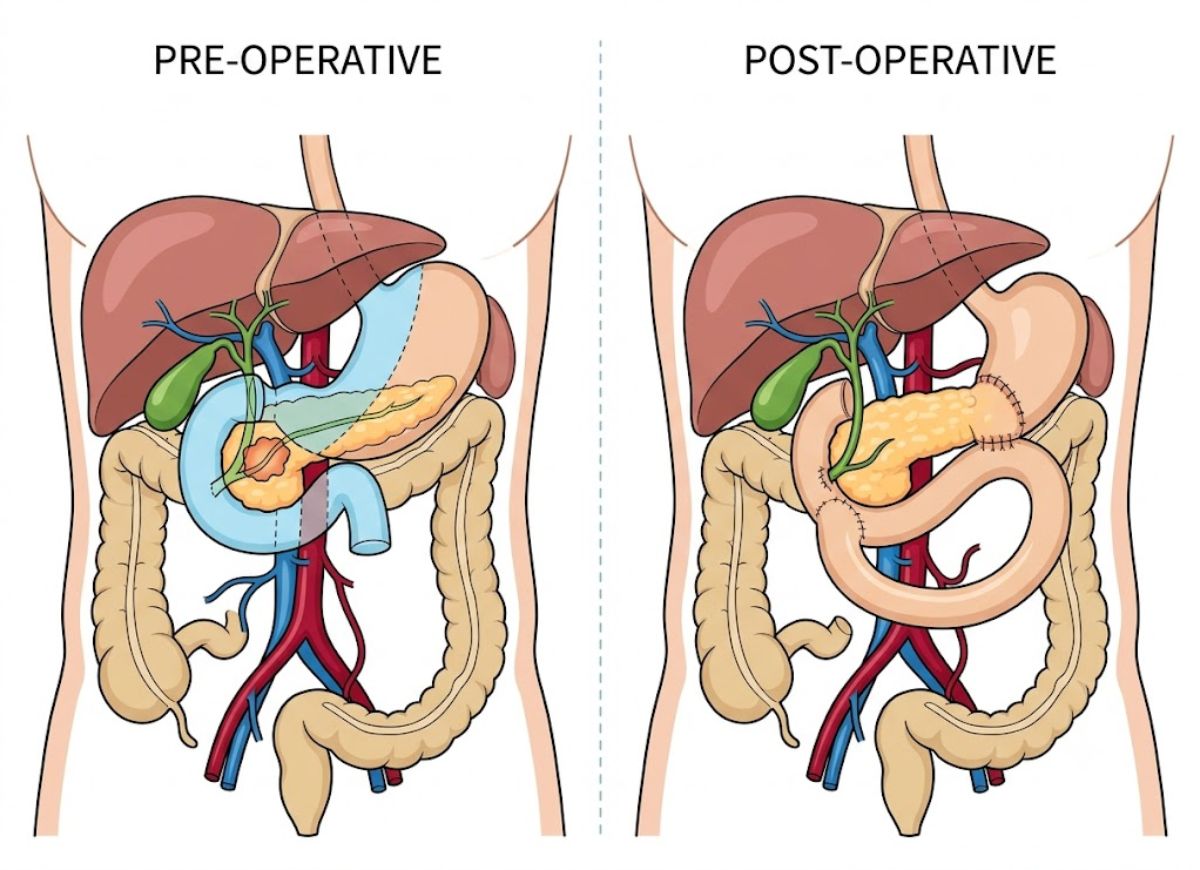
The Whipple Procedure removes the head of the pancreas along with part of the small intestine called the duodenum, the gallbladder, and a section of the bile duct. The surgeon then reconnects the remaining digestive organs so that food, bile, and digestive enzymes can continue moving through the digestive tract. Although it is an extensive operation, it can provide an important treatment option for selected patients, particularly those with certain pancreatic tumors and other serious diseases.
Thousands of pancreatic operations are performed around the world each year, and the Whipple Procedure remains a major surgical treatment for resectable pancreatic cancer and selected conditions involving the upper digestive tract. Improvements in surgical methods, anesthesia, intensive care, and recovery protocols have helped make the procedure safer than it was in the past.
Even though the whipple procedure may provide significant benefits, it is still a major operation that requires careful preparation and a prolonged recovery. Patients often want to understand why the surgery is necessary, what happens during the operation, what complications may occur, how digestion can change, and how long recovery may take.
Recovery after a whipple procedure is different for every patient. Some people gradually return to their usual routines, while others may require continuing nutritional support, digestive enzymes, blood sugar management, or regular medical follow-up. In this article, we will explain what the Whipple Procedure is, why it is performed, its potential benefits and risks, how reconstruction is carried out, and what patients may experience during recovery.
What is the Whipple Procedure?
The Whipple procedure, medically referred to as a pancreaticoduodenectomy, is a major operation in which surgeons remove the head of the pancreas, the gallbladder, part of the bile duct, and the first section of the small intestine, known as the duodenum.
The operation is mainly used for tumors and other diseases affecting the pancreatic head or nearby structures. For certain cancers that can be completely removed, surgery may provide the possibility of long-term disease control or cure. After the affected organs are removed, the surgeon reconstructs the digestive tract so that food, bile, and pancreatic secretions can once again move through the digestive system.
The pancreas is located behind the stomach and performs two important jobs. It produces insulin and other hormones that help regulate blood sugar, while also producing digestive enzymes that help break down food. Its head sits within the curved section of the duodenum and lies close to important blood vessels and the common bile duct.
Because these structures are located so close together, a tumor in the head of the pancreas may involve nearby tissues. Removing the affected structures together can allow the surgeon to remove the disease while maintaining the necessary digestive connections. Reconstruction is an equally important part of the operation because it restores the pathway needed for digestion and nutrient absorption.
Medical Conditions Whipple Procedure Treats
The Whipple procedure is most commonly associated with cancer, but it may also be recommended for selected non-cancerous or pre-cancerous conditions involving the pancreatic head and surrounding structures.
Pancreatic adenocarcinoma, particularly pancreatic ductal adenocarcinoma, is one of the main reasons this surgery is performed. When the tumor is limited to the pancreatic head and has not spread to distant parts of the body, surgical removal may provide the possibility of long-term disease control or cure.
Cholangiocarcinoma, or bile duct cancer, is another condition that may require a Whipple. When the tumor develops in the lower section of the bile duct as it passes through or near the pancreatic head, removing the affected area may require pancreaticoduodenectomy.
Ampullary cancer develops in the ampulla of Vater, where the bile duct and pancreatic duct empty into the duodenum. Because these tumors may cause symptoms such as jaundice, they can sometimes be identified before other pancreatic cancers. A Whipple procedure is commonly used when surgical removal is appropriate.
Duodenal cancer is uncommon, but tumors arising in the first part of the small intestine may require a Whipple when they are located close to the pancreas.
Certain pre-cancerous or non-cancerous pancreatic growths can also lead to consideration of this operation. Examples include intraductal papillary mucinous neoplasms (IPMNs) and some pancreatic neuroendocrine tumors (PNETs), particularly when removal is recommended because of their size, location, symptoms, or risk of becoming malignant.
In uncommon cases, people with severe chronic pancreatitis may undergo a Whipple when the pancreatic head has become significantly damaged or enlarged and is causing persistent pain or obstruction of the pancreatic or bile ducts.
What Happens During The Surgical Reconstruction?
After the diseased portions have been removed, the reconstruction stage reconnects the remaining organs with the small intestine. The goal is to restore the normal movement of food and allow bile and pancreatic enzymes to enter the digestive tract.
The surgeon generally creates three important connections, called anastomoses. These connections allow digestive fluids to mix with food and help restore digestive function.
A simple way to picture this is to imagine the digestive system as a network of connected pipes. The surgery removes one major junction, and the surgeon must create a new route so that all the necessary fluids and food can continue traveling through the system. The jejunum, which is part of the small intestine, becomes the central connection point.
Pancreaticojejunostomy: The remaining pancreas is connected to the jejunum. This allows pancreatic enzymes to enter the small intestine and participate in digestion. Because pancreatic fluid contains powerful digestive enzymes, a leak from this connection, called a pancreatic fistula, can become a serious complication.
Hepaticojejunostomy (or Choledochojejunostomy): The bile duct coming from the liver is attached to the jejunum. This connection allows bile to reach the small intestine, where it helps with the digestion and absorption of fats.
Gastrojejunostomy (or Duodenojejunostomy): The stomach, or the remaining section of the duodenum in a pylorus-preserving operation, is connected to the jejunum. This restores the route through which food leaves the stomach and enters the small intestine, where it can mix with bile and pancreatic enzymes.
Is the Whipple Procedure a Common Surgery?
The Whipple procedure is not common compared with routine operations such as appendectomy or gallbladder surgery. However, it is considered one of the standard surgical treatments for tumors in the head of the pancreas when the disease is considered resectable.
Because the procedure is technically demanding, it is usually performed at specialized medical centers by surgeons who have extensive experience with pancreatic operations. Hospitals that perform these procedures frequently generally have teams experienced in managing the complex complications that can occur after surgery.
A smaller community hospital may perform very few Whipple procedures, while a major academic hospital or specialized cancer center may perform several each week. Studies have shown an association between higher hospital volume and improved outcomes for complex pancreatic surgery, including lower complication and mortality rates.
For this reason, patients who need a Whipple are often referred to centers with dedicated pancreatic surgery programs. These centers may bring together pancreatic surgeons, oncologists, gastroenterologists, dietitians, nurses, and other specialists to provide coordinated care.
Risks and Potential Complications of the Whipple Procedure
The Whipple procedure carries significant risks because it involves removing several organs and then creating multiple new digestive connections.
Although the surgery can be an important or potentially life-saving treatment, patients may experience short-term complications such as infection, bleeding, blood clots, digestive problems, or leakage from one of the surgical connections. Longer-term issues can include changes in digestion, nutritional deficiencies, pancreatic enzyme insufficiency, and diabetes.
Complications are generally divided into short-term problems that occur during or soon after the hospital stay and longer-term effects that may continue after the initial recovery period. One of the most serious early complications is a leak from the connection between the pancreas and small intestine, known as a pancreatic fistula.
Over time, some patients may develop difficulties controlling blood sugar or digesting food. Modern surgical techniques, improved anesthesia, intensive care, and better postoperative management have helped reduce the risk of death associated with the procedure, while much of current care focuses on preventing, identifying, and treating complications.
The Most Common Immediate Post-operative Risks
The most important early complications following a Whipple include pancreatic fistula, delayed gastric emptying, infection, bleeding, and blood clots. Close monitoring after surgery helps medical teams identify these problems as early as possible.
These complications can occur because the operation is technically complex and creates substantial stress on the body. Prompt treatment can reduce the risk of more serious consequences.
Pancreatic Fistula (Anastomotic Leak): A pancreatic fistula can occur when the connection between the remaining pancreas and small intestine does not heal properly. Pancreatic fluid can then leak into the abdomen and irritate surrounding tissues. Severe cases may result in infection, abscess formation, bleeding, or sepsis. Treatment may include drains, nutritional support, antibiotics, additional procedures, and occasionally another operation.
Delayed Gastric Emptying (DGE): Some patients experience delayed gastric emptying, meaning the stomach takes longer than expected to move food into the small intestine. This may cause nausea, vomiting, bloating, and difficulty eating. A nasogastric tube may be needed temporarily while the stomach recovers.
Infection: Any major operation carries an infection risk. Following a Whipple, infections may develop at the surgical incision, inside the abdomen, or in the lungs. Abdominal infections can sometimes be associated with a pancreatic leak or other postoperative complication.
Post-operative Bleeding: Bleeding can develop from blood vessels involved during the operation or from one of the surgical connections. Depending on its severity, treatment may involve blood transfusions, an interventional radiology procedure, or another surgery.
Blood Clots: Major abdominal surgery and reduced mobility can increase the risk of deep vein thrombosis (DVT). A clot can potentially travel to the lungs and cause a pulmonary embolism (PE), which can be life-threatening.
Potential Long-term Complications After Recovery
The potential long-term complications after a Whipple procedure are often related to changes in digestion and pancreatic function.
Even after recovering from the operation itself, some patients experience lasting changes that require dietary adjustments, medication, enzyme replacement, or regular medical monitoring.
The pancreas produces enzymes that help digest fats, proteins, and carbohydrates. After part of the pancreas is removed and the digestive tract is reconstructed, some patients may not produce or deliver enough enzymes into the small intestine.
This condition is known as pancreatic exocrine insufficiency (PEI). It can cause bloating, gas, abdominal discomfort, fatty stools, and unintended weight loss. Pancreatic Enzyme Replacement Therapy (PERT) can help by supplying digestive enzymes in prescription capsules taken with meals and snacks.
The pancreatic head also contains insulin-producing cells. Removing part of the pancreas can reduce insulin production and may lead to new-onset diabetes. People who already have impaired blood sugar control may have a greater risk. Management may involve blood glucose monitoring, dietary adjustments, oral medicines, or insulin.
Maintaining weight and adequate nutrition can also be challenging. Some patients may develop deficiencies in vitamins and minerals and require nutritional supplements. A dietitian familiar with pancreatic surgery can help create an appropriate eating plan.
Scar tissue can occasionally develop around the new surgical connections and cause narrowing. A bile duct stricture can interfere with bile flow and lead to jaundice, while narrowing of a pancreatic duct may contribute to pain or pancreatitis. Depending on the problem, an endoscopic procedure such as ERCP and stent placement may be required.
Success Rates for the Whipple Procedure
The safety of the Whipple procedure has improved considerably over the past several decades. One important measure of this improvement is the reduction in operative mortality.
Historically, the procedure carried a much higher risk of death. Today, experienced high-volume centers generally report substantially lower operative mortality, although the exact risk varies according to the patient’s health, disease, surgical complexity, and the medical center.
The meaning of surgical success has also expanded. Survival through the operation is only one part of the outcome. Medical teams also focus on reducing complications, supporting recovery, preserving nutritional health, and helping patients maintain their quality of life.
Preoperative optimization, minimally invasive techniques for selected patients, and Enhanced Recovery After Surgery (ERAS) programs may all contribute to better recovery. These approaches can encourage earlier movement, improve pain control, support earlier nutrition, and reduce the physical stress associated with surgery.
The overall goal is to minimize complications such as pancreatic fistula and delayed gastric emptying, reduce unnecessary hospital time, and help patients return to everyday activities safely.
Recovery Process from a Whipple Procedure
Recovery from a Whipple procedure occurs in several stages. It usually begins with a hospital stay that may last around one to two weeks and continues with several months of healing and adjustment at home.
During this period, doctors monitor the patient closely for complications, control pain, gradually reintroduce food, and encourage physical activity. Full recovery can take several months, and some patients may need permanent changes in diet, enzyme replacement, or other forms of medical support.
The first stage takes place in the hospital and is focused on close monitoring and stabilization. Some patients spend the first day or two in an intensive care or high-dependency setting. Pain may be controlled using an epidural or patient-controlled analgesia system.
Patients may initially have several tubes and drains to remove fluid, decompress the stomach, monitor surgical drainage, and track urine output.
As the patient becomes more stable, care generally moves to a surgical ward. The focus then shifts toward walking, breathing exercises, gradual nutritional intake, and preparing for discharge.
The Typical Hospital and Initial Recovery Period
The typical hospital stay after a Whipple procedure is often around 7 to 14 days, although complications or other medical issues can make it longer. The first 24 to 48 hours may involve close monitoring in an ICU or specialized postoperative unit.
During this period, medical staff monitor vital signs, oxygen levels, heart function, blood pressure, fluid balance, and other important measures. Effective pain control allows patients to breathe deeply, cough, and begin moving safely.
Several tubes and drains may be present during the first few days. A nasogastric tube may be used to keep the stomach decompressed, while abdominal drains help remove fluid from the surgical area and allow doctors to monitor for possible pancreatic leakage.
A urinary catheter may also be used temporarily. As bowel activity returns, the medical team gradually removes these devices when they are no longer needed.
Food is reintroduced slowly. Patients may begin with small amounts of clear liquids before progressing to more substantial foods as tolerated.
Physical and occupational therapists may help patients get out of bed, walk, and regain independence with everyday activities. Discharge generally occurs when the patient’s pain is manageable with oral medication, food intake is adequate, and they can move safely with an appropriate level of assistance.
Dietary Changes After the Whipple Procedure
Dietary changes are often an important part of recovery because the digestive anatomy has been altered and pancreatic function may be reduced.
The main goals are to provide enough calories and nutrients for healing while reducing problems such as bloating, nausea, diarrhea, and abdominal discomfort. Rather than eating three large meals, many patients find it easier to eat smaller meals more frequently throughout the day.
Six to eight small meals or snacks may be recommended during recovery depending on individual nutritional needs. Smaller portions can place less demand on the altered digestive system and make it easier to consume enough nutrition.
At first, some patients may need to limit fatty foods because fat digestion can be more difficult after surgery. Lean sources of protein, such as chicken, fish, and eggs, can support healing, while complex carbohydrates can provide energy. Highly sugary foods may cause problems for some people, including rapid movement of food into the intestine.
Many patients need pancreatic enzyme replacement therapy to help digest food. These prescription enzymes are usually taken with meals and snacks, with the dose adjusted according to symptoms and dietary intake.
Adequate hydration is also important. Since part of the small intestine has been removed and digestion has changed, some patients may develop deficiencies involving vitamins or minerals. Their healthcare team may recommend blood tests and supplements when necessary.
Long-term Outlook For Patients
The long-term outlook after a Whipple procedure depends largely on why the operation was performed and, when cancer is involved, factors such as the cancer type, stage, lymph node involvement, and whether the tumor was completely removed.
For patients with pancreatic cancer, surgery may provide the possibility of long-term survival when the cancer is surgically removable. Additional treatment such as chemotherapy, and sometimes radiation, may be recommended after recovery to reduce the risk of recurrence.
Long-term follow-up is important for all patients. Follow-up may involve regular appointments, blood tests, imaging studies, and monitoring for digestive or metabolic complications. In people treated for cancer, tests such as CA 19-9 may be used along with imaging and clinical assessment.
Managing pancreatic enzyme insufficiency and diabetes, when present, can become an ongoing part of care. Patients may also need to adjust their eating habits and monitor their nutritional status.
Although life after a Whipple may involve a period of adjustment, many people eventually return to active daily lives. Support from family, healthcare professionals, dietitians, and patient support groups can make the transition easier.
How to Prepare for the Whipple Procedure
Preparing for a Whipple procedure involves more than simply getting ready for the hospital stay. Patients may benefit from medical evaluation, nutritional improvement, physical conditioning, and practical planning for the recovery period.
This preparation is sometimes described as prehabilitation. The goal is to help the patient enter surgery in the strongest condition possible and make recovery easier.
The preparation process usually involves a team that may include the surgeon, anesthesiologist, dietitian, physical therapist, and other specialists. The patient’s family or caregivers can also play an important role.
The first step is a complete medical evaluation to determine whether the patient can safely undergo such a major operation. Doctors assess the disease itself as well as heart, lung, kidney, liver, nutritional, and overall health.
Once surgery is planned, the focus may shift to improving nutrition, maintaining physical activity, stopping smoking, limiting or avoiding alcohol as advised, and arranging support for the period after discharge.
Who is Considered a Suitable Candidate for this Surgery?
A suitable candidate for the Whipple procedure generally has disease that can be surgically removed and is healthy enough to tolerate a major operation and a prolonged recovery.
The decision is usually made after a multidisciplinary evaluation. Doctors weigh the potential benefit of removing the disease against the risks associated with surgery.
The criteria generally fall into two broad areas: oncologic factors and physiologic factors.
Oncologic criteria concern the tumor or disease. The most important consideration is whether the tumor is resectable, meaning surgeons believe it can be removed completely or with an appropriate surgical margin. For pancreatic cancer, the absence of distant metastases is an important factor.
Cancer that has spread to distant organs such as the liver, lungs, or peritoneum generally requires a different treatment strategy because surgery on the pancreatic head alone would not address the entire disease.
Doctors also evaluate whether the tumor involves major blood vessels. Limited involvement of certain veins may sometimes be treated with vascular reconstruction, while extensive involvement of critical arteries can make surgery unsuitable.
Physiologic criteria focus on the patient’s overall health. The person must be able to tolerate a major operation and the recovery period.
Adequate heart and lung function is important because anesthesia and major surgery place significant stress on these systems. Severe frailty or malnutrition can increase the risk of complications, so nutritional support may be provided before surgery.
Liver and kidney function are also assessed because these organs play important roles in medication processing, fluid balance, and recovery. Other serious medical conditions are considered carefully when determining whether the operation is appropriate.
Medical Tests Required Before the Procedure
A detailed series of medical tests is generally performed before a Whipple procedure. These tests help confirm the diagnosis, determine the extent of disease, map important anatomy, and evaluate the patient’s ability to tolerate surgery.
A multiphase contrast-enhanced CT scan of the abdomen is commonly an important part of the evaluation. It can show the size and location of a tumor and its relationship to nearby blood vessels and organs. MRI or MRCP may also be used when more detailed information about the pancreas or bile ducts is needed.
Endoscopic Ultrasound (EUS) with biopsy involves passing a thin flexible instrument through the mouth and into the upper digestive tract. An ultrasound probe provides detailed images of the pancreas, and a needle can sometimes be used to collect a tissue sample when a biopsy is required.
Blood testing may include liver function tests, kidney function tests, a complete blood count, nutritional markers, and coagulation studies. For some cancer patients, CA 19-9 may also be measured as part of the overall evaluation, although it is not by itself a definitive cancer test.
Because the operation places considerable stress on the body, heart and lung assessments may also be necessary. Depending on the patient’s age and medical history, testing can include an electrocardiogram, echocardiogram, pulmonary function testing, or consultations with cardiology or pulmonology specialists.
Essential Steps to Take Before Going to the Hospital
Preparing for the hospital stay should include physical preparation, practical arrangements, and emotional support.
Working with a dietitian can help ensure that the patient receives adequate protein and calories before surgery. If jaundice, poor appetite, or digestive problems make eating difficult, the medical team may recommend nutritional drinks or other nutritional support.
Unless the medical team advises otherwise, gentle exercise such as regular walking can help maintain strength and endurance before surgery.
Smoking can interfere with wound healing and increase the risk of respiratory complications. Alcohol can also affect overall health and may interact with medications or contribute to other surgical risks. Patients should follow their healthcare team’s recommendations about stopping smoking and alcohol before surgery.
Because recovery can be demanding, arranging help at home before admission is important. Family members, friends, or professional caregivers may assist with meals, transportation, household tasks, medication management, and appointments.
For the hospital stay, pack comfortable clothing, non-slip footwear, personal toiletries, a long phone charger, and important documents. Bring an updated list of medications, allergies, medical conditions, and emergency contacts.
It is also helpful to understand the expected surgical and recovery process. Patients should discuss concerns with their surgical team and identify a family member or caregiver who can help communicate with healthcare professionals during the hospital stay.
Different Approaches and Alternatives to the Whipple Procedure
There are several surgical approaches to the Whipple procedure, ranging from traditional open surgery to minimally invasive methods. For patients who cannot safely undergo the operation, non-surgical treatments may be considered instead.
The most appropriate option depends on the patient’s disease, overall health, anatomy, treatment goals, and the experience of the surgical team.
The Difference Between a Standard and a Pylorus-preserving Whipple
The main difference between a standard Whipple and a pylorus-preserving pancreaticoduodenectomy (PPPD) is how much of the stomach is removed.
During a standard Whipple, the surgeon removes the pancreatic head, duodenum, gallbladder, part of the bile duct, and a portion of the lower stomach that includes the pylorus. The pylorus is a muscular valve that regulates the movement of food from the stomach into the small intestine.
A pylorus-preserving Whipple keeps the stomach and pylorus intact. The stomach is then connected to the jejunum after the affected section of the duodenum is removed.
The goal of preserving the pylorus is to maintain more of the normal stomach anatomy, although the suitability of this technique depends on the patient’s disease and surgical circumstances.
A Robotic or Laparoscopic Whipple and Traditional Open Surgery
The main difference between minimally invasive Whipple surgery and traditional open surgery is how the surgeon reaches the abdominal organs.
Traditional open surgery uses a larger abdominal incision that gives the surgeon direct access to the operative area.
Laparoscopic surgery uses several smaller incisions through which a camera and specialized instruments are inserted. Robotic-assisted surgery also uses small incisions, while allowing the surgeon to control instruments with a high-definition three-dimensional view and articulated movements.
Both approaches are intended to achieve the same fundamental goal: safely remove the disease and reconstruct the digestive system.
Potential benefits of minimally invasive approaches can include smaller incisions, reduced blood loss, less postoperative discomfort, and a shorter hospital stay in appropriately selected patients. However, the exact benefits vary, and not every patient is a candidate for a minimally invasive Whipple.
Because a Whipple is technically demanding, minimally invasive versions require extensive training and experience. These operations are generally best performed by teams that regularly perform complex pancreatic surgery.
Minimally invasive procedures can sometimes take longer than open surgery, particularly while a surgical team is gaining experience with the technique. Robotic equipment can also increase procedural costs.
Non-surgical Alternatives for Conditions Treated by the Whipple Procedure
For some patients, non-surgical treatments are used when a Whipple procedure is not appropriate. This may occur when cancer has spread to distant organs, when a tumor cannot be safely removed because of extensive involvement of major blood vessels, or when other health problems make major surgery too risky.
In these situations, treatment may focus on controlling the disease, slowing its progression, and relieving symptoms.
Systemic chemotherapy is commonly used for advanced pancreatic cancer. Depending on the disease and treatment plan, radiation therapy may also be considered, particularly for certain locally advanced tumors.
Stereotactic Body Radiation Therapy (SBRT) is one form of focused radiation that can deliver high doses to a specific tumor over a relatively short treatment course in selected cases.
Endoscopic treatments can also help relieve blockages. If a tumor blocks the bile duct and causes jaundice, an ERCP may be used to place a stent that keeps the duct open. If the duodenum becomes obstructed, an intestinal stent may sometimes be placed to improve the passage of food.
Clinical trials may also be available. Depending on the disease, these studies can investigate targeted therapies, immunotherapies, or other newer treatment strategies.
How One Finds an Experienced Surgeon or High-volume Hospital For this Procedure
Choosing an experienced pancreatic surgeon and a medical center that regularly performs Whipple procedures can be an important part of treatment planning.
High-volume centers generally have specialized teams familiar with complex pancreatic operations and their possible complications. Research has found an association between greater experience with these procedures and better surgical outcomes.
Patients can begin by asking their gastroenterologist, oncologist, or primary physician for referrals to pancreatic surgery centers. They can then research hospitals and surgeons and compare the services available.
The National Cancer Institute (NCI) provides information about designated Comprehensive Cancer Centers in the United States. Organizations such as the Pancreatic Cancer Action Network (PanCAN) also provide resources for patients searching for pancreatic cancer specialists and treatment centers.
When meeting with a potential surgeon, patients can ask specific questions about experience and outcomes. Useful questions include: “How many Whipple procedures do you perform each year?”, “How many does this hospital perform annually?”, and “What are your complication and mortality rates?”
Understanding the experience of both the surgeon and the medical center can help patients have a more informed discussion about where their procedure should be performed.
FAQs
1. Can you live a normal life after Whipple surgery?
Yes, many people are able to return to active and meaningful lives after Whipple surgery. However, recovery can take several months because the operation changes the digestive system. Some patients need ongoing dietary adjustments, pancreatic enzyme replacement, blood sugar monitoring, or other forms of medical support. With appropriate follow-up and nutrition care, many people gradually return to their usual routines.
2. Is a Whipple the hardest surgery?
The Whipple Procedure is considered one of the more complex abdominal operations because several organs are removed and multiple new digestive connections must be created. The pancreas is also located close to important blood vessels and ducts, making the procedure technically demanding. Experienced surgical teams and modern postoperative care have improved the safety of the operation.
3. What is the survival rate for Whipple surgery?
Survival after a Whipple procedure varies considerably depending on the reason for surgery, the type and stage of disease, whether the tumor can be completely removed, and the patient’s overall health.
For pancreatic cancer, outcomes are generally influenced by factors such as tumor stage, lymph node involvement, surgical margins, response to additional treatment, and overall medical condition. Surgery may provide an important chance for long-term survival when the cancer is resectable.
4. What are the disadvantages of Whipple surgery?
Whipple surgery is a major operation and can involve a long recovery period. Potential disadvantages include infection, bleeding, digestive changes, delayed stomach emptying, pancreatic enzyme insufficiency, weight loss, nutritional deficiencies, and an increased risk of diabetes. Some patients require long-term enzyme replacement, dietary adjustments, or medical monitoring.
5. Is a 3 cm pancreatic tumor big?
A 3 cm pancreatic tumor is a significant finding, but size alone does not determine how serious the condition is or whether surgery is possible. Doctors also consider the tumor’s location, type, involvement of nearby blood vessels, lymph nodes, distant spread, and the patient’s overall health. Imaging and, when appropriate, biopsy results help guide treatment decisions.
6. How many Whipple surgeries are successful?
Outcomes for Whipple surgery have improved, particularly at experienced high-volume centers. However, the meaning of “successful” can vary. It may refer to safely completing the operation, removing the disease, avoiding major complications, or achieving long-term disease control. Individual results depend on the patient’s condition and the reason for surgery.
7. How painful is Whipple surgery recovery?
Whipple surgery recovery can involve significant discomfort, especially during the first several days and weeks. Hospitals use pain medicines and other strategies to control postoperative pain and help patients move and breathe comfortably. Discomfort generally decreases as healing progresses, although energy, appetite, and digestive function may take several months to return to a new baseline.
Conclusion
The whipple procedure is a complex operation that can be an important treatment for selected cancers and other serious conditions involving the pancreas, bile duct, duodenum, and surrounding digestive structures. Although the surgery involves removing and reconnecting several organs, advances in surgical and postoperative care have improved the ability of many patients to recover.
Understanding why the operation is recommended, how it is performed, its possible complications, and what recovery involves can help patients and families prepare for the treatment journey.
Recovery is not the same for everyone. Some people may require dietary changes, pancreatic enzymes, blood sugar management, or long-term follow-up. Working closely with an experienced healthcare team can help identify complications early, support nutritional health, and make the transition back to daily life smoother.