
Lone Star Tick Bite: Symptoms, Risks, and When to See a Doctor
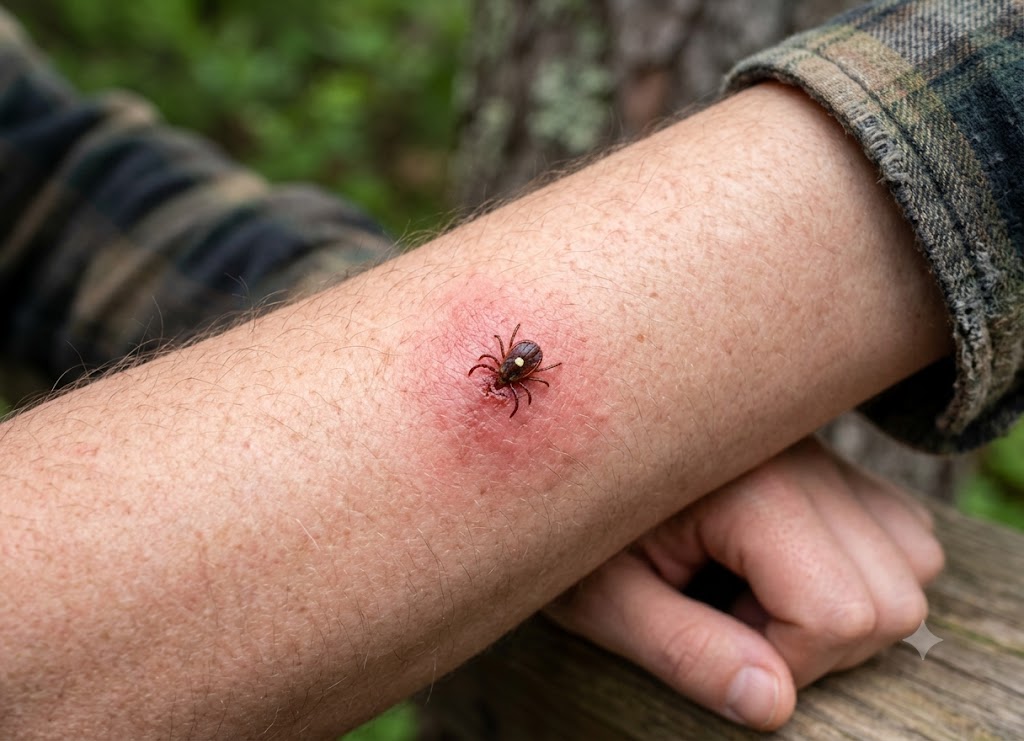
A bite from a lone star tick isn’t always just a small itchy bump. This tick thrives across much of the eastern, southeastern, and south-central United States, and it has a reputation for biting aggressively. Some people walk away with nothing more than mild skin irritation, while others go on to develop fever, a spreading rash, body aches, swollen glands, or stomach trouble. One of its most talked-about effects is alpha-gal syndrome a delayed-onset allergy to red meat and other products that come from mammals.
Knowing what a normal bite reaction looks like versus a warning sign can help you decide whether to just watch and wait or head to a doctor. This tick has been connected to conditions such as ehrlichiosis, tularemia, Southern tick-associated rash illness (STARI), Heartland virus disease, and alpha-gal syndrome. Some symptoms take days to show up after the bite itself, while an alpha-gal reaction typically doesn’t appear until hours after eating beef, pork, lamb, or similar meat. Below, we walk through the symptoms, the risks, how to prevent bites, and when it’s time to call a professional.
The symptoms and signs of a Lone Star tick bite
Right after a bite, you’ll usually notice redness, itching, and some swelling at the site and in some cases, a rash that spreads outward in a rough circle. These early reactions can be followed later by more serious, body-wide symptoms if the tick happened to be carrying a pathogen. It helps to look at both what the bite itself looks like and how symptoms might change over the following days.
The Cutaneous Evaluation of the Bite
Soon after the tick attaches, the skin around the feeding site usually puffs up into a small, red, raised bump not unlike an unusually bad mosquito bite. This happens because your body is reacting to compounds in the tick’s saliva, including natural blood thinners and mild numbing agents that let the tick feed without you noticing right away.
Tracking Lone Star Tick Symptoms in Humans
Doctors generally split lone star tick symptoms into two stages: an early phase limited to the skin, and a later, body-wide phase that signals an actual infection has taken hold.
Early Cutaneous Phase (Hours to 1 Week)
Intense Localized Pruritus: One of the clearest signs of a lone star tick bite is how intensely it itches right at the attachment point. That itch and the soreness that comes with it can stick around for days even after you’ve removed the tick.
The STARI Manifestation: Within about a week, some people develop Southern Tick-Associated Rash Illness (STARI), a rash that expands outward to three inches or more, often with a lighter, clearer patch in the middle that gives it a bullseye-like look.
Diagnostic Note: A STARI rash can look a lot like the bullseye rash tied to Lyme disease, but lone star ticks don’t actually carry Lyme. STARI tends to be smaller, shows up faster, keeps a more even circular shape, and may have a scaly or slightly blistered center.
Contrast with a Simple Reaction: A bite that isn’t infected stays put it might itch a lot and swell a little, but the redness won’t creep outward from the puncture site over time.
Delayed Systemic Phase (Days to Weeks)
If the tick was infected and passed a pathogen into your bloodstream, the localized itching and redness can give way to a full-body illness such as ehrlichiosis, Heartland virus, or tularemia.
Febrile Spikes and Chills: A sudden, unexplained fever that shows up along with shaking, chills, and drenching night sweats.
Profound Malaise: A heavy, whole-body tiredness that feels far worse than what your day-to-day activity would explain.
Persistent Headaches: Headaches that are severe, ongoing, and often worse when a fever is also present.
Structural Body Aches: Aching muscles and deep joint pain that shows up without any obvious cause, like a hard workout.
Gastrointestinal Distress: The infection can also upset your stomach, leading to nausea, vomiting, or diarrhea.
Swollen Lymph Nodes: Nodes near the bite often in the groin, armpit, or neck can swell up, feel firm, and hurt when touched.
Illnesses associated with Lone Star tick bites
The main illnesses tied to lone star tick bites include the bacterial infections ehrlichiosis and tularemia, viral diseases like Heartland and Bourbon virus, and the allergic reaction known as alpha-gal syndrome. Unlike the deer tick, the lone star tick (Amblyomma americanum) doesn’t carry the bacteria responsible for Lyme disease. Knowing which pathogens this tick can pass along makes it easier to get the right diagnosis and treatment. It’s worth separating the standard infections it can cause from the unusual allergic condition it’s become known for.
Pathogenic Profile: Bacterial and Viral Hazards
Because lone star ticks feed so aggressively, it’s important to know exactly which bacteria and viruses they can transmit, since fast treatment often depends on it.
Ehrlichiosis: This is the infection most commonly linked to this tick, caused by the bacteria Ehrlichia chaffeensis. Symptoms usually start one to two weeks after the bite and include high fever, intense headaches, and deep fatigue. Left untreated, it can progress to organ damage or toxic shock. The good news: it typically responds well to a standard course of doxycycline.
Tularemia: Caused by Francisella tularensis sometimes called “rabbit fever” a tick-transmitted case often shows up as a painful open sore at the bite site along with noticeably swollen lymph glands nearby. Treating it usually requires stronger antibiotics like streptomycin or gentamicin.
Heartland Virus Disease: A newer viral illness with no antibiotic treatment. It causes deep fatigue, appetite loss, nausea, and headaches, and bloodwork often shows unusually low white blood cell and platelet counts. Recovery mostly relies on supportive care rather than a specific cure.
Bourbon Virus Disease: A rare and serious viral illness with symptoms similar to Heartland virus high fever, body aches, and dropping blood counts. It’s named for Bourbon County, Kansas, where it was first identified, and severe cases need hospital-level supportive care since there’s no targeted antiviral treatment.
Immunological Mechanics of Alpha-Gal Syndrome
Beyond the infections above, a lone star tick bite can also set off alpha-gal syndrome (AGS) commonly known as the red meat allergy. It works through a fairly unusual immune process that can permanently change what foods your body tolerates.
Here’s roughly how it unfolds:
The Initial Trigger: The tick picks up a sugar molecule called alpha-gal (galactose-α-1,3-galactose) from feeding on deer, livestock, or other mammals. When it later bites a person, it injects some of that molecule into the skin along with its saliva.
The Antibody Response: Your immune system treats this unfamiliar sugar as a threat and starts producing large amounts of IgE antibodies aimed specifically at alpha-gal.
The Delayed Allergic Reaction: Red meat beef, pork, lamb, venison naturally contains alpha-gal. Once you’re sensitized, eating it causes those IgE antibodies to latch onto the sugar, triggering mast cells to release histamine throughout the body.
Unlike a typical food allergy, which hits within minutes, alpha-gal reactions after a lone star tick bite usually show up three to six hours after eating roughly the time it takes your body to digest mammalian fat and absorb the alpha-gal sugars. Reactions can range from hives and itching to stomach cramps or, in severe cases, anaphylactic shock.
When should you call a doctor for a Lone Star tick bite?
Call a doctor if you notice any body-wide symptoms fever, a rash that keeps growing, a bad headache, or significant aches since these point to a possible tick-borne illness. Not every bite needs medical attention, but once these signs appear, it’s worth getting checked to rule out (or treat) infections like ehrlichiosis or tularemia. The key is telling the difference between a harmless local reaction and something more serious happening throughout your body.
Triage Guidelines: Assessing Urgency
A lone star tick bite isn’t automatically an emergency. Most bites cause a mild, localized skin reaction you can manage at home. What matters most is recognizing when symptoms move beyond the bite site that’s the signal something has entered your bloodstream.
Tracking Lone Star Tick Symptoms in Humans
When you’re keeping an eye on symptoms, the easiest way to gauge severity is by checking whether they’re staying local or spreading.
When to Manage at Home
If everything stays confined to a small area right around the bite smaller than a quarter and there’s no fever, body aches, or exhaustion, you can usually just monitor it yourself. The itching might be intense, but as long as it isn’t spreading, home care is generally enough.
When to Call a Doctor or Visit Urgent Care
Reach out to a healthcare provider if any of these “red flag” symptoms show up within 30 days of the bite:
A rash that keeps growing over 24 to 72 hours deserves attention. If you spot a red patch or bullseye shape forming, trace its edge with a pen and photograph it daily next to a coin so your doctor can track how fast it’s changing.
Also get checked if you develop a fever of 100.4°F (38°C) or higher, strong chills, a headache that won’t let up, widespread muscle aches, or exhaustion that leaves you completely wiped out. Keep an eye on nearby lymph nodes too in the groin, armpit, or neck for swelling, firmness, or tenderness.
When to Seek Emergency Medical Attention
While bacterial and viral infections call for a clinic visit and bloodwork, some symptoms mean it’s time for the ER. Get emergency care right away if you notice signs of anaphylaxis a severe, whole-body allergic reaction. This can happen shortly after a bite, or three to six hours after eating red meat or dairy if alpha-gal syndrome has developed.
Watch for airway trouble: sudden difficulty breathing, wheezing, or tightness in the chest from swelling in the lips, tongue, or throat. A sudden blood pressure drop can bring on dizziness, confusion, a racing heart, or fainting. And widespread hives, flushing, or swelling far from the original bite site are also emergency signs.
Comprehensive Prevention Strategies and Field Comparison
Staying ahead of tick-borne illness comes down to two things: creating a chemical barrier before you head outdoors, and doing a careful check afterward.
Prevention Protocols
Treating clothing, boots, and gear with permethrin is one of the most effective defenses it bonds to fabric and kills ticks on contact. On bare skin, use an EPA-approved repellent with an active ingredient like DEET, picaridin, or IR3535.
Ticks often wander on your body for a while before they actually bite, so checking yourself thoroughly within two hours of coming indoors makes a real difference. Pay close attention to warm, hidden spots behind the knees, around the waistband, the belly button, underarms, and scalp. Tossing your outdoor clothes in the dryer on high heat for at least 10 minutes will kill off any ticks still clinging to them.
Entomological Differences: Lone Star vs. Deer Tick
Telling a lone star tick apart from a deer tick matters, because the two carry very different diseases and require different medical follow-up.
| Feature | Lone Star Tick (Amblyomma americanum) | Deer Tick (Ixodes scapularis) |
|---|---|---|
| Visual Markings | Adult females have a bright white or silvery dot on their back; males have faint white edging. | No white markings females have an orange-red body against a dark brown shield. |
| Physical Size | Larger, with a flatter, more rounded body. | Smaller adult females are about the size of a sesame seed before feeding. |
| Primary Diseases | Ehrlichiosis, tularemia, Heartland virus, Bourbon virus, and STARI. The only one linked to alpha-gal syndrome. | Lyme disease, anaplasmosis, babesiosis, and Powassan virus. |
| Hunting Behavior | Aggressive actively chases hosts by sensing vibration, shadows, and CO2. | Passive climbs grass tips and waits (“questing”) for a host to brush past. |
The rashes differ too. A lone star tick bite is often tied to STARI, which can look like the classic Lyme bullseye but tends to be smaller, less likely to grow very large, and usually develops a clear center sooner.
Safe Mechanical Extraction Protocol
How you remove an embedded tick can determine whether it manages to pass pathogens into your body before it comes off.
Avoiding Dangerous Extraction Myths
You may have heard of old home remedies for removing ticks, but research shows they actually raise infection risk. Coating an attached tick in petroleum jelly, nail polish, or alcohol or holding a lit match near it is meant to make the tick back out on its own.
In practice, these tricks stress the tick instead. Before it detaches, it can reflexively empty its stomach and saliva into the wound, pushing concentrated bacteria or viruses straight into your bloodstream. Squeezing, twisting, or yanking it out with regular tweezers causes similar problems, often breaking the body apart or leaving the mouthparts stuck in your skin.
Step-by-Step Mechanical Extraction
To remove a tick cleanly, without triggering regurgitation or snapping off its head, use fine-tipped tweezers and follow these steps:
1. Grasp the mouthparts.
Come at the tick from the side and place your tweezer tips flat against the skin, sliding them under the tick’s body to grip the mouthparts right where they enter your skin. Don’t squeeze the soft abdomen.
2. Execute a straight vertical pull.
Pull upward with steady, even pressure no twisting or jerking. Twisting can tear the tick’s tiny anchoring barbs sideways, which often snaps the head off and leaves it embedded in the skin.
3. Decontaminate the wound site.
Once it’s out, clean the bite area, your hands, and the tweezers thoroughly rubbing alcohol, iodine, or just soap and warm water will do the job of removing any leftover pathogens.
If part of the mouthparts breaks off and stays visible, you can try lifting it out gently with the tweezers. If it’s too deep to reach safely, leave it alone rather than digging or cutting your skin will naturally push the fragment out as it heals.
Tick Disposal and Symptom Monitoring
Never crush a live tick with your bare fingers fluids released this way can enter your body through tiny cuts. Instead, drop it in rubbing alcohol to kill it, seal it in tape, or flush it. If you want to keep it for testing or identification, place it in a sealed bag or vial and note the date.
Keep an eye on your health for a full 30 days after the bite. If you notice a spreading circular rash, a sudden fever, tremors, or unexplained joint pain and fatigue, see a doctor right away and be sure to mention when and where you were bitten.
Habitat Ecology and Environmental Life Cycle
Knowing where lone star ticks live and how they grow helps you understand your risk level and when exposure is most likely.
Geographic Distribution and Preferred Ecosystems
Once limited mostly to the warm, humid southeastern U.S., the lone star tick’s territory has grown substantially. It’s now established from central Texas and Oklahoma across the Atlantic coast and well into the Midwest and Northeast, with populations reported as far north as Iowa, Illinois, and Maine. Shifting climate patterns and growing deer populations are the main drivers behind this spread.
Within these regions, the tick favors damp, shaded spots that keep it from drying out dense woodlands, forest edges where trees meet lawns or trails, and thick leaf litter that shelters it from extreme heat and cold.
The Three-Year Multi-Host Life Cycle
The lone star tick goes through four life stages egg, larva, nymph, and adult usually over two to three years. At each stage, it needs a fresh blood meal from a new host before it can molt and move on.
The Larval “Seed Tick” Phase: After a final big blood meal, an adult female lays up to 5,000 eggs in the leaf litter. These hatch into tiny six-legged larvae called seed ticks, which cluster together on low brush. Walking through a nest of them can leave hundreds swarming onto your boots or pant leg at once. Larvae typically feed on small birds or rodents.
The Nymphal Phase: After molting, the larva becomes an eight-legged nymph about the size of a poppy seed. Nymphs move higher up on vegetation to reach larger hosts raccoons, foxes, dogs, and humans. Because they’re so small and their saliva numbs the area, they often feed for days without being noticed, making this stage especially risky for spreading ehrlichiosis.
The Reproductive Adult Phase: After one more molt, the nymph becomes a sexually mature adult. Adults climb higher on brush to find large mammals like deer, cattle, or humans. Males bite but don’t feed extensively; females need to stay attached for 7 to 10 days to fully engorge before dropping off to lay eggs and start the cycle again.
Conclusion
A lone star tick bite might cause nothing more than short-lived redness and itching or it could lead to infection, tick-borne illness, or alpha-gal syndrome. Symptoms like fever, chills, headache, muscle pain, rash, swollen glands, spreading redness, or growing fatigue shouldn’t be ignored. Seek urgent care for breathing trouble, facial or throat swelling, fainting, a severe allergic reaction, confusion, neck stiffness, or sudden weakness. Removing the tick properly, watching for symptoms, and getting checked when warning signs appear all go a long way toward avoiding complications.
Frequently Asked Questions
1. What is a lone star tick?
A lone star tick gets its name from the white dot often found on the back of adult females. It’s mainly found in the eastern, southeastern, and south-central U.S., though its range keeps expanding. It bites humans, pets, and wildlife, and is linked to alpha-gal syndrome along with several tick-borne infections.
2. What symptoms can happen after a lone star tick bite?
You might see redness, itching, swelling, or soreness at the bite site. Some people go on to develop flu-like symptoms fever, chills, headache, fatigue, and body aches. A rash, swollen lymph nodes, nausea, or diarrhea can also show up depending on what’s going on. Any symptoms that worsen or appear days later are worth mentioning to a doctor.
3. Can a lone star tick bite cause a red meat allergy?
Yes it’s closely tied to alpha-gal syndrome, a delayed allergy to red meat and other mammal products. Reactions can include hives, itching, stomach pain, nausea, diarrhea, swelling, wheezing, or anaphylaxis, usually several hours after eating meat. Not everyone bitten develops the allergy, but repeated bites may raise the risk.
4. What diseases can lone star ticks spread?
They’re linked to ehrlichiosis, tularemia, STARI, Heartland virus, and Bourbon virus. These can cause fever, headache, fatigue, muscle pain, rash, swollen lymph nodes, or digestive issues. Some can become serious without treatment, so a doctor may run blood tests or start treatment based on your symptoms and exposure history.
5. When should I see a doctor after a lone star tick bite?
See a doctor if you develop fever, rash, a severe headache, muscle aches, swollen lymph nodes, spreading redness, pus, or worsening fatigue. It’s also important to get checked if part of the tick is still embedded or you’re not sure how long it was attached. Seek emergency help for breathing problems, throat swelling, fainting, confusion, or a severe allergic reaction.
6. How can I prevent lone star tick bites?
Use an EPA-registered tick repellent, wear long sleeves and pants in wooded or grassy areas, and treat clothing with permethrin when it makes sense. Check yourself, your kids, and your pets after being outdoors, and shower soon after coming inside to help remove any unattached ticks. Removing an attached tick quickly with fine-tipped tweezers also lowers your risk of illness.