8 Common Symptoms of Congestive Heart Failure You Need to Know
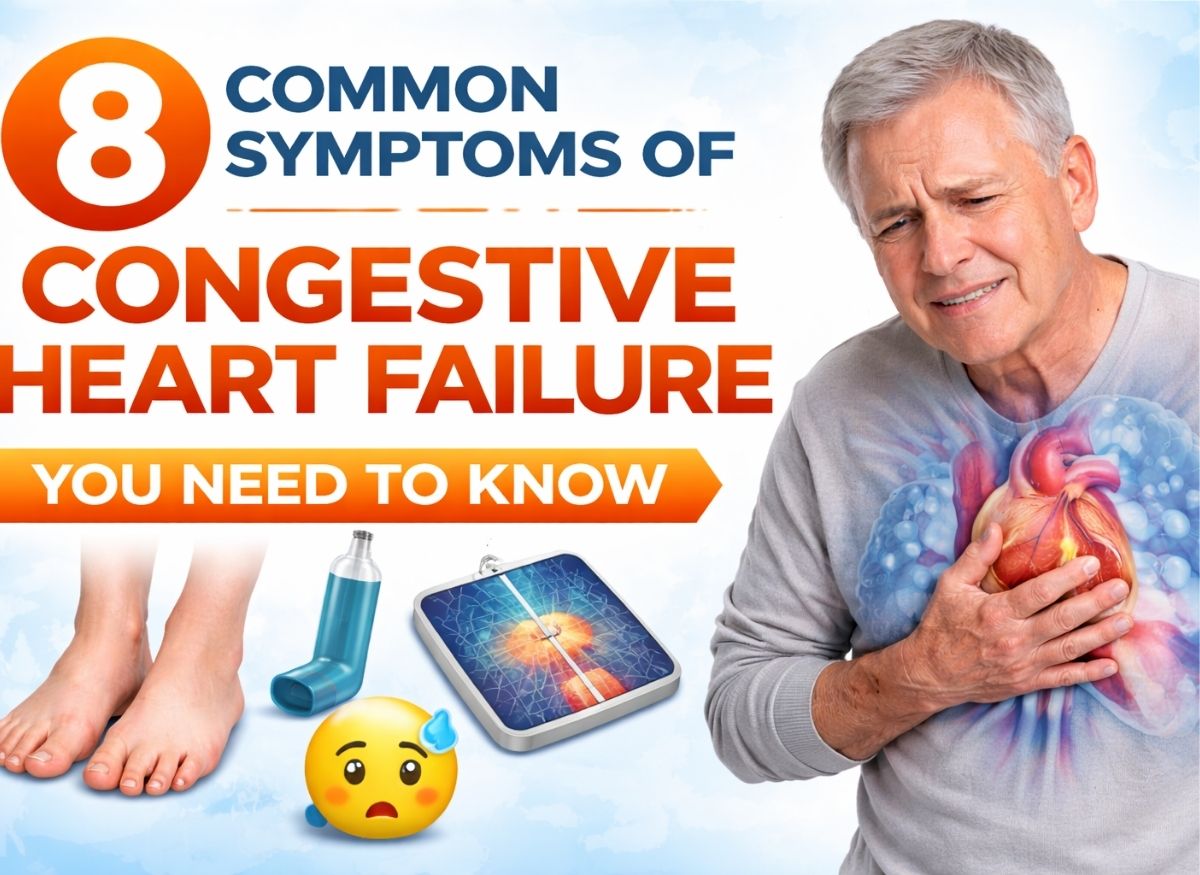
Congestive heart failure (CHF), often called simply heart failure, is a serious condition in which the heart can’t pump blood well enough to meet the body’s needs. Over time, fluid builds up in the lungs, abdomen, and other tissues, causing a range of symptoms. CHF can affect people of any age but is more common in older adults, especially those with high blood pressure, coronary artery disease, or a previous heart attack.
Knowing the symptoms matters for early diagnosis and effective management. Untreated, CHF can lead to serious complications, including kidney failure, liver damage, and death. Recognizing it early improves outcomes and can keep the condition from worsening.
This article covers eight common symptoms, from shortness of breath to leg swelling, along with causes, when to seek help, how CHF is diagnosed and staged, and what you can do to improve your outlook.
Understanding CHF: How It Works and Why It Develops
CHF is a chronic, progressive condition in which the heart can’t pump efficiently enough to meet the body’s metabolic demands. “Failure” doesn’t mean the heart has stopped. It means the heart muscle is too weak or too stiff to maintain healthy circulation. Blood backs up, and fluid leaks into the lungs and other tissues, a process called congestion.
CHF is a syndrome rather than a single disease, and it usually develops after years of underlying damage. The diagnosis is serious, but modern medicine offers effective management through medication, procedures, and lifestyle changes.
How Heart Failure Affects Pumping
Clinicians assess the heart using the left ventricular ejection fraction (LVEF), the percentage of blood the left ventricle pumps out with each contraction. A normal ejection fraction is roughly 50% to 70%. Heart failure falls into two functional types, depending on whether the problem is squeezing or filling:
- Systolic heart failure (HFrEF) is a “weak pump” problem. The heart muscle becomes thin, weak, and stretched, and the ventricles can’t contract forcefully enough. Ejection fraction is low (usually 40% or less), so blood remains in the chamber after each beat and backs up into the veins.
- Diastolic heart failure (HFpEF) is a “stiff pump” problem. The muscle is normal in size or even thickened, but too stiff to relax between beats, so the ventricle can’t fill with enough blood. Ejection fraction may stay normal (above 50%), but the total volume moved is too low because the starting volume was too low.
Causes and Risk Factors
The causes are varied, but nearly all involve long-term stress on the heart muscle. Identifying the root cause is essential for judging the outlook.
- Coronary artery disease (CAD): The leading cause. Narrowed arteries deliver less oxygen to the heart. If a blockage causes a heart attack, the resulting scar tissue produces ischemic heart failure, because dead muscle no longer contributes to pumping.
- High blood pressure: A primary driver of diastolic heart failure. Constant pressure forces the heart to bulk up, eventually leaving the muscle too stiff to fill properly.
- Diabetes: A major risk factor, since high blood sugar damages both the small blood vessels and the heart muscle fibers.
- Alcohol-related cardiomyopathy: Excessive drinking is toxic to heart cells and can cause a form of systolic heart failure called dilated cardiomyopathy.
- Valve disease: A leaky or narrowed valve makes the heart work harder to compensate, and a sudden valve failure can trigger acute heart failure.
- High-output heart failure (rare): The heart pumps normally, but the body’s demands, from conditions such as severe anemia or hyperthyroidism, are so high that it can’t keep up.
8 Common Symptoms of CHF
CHF is a master of disguise. It often looks like a set of unrelated problems, but these symptoms are really the body’s warning lights, reflecting a heart that can’t maintain normal output. Fluid ends up in the wrong places, and muscles are starved of fuel.
- Shortness of breath (dyspnea). One of the most immediate signs of left-sided failure. Because the left ventricle supplies the body’s main blood flow, its failure causes a backup into the lungs. Pressure rises in the lung capillaries and fluid is forced into the air sacs (pulmonary edema), making breathing labor-intensive.
- Persistent cough and wheezing. The same fluid backup irritates the airways, causing a persistent, hacking “cardiac cough” that often worsens at night and may bring up white or pink-tinged frothy sputum. Fluid narrowing the bronchial tubes can cause wheezing, which is sometimes misdiagnosed as asthma.
- Rapid or irregular heartbeat (tachycardia and palpitations). With a low ejection fraction, the heart senses it isn’t moving enough blood and beats faster to maintain output. That helps briefly, but the constant racing strains the muscle and can lead to acute heart failure or arrhythmias such as atrial fibrillation. People describe a fluttering or pounding in the chest, even at rest.
- Swelling (edema). Right-sided failure shows up most in the lower body. When the right side is too weak to push blood to the lungs, pressure builds in the veins returning from the body, forcing fluid into the legs, ankles, and feet. This causes pitting edema, swelling that leaves an indentation when pressed.
- Frequent nighttime urination (nocturia). During the day, gravity keeps fluid in your legs. When you lie down, that fluid returns to the bloodstream and the kidneys receive a surge they couldn’t process earlier, so you need to urinate at night. It’s not just a bladder issue. It reflects your body processing a daytime fluid buildup.
- Fatigue. Often the most debilitating symptom. The heart prioritizes the brain and vital organs, diverting blood from the arm and leg muscles. Limbs feel heavy and weak, producing an exhaustion that rest doesn’t fix.
- Reduced ability to exercise. Tasks that were once easy, like walking to the mailbox or climbing a flight of stairs, become major efforts because the heart lacks the reserve to increase blood flow during exertion. This decline is a key marker for tracking the outlook over time.
- Nausea and loss of appetite. Fluid can also build up in the abdomen and liver (ascites), pressing on the stomach and slowing digestion. Combined with reduced blood flow to the intestines, this causes persistent nausea, bloating, and poor appetite. The original notes that women may report these digestive symptoms more often than classic chest pain.
When to Seek Medical Help
Because CHF is chronic, many people settle into a “new normal” of some baseline fatigue or mild swelling. But the heart’s ability to compensate can shift quickly. Knowing the difference between a minor hiccup and acute heart failure is the most important skill a patient or caregiver can have. Catching a change early can mean a simple medication adjustment at home rather than a week in the hospital.
Call Your Doctor
Not every symptom needs a 911 call, but every change deserves a conversation with your care team. Contact your cardiologist or primary care provider if you notice a slow worsening of symptoms, such as:
- Weight gain. The most critical daily check. A gain of 2 to 3 pounds in one day or 5 pounds in a week is fluid, not fat, and is often the first sign of an impending flare-up.
- Increasing congestion. Needing an extra pillow at night to breathe (orthopnea), or shoes feeling tighter than usual, suggests your heart is struggling with its workload.
- A persistent cough. A dry, hacking cough that won’t quit, especially when lying down, suggests fluid is beginning to irritate your airways. Acting early can prevent progression to acute heart failure.
Call 911
Certain red flags suggest acute decompensation, when the heart has reached a critical point or fluid is rapidly filling the air sacs (pulmonary edema, which is life-threatening):
- Severe shortness of breath at rest. Feeling like you’re suffocating while sitting still is an emergency. Unlike typical breathlessness, it doesn’t ease with rest and often brings intense panic or “air hunger.”
- Chest pain or pressure. New or crushing pain may indicate a heart attack, which can be both a cause and a complication of CHF. Pain radiating to the jaw, neck, or left arm should be treated as an emergency.
- Fainting or severe confusion. Sudden loss of consciousness, or profound dizziness and confusion, suggests the brain isn’t getting enough oxygenated blood, possibly from a dangerously low ejection fraction or a life-threatening arrhythmia such as atrial fibrillation or ventricular tachycardia.
- Pink, frothy sputum. Perhaps the most distinctive and dangerous sign of acute heart failure. A “bubblegum” pink tinge means blood is leaking into the lungs.
With CHF, toughing it out is dangerous. If you’re in doubt, especially about a combination of symptoms such as a racing heart with lightheadedness, get evaluated. EMS can start treatments such as high-flow oxygen and diuretics before you reach the hospital.
How CHF Is Diagnosed
Diagnosis maps the heart’s electrical activity, structure, and chemical output. A physical exam can reveal clues, such as an S3 gallop (a specific heart sound) or fluid crackling in the lungs, but doctors rely on objective tests to determine the outlook and to classify the condition as systolic or diastolic, the first step toward a targeted treatment plan.
The Gold Standard: Echocardiogram
If one test defines heart failure, it’s the echocardiogram, a non-invasive ultrasound that shows the heart moving in real time.
- Pumping strength: It measures LVEF, distinguishing systolic failure (low LVEF) from diastolic failure (preserved LVEF, but a stiff heart that can’t fill).
- Structure: It reveals thickened walls (hypertrophy) from high blood pressure, or stretched and thinned chambers (dilation), and checks the valves for leaks or narrowing.
Blood and Electrical Tests
- BNP and NT-proBNP: When the heart muscle is stretched or pressured, it releases B-type natriuretic peptide. A high level is a major red flag for acute heart failure and helps separate breathlessness caused by the heart from breathlessness caused by the lungs, such as pneumonia.
- Electrocardiogram (ECG/EKG): Maps the heart’s electrical wiring. It can detect irregular rhythms such as atrial fibrillation, which is common in CHF, or evidence of a past “silent” heart attack behind ischemic heart failure.
- Chest X-ray: A quick snapshot of the heart’s silhouette and the lungs. Doctors look for an enlarged heart (cardiomegaly) and “Kerley B lines,” a telltale sign of fluid in lung tissue.
Advanced Testing
- Stress testing: Monitors the heart during exercise (or simulated exercise with medication). It’s vital for diagnosing ischemic heart failure, where blood flow is restricted only during exertion.
- Cardiac MRI: The most detailed view of the heart. It can identify specific cardiomyopathies and highlight scar tissue, whose extent helps determine the outlook and the chances of recovery.
- Cardiac CT: Often used to look at the coronary arteries, identifying blockages without invasive catheterization and helping rule out CAD as the main driver.
Stages and Classifications
Because CHF is progressive, doctors use two systems to track severity. They guide the outlook and determine which medications or procedures are needed. The structural damage may be permanent, but how you feel and function can often improve with the right care.
ACC/AHA Stages: Structural Progression
Developed by the American College of Cardiology and American Heart Association, this system reflects the heart’s physical evolution. It’s a one-way street: once you move to a later stage, you don’t go back.
- Stage A (at risk): No structural damage or low ejection fraction, but high-risk conditions such as hypertension, diabetes, or a history of alcohol-related cardiomyopathy. The goal is aggressive prevention.
- Stage B (pre-heart failure): Structural changes are visible, such as a thickened wall from diastolic dysfunction or a scar from a past heart attack, but the person has never had symptoms.
- Stage C (symptomatic): Where most people are diagnosed. There is structural damage, and the person currently has or has had symptoms such as breathlessness or swelling.
- Stage D (advanced): Refractory heart failure. Standard medications no longer work, symptoms occur even at rest, and specialized advanced therapies may be required.
NYHA Functional Classes: Quality of Life
The New York Heart Association scale looks at the person rather than the heart, measuring how much CHF limits daily life. Unlike the stages, your class can move up and down. For example, a patient can go from Class III back to Class II if treatment reduces fluid buildup.
| Class | Limitation | What it means |
|---|---|---|
| I | None | Ordinary activity doesn’t cause undue fatigue, palpitations, or breathlessness |
| II | Slight | Comfortable at rest, but ordinary activity (a few blocks’ walk, two flights of stairs) causes fatigue or shortness of breath |
| III | Marked | Comfortable at rest, but even less-than-ordinary activity (crossing a room, getting dressed) causes significant distress |
| IV | Severe | Unable to do any activity without discomfort; symptoms are present even at rest |
Why This Matters for Treatment
Together, these systems guide real-time decisions. Someone in Stage C, Class III has permanent heart damage and symptoms that significantly affect life, which might prompt a diuretic change or a new heart-strengthening medication to move them back toward Class II. At Stage D, the conversation turns to advanced options, such as a ventricular assist device (VAD), a mechanical pump that supports the weakened ventricle, or evaluation for a heart transplant, managed by a dedicated heart failure team.
CHF vs. Heart Attack
Think of the difference as plumbing versus pump. A heart attack is an acute blockage in the supply lines, while CHF is a functional decline of the engine itself. One often leads to the other.
- Heart attack (the plumbing problem): Medically an acute myocardial infarction. A clot blocks a coronary artery, and without oxygen the heart muscle begins to die within minutes. Symptoms are sudden: crushing chest pain, cold sweats, nausea.
- Congestive heart failure (the pump problem): A progressive failure of pumping, either too weak (systolic) or too stiff (diastolic). It usually develops over years, with symptoms like edema and nocturia worsening gradually as ejection fraction declines.
The link: A heart attack is a leading cause of CHF. Dead muscle is replaced by stiff, non-contractile scar tissue, lowering ejection fraction as the remaining healthy muscle works harder to compensate. Over time this leads to systolic heart failure, turning an acute emergency into a chronic condition.
Can Lifestyle Changes Improve Outcomes?
Absolutely. The structural damage is often irreversible, but lifestyle changes can meaningfully improve your NYHA class, potentially moving you from Class III back to Class II. They reduce the heart’s workload so it functions more efficiently despite its limits.
Managing fluid balance
- Restrict sodium. Sodium pulls water into the bloodstream, raising blood volume and blood pressure and forcing a weak heart to pump a heavier load. Limiting salt helps prevent flare-ups and the “drowning” feeling of pulmonary edema.
- Weigh yourself daily. This is the most important home “diagnostic.” Rapid weight gain is the earliest sign of fluid retention, and catching a 3-pound gain allows a medication adjustment before fluid reaches the lungs.
Strengthening the system
- Cardiac rehabilitation. It may feel counterintuitive to exercise with fatigue and limited stamina, but inactivity weakens the heart further. Supervised, moderate activity improves your heart’s reserve and trains peripheral muscles to use oxygen more efficiently, reducing demand on the heart.
- Avoid alcohol and tobacco. Alcohol is toxic to heart cells, and eliminating it and tobacco is non-negotiable for improving your outlook, since both damage cardiac fibers and constrict blood vessels.
- Control blood pressure. Since hypertension is a primary driver of diastolic heart failure, keeping pressure within a strict target range prevents the heart from getting stiffer.
Conclusion
CHF is serious, but with early recognition and timely treatment it can be managed effectively. Knowing the symptoms lets you seek medical advice before the condition reaches a severe stage. By working with your healthcare team and following your treatment plan, you can improve your quality of life and reduce the risk of complications.
If you notice symptoms such as shortness of breath, fatigue, or swollen ankles, don’t wait. See a doctor for an accurate diagnosis and to start treatment. With proper care, people with heart failure can continue to live full, healthy lives. Staying proactive, and remembering that prevention, early detection, and lifestyle changes all matter, is key to managing CHF.
Frequently Asked Questions
What is congestive heart failure?
A condition in which the heart can’t pump blood effectively enough to meet the body’s needs, causing fluid buildup in the lungs, abdomen, and elsewhere. The heart weakens over time, and organs don’t receive the oxygen and nutrients they need. Causes include coronary artery disease, high blood pressure, previous heart attacks, and other heart conditions.
What are the early symptoms?
Shortness of breath, especially with activity or lying flat; fatigue; swollen ankles, feet, or legs; and a rapid or irregular heartbeat. They often develop gradually, and many people dismiss them as aging or tiredness, but they are important indicators and early action is essential.
What are the main causes?
- Coronary artery disease: blocked or narrowed arteries reduce blood flow to the heart muscle.
- High blood pressure: over time it strains and damages the heart.
- Heart attack: damaged muscle impairs pumping.
- Valve disease: faulty valves cause blood-flow problems.
- Diabetes and obesity: both raise risk by contributing to high blood pressure and CAD.
Can CHF be cured?
No, but it can be managed effectively with medications, lifestyle changes, and procedures. Early diagnosis and consistent treatment improve quality of life and slow progression. Medications such as ACE inhibitors, beta-blockers, and diuretics help control symptoms, while a heart-healthy diet and regular exercise can improve heart function.
How is it diagnosed?
Through a physical exam, medical history, and tests including an echocardiogram (heart function), chest X-ray (fluid in the lungs), ECG (rhythm), and blood tests such as BNP, which indicates heart strain.
Can lifestyle changes help?
Yes, a great deal. Follow a low-sodium diet, stay physically active as your provider advises, quit smoking and limit alcohol, maintain a healthy weight, and monitor blood pressure and underlying conditions such as diabetes.
What is the life expectancy?
It depends on severity, how well the condition is managed, and overall health. With appropriate treatment, many people live for many years. Advanced stages can significantly affect quality of life and shorten life expectancy, while early diagnosis, sticking to treatment, and lifestyle changes improve outcomes.