
Tommy John Surgery Risks, Recovery, and Return to Sports Explained
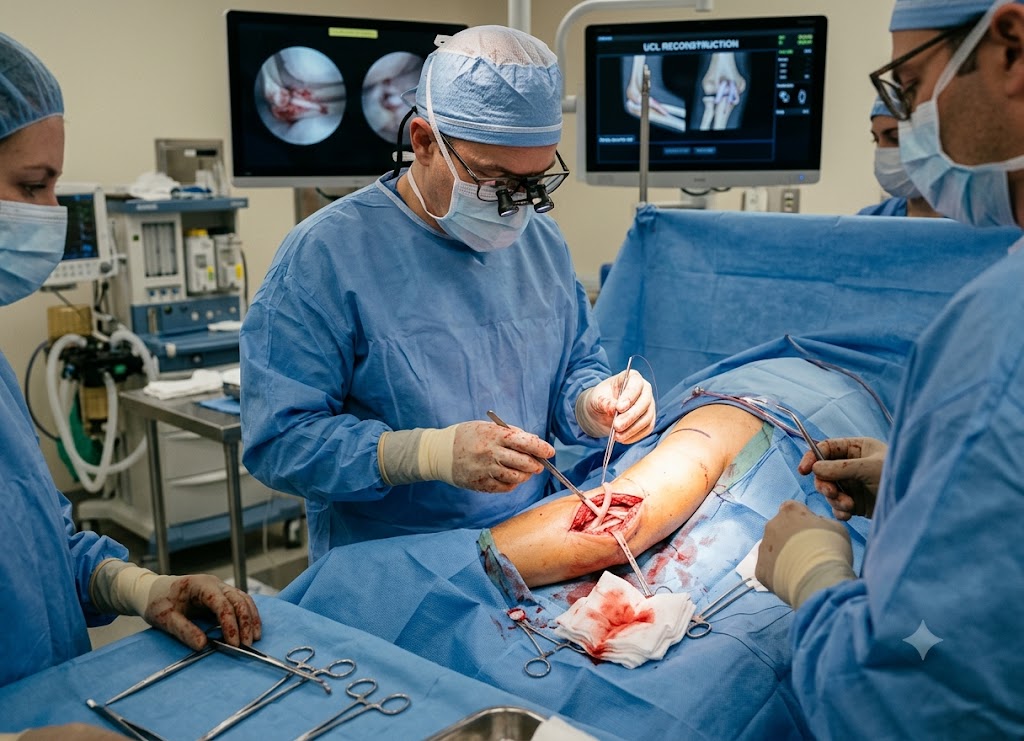
Tommy John surgery is an operation used to treat a damaged or torn ulnar collateral ligament (UCL) in the elbow. This ligament provides stability to the inner part of the elbow, particularly when the arm is used for powerful throwing movements. The surgery is strongly associated with baseball pitchers, but athletes involved in softball, javelin, football, gymnastics, tennis, and other throwing or overhead sports may also develop UCL injuries.
For many athletes, the biggest challenge is not the operation itself but the long rehabilitation period that follows. Understanding Tommy John surgery risks, recovery, and the process of returning to sports can help athletes develop more realistic expectations.
Recovery can take many months and usually involves a carefully planned rehabilitation program. Although many athletes eventually return to competition, the exact timeline can vary depending on the severity of the injury, surgical method, rehabilitation progress, age, sport, playing position, and whether the operation is a first reconstruction or a revision.
This article explains what Tommy John surgery involves, who may need it, the potential risks, the different stages of rehabilitation, and what athletes can expect when working toward a return to sports.
What is Tommy John Surgery and Who Needs It?
Tommy John surgery, medically known as Ulnar Collateral Ligament (UCL) reconstruction, is a surgical procedure used to replace a torn or severely damaged UCL with a tendon graft. The replacement tendon may come from another part of the patient’s body or from a tissue donor.
The operation is most commonly performed on overhead athletes whose sports repeatedly place significant stress on the elbow. Over time, these forces can weaken the ligament and eventually cause it to tear.
To understand the procedure, it is helpful to look at how the reconstruction is performed and which athletes are most likely to require it. Tommy John surgery is not simply a matter of stitching a damaged ligament back together. Instead, the surgeon generally reconstructs the ligament using a tendon graft to restore stability to the inner side of the elbow during high-force movements such as throwing.
1. Defining the Procedure: Anatomy of the Elbow
To understand what is tommy john surgery, it is first important to understand the role of the UCL. Also called Ulnar Collateral Ligament reconstruction, Tommy John surgery replaces a damaged or unstable ligament on the inner side of the elbow with a healthy tendon taken from another part of the body or obtained from a donor.
The UCL is an important stabilizing structure that helps resist valgus stress. This is the outward force placed across the elbow during high-speed overhead throwing. When repeated stress becomes greater than the ligament can tolerate, the tissue may become stretched, weakened, or completely torn.
A damaged UCL can result in pain on the inside of the elbow, instability, reduced throwing velocity, and difficulty controlling the ball. For athletes who rely heavily on throwing, these symptoms can significantly affect performance.
2. Step-by-Step: The Reconstruction Process
Reconstructing the UCL involves several carefully controlled surgical steps. Because a severely damaged ligament may not be suitable for a simple repair, surgeons commonly use a tendon graft to create a new stabilizing structure.
1. Graft Harvesting: Phase 1.
The surgical team first obtains a suitable tendon that can serve as the replacement ligament. A common choice is the palmaris longus tendon in the forearm. Not everyone has this tendon, so alternatives such as part of the hamstring or gracilis tendon may be considered.
In some cases, an allograft obtained from a tissue donor can be used. This approach may eliminate the need for a second incision to harvest the patient’s own tendon.
2. Surgical Approach & Nerve Protection: Phase 2.
The surgeon makes an incision along the inner side of the elbow to reach the damaged ligament. Special care is taken around the ulnar nerve, which travels behind the elbow and provides sensation to the ring and little fingers.
Depending on the situation, the surgeon may move the nerve to a different position in front of the elbow joint. This procedure is called ulnar nerve transposition and is intended to reduce tension or irritation around the nerve.
3.Tunnel Drilling & Graft Fixation: Phase 3.
After examining and preparing the damaged UCL, the surgeon creates carefully positioned tunnels in the humerus and ulna. These tunnels allow the tendon graft to be passed through the bones and positioned where the original ligament provided stability.
Different reconstruction methods can be used, including figure-eight and docking techniques. The selected method depends on the surgeon’s preference, the patient’s anatomy, and the characteristics of the injury.
4.Tensioning & Joint Closure: Phase 4.
The surgeon carefully adjusts the tension of the graft so the elbow has appropriate stability without becoming excessively tight. The graft is then secured using anchors, sutures, or another fixation method.
After confirming that the reconstruction is stable, the surgical area is closed. If the ulnar nerve has been transposed, it is placed into its new position before the surrounding tissues and skin are closed.
3. Clinical Demographics: Who Requires UCL Reconstruction?
Tommy John surgery may be considered for an athlete with a significant partial or complete UCL tear when symptoms and loss of function continue despite appropriate nonsurgical treatment.
Treatment decisions are based on more than age or sport. Doctors also consider the severity and location of the tear, the athlete’s activity goals, elbow stability, and response to rehabilitation.
Baseball Pitchers: Pitchers represent a large proportion of athletes undergoing UCL reconstruction. A high-effort baseball pitch produces substantial valgus forces across the elbow. Repeated exposure to these forces can gradually damage the ligament. A significant UCL injury can lead to pain, reduced velocity, poor control, and difficulty continuing to pitch.
Other Baseball Positions: Catchers, outfielders, third basemen, and other players who regularly make powerful throws can also develop UCL injuries. Although their throwing demands differ from pitchers, repeated high-force throws can still place considerable stress on the elbow.
Javelin Throwers: The rapid, forceful motion involved in throwing a javelin creates significant stress around the inner elbow. Repeated training and competition can contribute to UCL injury in these athletes.
Tennis Players: Serving requires a fast overhead movement that places stress on the elbow. Competitive tennis players may develop UCL problems when repetitive loading exceeds the ligament’s ability to recover.
Quarterbacks & Multi-Sport Athletes: Quarterbacks and athletes participating in multiple throwing sports can also experience UCL injuries. The overall risk depends on throwing volume, technique, training load, and individual factors.
Ultimately, anyone researching what is tommy john surgery should understand that it is a specialized reconstruction designed to restore stability after significant UCL damage when other treatment options are insufficient.
The Risks and Potential Complications of Tommy John Surgery
Tommy John surgery has potential risks, just like other surgical procedures. These include general surgical complications such as infection or reactions to anesthesia, along with problems more specifically associated with UCL reconstruction.
Important procedure-related concerns include ulnar nerve irritation or injury, graft failure, continued elbow pain, stiffness, reduced range of motion, and problems with the reconstructed ligament.
Although many athletes have successful outcomes, surgery does not guarantee that an athlete will return to the same level of performance. Complications can extend rehabilitation, require additional treatment, or make a full return to competition more difficult.
Understanding these possible outcomes allows athletes to have a more realistic discussion with their orthopedic specialist before deciding on treatment.
1. Procedure-Specific Risks and Neurological Vulnerabilities
Although what is tommy john surgery is often discussed in terms of successful athletic comebacks, the operation remains a technically demanding reconstruction with genuine risks.
The ulnar nerve runs close to the surgical area, so protecting it during the procedure is particularly important. Other risks involve the reconstructed ligament, bone tunnels, and elbow joint itself.
Ulnar Nerve Neuropathy: The ulnar nerve travels through a narrow area behind the elbow and can become irritated, stretched, or bruised. Some patients may experience numbness, tingling, or weakness involving the ring and little fingers. Scar tissue around the nerve can also cause persistent symptoms.
Arthrofibrosis and Motion Loss: Scar tissue may develop inside or around the elbow after surgery and restrict movement. Even a relatively small loss of elbow extension can affect throwing mechanics. Rehabilitation therefore places considerable emphasis on restoring safe range of motion.
Graft Failure and Attenuation: The tendon graft requires time to heal and adapt to its new role as a ligament. If excessive stress is placed on it too early, the graft may stretch, weaken, or tear. A new injury can also occur later after the athlete has returned to sports.
Tunnel Stress Fractures: The bone tunnels created during reconstruction can temporarily weaken the affected bones. Although uncommon, excessive stress before adequate healing can contribute to a fracture near a tunnel.
2. General Surgical Complications
In addition to UCL-specific concerns, Tommy John surgery carries general risks associated with orthopedic surgery.
Deep and Superficial Infections: Bacteria can enter through the surgical incision and cause an infection. A deeper infection involving the reconstructed ligament or elbow joint can be particularly serious and may require antibiotics, drainage, or additional surgery.
Deep Vein Thrombosis (DVT): Blood clots can develop after surgery, although the risk varies from person to person. Reduced activity during recovery can contribute to clot formation. If a clot travels to the lungs, it can cause a pulmonary embolism, which requires urgent medical treatment.
Other general risks can include bleeding, swelling, medication reactions, and complications related to anesthesia. The surgical team takes preventive measures and monitors patients to reduce these risks.
3. Mechanisms of Surgical Failure and Revision Realities
A primary Tommy John reconstruction can occasionally fail. In sports medicine, failure may refer to persistent instability, continued pain, graft rupture, or an inability to return to the desired level of athletic activity.
Several factors can contribute to an unsuccessful reconstruction.
Improper Graft Ligamentization: After the tendon is placed in the elbow, it gradually undergoes biological changes that allow it to function more like a ligament. This process takes time. Excessive throwing or loading before adequate healing can place the graft at risk.
Poor Rehabilitation Discipline: Rehabilitation plays a major role in recovery. Advancing exercises or throwing too quickly may expose the graft to excessive stress, while inadequate exercise can contribute to weakness and stiffness.
Uncorrected Throwing Mechanics: Poor mechanics can continue to place abnormal stress on the elbow even after reconstruction. Identifying and correcting contributing movement patterns is therefore an important part of rehabilitation.
The Challenge of Revision Surgery: If the reconstruction fails, a second operation may be necessary. Revision surgery can be more complicated because of scar tissue, changes in the bone tunnels, and previous graft material. Recovery may also be longer, and outcomes can differ from those of a first-time reconstruction.
What does the Recovery from Tommy John Surgery typically involve?
1. The Five Phases of Rehabilitation
Recovery after Tommy John surgery is a gradual process that commonly takes 12 to 18 months for throwing athletes, although individual timelines vary.
The rehabilitation program is designed to protect the healing graft while progressively restoring motion, strength, throwing ability, and sport-specific performance.
The operation itself is only the beginning. Long-term recovery depends heavily on structured physical therapy and a gradual progression through rehabilitation milestones.
1.Phase 1: Immediate Post-Operative Protection: Weeks 0–2.
The first stage focuses on protecting the reconstruction, reducing swelling, controlling pain, and allowing the surgical tissues to begin healing.
The elbow may initially be placed in a splint or protective brace. Gentle hand, wrist, and shoulder movements may be introduced as directed by the medical team to maintain circulation and reduce stiffness in other areas.
2.Phase 2: Early Motion Restoration: Weeks 2–6.
During this phase, rehabilitation begins to focus more heavily on restoring controlled elbow movement.
A hinged brace may allow progressively greater movement under the supervision of the rehabilitation team. Exercises generally progress from assisted movements toward active range-of-motion exercises while avoiding excessive stress on the healing graft.
3.Phase 3: Structural Foundation & Strengthening: Months 1.5–4.
As healing progresses, the athlete begins developing strength throughout the arm and upper body. The rehabilitation program may include exercises for the forearm, biceps, triceps, shoulder, rotator cuff, and upper back.
The goal is to build a strong muscular foundation that can help distribute the forces generated during future throwing activities.
4.Phase 4: Advanced Kinetic Strengthening & Interval Throwing: Months 4–9.
This stage introduces more advanced strengthening and sport-specific activities. Athletes may begin plyometric exercises and movement drills designed to prepare the body for faster and more explosive actions.
When appropriate strength, motion, and stability milestones have been achieved, a structured Interval Throwing Program (ITP) may begin. Throwing generally starts at lower intensity and shorter distances before gradually increasing in volume, distance, and effort.
5.Phase 5: Mound Progression & Return to Competition: Months 9–18+.
The final stage focuses on rebuilding competitive throwing ability. For pitchers, progression may move from flat-ground throwing to bullpen sessions and eventually to more realistic game situations.
The athlete may advance from lower-effort throwing to higher-intensity work, live batting practice, simulated games, and eventually competitive play when the medical and rehabilitation team determines that the athlete is ready.
2. Core Components of the Physical Therapy Regimen
A comprehensive rehabilitation program following Tommy John surgery focuses on much more than the elbow.
Throwing involves the entire body, so rehabilitation addresses the hand, forearm, shoulder, trunk, hips, and legs to improve strength, coordination, and movement efficiency.
Targeted Mobility Work: Physical therapists may use stretching, controlled movement, manual therapy, and other techniques to restore elbow mobility and reduce stiffness. The goal is to regain functional movement while protecting the healing reconstruction.
Total Kinetic Chain Strengthening: Rehabilitation develops strength throughout the complete throwing chain:
Hand and Forearm: Wrist and grip exercises help strengthen muscles that support the elbow and contribute to controlling the ball.
Shoulder and Scapula: Rotator cuff and scapular stabilization exercises help create a strong shoulder foundation and improve control of the upper limb during throwing.
Core and Lower Body: The legs and trunk play an important role in generating throwing power. Exercises targeting the hips, legs, and core can help athletes produce force efficiently rather than relying entirely on the recovering arm.
Biomechanical Analysis and Retraining: Throwing mechanics may be evaluated during rehabilitation. Video analysis and other assessment methods can help identify movement patterns that may place unnecessary stress on the elbow. Correcting these issues can be an important part of reducing future injury risk.
Ultimately, understanding what is tommy john surgery means recognizing that the reconstruction is only one part of the recovery process. Returning to competitive sports requires consistent rehabilitation, gradual progression, and appropriate medical clearance.
Defining the Comeback: Return-to-Play Statistics
For athletes with a significant UCL injury, one of the biggest questions is whether they will be able to compete again.
Studies of athletes who undergo UCL reconstruction have generally reported that many are able to return to play, although the exact rate varies according to the population studied, definition of return, sport, and follow-up period.
Return-to-play statistics are especially influenced by studies of elite baseball players, who often have access to highly specialized medical and sports-performance resources. These results should not be interpreted as a guarantee for every athlete.
The timeline for returning also differs considerably. Some athletes may return to competition within roughly a year, while others, especially pitchers or people undergoing revision surgery, may require substantially longer.
Age, injury characteristics, surgical technique, rehabilitation progress, complications, previous performance level, and adherence to the rehabilitation program can all influence the final outcome.
Dispelling the “Bionic Arm” Myth
A common belief surrounding Tommy John surgery is that the procedure can make an athlete’s arm stronger than it was before the injury. This idea is often described as the “bionic arm” myth.
Tommy John surgery is designed to restore stability to a damaged elbow. It is not intended to enhance a healthy arm beyond its natural capabilities.
Some athletes may perform well after surgery or even improve certain performance measures. However, these changes cannot automatically be attributed to the reconstructed ligament itself.
Several factors may contribute to improvements during the long recovery period.
Kinetic Chain Strengthening: Rehabilitation often includes extensive work on the legs, hips, core, shoulder, and forearm. This can improve how efficiently an athlete transfers power through the body.
Biomechanical Correction: The extended period away from competition gives athletes time to examine and improve throwing mechanics. Correcting inefficient movement patterns may improve performance while also reducing unnecessary stress.
Systemic Rest: The long break from competitive throwing allows the elbow, shoulder, and surrounding tissues to recover from accumulated training and competition demands.
Although an athlete may return with improved mechanics or conditioning, this should not be interpreted as evidence that Tommy John surgery itself creates a stronger-than-normal elbow.
The Reality of the Return Journey
Returning to sports after Tommy John surgery is a gradual process, and successful reconstruction does not guarantee that an athlete will immediately regain their previous performance level.
Some athletes return successfully but experience differences in velocity, consistency, workload tolerance, or overall performance. Others may encounter complications or reinjury during rehabilitation.
A successful sports-medicine outcome generally involves restoring enough strength, stability, movement, and sport-specific function for the athlete to safely resume their desired activity.
The psychological side of recovery can also be challenging. Spending many months away from competition may create frustration, uncertainty, or anxiety about returning to high-pressure situations.
Patience is therefore essential. The athlete must allow the graft to heal and progress through each stage rather than rushing toward competition.
Ultimately, Tommy John surgery can provide a path back to sports for athletes with significant UCL injuries, but the outcome depends on many factors beyond the operation itself, including rehabilitation, physical conditioning, throwing mechanics, and long-term workload management.
Key considerations and alternatives related to UCL injuries
Important considerations for Ulnar Collateral Ligament (UCL) injuries include obtaining an accurate diagnosis, determining the severity and location of the tear, considering nonsurgical treatment when appropriate, and comparing reconstruction with newer repair techniques.
The appropriate treatment is different for every athlete. Doctors consider the injury pattern, symptoms, athletic goals, age, sport, and response to conservative treatment before recommending surgery.
1. Clinical Evaluation and Diagnostic Pathways
Determining whether an athlete needs UCL surgery begins with a detailed evaluation. Before considering what is tommy john surgery, a clinician must establish whether the ligament is actually damaged and whether the injury is responsible for the athlete’s symptoms.
The diagnostic process commonly includes a medical history, physical examination, and imaging when appropriate.
The Valgus Stress Test: During this examination, the clinician applies controlled force to the elbow to evaluate the stability of the UCL. Pain, increased movement, or a difference compared with the opposite elbow can indicate ligament injury.
Contrast-Enhanced Imaging: Imaging can provide additional information about the condition of the ligament. MRI can identify many soft-tissue injuries, while an MR arthrogram uses contrast material within the joint to provide additional detail in selected cases, particularly when a subtle or partial tear is suspected.
The results of these assessments are considered together rather than relying on a single test.
2. Non-Surgical Alternatives and Biologic Therapies
Surgery is not necessary for every UCL injury. Athletes with certain lower-grade or partial tears may improve with rest, rehabilitation, gradual strengthening, and other conservative measures.
Dynamic Stabilization Training: A nonsurgical rehabilitation program may begin with a period of throwing rest followed by progressive strengthening. Particular attention can be given to the forearm flexor-pronator muscles, which contribute to dynamic support of the elbow.
The athlete may gradually rebuild strength and movement before beginning a carefully controlled return-to-throwing program.
Platelet-Rich Plasma (PRP) Injections: PRP involves processing a sample of the patient’s blood to concentrate platelets and then injecting the preparation into the injured area. PRP has been studied as a treatment for certain UCL injuries, particularly partial tears.
However, the evidence regarding its effectiveness varies, and PRP is not appropriate for every UCL injury. Athletes should discuss potential benefits, limitations, and alternatives with a qualified sports-medicine specialist.
Surgical Evolution: Traditional Reconstruction vs. Internal Brace Repair
When nonsurgical treatment does not provide adequate improvement or when the UCL injury is severe, surgery may be considered.
Traditional Tommy John reconstruction remains an established surgical approach. Newer UCL repair techniques with an internal brace may be suitable for selected acute injuries in which the native ligament tissue remains healthy enough to repair.
The choice depends heavily on the tear’s location, severity, tissue quality, athlete characteristics, and surgeon assessment.
Traditional Tommy John Reconstruction: This technique replaces the damaged UCL with a tendon graft. The surgeon prepares bone tunnels in the humerus and ulna and secures the graft to recreate the ligament’s stabilizing function. Rehabilitation for throwing athletes commonly takes many months, often around 12 to 18 months or longer.
UCL Repair with an Internal Brace: In selected acute injuries, the native ligament may be repaired rather than completely reconstructed. Anchors are used to reattach the ligament, while strong suture tape provides additional support during healing.
Because the native ligament is preserved, some carefully selected athletes may follow a shorter rehabilitation timeline than those undergoing traditional reconstruction. However, not every tear is suitable for this technique, and return-to-sport timing must be determined individually.
Historical Context: The Origin of “Tommy John” Surgery
The name Tommy John surgery comes from a landmark event in sports medicine.
In 1974, professional baseball pitcher Tommy John suffered a serious UCL injury while playing for the Los Angeles Dodgers. At that time, such an injury was widely considered potentially career-ending.
Team physician Dr. Frank Jobe developed an experimental surgical approach to reconstruct the damaged ligament. On September 25, 1974, Jobe replaced John’s injured UCL with a tendon from the opposite forearm.
Tommy John then underwent an extensive rehabilitation process before returning to Major League Baseball in 1976.
His successful comeback helped demonstrate that athletes could return to high-level competition after UCL reconstruction. The procedure subsequently became widely known as “Tommy John surgery,” and it has since become an established treatment for significant UCL injuries in throwing athletes.
Conclusion
Tommy John surgery can restore stability to an elbow affected by a significant UCL injury, but it is not a quick or guaranteed solution. Potential complications include infection, stiffness, nerve irritation, persistent pain, graft problems, and failure to regain the desired level of athletic performance.
Recovery usually involves many months of structured rehabilitation. Athletes must gradually restore movement and strength before progressing to throwing, sport-specific training, and eventually competition.
Anyone considering Tommy John surgery should discuss the injury, available treatment options, potential risks, expected recovery time, return-to-play requirements, and long-term elbow health with an orthopedic sports-medicine specialist.
Frequently Asked Questions
1. What is Tommy John surgery?
Tommy John surgery is a UCL reconstruction procedure used to treat significant damage or tearing of the ulnar collateral ligament in the elbow. During the operation, the damaged ligament is generally replaced with a tendon graft obtained from another part of the patient’s body or from a tissue donor.
The purpose is to restore elbow stability, particularly for athletes who place high demands on the joint through throwing or overhead movements.
2. Who might need Tommy John surgery?
Tommy John surgery may be considered when a UCL injury causes ongoing pain, instability, or reduced throwing ability and does not improve sufficiently with appropriate nonsurgical treatment.
The procedure is especially common among throwing athletes, including baseball pitchers. However, the need for surgery depends on the severity and location of the injury, symptoms, activity goals, imaging findings, and response to rehabilitation.
3. What are the risks of Tommy John surgery?
Potential complications include infection, bleeding, elbow stiffness, nerve irritation or injury, numbness, weakness, persistent pain, and problems involving the tendon graft.
There is also a possibility that an athlete may not return to the same level of performance or could require additional treatment if the reconstruction fails.
4. How long does recovery from Tommy John surgery take?
Recovery usually takes many months. Throwing athletes often require approximately 12 months or longer before returning to competition, while some may need 18 months or more.
Early rehabilitation focuses on protecting the graft and restoring movement. Later stages involve strengthening, sport-specific exercises, progressive throwing, and performance testing.
The exact timeline should be based on healing and rehabilitation milestones rather than a fixed calendar date.
5. Can athletes return to sports after Tommy John surgery?
Yes, many athletes are able to return to sports following Tommy John surgery, but recovery is not guaranteed and the timeline varies.
Return to play depends on factors such as graft healing, elbow stability, strength, range of motion, throwing mechanics, sport, position, and rehabilitation progress.
Some athletes may return around a year after surgery, while pitchers and athletes undergoing revision procedures may require more time. A gradual progression and medical clearance are important before full competition.