
7 Signs of Auditory Processing Disorder That Are Easy to Miss
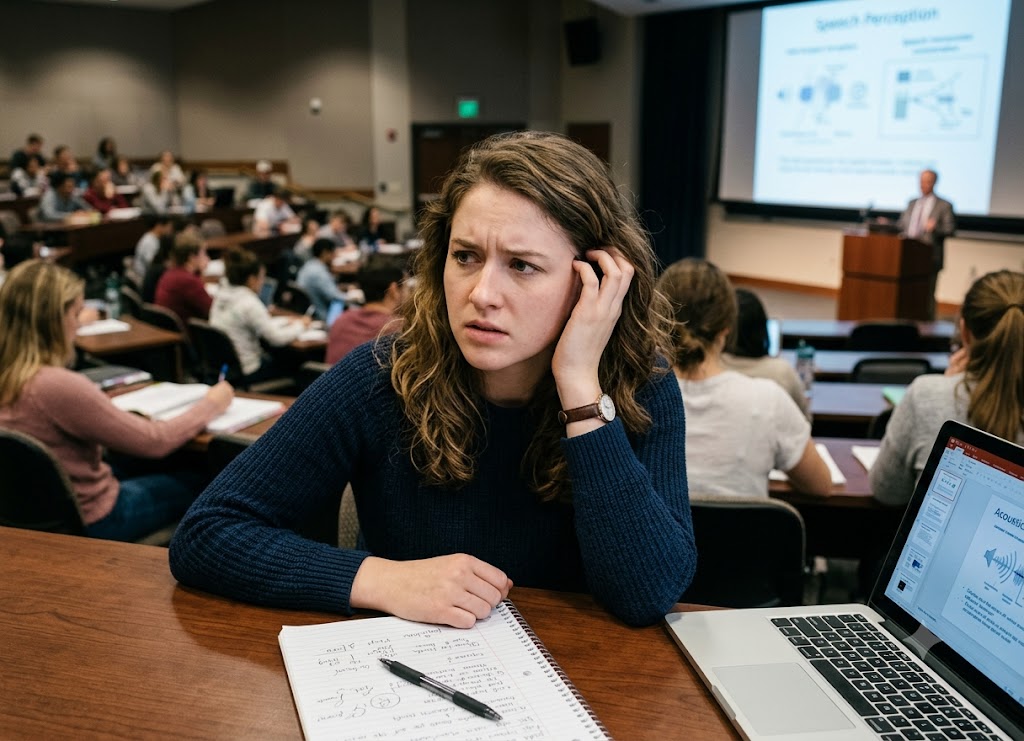
Auditory processing disorder (APD) is a condition in which a person may hear sounds normally but have difficulty with the way the brain organizes and interprets those sounds. Someone with APD can pass a standard hearing test and still struggle to understand speech, especially when there is background noise.
These difficulties can make everyday conversations tiring, confusing, or frustrating. Because the symptoms can resemble inattention, learning difficulties, hearing problems, or behavioral issues, APD can sometimes be difficult to recognize.
Recognizing the early signs can help children and adults receive appropriate support sooner. Common signs include difficulty following spoken instructions, frequently asking others to repeat themselves, confusing similar-sounding words, struggling in noisy environments, delayed responses, reading or spelling difficulties, and listening fatigue.
These problems may become more noticeable at school, work, restaurants, family gatherings, or other busy environments. This article explores seven signs of auditory processing disorder that are easy to overlook and explains why a professional evaluation may be helpful.
Deconstructing the Neurological Mechanics of APD
An auditory processing disorder affects the way the central nervous system handles and interprets sound. The important difference is between hearing a sound and understanding what that sound means.
The ears collect sound normally, but the brain may have difficulty organizing, separating, and interpreting the information.
[Clear Acoustic Signal] ──► Inner Ear ──► [Central Nervous System] ──► Difficult-to-Interpret Message
When auditory processing is affected, several parts of sound perception may become challenging.
Auditory Discrimination: The brain may have difficulty identifying small differences between similar sounds. A person may confuse words such as “boat” and “coat” or similar-sounding numbers and words.
Auditory Figure-Ground Processing: Most people can focus on one speaker while filtering out background sounds. Someone with APD may have difficulty separating a teacher’s, coworker’s, or family member’s voice from sounds such as conversations, air conditioning, traffic, or keyboard noise.
Auditory Closure: This ability helps the brain understand speech when parts of a word or sentence are unclear or missing. With APD, missing even a small part of spoken information may make it harder to understand the complete message.
Hardware vs. Software: APD vs. Hearing Loss
An auditory processing disorder is different from typical hearing loss. Hearing loss generally involves the physical structures responsible for detecting sound, while APD involves difficulties with processing and interpreting sounds.
                       [Auditory Difficulty Comparison]
                                    │
              ┌─────────────────────┴─────────────────────┐
              ▼                                           ▼
 [Peripheral Hearing Loss]              [Central Auditory Processing Disorder]
  ├── Involves the hearing system        ├── Involves sound processing
  ├── May affect audiogram results       ├── Standard hearing may be normal
  └── Louder sound may help              └── Louder sound may not solve the problem
The Hardware (Hearing Loss): Hearing loss can result from problems affecting the outer, middle, or inner ear, including the cochlea or auditory nerve. Because sound detection is affected, a standard hearing test may show reduced hearing ability. Depending on the type and severity of hearing loss, hearing aids or other treatments may improve access to sound.
The Software (APD): With auditory processing disorder, a person may have normal basic hearing but still struggle to interpret spoken information. Simply increasing the volume may not solve the problem because the main difficulty is processing the sound rather than detecting it.
Behavioral Signs and Daily Practical Expressions
Because APD affects the interpretation of sound rather than simply its volume, it can influence communication and everyday interactions.
[Spoken Instruction] ──► Hearing the Sound ──► [Slower Processing] ──► Difficulty Understanding
A person may hear someone clearly but still have trouble understanding exactly what was said. They may describe the experience as being able to hear the speaker but needing more time to process the message.
Because the brain may need additional time to organize and interpret incoming sounds, responses can sometimes be delayed. This can make it difficult to keep up with fast conversations, classroom discussions, lectures, or several instructions given at once.
7 subtle symptoms of Auditory Processing Disorder
The seven subtle symptoms of Auditory Processing Disorder include difficulty understanding speech in noisy environments, frequently mishearing words, trouble following multi-step directions, appearing inattentive, having poor auditory memory, responding slowly in conversations, and struggling with phone calls.
These signs may occur because the central auditory system has difficulty processing sounds even when basic hearing is normal. Looking at each symptom more closely can help explain how APD may appear in everyday life.
Early Interpersonal Communication Lag
Because auditory processing disorder affects how the brain interprets sound, its signs may appear as subtle communication or behavior changes. These signs can easily be mistaken for ordinary distraction or a lack of attention.
[Fast Spoken Input] ──► Normal Hearing ──► [Longer Processing Time] ──► Delayed Response
Increased Auditory Latency (Delayed Responses)
People with APD may sometimes take longer to respond during conversations. Their brains may need additional time to organize the sounds, separate important information, and understand the meaning before they can respond.
This delay does not necessarily mean the person is ignoring the speaker or failing to pay attention.
- Real-World Example: During a fast-moving group discussion, someone with auditory processing disorder may have something useful to say but need extra time to process what others have said. By the time they are ready to respond, the conversation may have already moved to another topic.
The Exhaustion of Phone Conversations
Phone calls can be particularly difficult for people with auditory processing disorder because they remove many visual clues used during face-to-face conversations.
Facial expressions, lip movements, gestures, and body language can all provide helpful context. Without those clues, the listener must depend almost entirely on the audio signal. Poor call quality or background noise can make the task even harder.
As a result, some people may find phone conversations tiring and prefer written communication when possible.
Attention and Memory Load Failures
When the brain has difficulty processing spoken information, it can also become harder to remember and follow what was said.
                         [Auditory Processing Challenges]
                                      │
              ┌───────────────────────┴───────────────────────┐
              ▼                                               ▼
 [Auditory Working Memory Difficulty]             [Background Noise Overload]
  ├── Details may be lost quickly                  ├── Distracting sounds remain noticeable
  ├── Instructions become harder to follow        ├── Important speech is harder to isolate
  └── Information may need repeating              └── Can appear like inattentiveness
Trouble with Multi-Step Spoken Directions
This difficulty can involve auditory sequencing and working memory. When someone gives several spoken instructions, the brain needs to remember each step and keep the correct order.
For someone with APD, some of that information may be lost or become mixed together.
- Real-World Example: If a teacher says, “Take out your math book, turn to page 52, and complete the first three problems,” a person with APD may remember only part of the instruction or complete the steps in the wrong order.
Apparent Inattentiveness vs. Filter Overload
This symptom may sometimes be mistaken for ADHD or daydreaming. However, difficulty focusing on speech can occur because the brain has trouble filtering background sounds.
A pencil dropping, someone talking nearby, traffic outside, or an air conditioner may remain distracting when the person is trying to listen to one speaker. The resulting difficulty concentrating may look like inattention even when the person is making an effort to listen.
Poor Auditory Memory
When spoken information is not processed clearly, remembering it can become more difficult. A person may have trouble recalling names, dates, instructions, or important points from a lecture or conversation.
Written notes, text messages, emails, or other visual reminders may help preserve information that was presented verbally.
Acoustic Discrimination Failures in Everyday Environments
Many signs of auditory processing disorder involve difficulty separating and identifying sounds, particularly when several sounds occur at the same time.
[Speech + Background Noise] ──► Ear Detects Sounds ──► Brain Processes Competing Signals ──► Difficulty Understanding
Auditory Figure-Ground Discrimination Breakdown
This is a common difficulty associated with APD. A person may struggle to follow conversations in places such as busy restaurants, classrooms, offices, or crowded homes.
Most people can automatically reduce their attention to unimportant background sounds. Someone with APD may find it much harder to separate the main speaker’s voice from surrounding noise.
Poor Auditory Discrimination (Frequent Mishearing)
Auditory discrimination involves recognizing differences between similar speech sounds. With APD, a person may have difficulty distinguishing sounds such as /p/ and /b/ or /sh/ and /ch/.
This can lead to frequent misunderstandings or requests for repetition. The problem is not necessarily that the speaker is too quiet; the listener may need clearer or more carefully delivered information.
Diagnostic Symptom Matrix
| Subtle Symptom | Possible Processing Difficulty | Common Misattributions |
|---|---|---|
| Noisy Environment Difficulty | Difficulty separating speech from background sounds | Social anxiety, introversion, or selective hearing |
| Frequent Mishearing | Difficulty distinguishing similar speech sounds | Hearing loss or lack of attention |
| Multi-Step Tracking Trouble | Difficulty with auditory sequencing and working memory | Disobedience, forgetfulness, or poor understanding |
| Apparent Inattentiveness | Difficulty filtering distracting sounds | ADHD or daydreaming |
| Poor Auditory Memory | Difficulty retaining spoken information | Carelessness or poor note-taking |
| Delayed Conversation Responses | Need for additional time to process speech | Hesitancy, shyness, or slow responses |
| Phone Call Challenges | Lack of visual cues and possible audio-quality problems | Rudeness or lack of interest |
Understanding how these symptoms interact can make auditory processing disorder easier to recognize. Since these challenges may affect school, work, and relationships, early recognition can help individuals seek appropriate support from an audiologist or other qualified professional.
What causes APD symptoms and when should you seek a diagnosis?
Auditory Processing Disorder can be associated with several factors, including developmental differences, neurological conditions, chronic ear infections, and head injuries. In some cases, the exact cause may not be clear.
A professional evaluation may be appropriate when listening difficulties happen regularly and interfere with school, work, communication, or daily activities. A qualified audiologist can assess hearing and determine whether additional auditory processing testing is needed.
Underlying Causes and Neurological Risk Factors
The factors associated with auditory processing disorder may affect the development or function of the central auditory pathways.
[Changes in Auditory Input] ──► [Auditory Pathway Development] ──► [Differences in Central Processing]
Early Childhood Ear Infections
Repeated middle-ear infections during infancy and early childhood may temporarily affect hearing because of fluid buildup. Repeated or fluctuating changes in hearing during important developmental periods may affect how the auditory system develops.
A history of ear infections does not automatically mean that a person will develop APD, but it can be one factor considered during an evaluation.
Neurological Trauma and Acquired Damage
Although APD is often discussed in relation to development, auditory processing difficulties can also occur after certain neurological events or injuries.
Potential factors include:
- Traumatic Brain Injuries (TBIs): Injuries that affect areas involved in hearing or sound processing.
- Vascular Events: Conditions such as strokes that affect brain regions involved in language or auditory processing.
- Neurological Conditions: Certain neurological disorders may interfere with normal communication within the brain.
Developmental and Genetic Influences
- Birth-Related Complications: Premature birth, low birth weight, or certain prenatal complications may affect overall neurological development.
- Genetic Predisposition: Auditory processing difficulties can occur more often within some families, and a family history of related learning or language difficulties may be relevant.
- Clinical Co-occurrence: APD may occur alongside conditions such as ADHD, autism spectrum disorder, dyslexia, or other learning and language difficulties. Careful assessment can help distinguish overlapping symptoms.
When to Seek an Evaluation: Overlapping Conditions
Because the signs of auditory processing disorder can resemble other conditions, professional evaluation is important when listening difficulties consistently interfere with everyday life.
                    [Overlapping Listening Symptoms]
                                  │
            ┌─────────────────────┼─────────────────────┐
            ▼                     ▼                     ▼
 [Auditory Processing]       [ADHD]              [Anxiety]
  ├── Difficulty processing   ├── Attention may   ├── Worry may
  │   spoken information      │   shift           │   affect focus
  └── Trouble separating     └── Executive       └── Concentration
      sounds                     challenges          may be affected
It is important to distinguish APD from other conditions with similar outward signs.
For example:
- A child with ADHD may miss instructions because their attention has shifted away from the speaker.
- A child with APD may be trying to listen but have difficulty interpreting the sounds reaching the brain.
Because these behaviors can look similar, self-diagnosis may be unreliable. A qualified professional can assess hearing, auditory processing, language, attention, memory, and learning factors as needed.
The Specialist Evaluation and Access to Targeted Support
A formal evaluation for APD is typically performed by an audiologist with appropriate training in central auditory processing. A basic hearing screening alone may not identify auditory processing difficulties.
[Standard Hearing Assessment] ──► [Specialized Auditory Testing] ──► [Evaluation] ──► [Support Strategies]
The Clinical Diagnostic Process
The evaluation may include a series of listening tests in a controlled environment. Depending on the person’s age and needs, testing may examine how well they understand speech in noise, distinguish different sounds, process competing signals, and recognize patterns in sound.
The results can help identify areas where auditory processing may be difficult.
Benefits of a Formal Diagnosis
A formal evaluation can help identify appropriate support strategies, including:
Academic and Workplace Accommodations: Students may benefit from supports such as preferential seating, written instructions, reduced background noise, or additional time when appropriate. Adults may also benefit from communication or workplace accommodations.
Assistive Listening Technologies: Some people may benefit from remote microphone or other assistive listening systems that make the primary speaker easier to hear in noisy settings.
Targeted Environmental and Coping Strategies: Audiologists and other professionals can recommend strategies such as reducing background noise, improving room acoustics, using written information alongside spoken instructions, and asking speakers to slow down or face the listener.
How is Auditory Processing Disorder managed and distinguished from other conditions?
Auditory Processing Disorder is generally managed with a combination of targeted support, communication strategies, and environmental adjustments. Because its symptoms can overlap with ADHD and other learning or attention conditions, specialized assessment can help determine which difficulties are related to auditory processing.
A comprehensive evaluation can help guide management strategies based on the individual’s specific needs, age, symptoms, and test results.
Divergent Neurological Pathways: APD vs. ADHD
Although auditory processing disorder and ADHD can have similar outward signs, such as difficulty following spoken instructions or appearing distracted, they are different conditions.
[Spoken Information] ──► [Attention Regulation Difficulty] ──► ADHD
[Spoken Information] ──► [Auditory Processing Difficulty] ──► APD
The Mechanism of Failure
The APD Mechanism: A person with APD may be actively trying to listen but have difficulty organizing, separating, or interpreting incoming sounds. Background noise can make this challenge more noticeable.
The ADHD Mechanism: ADHD can affect attention regulation, impulse control, working memory, and organization. A person may miss an instruction because their attention has shifted before the information is fully processed.
Clinical and Diagnostic Distinctions
Because APD and ADHD can look similar, professional evaluation is important.
- Primary Area of Difficulty: APD primarily involves processing and interpreting auditory information. ADHD primarily involves attention regulation and executive functioning.
- Common Challenges: APD may involve difficulty understanding speech in noise, distinguishing sounds, or processing verbal information. ADHD may involve difficulty sustaining attention, organizing tasks, or controlling impulses.
- Professional Assessment: APD is evaluated by an appropriately trained audiologist using auditory processing tests. ADHD is evaluated through clinical assessment by qualified healthcare professionals.
The Multi-Faceted Management Framework
Managing auditory processing disorder may involve several approaches depending on the individual’s specific difficulties.
                       [APD Management Approach]
                                  │
          ┌───────────────────────┼───────────────────────┐
          ▼                       ▼                       ▼
 [Direct Support]       [Environmental Changes]   [Compensatory Strategies]
  ├── Auditory training  ├── Preferential seating  ├── Clarification
  ├── Listening practice ├── Reduced background    ├── Written information
  └── Speech processing  │   noise                 └── Assistive technology
      activities         └── Better acoustics
Direct Therapeutic Interventions
Depending on the evaluation results, audiologists or speech-language professionals may recommend auditory training or other structured activities. These approaches may focus on skills such as distinguishing speech sounds, processing auditory patterns, and understanding speech in background noise.
Environmental Modifications
Simple changes to the listening environment may reduce the effort required to understand speech:
- Preferential Classroom/Office Seating: Sitting closer to the primary speaker and away from distracting noise sources may help.
- Acoustic Conditioning: Reducing echoes and reverberation with appropriate room treatments can improve the listening environment.
- Clear Visual Positioning: Having the speaker face the listener provides additional visual information, including facial expressions and lip movements.
Compensatory Strategies and Assistive Technology
- Active Listening Habits: Individuals can ask speakers to repeat or rephrase information, slow down, or provide written instructions when necessary.
- Assistive Listening Technologies (FM Systems): Remote microphone systems can transmit a speaker’s voice more directly to the listener and may be helpful in noisy environments.
Inside the Audio Booth: Advanced Testing Protocol
An evaluation for auditory processing disorder generally begins with a standard hearing assessment to make sure basic hearing ability is understood before specialized processing tests are considered.
[Standard Hearing Test] ──► [Specialized Listening Tests] ──► [Auditory Processing Assessment]
Once basic hearing has been evaluated, specialized tests may be used to examine different aspects of auditory processing.
Dichotic Listening Tests
These tests present different sounds to each ear at the same time. The person may be asked to repeat information heard in both ears or focus on information presented to one ear.
This can help assess how the brain handles competing auditory information.
Temporal Processing Tests
These tests examine how the brain recognizes the timing and sequence of sounds. For example, a person may be asked to identify brief pauses in sound or recognize patterns involving different pitches.
Monaural Low-Redundancy Speech Tests
These tests examine how well a person understands speech when some information has been altered or removed. Speech may be filtered, modified, or presented with background noise to evaluate how the auditory system handles incomplete or difficult signals.
Developmental Presentation: Childhood vs. Adulthood
The underlying listening difficulties associated with auditory processing disorder can appear differently depending on a person’s age and environment.
[Childhood School Setting] ──► Listening Challenges ──► Academic/Behavior Concerns
[Adult Work & Social Setting] ──► Listening Challenges ──► Fatigue & Communication Difficulties
The Childhood Profile (Academic Strain)
In children, APD may become especially noticeable in classrooms because they are expected to listen, process information, and follow instructions while dealing with other sounds.
- Academic Expression: Children may have difficulty connecting sounds with letters, following multi-step instructions, or understanding teachers when the classroom is noisy.
- Behavioral Misattributions: Their difficulties may be mistaken for inattentiveness, selective hearing, behavioral problems, dyslexia, or another learning or attention issue.
The Adult Profile (Compensated Strain and Fatigue)
Adults may develop ways to manage their listening difficulties over time, but challenging environments can still make symptoms noticeable.
- Workplace Friction: Adults may find meetings, phone calls, group discussions, or verbal instructions especially demanding when information is delivered quickly or without written support.
- Auditory Fatigue and Isolation: Busy social environments such as restaurants, parties, and conferences can require considerable effort to follow conversations. This may lead to listening fatigue.
- Relationship Strains: Frequently asking someone to repeat themselves or missing parts of conversations may sometimes be misunderstood as a lack of interest, even when the actual issue is difficulty processing speech.
Conclusion
Auditory processing disorder can affect communication, learning, attention, and everyday interactions even when basic hearing appears normal. Signs such as difficulty understanding speech in noisy environments, frequent mishearing, trouble following multi-step instructions, delayed responses, and listening fatigue should not be ignored when they occur regularly.
APD can overlap with ADHD, language disorders, learning difficulties, autism, and hearing-related conditions. Because of this overlap, a careful professional assessment is important.
If auditory processing disorder is suspected, an audiologist, speech-language pathologist, or appropriate educational specialist can help determine what type of evaluation and support may be useful.
Frequently Asked Questions
1. What is auditory processing disorder?
Auditory processing disorder is a condition that affects how the brain processes and interprets sounds. A person may hear sounds clearly but still have difficulty understanding speech, especially when background noise is present.
It is sometimes called central auditory processing disorder (CAPD). It can affect both children and adults and may interfere with communication, school, work, and everyday activities.
2. What are common signs of auditory processing disorder?
Common signs include difficulty understanding speech in background noise, frequently asking people to repeat themselves, mishearing words, and trouble following spoken instructions.
Some people may need extra time to respond because they need longer to process spoken information. Children may appear distracted or confused during verbal lessons, while adults may have difficulty with meetings, phone calls, group conversations, or fast speech.
3. Is auditory processing disorder the same as hearing loss?
No. Auditory processing disorder is different from typical hearing loss.
In many cases, a person with APD can detect sounds normally but has difficulty interpreting them. This means they may pass a basic hearing test but still struggle to understand spoken language, particularly in noisy environments.
A full evaluation may include both standard hearing tests and specialized auditory processing assessments.
4. How is auditory processing disorder diagnosed?
Auditory processing disorder is generally evaluated by an audiologist using specialized listening and processing tests.
The assessment may examine how well a person understands speech in noise, distinguishes similar sounds, recognizes auditory patterns, and processes information presented to both ears. Other professionals may also assess language, attention, memory, or learning abilities when appropriate.
5. How is auditory processing disorder managed?
Management may include auditory training, listening therapy, classroom or workplace accommodations, communication strategies, and environmental changes.
Helpful strategies may include reducing background noise, providing written instructions, using visual cues, allowing additional processing time, and using assistive listening technology when appropriate.
The most suitable approach depends on the person’s age, symptoms, evaluation results, and whether other learning, language, or attention difficulties are present.