
What a High Gleason Score Means for Prostate Cancer
A Gleason score is one of the key factors doctors use when evaluating prostate cancer. It is determined by examining prostate tissue obtained during a biopsy and assessing how abnormal the cancer cells look under a microscope. Instead of measuring the size of a tumor, the Gleason score provides information about how the cancer may behave, including its potential to grow and spread. Today, doctors commonly use the Gleason score together with the Grade Group system to better describe cancer aggressiveness and help guide treatment decisions.
A high Gleason score generally means the prostate cancer cells look more abnormal and may behave more aggressively than cells with a lower score. However, the Gleason score is only one part of the overall assessment. Doctors also consider PSA levels, imaging results, tumor stage, biopsy findings, and a person’s overall health when developing a treatment plan. This article explains what a high Gleason score may mean, how it can affect prognosis, and which treatment approaches may be considered at different stages of prostate cancer.
What Does a High Gleason Score Mean for Prostate Cancer Aggressiveness?
A high Gleason score indicates that the prostate cancer cells seen in a biopsy have a more abnormal and disorganized appearance. This pattern is generally associated with a greater potential for aggressive growth and spread. The Gleason grading system is based on how prostate cancer tissue looks under a microscope and helps pathologists estimate the biological behavior of the cancer.
The Pathological Microscopic Grading Scale
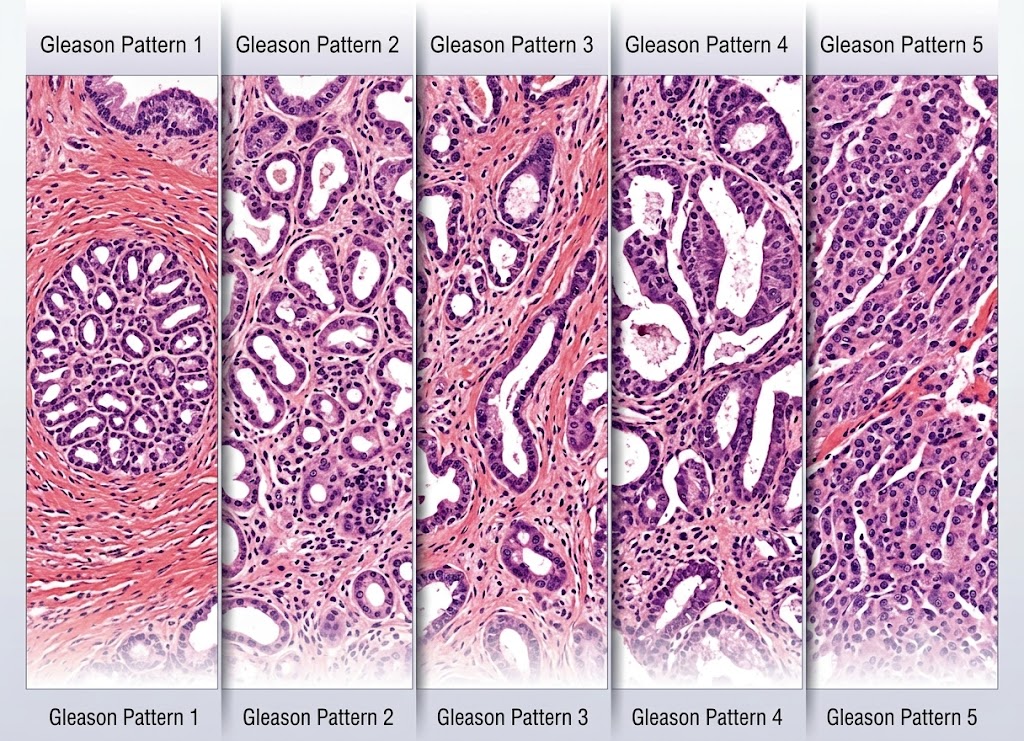
When examining a prostate biopsy under a microscope, a pathologist assigns a pattern grade based on how closely the cancerous tissue resembles normal prostate tissue.
Grade 3 represents a lower-grade, well-differentiated pattern. The cancer cells still form recognizable glandular structures. Although the glands may be smaller, more crowded, and less organized than healthy prostate glands, their basic structure remains visible. This pattern is commonly seen in a Gleason score 6 cancer.
Grade 4 represents a high-grade, poorly differentiated pattern. At this stage, the individual glands become less clearly defined and may fuse together. The cells can form irregular structures, sheets, or sieve-like patterns. These changes indicate a more abnormal tissue structure and are associated with a higher level of cancer aggressiveness.
Grade 5 represents the highest-grade pattern. The cancer cells show little or no recognizable gland formation. Instead, they may grow in solid sheets, cords, or individual cells. This pattern reflects highly abnormal tissue and is associated with a greater potential for invasive behavior and spread.
Note: Grades 1 and 2 are rarely used in modern prostate cancer biopsy reports because they generally resemble normal prostate tissue too closely.
Calculating the Combined Gleason Score
The Gleason score prostate cancer calculation combines two grades identified in the biopsy. The pathologist determines the two most common cancer growth patterns and adds them together:
Primary Pattern Grade + Secondary Pattern Grade = Total Gleason Score
The Primary Pattern Grade is the pattern that makes up the largest portion of the cancer and is listed first.
The Secondary Pattern Grade is the second most common pattern and appears after the first number.
The order of these numbers is important. For example, a Gleason score 7 can be reported as 4 + 3 = 7 or 3 + 4 = 7. In a 4 + 3 cancer, Grade 4 is the dominant pattern, while in a 3 + 4 cancer, Grade 3 is dominant. These two cancers have the same total score but can have different risk profiles.
Modern Gleason scores generally range from 6 to 10.
High-Risk Gleason Classifications (Scores 8 to 10)
Gleason scores of 8, 9, and 10 are considered high-grade prostate cancers and are associated with a greater risk of aggressive growth and spread.
Gleason Score 8 is classified as Grade Group 4. It can occur as 4 + 4 = 8, 3 + 5 = 8, or 5 + 3 = 8. The presence and proportion of higher-grade patterns can provide additional information about the cancer’s behavior.
Gleason Score 9 is classified as Grade Group 5. It can be reported as 4 + 5 = 9 or 5 + 4 = 9. The presence of Grade 5 tissue indicates a particularly high-grade cancer with a greater potential for aggressive behavior and spread.
Gleason Score 10 is also classified as Grade Group 5. A score of 10 is reported as 5 + 5 = 10 and represents the highest possible Gleason score. It indicates that both of the predominant patterns identified in the biopsy are Grade 5.
Overview of the Gleason Grading Framework
- Gleason 6 Prostate Cancer: A prostate Gleason score 6 is usually written as 3 + 3 = 6. It represents a lower-grade cancer and may be appropriate for active surveillance in carefully selected patients.
- Gleason Score 7: This includes 3 + 4 and 4 + 3 cancers. The order of the numbers matters because it shows which grade is dominant.
- High Gleason Scores (8-10): These are high-grade cancers with a greater potential for aggressive growth and spread and often require active treatment.
The Typical Prognosis with a High Gleason Score
A high Gleason score, particularly a score of 8 to 10, is associated with a higher risk of cancer progression, recurrence after treatment, and metastasis compared with lower scores. However, the Gleason score does not determine an individual’s outcome by itself. It is one important factor doctors use when estimating risk and planning treatment.
Long-Term Survival and Recurrence Trends
Receiving a high Gleason score can be concerning, but it is important to remember that the score is a risk factor rather than a prediction of exactly what will happen to one person.
For men with high-risk prostate cancer that remains localized, outcomes can still be favorable with appropriate treatment. Prognosis depends on several factors, including PSA level, tumor stage, the extent of cancer found in the biopsy, imaging results, and the treatment selected.
Higher-grade cancers have a greater chance of returning after initial treatment than lower-grade cancers. One way doctors monitor for recurrence is by checking prostate-specific antigen, or PSA, levels after treatment.
Two important concerns include:
- Biochemical Recurrence (BCR): This refers to a rise in PSA after initial treatment that may indicate that prostate cancer has returned or remains present. The risk varies according to the cancer’s grade, stage, PSA level, and treatment.
- Metastatic Potential: Higher-grade cancer cells have a greater potential to spread beyond the prostate. Possible sites include nearby lymph nodes and bones.
The Path to a Cure for High-Risk Disease
A high Gleason score does not automatically mean that prostate cancer cannot be treated with curative intent. When high-risk cancer is detected while it remains localized, doctors may use treatments designed to eliminate the cancer and reduce the risk of recurrence.
Definitive Local Treatments: Depending on the individual’s cancer characteristics, treatment may include radical prostatectomy or radiation therapy. Surgery removes the prostate and may include removal and examination of nearby lymph nodes. Radiation uses targeted energy to destroy cancer cells.
Multimodal Treatment Plans: High-risk prostate cancer may require more than one treatment approach. For example, radiation may be combined with androgen deprivation therapy (ADT), which lowers testosterone levels and can make prostate cancer cells more vulnerable to treatment.
The Power of Early Intervention: Identifying high-grade prostate cancer before it spreads can provide more opportunities for treatments aimed at controlling or eliminating the disease. The treatment approach depends on the cancer’s stage and the individual’s overall circumstances.
Comparing Outcomes: Scores 8, 9, and 10
Although Gleason scores 8, 9, and 10 are all considered high-grade, they represent different combinations of microscopic patterns.
Gleason Score 8 (Grade Group 4)
A Gleason score of 8 can occur when the biopsy contains predominantly Grade 4 patterns or a combination involving Grade 5 tissue. These cancers are considered high-grade and have a greater potential for progression than lower Gleason scores.
Gleason Score 9 (Grade Group 5)
A score of 9 is reported as either 4 + 5 = 9 or 5 + 4 = 9. Because Grade 5 tissue is present, these cancers are considered particularly aggressive and require careful evaluation and treatment planning.
Gleason Score 10 (Grade Group 5)
A Gleason score of 10 is reported as 5 + 5 = 10 and represents the highest possible score. The biopsy shows Grade 5 patterns as both the primary and secondary patterns. These cancers are considered very high grade and have a substantial potential for progression and spread.
The Standard Treatment Paths for a High Gleason Score?
Treatment for a high Gleason score depends on whether the cancer is confined to the prostate, has reached nearby tissues or lymph nodes, or has spread to distant parts of the body. For localized high-risk disease, treatment commonly involves surgery or radiation-based therapy, sometimes combined with hormone therapy.
Primary Curative Approaches for Localized High-Risk Disease
When a high Gleason score such as 8, 9, or 10 is confirmed, doctors generally consider active treatment rather than observation alone. The specific approach depends on the cancer’s stage, PSA level, imaging findings, overall health, and personal circumstances.
The two major treatment approaches for localized high-risk prostate cancer include radical prostatectomy and external beam radiation therapy, often combined with hormone therapy.
Radical Prostatectomy with Pelvic Lymph Node Dissection
Radical prostatectomy involves surgically removing the prostate gland and usually the seminal vesicles. In some patients, nearby pelvic lymph nodes are also removed and examined.
Analyzing these lymph nodes can help determine whether cancer has moved beyond the prostate. The surgical pathology report can also show whether the tumor has extended outside the prostate or involved the seminal vesicles.
Surgery may be performed using traditional open techniques or minimally invasive approaches, including robotic-assisted surgery.
External Beam Radiation Therapy paired with Androgen Deprivation Therapy
External beam radiation therapy uses targeted high-energy radiation to destroy cancer cells in the prostate and, when appropriate, nearby tissues.
For high-risk Gleason score prostate cancer, radiation may be combined with Androgen Deprivation Therapy (ADT), also known as hormone therapy. ADT reduces testosterone levels, which can slow the growth of prostate cancer cells and improve the effectiveness of radiation in appropriate patients.
The duration of hormone therapy varies depending on the patient’s risk level and treatment plan. High-risk disease may require long-term ADT under the guidance of the oncology team.
Multimodal Treatment Combinations to Improve Outcomes
Because high-grade prostate cancer has a greater risk of recurrence and spread, doctors may combine treatments to address both the known tumor and the possibility of microscopic disease elsewhere.
Surgery followed by Adjuvant Radiation or Hormone Therapy
After radical prostatectomy, the final pathology report may reveal features associated with a higher risk of recurrence. These can include positive surgical margins, extension beyond the prostate, or involvement of the seminal vesicles or lymph nodes.
Depending on these findings and the patient’s PSA results, doctors may recommend additional treatment such as radiation therapy or hormone therapy.
Advanced Treatment Intensification
For some patients with very high-risk disease, doctors may intensify treatment by adding newer hormone-targeting medications to the treatment plan.
Medications such as abiraterone or enzalutamide may be considered in certain situations. Whether these treatments are appropriate depends on the stage of the cancer, other risk factors, and the overall treatment strategy recommended by the oncology team.
Why Active Surveillance is Eliminated for High Gleason Scores
Active surveillance is generally designed for selected patients with lower-risk prostate cancer. It involves closely monitoring the cancer through PSA testing, examinations, imaging, and sometimes repeat biopsies rather than treating it immediately.
High-grade cancers, particularly Gleason scores 8 to 10, generally require active treatment because they have a greater potential for progression and spread.
Higher Risk of Progression: High-grade cancer is more likely to grow and spread than lower-grade disease. For this reason, delaying treatment may not be appropriate when the cancer has features associated with significant risk.
Need for Active Management: The goal of treating high-grade disease is to control the cancer and reduce the risk of progression. Doctors select treatment based on the complete risk profile rather than the Gleason score alone.
Individualized Clinical Decisions: Although active surveillance is generally not used for high-risk prostate cancer, treatment decisions should be based on the individual’s complete clinical picture. A urologist, radiation oncologist, or medical oncologist can explain the available options and their potential benefits and risks.
What Other Factors Influence Your Prostate Cancer Diagnosis and Treatment?
The Gleason score is important, but it is not the only factor used to understand prostate cancer. Doctors also consider the Grade Group, PSA level, clinical stage, imaging findings, biopsy results, and sometimes genomic testing.
Together, these factors provide a more complete picture of the cancer and help doctors develop an individualized treatment plan.
The Modern Grade Group System
The Grade Group system was introduced to make prostate cancer grading easier to understand. It divides prostate cancer into five groups, from Grade Group 1, representing the lowest grade, to Grade Group 5, representing the highest grade.
- Grade Group 1: Corresponds to a Gleason score 6 (3 + 3). It represents lower-grade prostate cancer.
- Grade Group 2: Corresponds to a Gleason score 7 (3 + 4). The Grade 3 pattern is dominant.
- Grade Group 3: Corresponds to a Gleason score 7 (4 + 3). The Grade 4 pattern is dominant.
- Grade Group 4: Corresponds to a Gleason score of 8, including 4 + 4, 3 + 5, and 5 + 3.
- Grade Group 5: Corresponds to Gleason scores of 9 and 10 and represents the highest-grade category.
Integrating PSA Levels and Clinical Staging (TNM)
A high Gleason score prostate cancer diagnosis needs to be considered alongside PSA levels and the cancer’s clinical stage.
PSA is a protein produced by prostate cells and is measured through a blood test. The PSA level can provide useful information about the amount and activity of prostate tissue and is an important part of prostate cancer risk assessment.
The TNM system describes how far the cancer has progressed:
- T (Tumor): Describes the primary tumor and whether it has grown beyond the prostate.
- N (Nodes): Indicates whether nearby lymph nodes contain cancer.
- M (Metastasis): Indicates whether the cancer has spread to distant parts of the body, such as the bones.
The Power of Combined Data
Looking at Gleason score, PSA, and TNM stage together gives doctors a more complete risk assessment.
For example, someone with a Gleason score of 9, a high PSA level, and evidence that the tumor has grown outside the prostate may require a different treatment approach from someone with a Gleason score of 8 whose cancer remains confined to the prostate.
This combined assessment helps doctors determine the stage and risk category of the cancer and select an appropriate treatment strategy.
Advanced Genomic Testing: Looking Inside the Tumor
Microscopic examination provides important information about the cancer, while genomic tests can provide additional information about the biological characteristics of tumor cells.
Some genomic tests analyze specific gene activity within prostate cancer tissue. Examples include Decipher, Prolaris, Oncotype DX Prostate, and ProMark.
These tests may provide additional information in selected patients, including:
Predicting Metastasis Risk: Some genomic tests can help estimate the likelihood of cancer progression or spread and may provide additional information beyond traditional clinical factors.
Guiding Post-Surgical Decisions: In certain cases, genomic test results may help doctors decide whether additional treatment should be considered after surgery.
Clarifying Ambiguous Profiles: When clinical information does not provide a clear picture of the cancer’s behavior, genomic testing may offer additional biological information that can support treatment discussions.
Genomic testing is not necessary for every patient, and its usefulness depends on the individual’s specific diagnosis and treatment situation.
The Value of an Expert Pathology Second Opinion
A second pathology review can be especially useful when a prostate biopsy shows high-grade disease. The purpose is to confirm that the cancer has been accurately graded before major treatment decisions are made.
Pathologists examine biopsy samples and assign grades based on the patterns they see. In some cases, expert pathologists may interpret the same tissue somewhat differently.
For example, distinguishing between a 4 + 3 = 7 cancer and a 3 + 5 = 8 cancer can change the Grade Group and overall risk assessment. Having biopsy slides reviewed by an experienced urological pathologist can provide additional confidence in the diagnosis and help ensure that treatment decisions are based on an accurate interpretation.
Conclusion
A high Gleason score means that prostate cancer cells appear more abnormal under the microscope and may have a greater potential to grow or spread. However, the score does not determine the outcome by itself.
Doctors consider the Gleason score together with PSA levels, imaging findings, tumor stage, biopsy results, overall health, and other relevant factors when developing a treatment plan. Depending on the situation, treatment may include surgery, radiation therapy, hormone therapy, chemotherapy, or newer targeted treatments.
Understanding your Gleason score and Grade Group can make it easier to discuss your diagnosis, prognosis, and treatment options with your healthcare team. If you receive a high score, your doctor can explain what it means in the context of your complete test results and individual circumstances.
Frequently Asked Questions
1. What is a Gleason score?
A Gleason score is a grading system used to describe how prostate cancer cells look under a microscope. It is calculated by adding the grades of the two most common cancer growth patterns identified in a biopsy. Modern prostate cancer Gleason scores generally range from 6 to 10. Higher scores are associated with a greater potential for aggressive behavior.
2. What is considered a high Gleason score?
Gleason scores of 8, 9, and 10 are generally considered high-grade prostate cancer. These cancers have a greater potential to grow and spread than lower-grade tumors. However, a high score does not necessarily mean the cancer has already spread. PSA testing, imaging, and staging are needed to determine the extent of the disease.
3. Does a high Gleason score mean the cancer is advanced?
Not necessarily. A Gleason score describes the appearance and grade of the cancer cells, not how far the cancer has spread. A person can have a high-grade tumor that is still confined to the prostate. Doctors use the Gleason score together with PSA levels, imaging, and TNM staging to determine the overall extent of the cancer.
4. How does a Gleason score affect treatment?
The Gleason score is an important factor in treatment planning. Higher-grade cancers are more likely to require active treatment, which may include surgery, radiation therapy, hormone therapy, or combinations of these approaches. Lower-risk cancers may be suitable for active surveillance in selected patients. Age, overall health, cancer stage, and personal preferences may also influence the treatment plan.
5. Can a high Gleason score be treated successfully?
Yes. High-grade prostate cancer can be treated, and treatment may be given with curative intent when the disease is still localized. Depending on the stage and risk profile, treatment may include surgery, radiation, hormone therapy, chemotherapy, or newer systemic treatments. Outcomes vary from person to person, so the complete clinical picture is important.
6. What is the difference between a Gleason score and a Grade Group?
Both systems describe the grade and aggressiveness of prostate cancer, but the Grade Group system provides a simpler five-level classification.
Grade Groups range from 1 to 5, with higher groups representing higher-grade disease. For example, Gleason 3 + 3 = 6 corresponds to Grade Group 1, while Gleason scores 9 and 10 correspond to Grade Group 5. Doctors commonly use both the Gleason score and Grade Group when discussing prostate cancer.