

8 Brain Tumor Warning Signs People Often Overlook
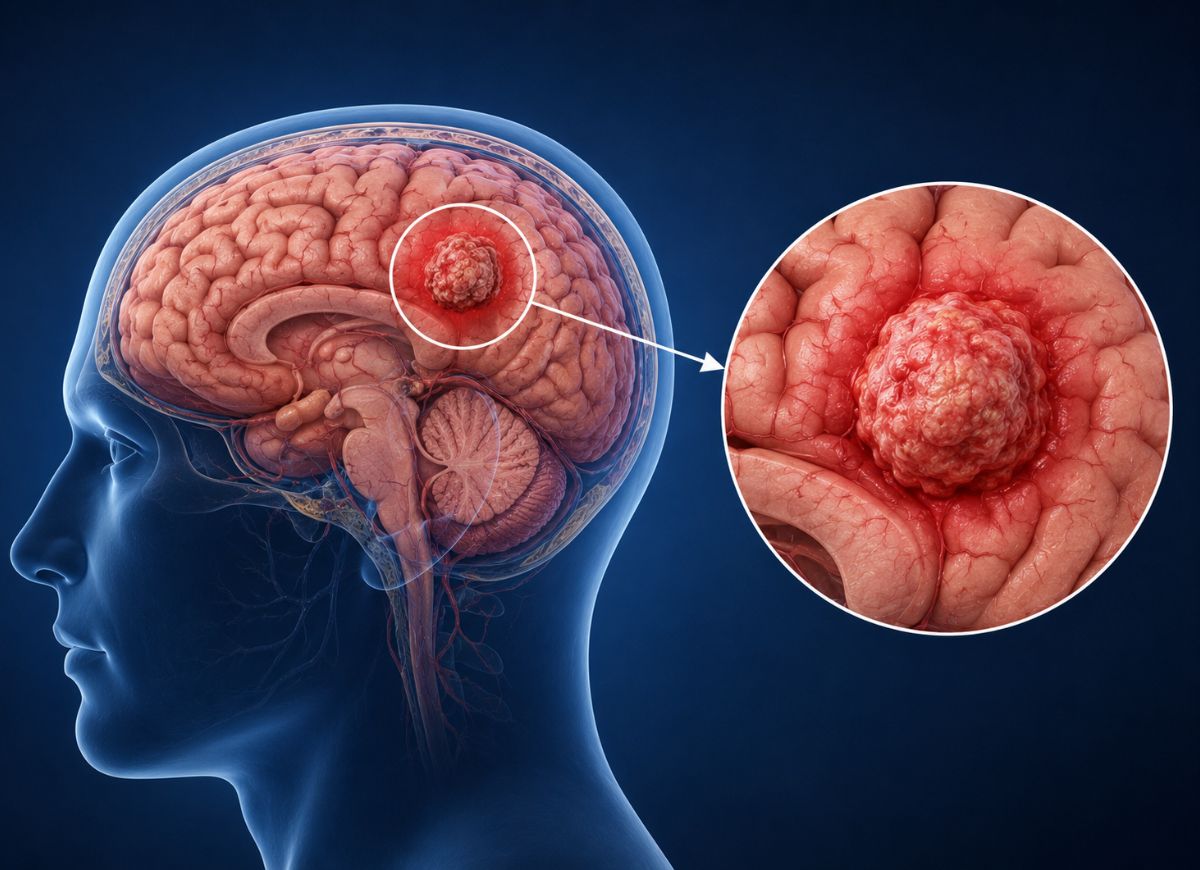
The brain controls nearly everything that makes daily life feel normal: memory, balance, speech, vision, mood, movement, sleep, and even how the body responds to pain. That’s why any unusual change involving the brain can feel unsettling. A headache that won’t behave like your usual headache. A sudden spell of dizziness. A small vision change. A strange weakness on one side. At first, these symptoms may seem easy to explain away as stress, exhaustion, dehydration, or too much screen time.
But sometimes the body is asking for closer attention. Brain tumors aren’t as common as many other cancers, yet they’re serious because even a small growth can affect important areas of the brain or spinal cord. In the U.S., about 24,740 malignant brain or spinal cord tumors are expected to be diagnosed in 2026, with around 18,350 deaths from these cancers. Brain and spinal cord cancers make up about 1% of new U.S. cancer diagnoses each year, but their impact can be life-changing.
The numbers broaden further when non-cancerous tumors are included. The National Brain Tumor Society estimates 81,104 adults age 40 and older will be diagnosed with a primary brain tumor in the U.S. in 2026, noting that brain tumors are the seventh most common tumor type overall in that age group.
The challenge is that symptoms don’t always appear dramatically. They can be subtle, inconsistent, and easy to mistake for everyday problems. Below, we look at 8 warning signs people often overlook, so you know which changes deserve attention.
The 8 Most Commonly Overlooked Signs
1. Subtle personality, mood, or behavioral changes. A tumor in the frontal or temporal lobes can disrupt the circuits responsible for emotional regulation, social behavior, and decision-making. The frontal lobe governs personality, planning, and impulse control, so a tumor there can cause uncharacteristic irritability, apathy, or a lack of social filter, sometimes closely mimicking depression. The temporal lobes process emotion and memory, so a tumor there can cause sudden, unprovoked fear, anxiety, or mood swings with no clear trigger. Because these symptoms overlap so much with psychiatric conditions, they’re often misdiagnosed, and family members are frequently the first to notice someone is “not themselves.” The gradual onset also means loved ones can adapt to a “new normal” without realizing something physical is happening.
2. Gradual loss of hearing or smell. This can point to an acoustic neuroma (a tumor on the nerve connecting the inner ear to the brain) or a tumor near the olfactory groove pressing on the smell nerve. Hearing loss is typically slow and one-sided, often accompanied by tinnitus or a feeling of fullness, and people frequently compensate unconsciously by favoring their good ear. Smell loss can make food taste bland or make it hard to detect smoke or gas, a real safety concern. Because unilateral hearing loss is often blamed on wax buildup or aging, and smell loss on allergies or a cold, this symptom is easy to dismiss. The key red flag is that it’s one-sided, since normal age-related sensory decline is usually bilateral.
3. Unexplained clumsiness or balance issues. This can signal a problem in the cerebellum, the brain’s coordination center. A tumor here can cause gait ataxia (difficulty walking straight, stumbling, a wide stance for stability), trouble with fine motor tasks like buttoning a shirt or writing, or a tremor when reaching for something. It can also cause vertigo or persistent unsteadiness, different from ordinary lightheadedness, often described as the room spinning or feeling like standing on a rocking boat. Because occasional clumsiness is normal, a gradual increase is often brushed off as aging or fatigue, and vertigo is often attributed to inner ear issues or blood pressure changes.
4. Persistent, unexplained fatigue. This is a profound exhaustion, not relieved by rest, disproportionate to activity level. It can stem from the body’s inflammatory response to the tumor, from the tumor affecting brain structures that regulate sleep and alertness (like the brainstem or hypothalamus), or from increased pressure inside the skull as the tumor grows. Fatigue is one of the most common, nonspecific complaints in medicine, tied to hundreds of conditions, so it’s rarely near the top of the list when a doctor first considers causes, and people often blame it on work, family responsibilities, or poor sleep.
5. Subtle speech or language difficulties (aphasia). This can show up as trouble finding words, jumbled sentences, or difficulty understanding others, depending on which language center is affected. Word-finding difficulty (anomia) is often the earliest sign, more pronounced than an occasional “tip-of-the-tongue” moment. A tumor in Broca’s area (frontal lobe) affects fluent speech production, making it slow and halting. A tumor in Wernicke’s area (temporal lobe) affects comprehension, producing fluent but nonsensical speech the person may not realize doesn’t make sense. Mild word-finding trouble is easily dismissed as normal aging, stress, or “brain fog.”
6. Growing confusion with everyday tasks. This points to disrupted executive function, often from a tumor in the frontal or parietal lobes. Someone might suddenly struggle with multi-step tasks like following a recipe or managing finances, make uncharacteristically poor decisions, or become confused about time, date, or familiar surroundings. Because it’s common to blame confusion on stress or being overloaded, and in older adults it’s often assumed to be normal aging or early dementia, the gradual onset can mask a physical cause underneath.
7. New numbness or tingling in the limbs (paresthesia). This can result from a tumor in the parietal lobe, which processes bodily sensation, disrupting signals from the limbs. It’s typically one-sided, a key distinguishing feature. Less commonly, tumors in the brainstem or spinal cord can cause it more broadly, affecting both sides. Some episodes are brief, caused by abnormal electrical activity known as a focal aware sensory seizure. Because numbness and tingling have many benign causes (a limb falling asleep, a pinched nerve, carpal tunnel, diabetic neuropathy), this symptom is usually dismissed unless it’s persistent, progressive, or paired with weakness or clumsiness on the same side.
8. Gradual short-term memory loss. A tumor affecting the temporal lobes or hippocampus can interfere with forming and retrieving new memories. Someone might forget recent conversations or repeatedly ask the same question because the information isn’t being encoded properly. Even a tumor located elsewhere can cause this indirectly by raising pressure inside the skull, affecting attention and concentration broadly. The key difference from ordinary age-related forgetfulness is pattern and progression: tumor-related memory loss tends to be more profound and paired with other neurological symptoms like personality changes or language trouble. Because memory lapses are common and often blamed on aging, stress, or busyness, a brain tumor typically isn’t suspected unless the decline progresses quickly or other symptoms appear.
When to Seek Medical Help
See a doctor if any of these symptoms are new, persistent, progressive, or occur together. A single, fleeting instance is rarely alarming, but a pattern that doesn’t resolve on its own warrants evaluation.
Is one symptom enough to see a doctor? Yes. The key is whether it represents a clear, sustained change from your normal baseline with no obvious explanation. A single day of unusual fatigue is common; debilitating fatigue that doesn’t improve over two weeks is a red flag. Numbness after sleeping on your arm wrong has an obvious cause; persistent numbness on one side of your face or a limb for no reason doesn’t, and deserves evaluation. A doctor’s role isn’t to assume the worst, but to begin a logical process of elimination, possibly including blood tests or a referral to a neurologist for imaging.
What symptom combinations are a bigger concern? Two or more of these signs occurring together makes an underlying issue like a brain tumor more likely, since a cluster often points to one cause affecting multiple brain functions:
- Personality changes with headaches, especially headaches that worsen in the morning or wake someone from sleep, can suggest rising pressure inside the skull.
- Clumsiness or an unsteady gait paired with new vision problems (blurred or double vision, loss of peripheral vision) can point to an issue in the cerebellum or brainstem, which govern both coordination and eye movement.
- One-sided weakness, numbness, or clumsiness combined with speech or language trouble strongly suggests a problem localized to one side of the brain.
- A new seizure in an adult is a medical emergency and is often the first sign of a brain tumor, especially if paired with growing confusion, memory loss, or trouble with daily tasks.
How Symptoms Vary by Tumor Location
Brain tumor symptoms depend heavily on where the tumor is, since different regions control different functions:
- Frontal lobe (personality, executive function, movement): behavior and mood shifts, difficulty problem-solving, weakness on one side of the body
- Cerebellum (balance, coordination, posture): dizziness, unsteady gait, trouble with fine motor tasks
- Occipital lobe (vision processing): blurred or double vision, or loss of vision in specific areas
- Temporal lobe (memory, hearing, language comprehension): trouble recalling recent events, phantom sounds, difficulty understanding speech
Primary vs. Secondary Brain Tumors
A primary brain tumor originates from cells within the brain itself or its immediate surroundings (like the meninges, cranial nerves, or pituitary gland). Common examples include gliomas and meningiomas, and they range from slow-growing and benign to aggressive and malignant.
A secondary (metastatic) brain tumor doesn’t originate in the brain at all. It forms when cancer cells spread from a primary cancer elsewhere in the body, traveling through the bloodstream or lymphatic system. These are actually more common than primary brain tumors in adults, most often originating from lung cancer, breast cancer, melanoma, colon cancer, or kidney cancer. The distinction matters enormously for treatment, since a metastatic tumor requires treating the original cancer as well.
Benign vs. Malignant Tumor Symptoms
Both types can cause similar general symptoms, headaches, seizures, nausea, blurred vision, simply because both take up space inside the rigid skull and press on brain tissue (the “mass effect”).
Benign tumors (like most meningiomas) are typically slow-growing with distinct borders and don’t invade surrounding tissue. Symptoms often develop gradually over months or years, and some are found incidentally on an unrelated scan.
Malignant tumors (like glioblastomas) grow rapidly and invade nearby tissue, often causing a faster, more severe symptom progression, sometimes a noticeable decline in neurological function over just weeks or months.
How Brain Tumors Are Diagnosed
Diagnosis starts with a neurological exam, testing motor skills, coordination, balance, reflexes, vision, hearing, and cognitive function. If this suggests an abnormality, MRI is the preferred imaging tool, providing detailed images of the brain’s soft tissue, sometimes with a contrast agent to make a tumor more visible. A CT scan is faster and useful in emergencies for detecting bleeding or pressure changes, though less detailed for soft tissue. A definitive diagnosis requires a biopsy, where a sample of tumor tissue is analyzed under a microscope to confirm the tumor type and grade, which guides treatment.
Frequently Asked Questions
How long can someone survive with a brain tumor?
It depends on tumor type, grade, location, size, age, overall health, and treatment response. Some people live many years, especially with slower-growing or non-cancerous tumors; others face a more serious outlook with aggressive tumors like glioblastoma, which has a notably lower survival rate, particularly in older adults.
Can you live a normal life with a brain tumor?
Yes, particularly with slow-growing or well-controlled tumors. Daily life may still require adjustments, regular scans, seizure medication, or managing fatigue and other symptoms, but many people continue working, studying, and maintaining routines.
How serious is a brain tumor?
Always worth taking seriously, since the brain controls so many essential functions. Even non-cancerous tumors can cause problems if they press on important tissue or block fluid flow. Seriousness depends on grade, location, growth speed, and treatment options, and any new seizure, worsening headache, vision change, confusion, weakness, or speech difficulty should be checked promptly.
What age do brain tumors start?
They can occur at nearly any age. Some types are more common in children, others in adults, and risk varies by tumor type rather than age alone. Symptoms, medical history, and imaging matter more than age when investigating a possible tumor.
How fast do brain tumors grow?
It depends on type and grade. Tumors are generally graded 1 to 4: grades 1 and 2 are low-grade and typically slower-growing, while grades 3 and 4 are high-grade, faster-growing, and more likely to spread into nearby tissue.
What’s a “Stage 3” brain tumor?
Brain tumors are usually described by grade rather than stage. A grade 3 tumor means the cells look very abnormal and grow faster than grade 1 or 2, and is considered high-grade with a higher likelihood of spreading into nearby tissue. Treatment may involve surgery, radiation, chemotherapy, or a combination.
What should someone with a brain tumor avoid?
Skipping medical appointments, ignoring new symptoms, stopping medication without guidance, driving after seizures unless cleared, and taking unapproved supplements that could interfere with treatment. Alcohol, smoking, poor sleep, and unmanaged stress can also make recovery harder. Any sudden weakness, seizure, severe headache, confusion, vision change, or speech problem should be taken seriously.
What’s the most advanced grade?
Grade 4 is the highest and most aggressive, meaning cells look very abnormal and tend to grow and spread quickly. Even so, outlook varies based on tumor type, location, age, molecular markers, and treatment response.
What treatments target brain tumor cells?
Surgery, radiation therapy, chemotherapy, targeted therapy, tumor treating fields, and in some cases immunotherapy, often used in combination depending on tumor type, grade, and molecular features.
The Bottom Line
Brain tumor warning signs can be easy to overlook because they often resemble everyday problems at first. Headaches, dizziness, vision changes, memory trouble, mood shifts, nausea, seizures, or weakness may be blamed on stress, aging, tiredness, or lack of sleep. Still, the brain is too important to ignore when symptoms feel unusual, persistent, or progressive. Not every headache or dizzy spell means a brain tumor, but patterns matter: symptoms that keep returning, worsen over time, or appear alongside other neurological changes deserve medical attention. Early evaluation helps identify the real cause and guide the right next step, whether the issue turns out to be minor, treatable, or more serious.