
10 Warning Broken Ribs Symptoms After a Fall or Accident
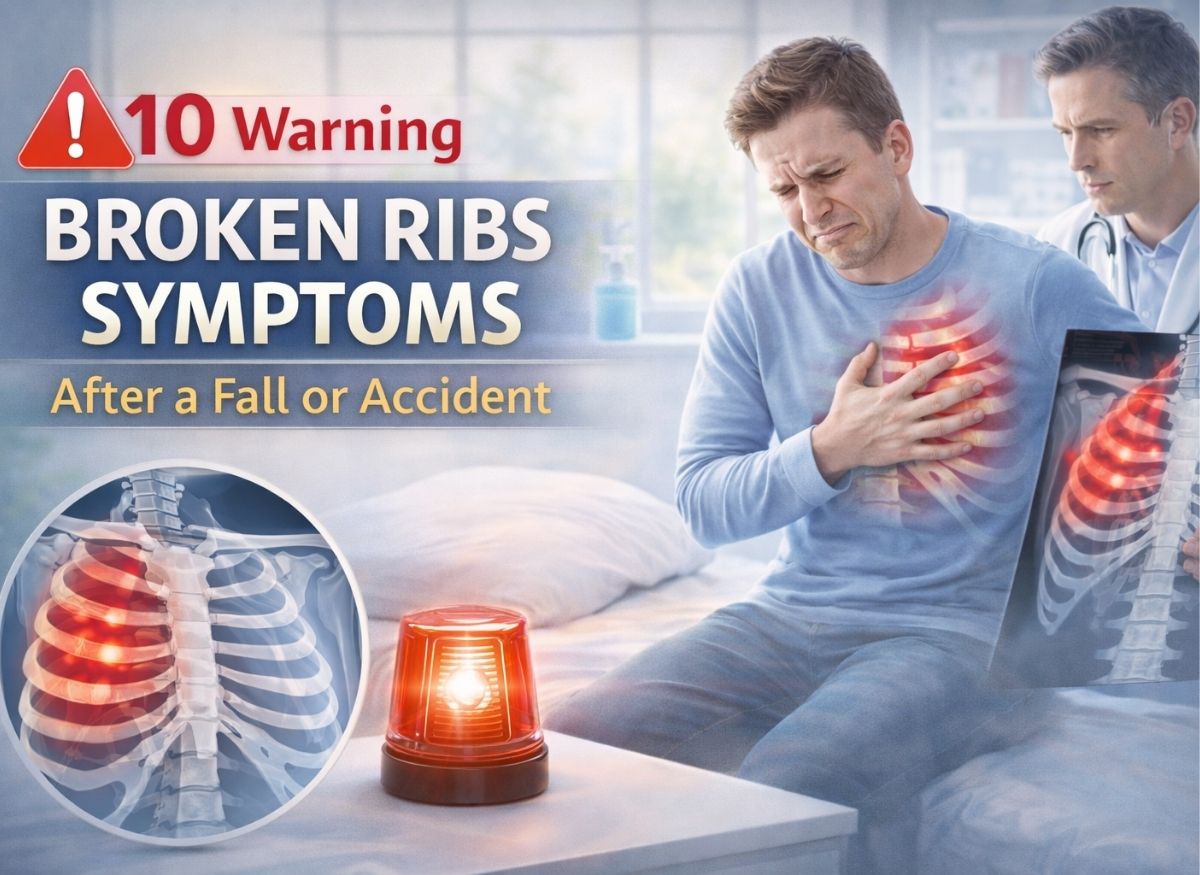
A fall or accident can leave you with more than passing pain. Sometimes it fractures a rib. Spotting broken ribs symptoms early helps you avoid complications and get care in time. Whether the cause is a car crash, a sports injury, or a simple slip, rib fractures are among the most common chest injuries, and they can affect your breathing, movement, and comfort.
Unlike many other fractures, broken ribs often heal by themselves, but they can turn dangerous if ignored. Sharp chest pain, trouble breathing, swelling, and tenderness can all point to a fracture. In serious cases, a broken rib can injure an internal organ or puncture a lung, so a quick diagnosis matters.
In this guide, we cover the ten most common warning signs of a rib fracture, what causes them, and when to see a doctor. Knowing these signs early helps you get the right treatment and recover faster.
What Is a Broken Rib?
A broken rib, or rib fracture, happens when one or more bones in the rib cage crack or break from trauma or heavy force. The rib cage has 12 pairs of curved bones that protect organs like the heart and lungs and support breathing and upper body movement. Ribs move with every breath, so even a small fracture can hurt a lot and make breathing harder.
The usual causes are falls, car accidents, sports injuries, and direct blows to the chest. Severe or long-lasting coughing, or a condition like osteoporosis that weakens the bones, can also lead to fractures. A fracture can be anything from a hairline crack to a break involving several ribs or displaced bone fragments.
Most rib fractures are simple and heal within six to eight weeks with rest and pain control. Severe cases, especially with multiple fractures, can cause lung injury or internal bleeding and need urgent care. Knowing what a broken rib is helps you take chest injuries seriously and get help when needed.
Extensive Clinical Overview of the 10 Primary Warning Signs of a Rib Fracture
A rib fracture is a significant bone injury in which a rib in the chest cage cracks or breaks. Broken ribs symptoms range from pain at one spot to serious breathing trouble. The rib cage is built to be both protective and flexible, but hard impacts or repeated strain can damage it. Knowing the signs of cracked ribs helps you tell an ordinary injured rib from a life-threatening lung problem.
After a chest injury, the main question is usually whether you broke a rib or just bruised the soft tissue. A fracture typically causes a “stabbing” pain, quite different from the dull, spreading ache of a pulled muscle. The symptoms are not limited to the impact spot. They can spread across the chest wall and affect everything from moving around to breathing.
Analysis of Pain, Tenderness, and Physical Sensations
Pain is the clearest clue. Unlike a bruise, fracture pain is specific and reacts strongly to movement. These first three signs make up the core of the pain picture.
1. Sharp, Pinpointed Pain
The key sign is point tenderness. Try locating the pain with one finger. With a fracture, the pain sits exactly where the bone broke, because the periosteum, the nerve-rich membrane around the bone, is disrupted. It is often described as sharp and knife-like, unlike the wider soreness of a muscle pull.
2. Severe Pain When You Move Your Torso
Ribs are attached to the spine and breastbone through the muscles between them, so bending, twisting, or reaching shifts the fracture site. The muscles tug on the unstable fragments, which grind against each other and cause sudden jolts of pain. Many people stay stiff and rigid, which is the body’s natural way of splinting the area and protecting irritated nerves.
3. Extreme Tenderness to Touch
How sensitive the area is to pressure helps separate a broken rib from a bruised one. A doctor pressing on a fracture, even lightly, can trigger intense pain because the pressure disturbs the broken bone ends. If touching one specific rib causes a sharp, out-of-proportion spike, that is a strong sign of a true break.
The Critical Link Between Respiration and Rib Fractures
The most distressing symptoms involve breathing. The chest wall has to expand for the lungs to fill, so a fracture sets oxygen need against pain. Three of the most dangerous warning signs come from this conflict.
4. Sharp Pain When Breathing Deeply
A deep breath lifts and widens the rib cage, which moves the broken ends of the bone. The result is a stabbing jolt that makes people catch their breath and stop mid-inhale. Being unable to take a full breath is one of the most reliable signs of cracked ribs.
5. Severe Pain When Coughing or Sneezing
A cough or sneeze is a forceful, involuntary squeeze of the breathing muscles, and it is often the most painful moment with a rib injury. The ribs move sharply and pain spikes. Many people instinctively press a pillow against the chest to soften the movement, which is a useful behavioral clue.
6. Shallow Breathing
To avoid the pain of expanding the chest, people start taking short, shallow breaths. It gives short-term relief but is risky, because the lungs do not fully expand and fluid can build up in the lower lungs. This is why rib care focuses so strongly on preventing pneumonia. Short, rapid breaths to avoid pain are a clear sign of significant damage.
Visible, Audible, and Positional Indicators of a Fracture
The last group of signs involves how the chest looks and how the body reacts to position. They help answer the question of how to tell if you broke a rib.
7. Bruising and Discoloration (Ecchymosis)
Blunt trauma often leaves noticeable bruising with a fracture. A contusion also bruises, but deep purple or blue skin combined with pinpoint tenderness points more toward a fracture. It shows the force was strong enough to rupture blood vessels near the bone.
8. Localized Swelling
Swelling is the body’s first reaction to injury. A lump or swollen area directly over a rib, rather than in the soft tissue between ribs, suggests the bone itself is hurt. The area may also feel sore under clothing or light touch.
9. A Crunching Sound or Feeling (Crepitus)
In more severe cases you may feel or hear grinding or crunching when you move or breathe deeply. This is called crepitus, and it happens when the two broken ends of the bone rub together. It is a strong sign of a fracture rather than a bruise.
10. Not Being Able to Lie on the Injured Side
Most people with a fracture cannot lie on the injured side, because body weight presses on the break and causes constant throbbing pain. This often causes poor sleep in the early days of recovery.
Immediate Actions and Medical Next Steps for Broken Ribs Symptoms
Managing broken ribs symptoms starts with immediate self-care and moves into longer-term medical follow-up. Because the rib cage exists to help you breathe, any damage puts the lungs at risk. Your first goal is twofold: control the pain enough to breathe fully, and watch for signs of organ or blood vessel complications that could become emergencies.
There is a real paradox here. A broken arm can be held still in a cast, but ribs have to keep moving for you to breathe. That is the central challenge of rib recovery. Treatment therefore focuses on pain control and habits that stop fluid from building up in the lungs and causing infection.
Immediate First Aid and Stabilization Techniques
The first hours matter for controlling inflammation. Care has moved away from tight bindings toward active breathing maintenance.
Cold Application
Applying a cold pack to the painful area is the first step. In the first 48 hours, use ice for 15 to 20 minutes every few hours. Cold narrows blood vessels, which limits bleeding into the soft tissue that causes swelling and bruising. It also numbs the nerves between the ribs, easing sharp pain so deep breathing is easier.
Pain Relief Medication
Good pain control protects your lungs. If it is safe for you, anti-inflammatory drugs such as ibuprofen or naproxen are preferred because they treat both pain and inflammation around the bone. If you have kidney disease or take blood thinners, acetaminophen is a common alternative. The goal is not to feel nothing, but to have enough relief to avoid the shallow breathing that leads to pneumonia.
Never Wrap the Chest Tightly
Do not bind the chest. It may feel like splinting, but this outdated practice is now considered dangerous. A tight wrap stops the lungs from clearing mucus and raises the risk of partial lung collapse (atelectasis). Current guidelines say the chest must stay free to expand fully.
Respiratory Safeguards: The Pillow Splint Technique
To make breathing easier, doctors recommend supporting the injury by hand during forceful movements.
Controlled Deep Breathing
Even with significant damage, take at least 10 slow, deep breaths every hour you are awake. This keeps the air sacs (alveoli) in the lower lungs open. To manage the pain, hold a pillow firmly against the injured area as you inhale. The pressure dampens the movement of the broken bone ends and reduces the pain spike during deep breaths or coughing.
Identifying Medical Emergencies and Red Flags
Most broken ribs do heal on their own, but some symptoms signal internal injury and call for an emergency room visit right away.
Signs of Lung and Blood Vessel Trauma
Go to the emergency room immediately if you notice any of these:
- Pneumothorax: extreme shortness of breath, or stabbing pain that worsens with each breath, can mean a punctured, collapsing lung.
- Coughing up blood (hemoptysis): even a small amount suggests a sharp rib fragment has injured lung tissue.
- Signs of internal bleeding: dizziness, confusion, or fainting, especially if a lower rib has cut the spleen (left side) or liver (right side).
- Flail chest: if part of the rib cage moves inward when you inhale and outward when you exhale (paradoxical breathing), this is life-threatening.
How will a doctor diagnose a rib fracture?
Diagnosis is a step-by-step process to tell minor muscle and bone trauma from a serious structural injury. The doctor combines what you describe with what they find on examination. The main goals are to check whether the chest wall is stable and to make sure the organs behind the ribs are safe.
The process moves from a hands-on exam to detailed imaging, so even hidden hairline fractures or internal problems are caught before they lead to pneumonia or internal bleeding.
The Clinical Foundation: History and Physical Examination
It usually starts with your medical history and a focused exam. The doctor will ask you to point to the painful spot and explain how the injury happened, such as a fall, an accident, or even a cough. This helps narrow down which ribs and organs may be involved.
- Visual inspection: the doctor looks for bruising, swelling, and paradoxical movement, where part of the chest sinks in as you inhale. These can suggest an unstable flail chest or an open wound.
- Palpation: the doctor presses along the rib cage to find the exact spot that causes sharp pain. A specific, excruciating point rather than a broad sore area strongly suggests a fracture. They may also feel crepitus, the grating of bone fragments, which is a definite sign of a broken rib.
- Listening to the lungs (auscultation): with a stethoscope, the doctor checks that air moves equally in both lungs. Weak breath sounds on the injured side could mean a collapsed lung (pneumothorax) or blood in the chest cavity (hemothorax). A “pleural rub,” a grating sound, suggests the lung lining is irritated by sharp rib ends.
Confirmatory Imaging: Visualizing the Damage to Ribs
An exam can point strongly to a fracture, but imaging is the only way to actually see the break and judge how serious it is. The choice of test depends on the symptoms and your overall condition.
- Chest X-ray: the usual first test. It shows displaced fractures well and is the gold standard for spotting a collapsed lung or fluid buildup. However, X-rays can miss up to 50% of non-displaced or hairline fractures. Even with a negative X-ray, a doctor may still treat you for a rib injury based on your symptoms.
- CT scan: if symptoms are severe or suggest internal injury, a CT scan is the better choice. It gives 3D cross-section views that reveal tiny fractures and shows whether the spleen, liver, or major blood vessels were affected.
- MRI and bone scans: less common. An MRI can assess cartilage and ligaments, which do not show well on X-rays. A bone scan can help when symptoms developed gradually, such as an athlete’s stress fracture from repetitive motion, because it detects bone-healing activity.
Establishing the Recovery Roadmap
Once a fracture is confirmed and dangerous complications are ruled out, the focus shifts to treatment. Since a cast is not possible, the diagnosis becomes the base for a managed recovery.
A confirmed diagnosis lets your doctor give specific instructions, such as the right pain medication dose so you can keep doing the deep-breathing exercises that prevent pneumonia. Knowing that broken ribs typically take about six weeks to heal helps you plan your return to work or sports. The doctor’s aim is to keep your lungs and organs protected and working while the bone heals on its own.
The Differences Between a Fractured Rib and a Bruised Rib
People often confuse the two because they cause almost the same symptoms. The medical difference is whether the bone itself is broken or the damage is limited to soft tissue like muscles and ligaments.
A bruised rib (rib contusion) happens when an impact ruptures blood vessels in the skin or muscle, causing local swelling and bleeding. A fractured rib means the bone has actually cracked or broken.
The Biological Anatomy of the Injury
The chest wall is a layered structure of bone and muscle. Whatever tissue is hurt, the body’s inflammatory response is similar, which is why both can cause sharp, stabbing pain.
In a bruised rib, the bone stays whole. The pain comes from the periosteum or the muscles between the ribs. Because the bone is intact, the chest wall stays stable. In a fracture, that stability is lost. The bone may have a microscopic hairline crack or a fully displaced break where the ends no longer line up, and this causes the most severe symptoms.
Comparing Sensory and Mechanical Signs
Both injuries hurt more when you breathe deeply or twist, but a few clues suggest a fracture.
- Point tenderness vs. widespread soreness: a bruise usually feels sore across a broader, fleshier area. A fracture usually causes an intense jolt when you press one tiny spot on the bone.
- Crepitus: this crunching or grating feeling happens only with a fracture, never with a simple bruise, because it comes from broken bone ends rubbing together during movement or breathing.
Diagnostic Imaging and Clinical Risks
Pain alone makes the two hard to tell apart, so imaging is the standard route.
- X-rays and CT scans: a chest X-ray is the main tool and reveals most fractures. A bruised rib looks normal on X-ray because soft tissue inflammation does not show up. If symptoms are severe but the X-ray is clear, a CT scan can look for a subtle hairline fracture.
- Risk of internal complications: this is the most important reason to tell them apart. A bruised rib is painful but generally safe. A fractured rib can have jagged edges, and a displaced fragment may puncture the lung (pneumothorax) or cut organs like the spleen or liver. That is why a confirmed fracture needs closer medical monitoring than a bruise.
Management and the Path to Recovery
Treatment for both is almost the same, since a cast cannot be used on a moving chest wall. Either way, recovery centers on keeping the lungs clear.
Strategies for Effective Healing
Because deep breathing hurts with both injuries, people tend to breathe shallowly, which leads to fluid buildup and pneumonia. Good care includes:
- Pain management: medication to dull the pain so you can keep breathing deeply.
- Cold therapy: ice to reduce swelling and numb local nerves.
- Incentive spirometry: a breathing device that helps the lungs expand fully during the roughly six-week recovery.
Healing takes about six weeks for both injuries. The pain from a bruise may fade slightly sooner, but both need patience and steady deep-breathing exercises for a safe, full recovery.
Conclusion
Recognizing broken ribs symptoms after a fall or accident protects your health and helps prevent serious complications. Sharp chest pain, trouble breathing, bruising, and tenderness should never be ignored. Catching them early allows timely diagnosis, good pain control, and medical treatment when needed.
Many rib fractures heal naturally with rest and supportive care, but severe injuries may need hospital treatment. A prompt medical check rules out or addresses problems like a punctured lung, internal bleeding, or infection. Knowing the symptoms helps you react quickly and make informed choices about your care.
Stay alert and informed to lower your risks and recover more smoothly. If you have persistent pain or suspect a rib injury, see a healthcare professional right away. Acting early on broken ribs symptoms is the key to restoring comfort, mobility, and well-being.
Frequently Asked Questions (FAQ) About Broken Ribs Symptoms
What are the most common broken ribs symptoms?
Common symptoms include sharp chest pain, especially when breathing, coughing, or moving. You may also have swelling, tenderness, bruising, and trouble taking deep breaths. Pain usually gets worse with activity or pressure on the area. Spotting these early leads to quicker diagnosis and treatment.
How can I tell if my rib is broken or bruised?
A broken rib usually causes intense, localized pain that worsens with breathing, coughing, or movement, while a bruised rib tends to be milder. Because the symptoms overlap, imaging is often needed to tell them apart. An X-ray, CT scan, or ultrasound can confirm the diagnosis. See a healthcare provider if the pain persists or gets worse.
How long does it take for broken ribs to heal?
Most uncomplicated rib fractures heal in six to eight weeks. Recovery time depends on how severe the injury is, your age, and your overall health. Rest, pain control, and avoiding strenuous activity are essential. Severe fractures can take longer.
When should I see a doctor for broken ribs symptoms?
See a doctor if you have severe chest pain, shortness of breath, dizziness, or lasting discomfort after an injury. Get care immediately if breathing becomes difficult or symptoms worsen. These can signal complications like a punctured lung or internal bleeding. Early evaluation helps prevent life-threatening outcomes.
Can broken ribs heal on their own?
Yes, most broken ribs heal without surgery. Treatment focuses on pain relief, rest, and breathing exercises to prevent complications like pneumonia. Medical supervision is still important for proper healing. Severe or displaced fractures may need specialized treatment.
What complications can arise from broken ribs?
Most rib fractures heal without problems, but serious cases can lead to pneumothorax (collapsed lung), internal bleeding, pneumonia, or damage to nearby organs. Older adults and people with multiple fractures face a higher risk. Prompt medical care greatly lowers the chance of complications.
What should I avoid while recovering from a broken rib?
Avoid heavy lifting, strenuous exercise, and activities that strain the chest. Do not bind or tightly wrap the ribs, as it can restrict breathing and raise the risk of pneumonia. Follow your doctor’s advice and give the injury enough time to heal. Returning to normal activities gradually keeps recovery safe.