

8 Signs You’re Experiencing Cognitive Dissonance and How to Reclaim Calm
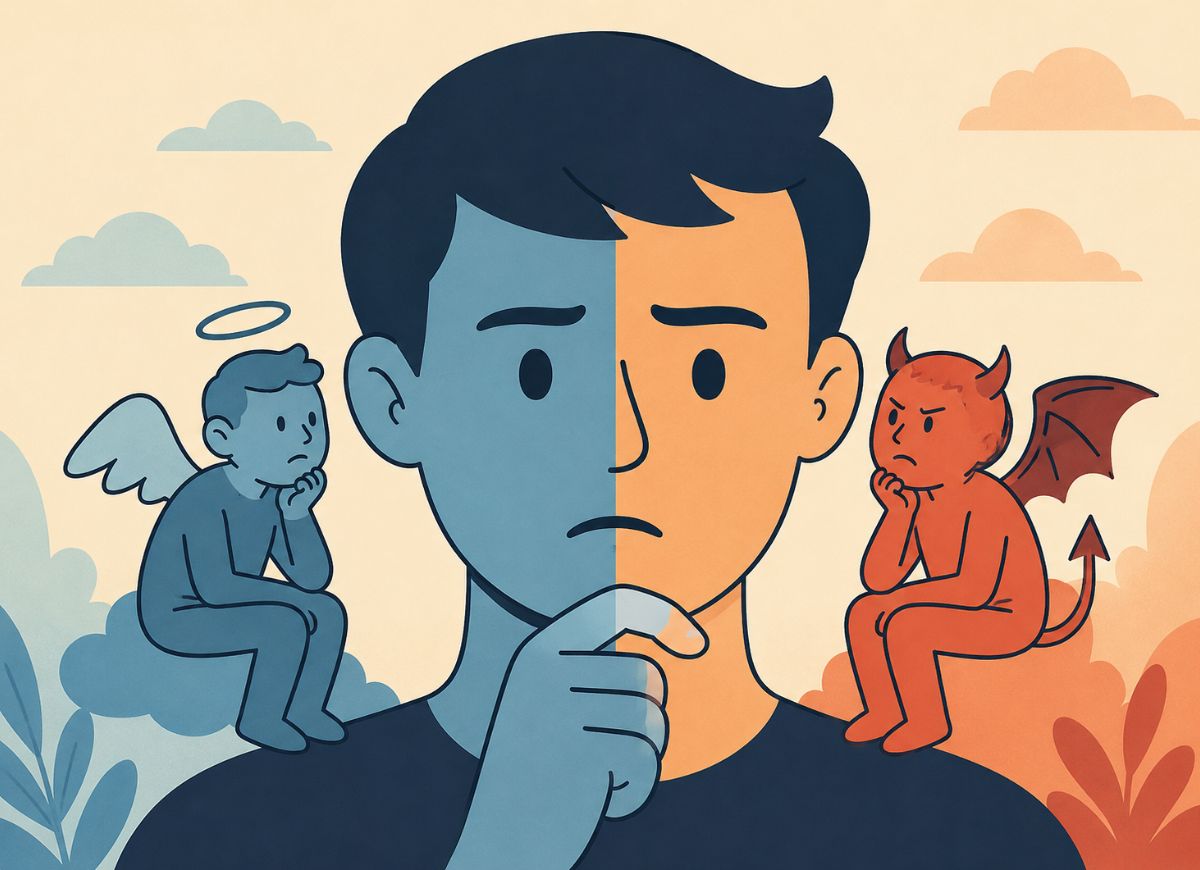
Inner conflict can sometimes be difficult to recognize. You may make choices that do not match your values, hold two opposing beliefs, or find yourself explaining away actions that make you uncomfortable. This mental tension may be a sign of cognitive dissonance, a psychological experience that occurs when your thoughts, beliefs, values, or behaviors do not agree with one another.
Cognitive dissonance is a normal part of being human. Everyone experiences it from time to time, whether over everyday decisions or more serious personal dilemmas. However, when these conflicts continue without being addressed, they can contribute to stress, anxiety, guilt, frustration, and emotional exhaustion.
For example, you may value your health but regularly avoid exercise. You might believe that honesty is important but tell a small lie to prevent an uncomfortable conversation. These contradictions can leave you feeling uneasy and may lead you to create explanations that make your behavior feel more acceptable.
The signs are not always obvious. You may notice yourself overthinking, avoiding certain information, struggling with decisions, seeking reassurance, or feeling guilty without realizing that an underlying conflict is responsible.
In this article, we will look at 8 common symptoms of cognitive dissonance. Understanding these patterns can help you recognize when your thoughts and actions are out of alignment, reflect on what is causing the conflict, and take steps toward greater clarity and emotional calm.
What Exactly Is Cognitive Dissonance?
Cognitive dissonance refers to the mental discomfort that occurs when a person holds two or more conflicting beliefs, ideas, or values, or when their behavior does not match what they believe. The concept was introduced by social psychologist Leon Festinger in 1957. His theory suggested that people naturally prefer consistency between their thoughts and actions.
When that consistency is disrupted, psychological tension can develop. This discomfort encourages people to find ways to reduce the conflict and restore a greater sense of internal balance.
Cognitive dissonance can develop in many situations. For example, you might struggle after choosing between two appealing options and later wonder whether you made the right decision. It can also happen when you continue a behavior that conflicts with something you strongly believe, such as smoking while knowing that smoking can seriously harm your health.
The intensity of the discomfort can depend on how important the conflicting beliefs are to you and how large the contradiction feels.
For instance, someone who strongly supports animal welfare but regularly eats meat may experience more noticeable conflict than someone who considers punctuality important but arrives two minutes late to a casual meeting.
To reduce this discomfort, people may change their behavior, adjust their beliefs, look for information that supports their choices, or convince themselves that the conflict is not particularly important.
8 Symptoms of Cognitive Dissonance
Feeling Uncomfortable or Stressed
One of the most common signs of cognitive dissonance is a general feeling of discomfort that you cannot immediately explain.
You may feel tense, anxious, irritated, embarrassed, or simply unsettled. Everything around you may appear normal, yet something still feels wrong.
This emotional discomfort can occur when your actions do not match your values or when you are struggling to accept two conflicting thoughts. Your mind is essentially signaling that something feels inconsistent and may need your attention.
Rationalizing or Justifying Actions
Another common response to cognitive dissonance is creating explanations that make a conflicting behavior seem more reasonable.
For example, someone who normally follows a strict budget might suddenly purchase an expensive gadget they do not need. Instead of acknowledging the contradiction, they may tell themselves, “I’ve been working hard, so I deserve it,” or “This will help me become more productive.”
The goal is not necessarily to deceive someone else. Often, the person is trying to make the decision feel acceptable to themselves and reduce the discomfort created by the contradiction.
Avoiding Contradictory Information
People may also avoid information that challenges their existing beliefs or behaviors. This can overlap with confirmation bias, which involves giving more attention to information that supports what you already believe.
For example, a long-term smoker who knows the health risks may avoid articles about smoking-related diseases or ignore public health warnings.
Avoiding uncomfortable information can temporarily reduce psychological tension because it prevents the conflict from becoming more noticeable.
This pattern can also occur with political or social beliefs, when someone primarily seeks information from sources that support their existing views.
Experiencing Regret or Guilt
Guilt, regret, and shame can also appear when your decisions do not match your expectations or values.
A common example is buyer’s remorse. After making a major purchase, such as buying a car or home, you may begin focusing on everything that could have been better about the decision.
You might compare your choice with the alternatives you rejected and wonder whether you made the right decision.
This creates tension between wanting to see yourself as someone who makes good decisions and the possibility that your recent choice may not have been ideal.
Seeking Constant Reassurance
Cognitive dissonance may also cause you to repeatedly seek reassurance from other people.
After making an important decision, you might continually ask friends or family members, “Did I make the right choice?” or “You think I made a good decision, right?”
Hearing others confirm your choice can provide temporary relief. Their reassurance becomes additional evidence that supports your decision and quiets the doubts that are creating discomfort.
Downplaying the Importance of the Conflict
Another way people reduce dissonance is by minimizing the importance of the contradiction.
This is sometimes called trivialization. Instead of changing the behavior, the person convinces themselves that the behavior is not serious enough to matter.
For example, someone who wants to eat healthier but regularly chooses junk food might say, “It’s only one candy bar,” or “You have to enjoy life sometimes.”
By making the conflict seem smaller, the person can reduce the guilt or discomfort associated with it.
Changing Your Beliefs
Sometimes changing a belief feels easier than changing a behavior.
Imagine someone who starts working for a company that uses business practices they once considered unethical. Over time, they may begin changing how they view those practices to reduce the tension between their job and their personal values.
Their thinking might shift from, “This is wrong,” to, “This is simply how business works.”
The change in belief makes the behavior feel less contradictory and can reduce the psychological discomfort.
Feeling Confused or Conflicted
Holding opposing thoughts can leave you feeling mentally confused or indecisive.
You may feel as though you are having an internal debate, with one part of you supporting a particular choice while another part argues against it.
This can make decisions more difficult and leave you uncertain about your priorities, values, or next steps.
Constantly going back and forth between conflicting thoughts can also consume a great deal of mental energy, leaving you feeling drained and emotionally unsettled.
How to Resolve Cognitive Dissonance
Cognitive dissonance can often be reduced by bringing your thoughts, values, and actions into better alignment.
You may choose to change a behavior, reconsider a belief, seek additional information, or reduce the importance you place on the conflict. The most appropriate approach depends on the situation and on which part of the conflict can realistically be changed.
Recognizing the contradiction is often the first step toward resolving it.
How to Stop the Mental Conflict of Cognitive Dissonance
Cognitive dissonance is not a permanent condition or a sign that something is wrong with your personality. It is a temporary state of psychological discomfort that can encourage you to examine what is happening internally.
Think of it as a warning signal. The discomfort itself is not necessarily the problem. Instead, it can indicate that something in your beliefs, choices, or behavior deserves closer attention.
Once you recognize the conflict, you can begin asking yourself useful questions.
For example:
- Does this action reflect the person I want to be?
- Are my current beliefs still important to me?
- Am I avoiding information because it makes me uncomfortable?
- Is there a healthier way to handle this situation?
- What would bring my actions and values closer together?
Taking time to reflect can help you understand why the conflict exists and decide what needs to change.
Learning how to recognize and manage cognitive dissonance does not mean you will never experience inner conflict again. Instead, it gives you better tools for responding to it when it appears.
Practical Strategies to Reduce Cognitive Dissonance
There are four main approaches people may use to reduce cognitive dissonance. The most helpful option depends on the situation and whether the behavior, belief, or interpretation can realistically be changed.
1. Change Your Behavior
Changing your actions so they better match your beliefs can be one of the clearest ways to reduce dissonance.
For example, if you believe regular exercise is important for your health but rarely exercise, you could begin adding physical activity to your routine.
Changing a long-standing habit can take effort, but when your actions begin reflecting your values, the source of the conflict may become much smaller.
2. Change Your Beliefs or Attitudes
Sometimes a person may reconsider a belief rather than change their behavior.
For example, someone who strongly believes they should never spend money unnecessarily might make an expensive purchase and later reconsider their rigid approach to saving.
They may decide that saving is important but that occasional spending on something meaningful is also reasonable.
Adjusting an overly strict belief can reduce the conflict between the person’s values and their behavior.
3. Add New Cognitions
Another strategy is to seek additional information or perspectives that help explain or support your decision.
For example, someone who purchases an expensive vehicle despite being concerned about money may focus on factors such as safety features, reliability, fuel efficiency, or resale value.
These additional considerations can change how the person views the decision and reduce the importance of the original conflict.
However, it is important to distinguish useful information from simply searching for evidence that tells you what you want to hear.
4. Reduce the Importance of the Conflict
Trivialization involves deciding that the contradiction is less important than it initially seemed.
For instance, someone who cares about reducing plastic waste but occasionally forgets reusable shopping bags might remind themselves that one small mistake does not define their overall environmental efforts.
This approach may be reasonable for minor inconsistencies. However, repeatedly minimizing serious conflicts can prevent you from addressing behaviors or decisions that genuinely need attention.
Real-world Examples and Related Psychological Concepts
Cognitive dissonance appears in many ordinary situations, from personal habits and relationships to work and purchasing decisions.
Understanding related concepts such as confirmation bias and effort justification can also help explain why people sometimes defend choices that conflict with their original beliefs.
Common Examples of Cognitive Dissonance In Daily Life
Cognitive dissonance can occur whenever your behavior conflicts with something you strongly believe.
For example, someone who cares deeply about environmental sustainability may work for a company with practices they believe contribute to pollution. Their belief that protecting the environment matters may conflict with their decision to remain in that job.
To reduce the discomfort, they might focus on the positive aspects of their work, tell themselves they can help create change from inside the company, or minimize the organization’s environmental impact.
Similar conflicts can occur in relationships. Someone may believe they deserve a supportive and healthy relationship while remaining in a relationship that repeatedly makes them unhappy.
They may focus heavily on their partner’s positive qualities, blame outside circumstances for the problems, or convince themselves that leaving would be worse than staying.
Money and consumer decisions can create similar tension. A person who considers themselves financially responsible may make an expensive impulse purchase that they cannot comfortably afford.
To feel better about the decision, they might focus on the product’s benefits, search for positive reviews, or tell themselves that the purchase was a special treat rather than an ongoing financial problem.
Cognitive Dissonance vs. Buyer’s Remorse
Cognitive dissonance is a broad psychological concept, while buyer’s remorse is one specific situation in which similar feelings can occur.
Cognitive dissonance can happen whenever beliefs, values, thoughts, and actions conflict. It may involve relationships, habits, ethics, work, health decisions, or personal choices.
Buyer’s remorse is specifically associated with regret or anxiety after making a purchase.
For example, you might buy an expensive product and later wonder whether you spent too much or chose the wrong option. The discomfort comes from the difference between wanting to make a smart purchase and worrying that your decision was a mistake.
The main difference is scope. Cognitive dissonance can occur in almost any area of life, while buyer’s remorse is connected specifically to purchasing decisions.
Dissonance may be reduced by changing behavior, changing beliefs, reconsidering the situation, or gaining new information. With buyer’s remorse, a person might justify the purchase, seek reassurance, read positive reviews, or return the item if that is possible.
Confirmation Bias Relating to Cognitive Dissonance
Confirmation bias and cognitive dissonance can work together.
Cognitive dissonance creates discomfort when thoughts or behaviors conflict. Confirmation bias involves giving greater attention to information that supports existing beliefs while overlooking or dismissing information that challenges them.
When people experience dissonance, looking for information that supports their existing choice can provide temporary relief.
Consider someone who purchases an expensive vehicle despite concerns about its reliability. They may feel tension between thinking of themselves as a careful consumer and worrying that they made a poor purchase.
To reduce that discomfort, they might search for positive reviews, focus heavily on the vehicle’s design and performance, and dismiss negative experiences from other owners.
This can make the decision feel more acceptable, even though the original concern has not necessarily disappeared.
What is the “Effort Justification” Paradigm in Cognitive Dissonance?
Effort justification is another concept associated with cognitive dissonance. It describes the tendency to value something more highly when we have invested significant effort, time, money, or emotional energy into achieving it.
When the outcome does not seem worthy of the effort, an uncomfortable contradiction can develop.
You may think, “I worked extremely hard for this,” while also thinking, “This was not worth it.” To reduce that conflict, you may begin viewing the outcome more positively.
This can happen in education, work, relationships, hobbies, and social groups.
For example, a student who spends years completing a demanding graduate program may continue to view the experience very positively even if the career opportunities afterward are less rewarding than expected.
The substantial effort invested can influence how valuable the final outcome feels.
FAQs
1. What is cognitive dissonance in simple words?
Cognitive dissonance is the uncomfortable feeling that happens when your beliefs, values, or actions do not match.
For example, you may know that smoking is harmful but continue smoking, or believe honesty is important while telling a small lie to avoid an argument.
That uncomfortable feeling is often a sign that something is inconsistent. People may reduce the discomfort by changing their behavior, adjusting their beliefs, or creating explanations that make their choices easier to accept.
2. Is cognitive dissonance a paradox?
Cognitive dissonance can feel paradoxical because people naturally prefer consistency, yet everyday life often forces us into situations where our beliefs and actions do not perfectly match.
For example, someone may value healthy living but work long hours, skip exercise, and rely on fast food because of a busy schedule.
The conflict between what they value and what they actually do can create stress, guilt, or overthinking. At the same time, that discomfort can encourage them to reflect and make changes.
3. Do people with ADHD have cognitive dissonance?
Cognitive dissonance can affect anyone, including people with ADHD.
Some challenges associated with ADHD, such as difficulties with planning, impulse control, attention, or follow-through, may sometimes result in actions that do not match a person’s intentions.
For example, someone may genuinely plan to finish a project early but repeatedly procrastinate. The difference between their intention and behavior may create frustration or inner conflict.
Strategies such as structured routines, reminders, planning tools, and professional support may help manage these challenges.
4. What is the root cause of cognitive dissonance?
Cognitive dissonance occurs because people generally prefer their thoughts, beliefs, and behaviors to feel consistent.
When your actions conflict with your values or new information challenges something you previously believed, psychological discomfort can develop.
Common triggers include difficult decisions, moral conflicts, social pressure, unexpected information, and behaviors that do not match personal values.
To reduce the discomfort, a person may change their behavior, reconsider their beliefs, seek additional information, or rationalize the situation.
5. Can cognitive dissonance be positive?
Yes. Although cognitive dissonance can feel uncomfortable, it can also encourage personal growth.
The discomfort may signal that something in your life is not aligned with your values. For example, feeling uneasy about repeatedly skipping exercise despite valuing fitness might encourage you to develop a more consistent routine.
When used as an opportunity for reflection, cognitive dissonance can support greater self-awareness, healthier decisions, and more intentional behavior.
6. What breaks cognitive dissonance?
Cognitive dissonance can be reduced by bringing your beliefs, values, and actions into better alignment.
You might change a behavior, reconsider a belief, gather new information, or decide that a particular conflict is less important than you originally thought.
Mindfulness and self-reflection can also help you notice the conflict before it leads to prolonged stress or repeated rationalization.
7. What is cognitive dissonance in a toxic relationship?
In an unhealthy relationship, cognitive dissonance may occur when someone recognizes that the relationship is harmful but continues to stay.
They may understand that certain behaviors are unacceptable while also focusing on hope, attachment, positive memories, or fear of being alone.
This can create emotional stress, guilt, anxiety, and exhaustion.
Recognizing the conflict can help a person think more clearly about their boundaries, safety, support system, and well-being. In difficult situations, professional guidance can also be helpful.
8. Can cognitive dissonance be reversed?
Cognitive dissonance can usually be reduced by addressing the conflict between your beliefs, values, and actions.
This may involve changing an unhealthy behavior, reconsidering an unrealistic belief, learning more about the situation, or developing a different perspective.
For example, someone who feels conflicted about an unhealthy habit might gradually replace it with healthier routines and create practical strategies for maintaining those changes.
With awareness and consistent self-reflection, cognitive dissonance can become an opportunity to understand yourself better and make choices that feel more aligned with your values.
Conclusion
Cognitive dissonance is a normal psychological experience that can happen whenever our beliefs, values, thoughts, and behaviors do not fully agree. Although the resulting discomfort can be stressful, it can also serve as a useful signal that something needs attention.
Recognizing signs such as emotional unease, rationalizing behavior, avoiding conflicting information, seeking reassurance, regret, or feeling mentally divided can help you identify the source of the conflict.
Once you understand what is creating the tension, you can begin deciding what needs to change. That might mean adjusting a behavior, reconsidering a belief, gathering better information, or recognizing that a minor inconsistency does not need to cause significant distress.
Cognitive dissonance may never disappear completely because conflicting situations are a natural part of life. However, learning to recognize and manage it can help you make more intentional choices, strengthen self-awareness, and create greater alignment between what you believe and how you live.