
Ulnar Nerve Pain: Causes, Symptoms, and Funny Bone Tingling
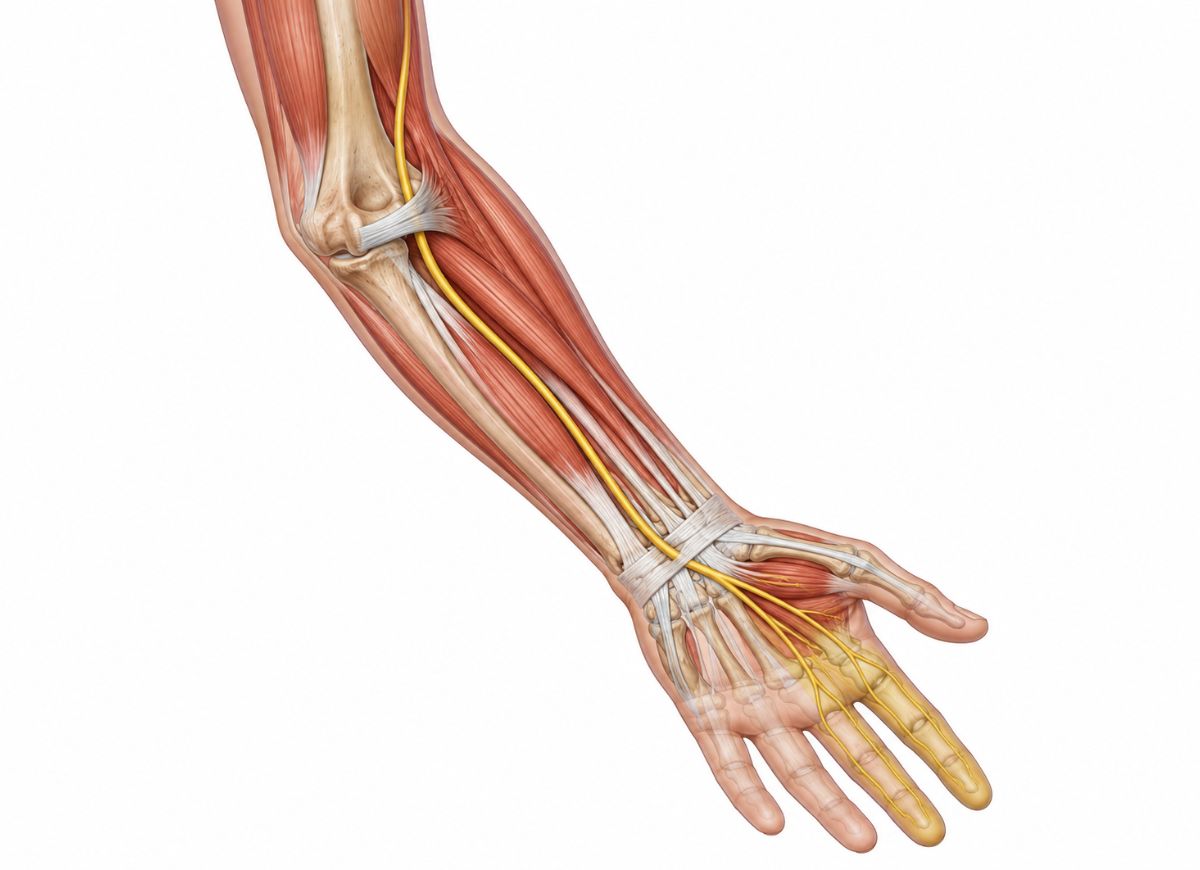
Have you ever knocked your elbow and felt a sudden electric-like shock travel into your hand? Most people call this hitting the “funny bone,” but there is no funny bone involved. The sensation usually happens because the ulnar nerve is struck. This important nerve runs from the neck, along the arm, around the inside of the elbow, and into the hand.
The ulnar nerve helps provide sensation and movement to parts of the hand. It is especially important for the little finger, part of the ring finger, grip strength, and the small hand muscles used for precise movements. Because the nerve sits close to the skin near the elbow, it can be easier to irritate or compress in this area.
Ulnar nerve pain can feel quite different from regular muscle soreness. It may cause tingling, numbness, burning, weakness, or a pins-and-needles sensation that moves from the elbow toward the fingers. Symptoms may appear after leaning on the elbow, sleeping with the arm bent, typing for long periods, cycling, lifting, or repeating certain arm movements. Injuries, swelling, or pressure around the elbow or wrist can also contribute.
At first, symptoms may come and go and seem minor. However, repeated numbness or weakness in the hand can be a sign that the nerve is being compressed. If irritation continues, everyday activities such as holding a phone, gripping a cup, buttoning clothes, or typing may become harder.
This article explains what ulnar nerve pain is, why “funny bone” tingling happens, common causes, typical symptoms, treatment options, and when medical attention may be needed.
What is the Ulnar Nerve (“Funny Bone”)?
The ulnar nerve is one of the three major nerves in the arm. It helps control movement and sensation in the forearm and hand. It is commonly associated with the “funny bone” because hitting the area where the nerve passes close to the surface of the elbow can create a sudden tingling or electric sensation.
Despite the name, the funny bone is not actually a bone. The unusual feeling comes from directly stimulating the exposed ulnar nerve as it passes near the elbow.
Primary Function of The Ulnar Nerve
The ulnar nerve has two major jobs. It provides movement to many of the small muscles inside the hand and carries sensory information from the little finger, part of the ring finger, and the nearby portion of the palm. Together, these functions support hand strength, coordination, and fine motor control.
The nerve supplies most of the intrinsic muscles of the hand. These small muscles are responsible for precise movements that we use throughout the day. For example, the interossei muscles help spread the fingers apart and bring them back together, while the hypothenar muscles control movements of the little finger.
The ulnar nerve also controls the adductor pollicis, a muscle that helps bring the thumb toward the index finger. This function is important for strong pinching and gripping. When ulnar nerve function is affected, tasks such as writing, fastening buttons, playing an instrument, or securely holding objects can become more difficult.
The nerve also carries sensory information from the hand to the brain. It provides sensation from the little finger, the side of the ring finger closest to the little finger, and the corresponding area of the palm. This includes sensations such as touch, pressure, temperature, and pain.
Because the sensory area supplied by the ulnar nerve follows a fairly consistent pattern, the location of numbness or tingling can help healthcare professionals identify possible nerve problems. Normal sensory feedback also helps protect the hand from injuries such as burns and cuts.
The Location of The Ulnar Nerve
The ulnar nerve follows a long path from the neck to the hand. It begins as part of the brachial plexus, travels down the inner side of the arm, passes behind the elbow through the cubital tunnel, continues through the forearm, and eventually enters the hand through Guyon’s canal at the wrist.
The nerve originates from the C8 and T1 nerve roots in the cervical spine. These nerve roots join the brachial plexus, a network of nerves located between the neck and shoulder. From there, the ulnar nerve travels down the arm along the inner side of the upper arm.
One of the most vulnerable parts of its path is the elbow. Here, the nerve passes through the cubital tunnel near the medial epicondyle, the bony prominence on the inside of the elbow. Because there is little soft tissue protecting the nerve in this area, hitting it can create the familiar sharp, tingling “funny bone” sensation.
After passing through the cubital tunnel, the ulnar nerve enters the forearm between two parts of the flexor carpi ulnaris muscle. It continues down the forearm alongside the ulna and supplies several muscles involved in movement of the forearm and fingers.
The nerve eventually reaches the wrist and passes through Guyon’s canal. This narrow space is another potential location where the nerve can become compressed. Once inside the hand, the nerve branches out to provide sensation and movement to its designated areas.
The Common Causes of Ulnar Nerve Irritation
Ulnar nerve irritation commonly develops when the nerve is compressed, stretched, or injured. Pressure around the elbow or wrist, keeping the elbow bent for long periods, repetitive movements, direct trauma, and certain medical conditions can all contribute.
One common cause is prolonged pressure on the nerve. This may happen when someone regularly leans on their elbow while sitting at a desk, rests the arm against a car window during a long drive, or places repeated pressure on the wrist while cycling or using certain tools. Long periods of pressure can irritate the nerve and interfere with normal nerve signaling.
Keeping the elbow bent for an extended period can also put stress on the ulnar nerve. When the elbow is flexed, the nerve stretches around the bony area on the inside of the elbow. Talking on a phone for a long time or sleeping with the elbows tightly bent can contribute to symptoms. Repeatedly bending and straightening the elbow, such as during some sports or work activities, may also increase irritation.
Direct injuries can cause ulnar nerve problems as well. A hard hit to the funny bone may cause temporary tingling, while more significant trauma can result in swelling and longer-lasting compression. Elbow fractures or dislocations may directly injure, scar, or shift the nerve.
Certain medical conditions can also increase the risk of ulnar nerve entrapment. Arthritis of the elbow may contribute to bone spurs that narrow the cubital tunnel. A ganglion cyst or tumor can put pressure on the nerve. Conditions such as diabetes may make nerves more vulnerable to compression, while swelling from fluid retention or previous injuries can increase pressure in the spaces through which the nerve travels.
Typical Symptoms of a Compressed Ulnar Nerve
A compressed ulnar nerve may cause symptoms that develop gradually. Early signs often include occasional numbness or a pins-and-needles feeling in the ring and little fingers. As compression continues, symptoms may progress to pain, reduced grip strength, difficulty with precise hand movements, and, in severe cases, muscle wasting.
Sensory symptoms are often among the first signs. A person may notice numbness or tingling in the little finger and the side of the ring finger closest to the little finger. These sensations may appear at night or when waking in the morning, especially when the elbow remains bent during sleep.
Certain activities can also trigger symptoms. Holding a phone, reading, or doing other activities that keep the elbow bent for a long time may bring on tingling. In more advanced cases, the numbness may become persistent rather than occasional.
Pain may occur around the inside of the elbow or travel downward into the forearm, hand, and fingers. Some people describe it as an aching discomfort, while others experience sharper or shooting sensations. The area around the inside of the elbow may also feel tender.
As the nerve becomes more affected, weakness may develop. A person may have trouble opening jars, holding heavier objects, or maintaining a strong grip. Fine motor skills can also become less precise, making tasks such as buttoning clothes, typing, or handling small objects more difficult.
Long-standing or severe nerve compression may lead to muscle wasting. The muscles controlled by the ulnar nerve can become smaller when they do not receive normal nerve stimulation. This may be particularly noticeable between the thumb and index finger and among the small muscles of the hand.
In advanced cases, a condition known as “claw hand” may develop. The fourth and fifth fingers can become curled and difficult to straighten. Muscle wasting or significant weakness can indicate substantial nerve damage and should be evaluated by a healthcare professional.
Treatment Options for Ulnar Nerve Pain
Treatment for ulnar nerve pain generally depends on the severity and duration of symptoms. Options may range from conservative measures, such as changing activities, using a brace, and physical therapy, to surgery when there is significant or persistent nerve compression.
The main goals are to reduce pressure on the ulnar nerve, ease symptoms, and help prevent further nerve damage.
Non-surgical Treatments for Ulnar Nerve Issues
Non-surgical treatment is often the first approach, particularly when symptoms are mild or have been present for a shorter period. It may include changing activities, avoiding pressure on the elbow, using a brace or splint, taking appropriate pain-relieving medication, and performing physical therapy exercises.
Activity modification is an important part of treatment. Try to avoid leaning directly on the elbow against hard surfaces such as desks and armrests. When pressure cannot be avoided, additional padding may provide protection.
It is also helpful to reduce activities that keep the elbow bent for long periods. Using a headset instead of holding a phone against the ear, adjusting a workstation, and taking regular breaks can help reduce prolonged elbow flexion.
A brace or splint may be particularly useful at night. Some people naturally sleep with their elbows deeply bent, which can place pressure on the ulnar nerve for several hours. A lightweight elbow brace or splint may help keep the elbow in a more neutral position. Some people may also use a loosely wrapped towel to discourage excessive bending while sleeping.
Over-the-counter nonsteroidal anti-inflammatory drugs (NSAIDs), including ibuprofen or naproxen, may help manage pain and inflammation. These medications can provide temporary symptom relief but do not remove the underlying cause of mechanical nerve compression. They are generally used alongside other measures rather than as a standalone solution.
Physical and occupational therapy may also be helpful. A therapist can teach nerve-gliding or nerve-flossing exercises designed to encourage the ulnar nerve to move more freely through the surrounding tissues. Therapists can also recommend ergonomic changes and strategies for reducing strain during everyday activities.
Surgery For Ulnar Nerve
Surgery for ulnar nerve entrapment is not necessary in every case. It may be considered when conservative treatment does not provide adequate improvement or when there is evidence of significant weakness, muscle wasting, or progressive nerve damage.
When symptoms continue despite appropriate non-surgical care, a healthcare professional may recommend surgical evaluation. Persistent numbness, worsening grip strength, severe pain, or evidence of muscle loss may indicate more advanced nerve compression.
Tests such as nerve conduction studies (NCS) and electromyography (EMG) can help determine how severely the nerve is affected. Muscle atrophy in the hand can also indicate that the nerve has been significantly compromised.
Several surgical procedures may be used to treat ulnar nerve compression at the elbow. One option is cubital tunnel release, in which the ligament forming the roof of the cubital tunnel is opened to create more space for the nerve.
Another procedure is ulnar nerve anterior transposition. During this surgery, the nerve is moved from behind the medial epicondyle to a more protected position in front of it. This can help prevent the nerve from stretching or catching against the bone when the elbow bends.
The nerve may be positioned beneath the skin, beneath a layer of fascia, or deeper within the muscle, depending on the situation. The overall goal is to reduce pressure, improve the environment around the nerve, and give it an opportunity to recover.
Ulnar Nerve Entrapment Diagnosis
Diagnosing an ulnar nerve problem usually begins with a review of your symptoms and medical history. A healthcare professional may ask when the symptoms began, what they feel like, and which activities make them better or worse.
A physical examination may then be performed to evaluate muscle strength, sensation, and signs of nerve irritation.
One test that may be used is Tinel’s sign. During this test, a physician gently taps over the ulnar nerve near the elbow or wrist. Tingling or pins-and-needles sensations traveling into the ring and little fingers may suggest irritation at that location.
Another test is Froment’s sign. It evaluates the strength of the adductor pollicis muscle, which is supplied by the ulnar nerve. The patient is asked to hold a piece of paper between the thumb and index finger. If the thumb bends at the joint to compensate for weakness, the test may be considered positive.
Additional testing may be recommended to confirm the diagnosis and determine the location and severity of nerve compression.
Nerve Conduction Studies (NCS) measure how quickly and strongly electrical signals travel through the ulnar nerve. Electrodes are placed on the skin at different points along the arm, allowing the clinician to identify areas where nerve signaling may slow down.
An EMG is often performed along with an NCS. This test evaluates the electrical activity of muscles supplied by the nerve. A fine needle electrode records muscle activity at rest and during contraction. Abnormal results may indicate that the nerve supply to a muscle has been affected.
In some situations, an MRI or ultrasound may also be used. These imaging tests can help identify possible causes of compression, including cysts, bone spurs, or inflammation related to arthritis.
The Difference Between Cubital Tunnel Syndrome and Guyon’s Canal Syndrome
Cubital tunnel syndrome and Guyon’s canal syndrome both involve compression of the ulnar nerve, but the two conditions occur in different locations. The location of the compression can influence the symptoms and possible causes.
Cubital tunnel syndrome occurs when the ulnar nerve is compressed around the elbow as it passes through the cubital tunnel. It is commonly associated with prolonged elbow bending, repeated elbow movements, leaning on the elbow, or direct injury.
Symptoms often include numbness and tingling in the little finger and the side of the ring finger closest to the little finger. Weakness in the hand and difficulty with precise movements may also occur. Because the dorsal cutaneous branch of the ulnar nerve branches off after the elbow, sensation on the back of the hand may also be affected when the nerve is compressed at the elbow.
Guyon’s canal syndrome occurs farther down the nerve, at the wrist. The ulnar nerve passes through a narrow area called Guyon’s canal before entering the hand.
This condition is less common and may be associated with repetitive wrist movements, prolonged pressure from bicycle handlebars or tools, wrist injuries, or a ganglion cyst.
Ulnar Nerve Symptoms and Carpal Tunnel Syndrome
Ulnar nerve entrapment and carpal tunnel syndrome are common nerve compression problems affecting the upper limb. However, they involve different nerves and typically affect different parts of the hand.
Ulnar nerve problems, including cubital tunnel syndrome, involve compression of the ulnar nerve. Symptoms usually affect the little finger and the side of the ring finger closest to the little finger. People may describe these fingers as feeling numb, tingly, or as though they have fallen asleep. Hand weakness and reduced coordination may also occur.
Carpal tunnel syndrome affects the median nerve as it travels through the carpal tunnel at the wrist. The median nerve supplies sensation to a different area of the hand.
As a result, carpal tunnel symptoms typically include numbness, tingling, or pain involving the thumb, index finger, middle finger, and the side of the ring finger closest to the thumb.
Stretches to Help Relieve Ulnar Nerve Irritation
Gentle nerve-gliding or nerve-flossing exercises may help encourage the ulnar nerve to move more freely through the cubital tunnel and surrounding tissues. These movements should be slow and gentle and should not cause pain.
If an exercise causes sharp, worsening, or unusual pain, stop immediately. It is best to speak with a doctor or physical therapist before beginning exercises, particularly if you have significant numbness or weakness.
The Head Tilt and Arm Extension Glide
This movement gently works along the nerve’s pathway from the neck toward the hand.
Step 1: Sit or stand upright with good posture. Keep your shoulders relaxed.
Step 2: Extend the affected arm out to the side at about shoulder height, with your palm facing upward.
Step 3: Bend your wrist so your fingers point toward the floor. You should notice a mild stretch through the forearm and hand.
Step 4: Slowly tilt your head away from the extended arm until you feel a gentle stretch. Do not force the movement.
Step 5: Hold the position for 15 to 30 seconds. For a gentle gliding motion, slowly return your head to a neutral position and then tilt it away again. You can also gently bend and straighten the elbow while maintaining the head position. Repeat 3 to 5 times.
The “A-OK” or “Goggle” Glide
This exercise is intended to encourage movement of the ulnar nerve around the elbow.
Step 1: Begin with your arm extended in front of you and your palm facing upward.
Step 2: Touch the tip of your thumb to the tip of your index finger to form an “A-OK” shape while keeping the other fingers extended.
Step 3: Slowly bend your elbow and bring your hand toward your face.
Step 4: Continue the movement by turning your hand so the palm faces you. Place the “A-OK” circle around your eye as though you are wearing a pair of goggles. Your elbow should point upward.
Step 5: Hold the position gently for 5 to 10 seconds, then slowly return to the starting position. Repeat 5 times while keeping the movement smooth and controlled.
FAQs
1. How to unblock the ulnar nerve?
An “unblocked” ulnar nerve generally refers to reducing pressure or irritation around the elbow or wrist. Mild symptoms may improve after changing activities, avoiding pressure on the elbow, limiting prolonged elbow bending, improving workstation ergonomics, and using physical therapy or a night splint when appropriate.
Ulnar nerve symptoms can become worse when the elbow stays bent for long periods, such as while driving or holding a phone. If numbness, weakness, or hand clumsiness continues, a healthcare professional may recommend nerve testing or, in more severe cases, a procedure to relieve pressure on the nerve.
2. Will an ulnar nerve heal itself?
A mildly irritated ulnar nerve may improve when the source of pressure is removed early. However, nerve recovery can take time because nerves generally heal gradually.
If compression continues, symptoms may progress from occasional tingling to persistent numbness, reduced grip strength, or muscle loss. Ongoing or worsening symptoms should be evaluated rather than ignored.
3. Which fingers are affected by the ulnar nerve?
The ulnar nerve mainly supplies the little finger and part of the ring finger, particularly the side of the ring finger closest to the little finger.
Tingling, numbness, or a sensation that these fingers are “falling asleep” is commonly associated with ulnar nerve irritation. Some people may also notice discomfort along the inner elbow, forearm, or pinky side of the hand.
4. Is it okay to massage the ulnar nerve?
Gentle massage around tight or tense muscles may feel soothing, but directly pressing on the ulnar nerve is generally not recommended. The nerve can be especially sensitive around the inside of the elbow where it passes close to the skin.
Deep pressure in this area may increase tingling, burning, or irritation. Instead, focus on avoiding pressure on the elbow, reducing repetitive strain, and asking a physical therapist whether nerve-gliding exercises are appropriate.
Stop any massage or movement that causes sharp pain, increased numbness, or worsening symptoms.
5. What vitamin deficiency causes nerve pain?
Vitamin B12 deficiency is one of the vitamin deficiencies associated with nerve symptoms. Low B12 levels can contribute to peripheral neuropathy, which may cause tingling, numbness, weakness, or burning sensations.
However, ulnar nerve pain is often related to physical compression rather than a vitamin deficiency alone. Depending on the symptoms, blood tests may be used to check B12 levels, diabetes, thyroid problems, inflammation, and other possible contributors.
6. How should I sleep with the ulnar nerve?
Try to sleep with the elbow in a more relaxed, straighter position instead of keeping it tightly bent. Some people with ulnar nerve irritation wake up with numbness in the ring and little fingers because the elbow remains flexed during sleep.
A folded towel around the elbow or a soft night splint may help discourage excessive bending. It is also helpful to avoid sleeping with your arm underneath your body or placing the elbow against a hard surface.
Conclusion
Ulnar nerve pain may begin with the familiar electric shock of hitting your “funny bone,” but repeated tingling, numbness, or weakness deserves attention. The ulnar nerve plays an important role in sensation, grip strength, and fine hand movements, particularly in the ring and little fingers.
When the nerve becomes compressed around the elbow or wrist, everyday activities such as typing, holding a phone, driving, or sleeping with a bent elbow may trigger symptoms.
Mild irritation may improve after reducing pressure on the elbow, changing repetitive activities, keeping the elbow straighter at night, and using appropriate exercises when recommended. More persistent symptoms may require medical evaluation, especially when numbness, weakness, or clumsiness begins interfering with daily activities.
Paying attention to symptoms early can be helpful. Reducing pressure before the nerve becomes severely damaged may support recovery. If symptoms continue, become more frequent, or interfere with normal hand function, a healthcare professional can help determine the cause and recommend an appropriate treatment approach.