
10 Symptoms of Barrett’s Oesophagus and How to Identify Them
Barrett’s oesophagus is a condition that can develop quietly, often without obvious symptoms until it becomes more advanced. It occurs when long-term acid reflux damages the lining of the oesophagus and causes the cells to change. This change can increase the risk of developing oesophageal cancer.
It is estimated that around 1 in 10 people with chronic acid reflux, also known as gastroesophageal reflux disease (GERD), may eventually develop Barrett’s oesophagus. Although it can occur in anyone, the risk is higher among people who have experienced frequent heartburn or reflux for many years.
One of the challenges with Barrett’s oesophagus is that the condition itself often causes few noticeable symptoms. Many of the symptoms people experience are actually related to the underlying GERD. Recognizing persistent or worsening symptoms can therefore be important.
Many signs associated with Barrett’s oesophagus overlap with those of acid reflux. However, ongoing symptoms may indicate that the oesophagus has been repeatedly exposed to stomach acid and is experiencing damage.
If the condition is not monitored or treated appropriately, it can lead to complications and increase the risk of oesophageal cancer. Fortunately, early detection, proper medical care, and lifestyle changes can help manage reflux and reduce the possibility of further complications.
So, how can you recognize possible warning signs? In this article, we’ll explore 10 symptoms associated with Barrett’s oesophagus and explain when they may require medical attention.
Whether you experience chronic reflux or simply want to understand the warning signs, this guide can help you recognize symptoms and know when it may be appropriate to speak with a healthcare professional.
What is Barrett’s Oesophagus?
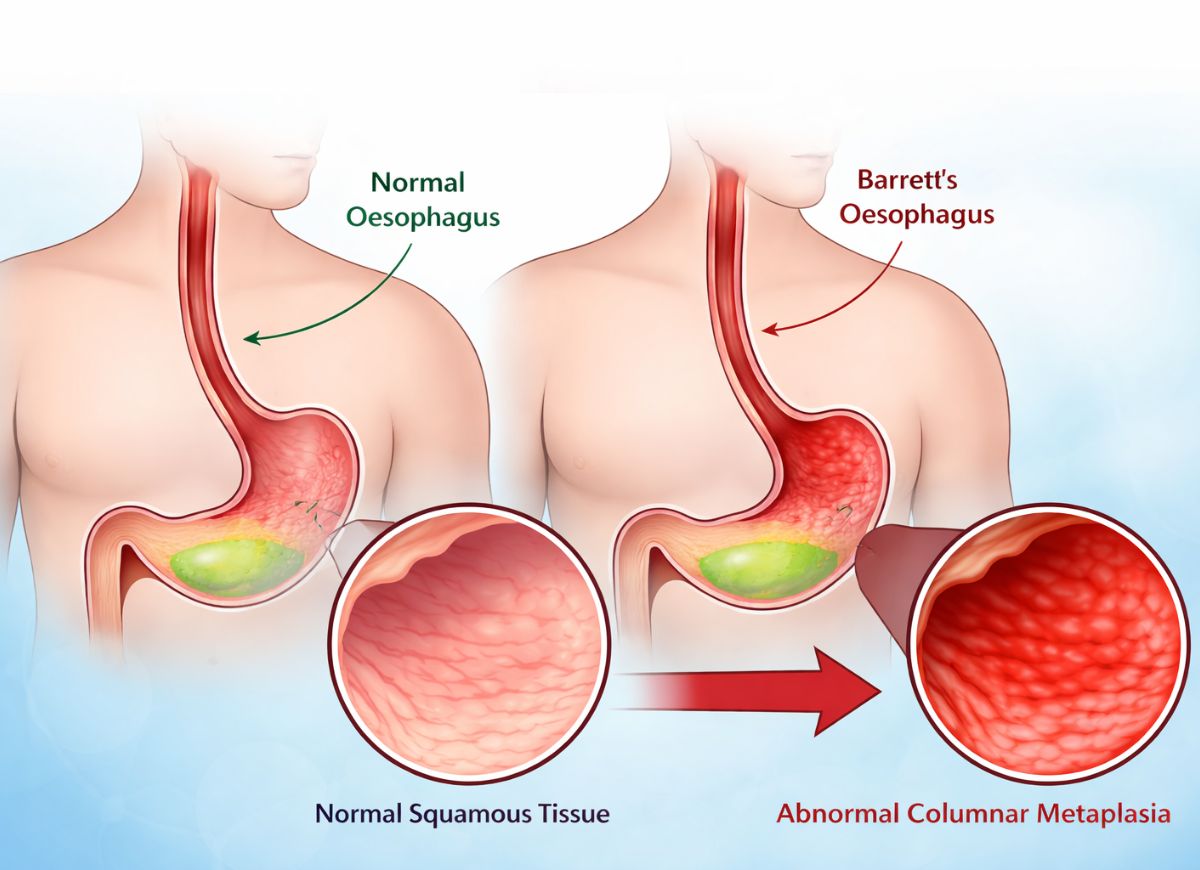
Barrett’s Oesophagus is a condition in which the normal squamous cells lining the lower oesophagus are replaced by column-shaped cells. This cellular change is known as intestinal metaplasia and is most commonly associated with long-term gastroesophageal reflux disease (GERD).
The altered cells are better able to tolerate stomach acid, but their presence is associated with an increased risk of oesophageal adenocarcinoma. Barrett’s itself is not cancer, but it is an important risk factor for this particular type of oesophageal cancer.
Long-standing acid reflux can contribute to Barrett’s Oesophagus through a process called metaplasia. During this process, the cells lining the oesophagus change in response to repeated irritation and injury from stomach contents.
Normally, the oesophagus is covered by squamous epithelial cells. These cells are well suited to allow food and liquids to move through the oesophagus, but they are not designed to tolerate repeated exposure to strong stomach acid.
With GERD, the lower esophageal sphincter (LES), which normally acts as a valve between the stomach and oesophagus, may not close properly. As a result, stomach acid, digestive enzymes such as pepsin, and bile can repeatedly travel upward into the oesophagus.
Repeated exposure can cause inflammation and injury known as reflux esophagitis. Over time, this ongoing irritation damages the normal squamous cells and triggers the body’s healing response.
Instead of replacing the damaged cells with the same type of squamous cells, the body may develop a different type of cell that is more resistant to the acidic environment. These columnar cells resemble cells normally found in the intestines.
This replacement of one mature cell type with another is known as metaplasia. Although it may initially provide greater resistance to acid exposure, the altered tissue can be more vulnerable to additional cellular changes.
Specialized intestinal cells, including mucus-producing goblet cells, are an important characteristic used when identifying Barrett’s Oesophagus. These cellular changes are also the reason the condition is considered precancerous rather than simply another form of reflux.
Is Barrett’s Oesophagus Considered a Form of Cancer?
Barrett’s Oesophagus is not cancer. Instead, it is considered a precancerous condition because it increases the risk of developing oesophageal adenocarcinoma. The cellular transformation involved in Barrett’s is called metaplasia and does not mean that cancer is already present.
However, the altered tissue can undergo additional genetic and cellular changes over time. The progression can involve a sequence from metaplasia to dysplasia and, in some cases, eventually to cancer. Dysplasia is an important stage in this process.
Dysplasia means that the cells within the Barrett’s lining have developed abnormal features when examined under a microscope. It is generally classified according to the degree of abnormality:
No Dysplasia: The Barrett’s cells are present, but they do not show precancerous abnormalities. This is a common finding, and the annual risk of progression to cancer is considered low.
Low-Grade Dysplasia (LGD): The cells display early precancerous changes. They may appear somewhat abnormal or disorganized under a microscope. Some cases remain stable, while others may progress.
High-Grade Dysplasia (HGD): The cells have more significant abnormalities and disorganization. This represents a more advanced precancerous stage and has a considerably higher risk of progressing to oesophageal adenocarcinoma.
Therefore, being diagnosed with Barrett’s Oesophagus does not mean that you have cancer. However, because the condition is associated with an increased cancer risk, regular medical monitoring is important.
Surveillance endoscopies can help doctors identify dysplasia or other concerning changes early, when treatment may be more effective at preventing progression.
10 Key Symptoms and Warning Signs of Barrett’s Oesophagus
Frequent, Long-Term Heartburn (GERD)
Frequent heartburn is one of the most common symptoms associated with chronic GERD. It usually feels like a burning sensation or discomfort behind the breastbone and may become worse after meals, in the evening, or when lying down or bending over.
When heartburn continues regularly for a long period, particularly several times a week for years, it can indicate persistent acid reflux that may damage the oesophageal lining.
Interestingly, some people with long-standing Barrett’s Oesophagus may notice that their heartburn becomes less noticeable. This does not necessarily mean the condition has improved and should not be considered reassurance that the oesophagus is healthy.
Difficulty Swallowing Food (Dysphagia)
Difficulty swallowing, medically known as dysphagia, can feel as though food is moving slowly or becoming stuck somewhere in the throat or chest.
Long-term inflammation can sometimes lead to scar tissue and narrowing of the oesophagus, known as an esophageal stricture. In other cases, swallowing difficulties may need to be evaluated to rule out more serious complications, including oesophageal cancer.
Regurgitation of Stomach Contents
Regurgitation occurs when stomach acid, sour fluid, or partially digested food moves back upward into the throat or mouth.
It may happen after eating or while lying down and can be especially troublesome at night. Some people may wake up coughing, choking, or experiencing an unpleasant acidic taste.
A Sensation of Food Being Stuck in the Chest
Some people experience pressure, discomfort, or a sensation that food is lodged in the chest even after eating has stopped.
This may be related to inflammation or changes in the normal movement of the oesophagus. Abnormal contractions and motility problems can sometimes occur when the oesophagus has been repeatedly irritated.
Nausea and Vomiting
Nausea is less typical than heartburn or regurgitation but can occur alongside significant oesophageal irritation.
Persistent vomiting may develop in some people when inflammation is severe or when narrowing of the oesophagus interferes with the normal movement of food.
Unexplained Weight Loss
Unexpected weight loss should always receive medical attention, particularly when there has been no intentional change in diet or physical activity.
In people with Barrett’s Oesophagus, weight loss may occur because chronic discomfort reduces appetite or swallowing difficulties make eating harder. Significant unexplained weight loss can also be associated with more serious underlying conditions and should therefore be investigated.
Chronic Cough or Sore Throat
When reflux travels high enough to reach the throat or voice box, it can irritate these sensitive tissues. This is sometimes referred to as laryngopharyngeal reflux (LPR).
Repeated irritation may lead to a persistent dry cough, frequent throat clearing, or a sore throat that does not appear to be caused by an infection.
Hoarseness or Changes in Voice
Repeated exposure to refluxed stomach contents can irritate the vocal cords and contribute to inflammation.
As a result, a person’s voice may become raspy, weak, strained, or hoarse. Persistent voice changes without an obvious explanation should be evaluated by a healthcare professional.
Chest Pain
Some people with oesophageal irritation or spasms may experience chest pain or pressure. This discomfort can sometimes feel different from typical heartburn.
However, chest pain should never automatically be assumed to come from the oesophagus. New, severe, crushing, or exertional chest pain requires urgent medical assessment to rule out a potentially life-threatening heart problem.
Vomiting Blood or Passing Black, Tarry Stools
Vomiting blood or passing black, tar-like stools can indicate bleeding somewhere in the upper digestive tract.
Blood in vomit may appear bright red or resemble dark coffee grounds. Black, sticky stools, known as melena, can occur when blood has been digested as it passes through the gastrointestinal tract.
Severe inflammation, ulcers, or other complications can cause gastrointestinal bleeding. Because these symptoms may indicate significant internal bleeding, they require urgent medical attention.
What are the Causes of Barrett’s Oesophagus?
The main cause of Barrett’s Oesophagus is long-term gastroesophageal reflux disease (GERD). Several factors can increase the likelihood of developing the condition, including age, sex, abdominal obesity, smoking history, and long-standing reflux.
Repeated exposure of the oesophagus to stomach acid and other digestive fluids can cause chronic injury and cellular changes. GERD is the main trigger, while genetic, demographic, and lifestyle factors can influence an individual’s overall risk.
Who is Most at Risk of Developing Barrett’s Oesophagus?
People with long-standing GERD have an increased risk of developing Barrett’s Oesophagus, particularly when other risk factors are also present. The condition is more commonly diagnosed in older adults and is more frequent in men and White individuals.
Chronic GERD is considered the most important risk factor. People who have experienced frequent heartburn, acid regurgitation, or other reflux symptoms for many years are more likely to develop changes in the oesophageal lining.
Barrett’s Oesophagus is uncommon in children and is less frequently diagnosed in younger adults. The risk generally increases with age, partly because the cellular changes can develop after years of repeated reflux-related injury.
Men are diagnosed with Barrett’s Oesophagus more often than women. Researchers believe that a combination of biological, hormonal, and lifestyle factors may contribute to this difference.
The condition is also reported more frequently among White individuals than among some other racial and ethnic groups. The reasons for these differences are complex and may involve genetic and environmental influences.
Excess body weight, particularly abdominal obesity, is another important risk factor. Extra abdominal pressure can place stress on the stomach and lower esophageal sphincter, making reflux more likely.
Both current and former smokers may also have an increased risk. Smoking can affect the function of the lower esophageal sphincter and may contribute to reflux and damage to the oesophageal lining.
Family History Increasing Risk for Barrett’s Oesophagus
A family history of Barrett’s Oesophagus or oesophageal adenocarcinoma may increase an individual’s risk of developing the condition.
Although chronic reflux and lifestyle factors play major roles, research also suggests that genetics can contribute to susceptibility. Barrett’s Oesophagus can occur in multiple members of the same family, sometimes referred to as familial Barrett’s Oesophagus.
People who have a first-degree relative, such as a parent, sibling, or child, with Barrett’s Oesophagus or oesophageal cancer may have a higher risk than those without such a family history.
Researchers continue to investigate genetic variations that may contribute to this familial pattern. However, genetics alone does not determine whether someone will develop Barrett’s Oesophagus.
If a close family member has been diagnosed with Barrett’s Oesophagus or oesophageal cancer, it is worth discussing your personal risk and possible screening with a gastroenterologist.
Sharing your family medical history with your healthcare provider can help them decide whether additional evaluation or monitoring may be appropriate.
Barrett’s Oesophagus Diagnosis
Doctors generally diagnose Barrett’s Oesophagus using an upper endoscopy, also called an esophagogastroduodenoscopy (EGD), together with tissue biopsies.
Simply looking at the oesophagus is not enough to confirm the diagnosis. Tissue samples need to be examined under a microscope to identify the cellular changes associated with intestinal metaplasia.
This combination of endoscopic findings and microscopic examination also helps determine whether dysplasia is present and, if so, how advanced it is.
Upper Endoscopy (EGD)
During an upper endoscopy, the patient is usually given medication to help them remain comfortable. A gastroenterologist then guides a thin, flexible tube called an endoscope through the mouth and into the oesophagus, stomach, and upper part of the small intestine.
The endoscope contains a light and small camera that allows the doctor to view the digestive tract on a monitor.
Healthy oesophageal tissue generally has a pale pink appearance. Areas affected by Barrett’s Oesophagus may look different, sometimes appearing reddish or salmon-colored with a velvety texture.
The doctor carefully examines the lower oesophagus and the area where it joins the stomach for signs of abnormal tissue.
Biopsy
If the doctor sees tissue that could represent Barrett’s Oesophagus, small samples are collected using instruments passed through the endoscope.
The samples are sent to a pathology laboratory, where a specialist examines them under a microscope. The pathologist looks for the cellular features that confirm intestinal metaplasia and may also check for dysplasia.
This microscopic examination is an essential part of confirming Barrett’s Oesophagus and determining the appropriate follow-up or treatment.
When to Seek Medical Help?
You should speak with a healthcare professional if you have persistent or long-standing GERD symptoms, particularly if they have continued for several years or occur alongside other risk factors.
Certain symptoms, often called alarm symptoms, require prompt medical evaluation. These include difficulty swallowing, unexplained weight loss, vomiting blood, black or bloody stools, and severe chest pain.
Such symptoms can sometimes indicate complications such as oesophageal narrowing, bleeding, ulcers, or a more serious underlying condition.
If solid foods repeatedly feel as though they are becoming stuck in the chest, especially if the problem later affects liquids, medical evaluation is important. A narrowing of the oesophagus can interfere with the normal passage of food and may require endoscopic assessment.
Vomiting blood or material that resembles coffee grounds can indicate bleeding in the upper gastrointestinal tract. This requires urgent medical care.
Black, tarry stools can also indicate bleeding higher in the digestive tract. Any significant gastrointestinal bleeding should be evaluated promptly.
Unintentional loss of a substantial amount of body weight over a relatively short period is another important warning sign. It can have many possible causes and should be investigated rather than ignored.
Severe or crushing chest pain should always be treated as an emergency until serious cardiac causes have been ruled out. Medical testing is necessary to determine whether the pain is related to the heart, oesophagus, or another condition.
Low-grade and High-grade Dysplasia
The main difference between low-grade dysplasia (LGD) and high-grade dysplasia (HGD) is the severity of the abnormal cellular changes found in Barrett’s tissue and the associated risk of progression.
Low-grade dysplasia means that the cells have developed definite but relatively early precancerous abnormalities. The changes can be subtle when viewed under a microscope.
Because the risk of progression is lower than with high-grade dysplasia, doctors may recommend closer endoscopic surveillance, careful management of GERD, or endoscopic treatment depending on the individual situation.
High-grade dysplasia represents a more advanced degree of precancerous change. The cells are much more abnormal and disorganized and can resemble cancerous cells, although they have not necessarily invaded deeper layers of the oesophageal wall.
Because high-grade dysplasia carries a considerably greater risk of progression to oesophageal adenocarcinoma, treatment is generally recommended rather than observation alone.
In low-grade dysplasia, the cells show early abnormalities in their structure and appearance. In high-grade dysplasia, there is much greater disruption of normal cell organization.
The management approach therefore differs according to the grade of dysplasia. Surveillance or endoscopic treatment may be considered for low-grade dysplasia, while high-grade dysplasia generally requires prompt therapeutic intervention.
Because the diagnosis of dysplasia can be difficult and has important treatment implications, biopsy samples are often reviewed by an experienced gastrointestinal pathologist before major treatment decisions are made.
Barrett’s Esophagus Treatment With and Without Dysplasia
Treatment for Barrett’s Oesophagus depends largely on whether dysplasia is present.
For people with non-dysplastic Barrett’s Oesophagus, treatment usually focuses on controlling GERD and monitoring the oesophageal lining for future changes. The goal is generally to manage reflux and identify dysplasia early rather than routinely removing all Barrett’s tissue.
When dysplasia is present, treatment becomes more focused on removing or destroying the abnormal cells to reduce the risk of progression to oesophageal cancer.
The appropriate treatment depends on the grade of dysplasia, the appearance and extent of the abnormal tissue, and the individual’s overall health.
For Barrett’s without Dysplasia (Non-Dysplastic), management may include proton pump inhibitors (PPIs) to control acid reflux, along with lifestyle measures that can reduce reflux symptoms. Periodic surveillance endoscopy may also be recommended based on individual risk and medical guidelines.
For Barrett’s with Dysplasia (Low-Grade or High-Grade), endoscopic eradication therapy may be recommended in addition to acid suppression.
Treatment options can include radiofrequency ablation (RFA), which uses controlled heat to destroy abnormal tissue; cryotherapy, which uses extreme cold to remove abnormal cells; and endoscopic mucosal resection (EMR), which allows raised or suspicious areas to be removed through an endoscope.
Even after successful treatment, continued medical follow-up and surveillance are usually necessary.
Barrett’s Oesophagus vs. Eosinophilic Esophagitis (EoE)
Barrett’s Oesophagus and Eosinophilic Esophagitis (EoE) both affect the oesophagus and may cause symptoms such as difficulty swallowing, but they are different conditions with different causes and treatments.
Barrett’s Oesophagus is primarily associated with chronic acid reflux. Repeated exposure to stomach contents can cause the normal squamous cells in the lower oesophagus to be replaced by intestinal-type columnar cells.
Eosinophilic Esophagitis, on the other hand, is an immune-mediated inflammatory disorder. It is often associated with food or environmental allergens and involves an increased number of eosinophils, a type of white blood cell, within the oesophageal tissue.
The underlying cause is therefore an important distinction: Barrett’s is associated mainly with chronic reflux-related injury, while EoE involves an immune and inflammatory response.
Accurately distinguishing between these conditions is important because their diagnosis and treatment are different. Barrett’s Oesophagus is identified by intestinal metaplasia, while EoE is diagnosed using symptoms, endoscopic findings, and biopsy evidence of increased eosinophils.
Treatment for Barrett’s may involve acid suppression, surveillance, and endoscopic eradication when dysplasia is present. EoE treatment can involve eliminating trigger foods, swallowed topical steroids, and esophageal dilation when narrowing causes swallowing problems.
Can Lifestyle and Diet Changes Reverse Barrett’s Oesophagus?
Lifestyle and dietary changes generally cannot completely reverse the cellular transformation that has already occurred in Barrett’s Oesophagus.
The intestinal metaplasia associated with Barrett’s is considered a lasting change in the oesophageal lining. However, lifestyle measures remain important because they can help control the GERD that contributed to the condition.
Reducing reflux can help limit continued irritation and inflammation of the oesophagus. Although lifestyle changes are not considered a cure for Barrett’s, they can play an important role in managing symptoms and supporting overall digestive health.
Helpful measures may include identifying and avoiding foods that trigger reflux, eating smaller meals, avoiding lying down soon after eating, and following any medications recommended by a healthcare professional.
Managing GERD with appropriate treatment can reduce repeated exposure of the oesophagus to stomach acid. Proton pump inhibitors and other medications may be recommended depending on the individual’s symptoms and medical history.
Other useful lifestyle measures can include maintaining a healthy weight, avoiding smoking, limiting alcohol if it worsens reflux, and elevating the head of the bed when nighttime reflux is a problem.
Weight management can be particularly helpful for people with abdominal obesity because reducing abdominal pressure may decrease reflux episodes.
FAQs
1. Can you live a normal life with Barrett’s oesophagus?
Yes, many people with Barrett’s oesophagus continue to live active and normal lives, particularly when the condition is identified and properly managed.
Treatment may include controlling acid reflux, making appropriate lifestyle changes, taking prescribed medication, and attending recommended follow-up appointments.
Although Barrett’s requires monitoring because of its association with oesophageal cancer, having the condition does not mean that cancer will develop.
2. Is Barrett’s oesophagus serious?
Barrett’s oesophagus is an important medical condition because it is associated with an increased risk of oesophageal adenocarcinoma. However, most people with Barrett’s do not develop cancer.
The condition usually develops after long-term reflux has repeatedly irritated the oesophageal lining. In some people, additional cellular changes called dysplasia can occur.
Early diagnosis, appropriate reflux management, surveillance, and treatment when needed can help reduce the risk of serious complications.
3. What are the red flags for Barrett’s oesophagus?
Many people with Barrett’s oesophagus have few symptoms, but certain warning signs should be evaluated by a healthcare professional. These include:
- Difficulty swallowing or a feeling that food is getting stuck.
- Persistent or worsening heartburn and acid reflux.
- Unexplained weight loss or reduced appetite.
- Blood in vomit or black, tarry stools.
- Persistent cough, throat irritation, or hoarseness.
If any of these symptoms occur, especially if they are severe or worsening, medical evaluation is important.
4. What foods trigger Barrett’s oesophagus?
There is no single diet that causes or cures Barrett’s oesophagus, but certain foods and drinks can trigger reflux symptoms in some people. Common triggers include:
- Spicy foods: May worsen heartburn or irritation in sensitive individuals.
- Citrus fruits: Their acidity can aggravate reflux symptoms.
- Tomatoes: Tomato-based foods may trigger heartburn in some people.
- Chocolate: May contribute to reflux in some individuals.
- Caffeinated beverages: Coffee, tea, and some soft drinks can worsen symptoms for certain people.
- Alcohol: Can contribute to reflux and may irritate the digestive tract.
Identifying your personal triggers and reducing foods that consistently worsen symptoms can help with reflux management.
5. What’s the worst thing for Barrett’s oesophagus?
One of the most important concerns with Barrett’s oesophagus is ongoing, poorly controlled acid reflux because repeated exposure to stomach contents can continue irritating the oesophageal lining.
Ignoring persistent symptoms or not following a recommended treatment plan may allow reflux-related damage to continue.
Managing GERD with appropriate medication, dietary adjustments, lifestyle changes, and regular medical follow-up can help protect the oesophagus and monitor for changes.
6. How do you stop Barrett’s oesophagus from progressing?
Managing Barrett’s oesophagus involves controlling reflux and following the monitoring or treatment plan recommended by your healthcare provider. This may include:
- Medications – Proton pump inhibitors (PPIs) and, when appropriate, other acid-reducing medicines can help control reflux.
- Lifestyle changes – Eating smaller meals, avoiding personal reflux triggers, staying upright after eating, and maintaining a healthy weight may help reduce symptoms.
- Regular monitoring – Follow-up endoscopies may be recommended to check for dysplasia or other changes. The timing depends on the individual diagnosis and whether dysplasia is present.
- Quitting smoking and limiting alcohol consumption – These measures may help reduce reflux and support overall oesophageal health.
Following medical recommendations and managing reflux can help reduce ongoing irritation and allow doctors to identify concerning changes early.
7. How often do I need an endoscopy if I have Barrett’s oesophagus?
The timing of surveillance endoscopy depends on factors such as the presence and grade of dysplasia, the length of the Barrett’s segment, and individual medical circumstances.
People without dysplasia may have surveillance examinations at intervals of several years, while those with dysplasia may require more frequent monitoring or treatment.
Your gastroenterologist can determine the appropriate schedule based on your biopsy results and overall risk.
8. What is stage 1 Barrett’s oesophagus?
“Stage 1 Barrett’s oesophagus” is not a standard way doctors generally classify Barrett’s. Barrett’s is more commonly described according to whether dysplasia is present and, if so, whether it is low-grade or high-grade.
Early Barrett’s may involve intestinal metaplasia without dysplasia. In this situation, the condition can often be managed through reflux control and appropriate surveillance.
Because terminology can vary, anyone who has been told they have a particular “stage” should ask their healthcare provider what the term means in relation to their endoscopy and biopsy results.
Conclusion
Barrett’s oesophagus is a condition that develops when long-term reflux contributes to changes in the lining of the oesophagus. Although Barrett’s itself is not cancer, it is associated with an increased risk of oesophageal adenocarcinoma and therefore requires appropriate medical attention.
Understanding the possible symptoms, risk factors, diagnostic process, and treatment options can help people recognize when professional evaluation may be necessary.
Managing acid reflux, following recommended lifestyle measures, taking prescribed medication, and attending regular surveillance appointments can all play an important role in long-term care.
If you have Barrett’s oesophagus or believe you may be at increased risk, discuss your symptoms and medical history with a healthcare professional. Individualized monitoring and treatment can help manage the condition and identify concerning changes as early as possible.