
8 Warning Signs of Anal Stenosis You Should Know
Anal stenosis is a condition that many people may not be familiar with, but it can have a major effect on bowel movements and everyday comfort. It happens when the anal canal becomes unusually narrow, making it harder or more painful to pass stool. Because the symptoms can develop slowly, some people may experience discomfort for months before realizing that an underlying condition could be responsible.
Although anal stenosis is relatively uncommon, it is most often associated with anorectal surgery, especially procedures used to treat hemorrhoids. Research has estimated that anal stenosis may develop in around 1% to 5% of patients after hemorrhoid surgery, depending on the surgical technique and other individual factors. While it is not common in the general population, the condition can significantly affect quality of life.
The narrowing can develop because of scar tissue, ongoing inflammation, repeated injury, or certain medical conditions affecting the anal area. As the anal canal becomes tighter, stool may become harder to pass, resulting in straining, pain, and a feeling that the bowel has not completely emptied. Symptoms may become more noticeable over time if the condition is not treated.
Another challenge is that anal stenosis can resemble other conditions, including hemorrhoids, anal fissures, constipation, and inflammatory bowel disorders. Recognizing persistent symptoms early is important because treatment may be easier before the narrowing becomes severe.
In this article, we will look at 8 warning signs of anal stenosis, as well as its causes, risk factors, diagnosis, and treatment options. Understanding these symptoms can help you know when it may be time to speak with a healthcare professional.
What is Anal Stenosis?
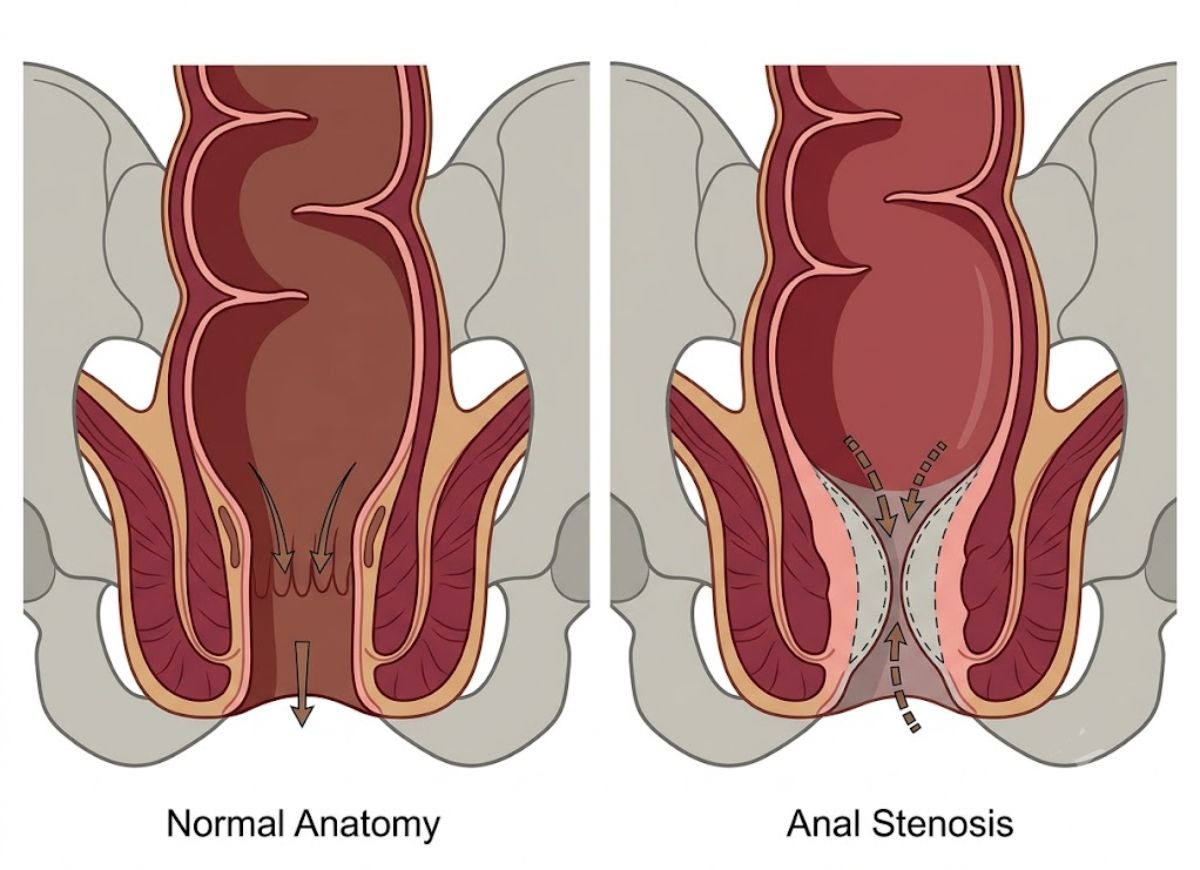
Anal stenosis is a condition in which the anal canal becomes abnormally narrow. The anal canal is the final part of the digestive tract and needs to stretch to allow stool to pass comfortably.
In many cases, the narrowing develops because normal, flexible tissue is replaced by scar tissue. This scar tissue is less elastic, making it harder for the anal canal to expand during a bowel movement.
The severity of anal stenosis can vary. Mild narrowing may cause only occasional difficulty passing stool, while severe stenosis can make it extremely difficult for even liquid stool to pass.
The Narrowing of The Anal Canal for Bowel Movements
A narrowed anal canal can make bowel movements much more difficult. Normally, the anal canal stretches as stool moves through it. When scar tissue makes the area less flexible, the opening cannot expand normally.
As a result, stool may take longer to pass and may require significant straining. Some people may spend a long time on the toilet while passing only a small amount of stool.
The shape of the stool can also change. People with anal stenosis may notice consistently thin, ribbon-like, or pencil-thin stools because the stool is being pushed through a narrow opening.
In more severe cases, only small pieces of stool or liquid may pass while harder stool remains in the rectum. This can create a persistent feeling of incomplete evacuation and may cause someone to feel the need to use the bathroom again soon after a bowel movement.
This repeated cycle of difficulty, straining, and discomfort can become a major part of daily life. It may also contribute to constipation, pain, and small tears or bleeding around the anal canal.
Is Anal Stenosis a Common Condition?
Anal stenosis is relatively uncommon in the general population. It is more often an acquired condition that develops after surgery or another problem affecting the anal canal.
One of the most common causes is hemorrhoidectomy, which is surgery to remove hemorrhoids. More extensive surgical techniques that remove a large amount of anal tissue may increase the risk because healing can produce scar tissue that contracts and narrows the canal.
Anal stenosis can also develop because of chronic inflammation or other medical problems. For example, perianal Crohn’s disease can cause repeated inflammation and healing, which may eventually result in scar tissue and narrowing.
Other possible causes include severe chronic anal fissures, trauma to the anal area, certain long-term tissue-damaging conditions, tumors, and fibrosis caused by radiation therapy for pelvic cancers.
For this reason, when anal stenosis is diagnosed, doctors usually look for a previous surgery or another underlying condition that may have caused the scar tissue and narrowing.
8 Key Symptoms of Anal Stenosis
Pencil-thin stools
Pencil-thin or ribbon-like stools are one of the symptoms commonly associated with anal stenosis. When the anal canal becomes narrow, stool may be shaped as it passes through the restricted opening.
The important factor is whether the change in stool shape is persistent. Occasional changes in stool caliber can happen for many reasons, but consistently thin stools along with difficulty passing stool may warrant medical evaluation.
Stool may also come out in small pieces or pellets when the narrowing is significant.
Severe constipation
Constipation caused by anal stenosis can involve more than simply having fewer bowel movements. The main problem may be difficulty physically passing stool through the narrowed opening.
A person may feel a strong urge to have a bowel movement but still be unable to empty the rectum completely. Even soft stool can sometimes be difficult to pass when the narrowing is significant.
As stool remains in the bowel for longer, it can become harder and more difficult to pass, creating a cycle of worsening constipation.
Straining during defecation
A narrowed anal canal may require significant effort to pass stool. Some people may need to push hard or strain for a long time before anything passes.
Repeated straining can increase pressure in the abdomen and may contribute to other problems, including hemorrhoids or rectal prolapse. It can also make bowel movements exhausting and uncomfortable.
Incomplete evacuation
Incomplete evacuation means feeling as though stool remains in the rectum even after having a bowel movement.
Because the narrowed canal may prevent the rectum from emptying properly, a person may feel the need to return to the toilet soon afterward. They may continue trying to pass stool but produce very little.
This repeated sensation of incomplete emptying can be frustrating and can interfere with normal daily activities.
Pain during bowel movements
Pain during bowel movements can occur when stool presses against the narrowed and less flexible tissue. The discomfort may feel sharp, tight, or like stretching or tearing.
When bowel movements become painful, some people may begin avoiding or delaying them. Holding stool can make constipation worse and may cause the next bowel movement to become even more uncomfortable.
Rectal bleeding
Bright red blood on toilet paper or on the outside of stool may occur when the narrowed anal canal becomes irritated or develops small tears.
Because the bleeding comes from the lower part of the digestive tract, the blood is often bright red. However, rectal bleeding can have many possible causes, so persistent or unexplained bleeding should be evaluated by a healthcare professional.
Anal tearing or fissures
A narrowed anal canal can increase the risk of anal fissures, which are small tears in the lining around the anus.
Passing stool through a tight opening can place additional pressure on the tissue and cause it to tear. A fissure can produce severe pain during a bowel movement and may continue to hurt afterward.
The resulting pain can cause the anal sphincter to tighten or spasm, potentially making bowel movements even more difficult and uncomfortable.
Abdominal bloating and cramping
When stool is difficult to pass, it may remain in the rectum or colon for longer than normal. This can contribute to bloating, a feeling of fullness, and abdominal discomfort.
The muscles of the colon may also contract more strongly as they try to move stool forward. These contractions can cause cramping and add to the discomfort associated with constipation.
The Primary Causes of Anal Stenosis
Anal stenosis generally develops when scar tissue or fibrosis causes the anal canal to become less flexible and narrower.
Surgery, particularly anorectal surgery, is one of the most common causes. Other possible causes include chronic inflammatory diseases, trauma, certain tissue-damaging conditions, and radiation therapy.
The underlying process usually involves healing that produces scar tissue. Unlike normal anal tissue, scar tissue does not stretch as easily, which can gradually create a fixed narrowing.
Surgery
Surgery is a major cause of anal stenosis, particularly procedures involving the removal of anal tissue. Hemorrhoidectomy, or surgical removal of hemorrhoids, is one of the procedures most often associated with this complication.
More extensive procedures that remove larger areas of tissue may increase the risk because the healing process can produce a larger amount of scar tissue. As the scar contracts, it can form a tight area around the anal canal.
The anal lining, known as the anoderm, contains important sensory nerves and plays a role in comfortable bowel movements and continence. Preserving enough healthy tissue during surgery helps reduce the risk of excessive scarring.
Other factors, such as infection, poor wound healing, or reduced blood supply to the area, may also contribute to increased scar formation.
Modern surgical approaches are designed to reduce the risk of anal stenosis, but narrowing remains a possible complication of procedures involving the anal canal.
Other Medical Conditions
Several medical conditions can also cause the scarring and narrowing associated with anal stenosis.
Crohn’s disease is one example. Chronic inflammation in the gastrointestinal tract can cause repeated injury and healing. Over time, this process may produce fibrous scar tissue and narrowing in the perianal region.
Significant injuries to the anal area can also result in stenosis. Examples may include severe perineal tears, penetrating injuries, or other trauma. As injured tissue heals, scar tissue can form and contract.
Radiation therapy for pelvic cancers may also damage healthy tissues. In some people, radiation can lead to chronic inflammation, reduced blood flow, and fibrosis, potentially causing narrowing months or years after treatment.
Rarely, chronic infections such as tuberculosis, lymphogranuloma venereum, or actinomycosis may cause inflammation and scarring around the anal area.
Chronic anal fissures can also contribute to narrowing in some cases. Tumors within or around the anal canal may obstruct the passage or produce inflammation and scarring that can resemble anal stenosis.
Anal Stenosis Treatment
Treatment for anal stenosis depends on how severe the narrowing is and how much it affects bowel movements.
Doctors generally begin with conservative approaches when the stenosis is mild or moderate. These treatments focus on keeping stool soft and reducing the difficulty of passing it.
More severe cases may require a procedure to widen the anal canal. The main goal of treatment is to make bowel movements easier and reduce symptoms such as pain, straining, and incomplete evacuation.
Non-surgical Treatment Options For Anal Stenosis
For mild to moderate anal stenosis, treatment may focus on improving stool consistency and gently stretching the narrowed area.
A high-fiber diet can help produce softer, easier-to-pass stools. Sources of fiber include fruits, vegetables, whole grains, beans, and other legumes. Adequate fluid intake is also important because fiber works best when there is enough water available.
A healthcare professional may also recommend stool softeners or osmotic laxatives, such as polyethylene glycol or lactulose, when appropriate. These treatments can help prevent hard stool from placing additional pressure on the narrowed area.
Bulk-forming products such as psyllium may also be useful for some people.
Certain prescription ointments can help relax the internal anal sphincter when muscle spasms are contributing to pain or difficulty. Examples may include topical nitroglycerin or calcium channel blockers such as diltiazem.
Anal dilators may also be used in selected cases. These are graduated medical devices designed to gently stretch the narrowed area. When recommended by a healthcare professional, treatment usually begins with a smaller size and progresses gradually.
The process may take weeks or months and requires consistency. It is generally performed under medical guidance to reduce the risk of injury.
Surgery For Anal Stenosis
Surgery may be considered when anal stenosis is severe or when conservative treatment does not provide enough relief.
A very tight and rigid narrowing may make it difficult or impossible to pass stool comfortably, even when the stool is kept soft. If dilation cannot be tolerated or does not improve the narrowing, surgical treatment may be recommended.
One surgical approach is anoplasty. The goal is to release the scarred tissue and introduce healthy tissue into the narrowed area so the anal canal can remain wider.
Several flap techniques may be used depending on the location and severity of the stenosis. One example is a V-Y advancement flap, in which healthy nearby tissue is moved into the affected area to help widen the opening.
Other approaches may include diamond-shaped or house-shaped flaps. The specific procedure depends on the individual anatomy, the amount of scarring, and the severity of the narrowing.
Anal Stenosis Diagnosis
A doctor diagnoses anal stenosis by reviewing the patient’s symptoms and medical history and performing a physical examination. Additional tests may be used when needed.
During the medical history, the doctor may ask about previous anorectal surgery, inflammatory bowel disease, radiation therapy, chronic anal fissures, and other conditions that can cause scarring.
A digital rectal examination is often an important part of the evaluation. During this examination, a healthcare professional uses a lubricated, gloved finger to assess the anal canal, including its flexibility, tone, and diameter.
A narrowed and rigid area may be noticeable during the examination. In more severe cases, inserting a finger may be difficult because of the tightness of the anal canal.
An anoscopy may also be performed. This involves using a short, lighted instrument called an anoscope to examine the anal canal and look for scarring, fissures, inflammation, or other abnormalities.
Potential Complications If Anal Stenosis Is Left Untreated
Without treatment, anal stenosis can cause symptoms to become more persistent and may lead to additional complications.
One common concern is severe constipation. As stool becomes increasingly difficult to pass, it may remain in the rectum and become hard and impacted.
Fecal impaction occurs when a hard mass of stool becomes stuck and cannot be passed normally. It may cause abdominal discomfort, bloating, and sometimes leakage of loose stool around the blockage. Medical treatment may be necessary.
Chronic anal fissures can also develop or become difficult to heal. Repeated straining and the passage of stool through a narrow opening can continue to irritate the anal lining.
Pain from fissures can cause the sphincter muscles to tighten, which may make the narrowing and discomfort worse. This can create a cycle of pain, muscle tension, constipation, and further injury.
Persistent symptoms can also affect daily activities and emotional well-being. Seeking medical care early may help prevent symptoms from becoming more difficult to manage.
Anal Stenosis vs. Hemorrhoids or An Anal Fissure
Anal stenosis, hemorrhoids, and anal fissures can all cause discomfort or bleeding, but they are different conditions with different underlying causes.
Anal stenosis involves physical narrowing of the anal canal, often because of scar tissue. A feeling of blockage, difficulty passing stool, incomplete evacuation, and consistently thin or ribbon-like stools may occur.
Hemorrhoids are swollen blood vessels around or inside the anus. Internal hemorrhoids often cause painless bright red bleeding, while external hemorrhoids may cause a lump, irritation, swelling, or pain, especially when a clot develops.
An anal fissure is a small tear in the lining of the anus. It commonly causes sharp pain during bowel movements, followed by burning or aching that may continue afterward. Bright red blood may appear on toilet paper or the surface of the stool.
In simple terms, anal stenosis is mainly associated with narrowing and difficulty passing stool, fissures are mainly associated with a painful tear, and hemorrhoids are associated with swollen veins that may cause bleeding, irritation, or a lump.
How to Prevent Anal Stenosis From Worsening
Lifestyle and dietary changes cannot remove established scar tissue, but they can help make bowel movements easier and reduce additional irritation.
The main goal is to keep stool soft and easy to pass. Increasing fiber intake can help. Soluble fiber, found in foods such as oats, beans, and apples, can help soften stool, while insoluble fiber from vegetables and whole grains can add bulk.
A combination of fiber sources may be helpful, with many adults aiming for roughly 25 to 35 grams of fiber per day. It is also important to drink enough fluids because insufficient hydration can make constipation worse.
Avoiding excessive straining is another important step. Spending less time pushing during bowel movements can reduce pressure and irritation around the anal canal.
Some people find that placing their feet on a small footstool while using the toilet helps position the body in a way that makes stool easier to pass.
Regular physical activity, including simple activities such as walking, can also support normal bowel function.
Together, these habits may reduce the strain placed on the anal canal and help prevent repeated irritation and injury.
FAQs
1. Can fissures cause stenosis?
Yes, chronic anal fissures can sometimes contribute to anal stenosis, although this is not a common cause. Repeated inflammation and injury may result in scar tissue that gradually narrows the anal canal. Treating persistent fissures may help reduce the risk of complications.
2. How to loosen a tight sphincter?
A tight anal sphincter may improve when treatment focuses on relaxing the muscles and making bowel movements easier. Warm sitz baths, managing constipation, eating enough fiber, staying hydrated, and prescribed medications may help.
Depending on the cause, a healthcare professional may also recommend pelvic floor therapy or other treatments.
3. Is fissure 100% curable?
Many anal fissures heal with appropriate treatment, particularly when they are treated early. Acute fissures may improve after bowel habits and stool consistency are addressed.
Chronic fissures can sometimes require prescription medications or procedures. Treatment depends on the cause, duration, and severity of the fissure.
4. Can a weak sphincter be repaired?
In some cases, treatment can improve the function of a weak anal sphincter. Options may include pelvic floor exercises, physical therapy, lifestyle changes, or medical procedures.
The appropriate treatment depends on why the sphincter has become weak and how significantly its function has been affected.
5. Do fissures ever fully heal?
Yes, many anal fissures can heal completely. However, some become chronic or return when problems such as constipation, hard stools, straining, or muscle tension continue.
Keeping stools soft and maintaining healthy bowel habits may help support healing and reduce the chance of recurrence.
6. Is it safe to go deep in Anally?
The anal area contains sensitive tissue that can be injured by excessive pressure or stretching. Deep penetration can increase the risk of irritation, tears, bleeding, or worsening existing symptoms.
People with anal fissures, hemorrhoids, anal stenosis, persistent pain, or unexplained bleeding should take extra care and discuss ongoing symptoms with a healthcare professional. Any activity that causes pain should be stopped.
Conclusion
Anal stenosis can make bowel movements difficult, painful, and frustrating, but recognizing the warning signs can help people seek medical attention sooner. The condition may develop because of scar tissue, inflammation, trauma, or complications from previous procedures.
Symptoms such as persistent difficulty passing stool, pencil-thin stools, straining, incomplete evacuation, pain, or bleeding should not be ignored, particularly when they continue or become worse.
Healthy bowel habits, adequate fiber and fluid intake, and avoiding unnecessary straining can help reduce irritation and make bowel movements easier. When symptoms persist, a medical evaluation can identify the underlying cause and help determine the appropriate treatment.
With proper care, many people with anal stenosis can experience improved symptoms and better bowel function.