
9 Sphenoid Sinusitis Symptoms Beyond the Headache
Headaches are one of the symptoms most people connect with sinus problems. However, not every sinus condition causes the familiar pressure around the forehead, cheeks, or nose. Sphenoid sinusitis is a less common form of sinus infection that affects the sphenoid sinuses, which are located deep inside the skull behind the eyes and close to important structures, including the optic nerves and brain.
Because of this unusual location, sphenoid sinusitis symptoms can sometimes be difficult to recognize. Instead of obvious nasal congestion or facial pressure, a person may experience deep headaches, discomfort around the eyes, neck pain, fever, or changes in vision. These symptoms can sometimes resemble other health conditions, making diagnosis more challenging.
Although sphenoid sinusitis is uncommon, it can become serious when infection or inflammation spreads to nearby structures. The sphenoid sinus is surrounded by important nerves, blood vessels, and other sensitive areas of the skull. Recognizing concerning symptoms early and receiving appropriate medical care can help lower the risk of complications.
Sinusitis affects millions of people worldwide, and chronic sinus problems are estimated to affect around 10%-12% of adults globally. Sphenoid sinusitis accounts for only a small proportion of sinus infections, but its deep location can make symptoms less obvious. Some people may not seek medical attention until unusual or persistent symptoms fail to improve with typical sinus treatments.
In this article, we will explore 9 sphenoid sinusitis symptoms, explain why they may occur, and discuss when medical attention may be necessary. Understanding these less familiar symptoms can make it easier to recognize when a sinus problem may require professional evaluation.
What is Sphenoid Sinusitis?
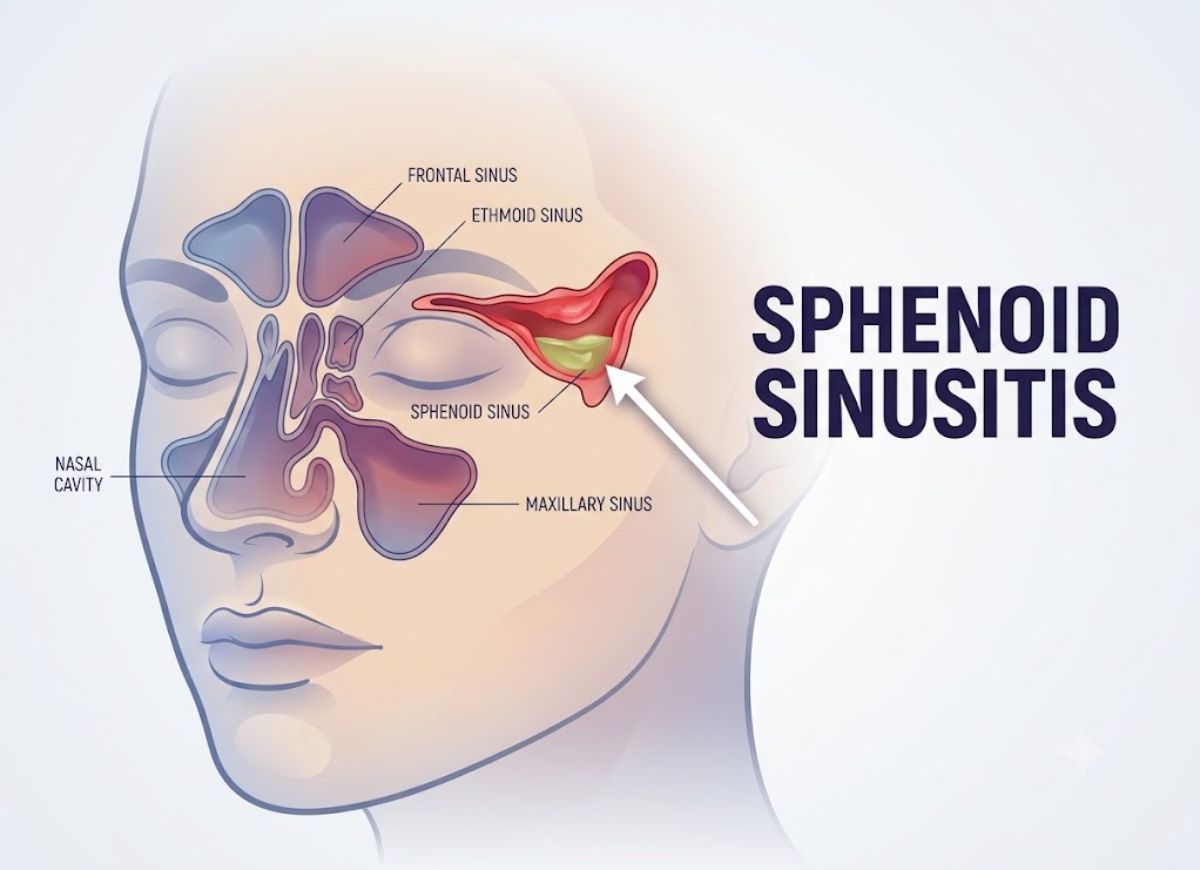
Sphenoid sinusitis occurs when the sphenoid sinuses become inflamed or infected. These are air-filled spaces located deep inside the sphenoid bone near the center of the skull.
The Location of Sphenoid Sinus
The sphenoid sinuses are found within the body of the sphenoid bone, a butterfly-shaped bone located near the base of the skull. They sit behind the ethmoid sinuses and are positioned beneath the brain, making them the most posterior of the paranasal sinuses.
To picture their location, imagine an area deep behind the eyes and near the center of the skull. This is approximately where the sphenoid sinuses are located. Their position places them close to several important anatomical structures.
More specifically, the sphenoid sinuses are surrounded by several vital structures.
Superiorly (Above): The pituitary gland and optic chiasm are located above the sphenoid sinuses. The optic chiasm is where important visual nerve pathways cross. Because of this close relationship, inflammation in the area can potentially affect nearby structures.
Laterally (To the Sides): The cavernous sinuses are located on either side. These venous channels are close to the internal carotid arteries and several cranial nerves involved in eye movement and facial sensation. In rare cases, an infection can spread to this region and cause serious complications such as cavernous sinus thrombosis.
Posteriorly (Behind): The brainstem and basilar artery are located toward the back of this region. These structures are essential for several important neurological functions.
This crowded anatomical setting helps explain why sphenoid sinusitis requires careful evaluation in certain cases. While many sinus infections remain limited to the sinus cavities, an infection in the sphenoid sinus is located close to the brain, optic pathways, nerves, and major blood vessels.
As a result, symptoms such as severe headaches, vision changes, or neurological problems can be particularly concerning and should not be ignored.
Sphenoid Sinusitis and Other Sinus Infections
Sphenoid sinusitis differs from more common forms of sinusitis mainly because of where it occurs and the type of symptoms it may produce. Sinusitis can affect the maxillary, frontal, ethmoid, or sphenoid sinuses, and the location of inflammation often influences where discomfort is felt.
Maxillary sinusitis commonly causes pressure or pain in the cheeks and beneath the eyes. Some people may also experience discomfort that feels similar to an upper toothache.
Frontal sinusitis affects the sinuses in the forehead and may cause pressure or pain above the eyes. This discomfort can sometimes become more noticeable when bending forward.
Ethmoid sinusitis affects the sinuses between the eyes and may cause discomfort around or between the eyes, along with congestion and pressure around the bridge of the nose.
Sphenoid sinusitis can be different. The pain may be deep and difficult to locate. Some people describe discomfort at the top of the head, toward the back of the head, or deep behind the eyes. The typical facial pressure associated with other sinus infections may be absent.
The location of the sphenoid sinus also means that certain complications, although uncommon, can be serious. Infection may rarely spread to nearby areas, including the tissues around the eyes, brain, or blood vessels.
Potential complications include meningitis, brain abscess, optic nerve problems, and cavernous sinus thrombosis. For this reason, symptoms such as significant vision changes, severe headache, confusion, or neck stiffness warrant prompt medical evaluation.
9 Key Symptoms of Sphenoid Sinusitis
Deep-Seated Headache
A deep headache is one of the symptoms most often associated with sphenoid sinusitis. Rather than causing pressure in the forehead or cheeks, the discomfort may occur at the top of the head, toward the back of the skull, or feel as though it is coming from deep inside the head.
The pain may be persistent, dull, or difficult to pinpoint. Some people may notice that it becomes worse when lying down or bending forward. A headache that persists or does not respond as expected to usual pain-relief measures should be evaluated, especially when other sinus-related symptoms are present.
Facial Pressure Behind the Eyes
Sphenoid sinusitis may cause a sensation of pressure or discomfort deep behind the eyes. This is known as retro-orbital discomfort.
Because the sphenoid sinuses are located close to the structures behind the eyes, inflammation in this area may produce pain that feels deeper than the facial pressure associated with other forms of sinusitis. Persistent pressure behind the eyes, particularly when combined with a deep headache, may require medical assessment.
Neck Pain and Stiffness
Some people with sphenoid sinusitis may develop pain or discomfort toward the back of the head and neck. This can sometimes feel like stiffness or an ache around the base of the skull.
However, neck stiffness can also occur with serious infections involving the tissues around the brain. Therefore, significant neck stiffness accompanied by fever, severe headache, confusion, or other neurological symptoms should be treated as a reason to seek urgent medical attention rather than assumed to be a routine sinus symptom.
Blurred or Double Vision (Diplopia)
Vision changes can occur when inflammation or infection affects structures close to the sphenoid sinus.
The optic nerves and several cranial nerves involved in eye movement are located near this area. If these structures become affected, a person may experience blurred vision, double vision, or other changes in how the eyes function.
Any new or unexplained vision change associated with suspected sphenoid sinusitis deserves prompt medical evaluation.
Pain with Eye Movement
Pain when moving the eyes can occur when inflammation affects tissues or nerves surrounding the eye.
Because several structures responsible for eye movement are located close to the sphenoid sinus, inflammation in this region may cause discomfort when looking from side to side or up and down.
New eye pain, especially when accompanied by vision changes, swelling, or severe headache, should be assessed by a healthcare professional.
Dizziness and Vertigo
Dizziness or a spinning sensation may occur in some people experiencing sphenoid sinusitis, although these symptoms are not specific to this condition.
Because the sphenoid sinuses are located deep within the skull near several neurological structures, symptoms such as dizziness can sometimes occur alongside other complaints. However, dizziness and vertigo have many possible causes, so they should not automatically be attributed to sinusitis.
Persistent or severe dizziness, especially when accompanied by neurological symptoms, requires medical evaluation.
Persistent Post-Nasal Drip
The sphenoid sinus drains into an area toward the back of the nasal cavity called the sphenoethmoidal recess. When inflammation increases mucus production, secretions may drain backward into the throat.
This can result in frequent throat clearing, coughing, or throat irritation. Some people may have relatively little nasal discharge or congestion, which can make sphenoid sinusitis harder to recognize.
Low-Grade Fever and Chronic Fatigue
An infection can sometimes cause fever, tiredness, and a general feeling of being unwell. With ongoing sinus inflammation or infection, a person may feel unusually fatigued.
However, fatigue and low-grade fever are not specific to sphenoid sinusitis and can occur with many other infections and medical conditions. Persistent fever or worsening symptoms should be discussed with a healthcare professional rather than assumed to be caused by a sinus infection.
Reduced Sense of Smell (Hyposmia/Anosmia)
A reduced ability to smell, known as hyposmia, or a complete loss of smell, known as anosmia, can occur with sinus inflammation.
Swelling and mucus within the nasal passages can interfere with the normal movement of air toward the areas involved in smell. Although changes in smell can occur with many types of sinusitis, they may be worth discussing with a doctor when they occur alongside persistent headaches, post-nasal drip, or other unusual symptoms.
When to Seek Medical Help?
Suspected sphenoid sinusitis should be evaluated by a healthcare professional, particularly when symptoms are persistent, unusual, or worsening. Because the sphenoid sinuses are located close to the eyes, nerves, brain, and major blood vessels, complications can occasionally be serious.
Red Flag Symptoms Requiring Immediate Attention
Certain symptoms require urgent medical attention. These include new or sudden vision changes, severe or rapidly worsening headache, high fever, confusion, significant drowsiness, or pronounced neck stiffness.
These symptoms do not necessarily mean that a sinus infection has spread, but they can indicate a serious medical problem that needs immediate assessment.
You should seek emergency medical care if you experience sudden vision loss, new double vision, or significant swelling around an eye. These symptoms can indicate involvement of the structures around the eye or optic pathways and should not be delayed.
A sudden, extremely severe headache that is unusual for you also requires urgent evaluation because it can have causes unrelated to sinusitis that need immediate attention.
A high fever accompanied by severe headache, confusion, neck stiffness, or other neurological symptoms is another reason to seek emergency care.
Changes in alertness, unusual confusion, difficulty staying awake, or significant behavioral changes should also be evaluated urgently.
Severe neck stiffness combined with fever and a severe headache can be associated with meningitis and requires immediate medical assessment.
Appropriate Time to Consult a General Practitioner or ENT
For symptoms that are persistent but not immediately severe, making an appointment with a general practitioner (GP) or an Ear, Nose, and Throat (ENT) specialist can help determine the cause.
A persistent headache lasting more than a week, ongoing post-nasal drip, pressure behind the eyes, reduced sense of smell, or other sinus-related symptoms that fail to improve should be evaluated.
You should consider arranging a medical appointment if a deep headache at the top or back of the head continues for several days and does not improve with appropriate self-care.
Persistent post-nasal drip, coughing, reduced smell, fatigue, and pressure behind the eyes may also warrant an evaluation, especially when typical nasal symptoms are limited.
A fever that continues for several days along with sinus-related symptoms should also be discussed with a doctor.
If you have been treated for headaches such as migraines or tension headaches but your symptoms continue or change, your doctor can help determine whether another condition may be responsible. Depending on your symptoms and examination, they may recommend imaging such as a CT scan or refer you to an ENT specialist.
Sphenoid Sinusitis Diagnosis
Diagnosing sphenoid sinusitis can sometimes require more than a routine physical examination because the affected sinus is located deep within the skull.
An ENT specialist may perform a nasal endoscopy. During this procedure, a thin instrument with a small camera is guided through the nasal passages so the doctor can examine deeper areas of the nose and look for inflammation, drainage, polyps, or other abnormalities.
The opening of the sphenoid sinus can be difficult to visualize directly, but abnormal drainage or inflammation in the surrounding area may provide useful clues.
Imaging is often important when sphenoid sinusitis is suspected. A Computed Tomography (CT) scan of the sinuses can provide detailed images of the sinus cavities and surrounding bone. It may show inflammation, fluid, mucosal thickening, or other changes within the sphenoid sinus.
An MRI may be recommended in more complicated cases, particularly when there is concern about involvement of soft tissues, the brain, optic pathways, or other structures near the sinus.
The specific tests used depend on the person’s symptoms, examination findings, and the doctor’s clinical judgment.
Is Surgery Ever Necessary for Sphenoid Sinusitis?
Surgery is not necessary for every case of sphenoid sinusitis. Treatment depends on the cause, severity, duration, and response to medical therapy.
When appropriate medical treatment does not resolve the infection or when drainage of the sinus is blocked, surgery may be considered. Surgical treatment may also be needed in certain fungal infections or when serious complications develop.
One commonly used approach is Functional Endoscopic Sinus Surgery (FESS). This minimally invasive procedure allows a surgeon to access the sinus through the nasal passages using an endoscope, avoiding external facial incisions.
A procedure called a sphenoidotomy may be performed to enlarge the natural opening of the sphenoid sinus. This can improve drainage and allow infected or trapped material to be removed.
The overall goal is to restore adequate ventilation and drainage while preserving as much normal sinus tissue as possible.
Potential Complications if Sphenoid Sinusitis is Ignored
Untreated sphenoid sinusitis can occasionally lead to serious complications because of the sinus’s close relationship with the brain, optic nerves, blood vessels, and other important structures.
Although these complications are uncommon, infection can sometimes extend beyond the sinus and affect nearby tissues. The risk may be greater in people with certain conditions that weaken the immune system.
Possible complications include infections involving the tissues surrounding the brain, such as meningitis, or a brain abscess. These conditions are medical emergencies and require immediate treatment.
Another rare but serious complication is cavernous sinus thrombosis. This occurs when an infection spreads to the cavernous sinus, a network of veins located near the sphenoid sinus. The resulting inflammation and clot formation can affect nearby cranial nerves and may cause eye movement problems, vision changes, facial symptoms, and other serious complications.
Because of these potential risks, persistent or worsening symptoms should not be ignored.
FAQs
1. How serious is sphenoid sinusitis?
Sphenoid sinusitis can range from mild to serious. Because the sphenoid sinuses are located deep within the skull near the eyes, nerves, blood vessels, and brain, complications are possible if an infection spreads. Severe headache, vision changes, high fever, confusion, or significant neck stiffness should be evaluated promptly.
2. How long can sinusitis last?
The duration depends on the type of sinusitis. Acute sinusitis often improves within a few weeks, while chronic sinusitis lasts 12 weeks or longer. Sphenoid sinusitis can sometimes be more difficult to recognize because its symptoms may not resemble typical sinus problems.
3. Can a sphenoid sinus infection go away on its own?
Some mild sinus infections can improve without specific treatment. However, suspected sphenoid sinusitis should not simply be ignored because of its location near important structures. Persistent or worsening symptoms should be assessed by a healthcare professional.
4. At what age do sphenoid sinuses develop?
The sphenoid sinuses begin developing during childhood and continue to grow and change as a person develops. They generally become more developed during later childhood and adolescence, although the timing varies between individuals.
5. Can sphenoid sinus affect eyes?
Yes. The sphenoid sinuses are located close to the optic nerves and other structures involved in eye function. Inflammation or infection in this area may be associated with pain behind the eyes, pressure, double vision, or other vision changes. New vision symptoms require prompt medical evaluation.
6. Does sphenoid sinus require surgery?
No. Surgery is not required in every case. Depending on the cause and severity, treatment may involve medication and monitoring. Surgery may be considered when medical treatment does not resolve the problem, drainage is blocked, certain fungal infections are present, or complications develop.
Conclusion
Sphenoid sinusitis is an uncommon form of sinusitis that can produce symptoms beyond the typical congestion and facial pressure associated with sinus problems. Although headache is a common feature, some people may also experience discomfort behind the eyes, vision changes, neck discomfort, fever, fatigue, post-nasal drip, dizziness, or changes in their sense of smell.
Understanding these 9 sphenoid sinusitis symptoms can make it easier to recognize when unusual symptoms may be related to inflammation in the deeper sinus cavities. Because the sphenoid sinuses are located near several important structures, persistent or concerning symptoms deserve appropriate medical evaluation.
Many sinus conditions can improve with proper care, but symptoms that become severe, persist, or change should not be overlooked. In particular, severe headaches, new vision problems, confusion, high fever, or significant neck stiffness require prompt medical attention. A healthcare professional can determine the underlying cause and recommend the appropriate treatment.