
8 Bundle Branch Block Symptoms You Shouldn’t Ignore
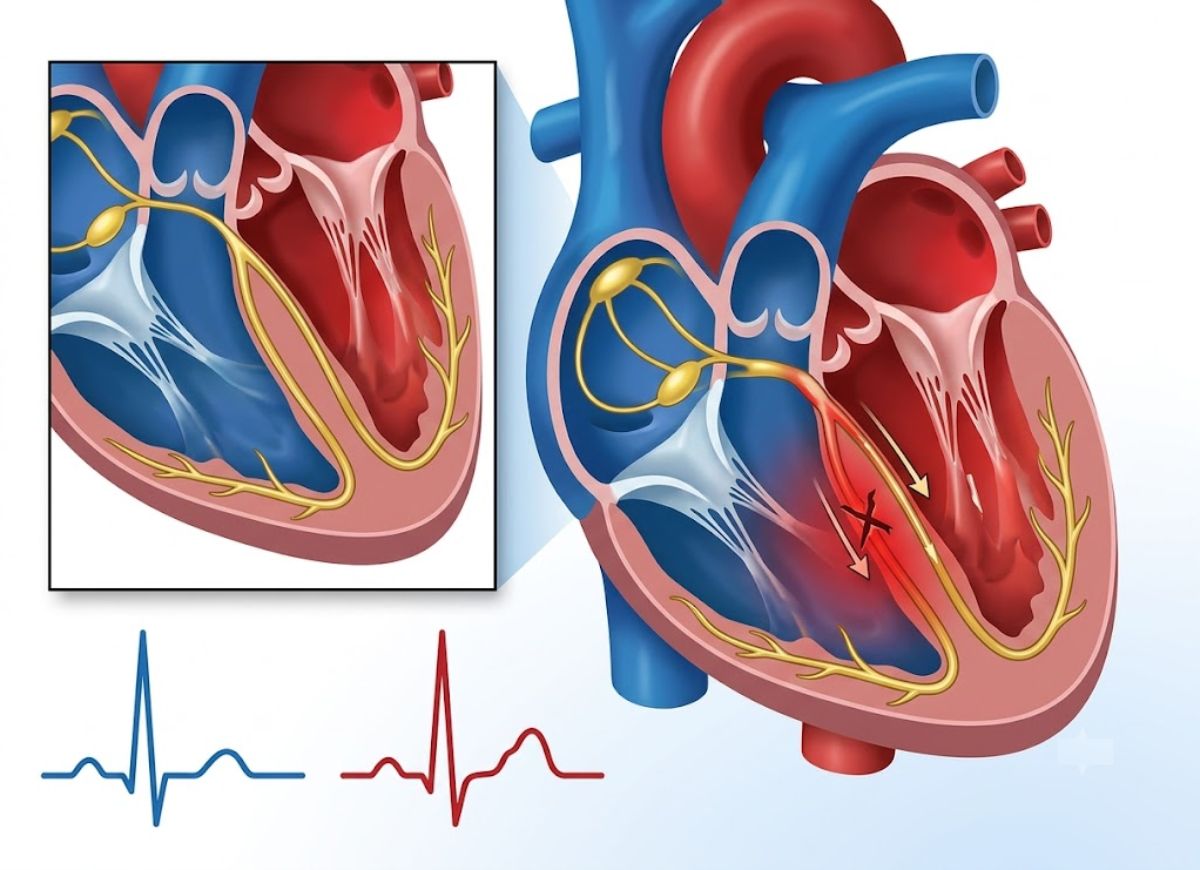
The heart relies on a finely tuned electrical wiring system to keep its chambers beating in perfect coordination. A bundle branch block happens when one part of that wiring slows down or gets interrupted, throwing the rhythm slightly out of step. It’s not a blockage in a blood vessel it’s a hiccup in the signal that tells the heart’s lower chambers when to squeeze.
Plenty of people walk around with a bundle branch block and never notice a thing. It often turns up by accident, spotted on an electrocardiogram (ECG) ordered for a completely unrelated reason. In other cases, it shows up alongside conditions like high blood pressure, heart failure, valve problems, cardiomyopathy, or scarring from an old heart attack which is exactly why it’s worth paying attention to, even when it seems to be causing no trouble at all.
The condition can involve the pathway on either the right or the left side of the heart. Right-sided blocks are frequently seen in people with otherwise healthy hearts, while left-sided blocks tend to point toward something more serious going on underneath. What it actually means for any one person depends heavily on their age, symptoms, medical background, and test results.
Some of the warning signs are easy to dismiss. Lightheadedness, fainting spells, breathlessness, chest tightness, creeping fatigue, a fluttering heartbeat, an unusually slow pulse, or feeling wiped out faster than usual during activity can all hint that the heart isn’t pumping quite as efficiently as it should. None of these guarantee something dangerous is happening but none of them deserve to be shrugged off either.
Below are eight symptoms tied to bundle branch block worth knowing, along with what they might mean, when to get checked, and why catching this early matters for your heart.
What is a Bundle Branch Block?
A bundle branch block is a glitch in the heart’s electrical circuitry a delay or full stoppage somewhere along the route that impulses travel to make the heart contract. Think of it less like a clogged pipe and more like a wiring fault: the plumbing is fine, but the signal has trouble getting through.
Picture the heart’s conduction system as a network of highways built for speed. A bundle branch block acts like a lane closure or major traffic jam on one of those routes. The electrical current can still reach its destination, but it has to detour through slower back roads, which throws off the precise timing the heart needs to pump effectively.
The word “block” makes it sound severe, but most of the time it simply means a delay in one section of the pathway rather than a total shutdown. Clinically, that delay can be a completely harmless footnote on an ECG report or it can be an early clue pointing toward a bigger heart issue.
Bundle Branch Block Disrupting The Heart’s Normal Rhythm
When a bundle branch block occurs, the two lower chambers of the heart the ventricles stop contracting in sync with one another. To understand why, it helps to know how the system is supposed to work.
Get updates on the latest posts and more straight to your inbox.
Everything starts at the sinoatrial (SA) node, the heart’s built-in pacemaker sitting in the upper right chamber. It fires off an impulse that sweeps across both atria, triggering them to contract and push blood downward into the ventricles. The signal then reaches the atrioventricular (AV) node, which holds it back for a split second before releasing it further along.
From there, the impulse zips down the bundle of His and splits into two branches right and left each one racing the signal to its matching ventricle. Under normal conditions, this setup fires both ventricles at nearly the same instant, producing one strong, coordinated pump that sends blood out to the lungs and the rest of the body.
When one of these branches is blocked, that synchrony breaks down. Take a left bundle branch block (LBBB), for example: the signal can’t travel the usual left-side route. The right ventricle still gets its signal on schedule and contracts normally, but the left ventricle has to wait for the impulse to crawl over from the right side, cell by cell, across the wall separating the two chambers.
That cell-to-cell crawl is far slower than the specialized fibers it should have used. The result is a left ventricle contracting a beat behind the right one an uncoordinated, dyssynchronous heartbeat.
This mismatch produces the wide QRS complex doctors look for on an ECG, the telltale fingerprint of a bundle branch block. Over time, this loss of coordination can chip away at the heart’s pumping efficiency, sometimes triggering symptoms or worsening existing heart failure.
Different Types of Bundle Branch Block
There are two main categories, split according to which side of the heart’s wiring is affected: Right Bundle Branch Block (RBBB) and Left Bundle Branch Block (LBBB). Each carries a different level of concern and tends to show up alongside different health issues.
The distinction matters because one type is generally treated as more worrisome than the other. RBBB involves a slowdown along the pathway feeding the right ventricle. The right bundle branch is a long, slender structure, which makes it a bit more prone to stretching or minor damage.
Interestingly, RBBB often shows up as an incidental finding in people who are otherwise completely healthy including young athletes with no underlying heart trouble at all. It’s frequently treated as a benign quirk on the ECG rather than a red flag.
LBBB, on the other hand, affects the pathway to the left ventricle. That branch is structurally more complicated, splitting into two smaller sub-branches. Since the left ventricle does the heavy lifting of pumping oxygen-rich blood to the entire body, any disruption there gets taken far more seriously.
A newly discovered LBBB is much more likely to signal real structural heart disease long-term high blood pressure, coronary artery disease, a weakened heart muscle, or heart failure are all common culprits. That’s why a new LBBB diagnosis almost always leads to a deeper cardiovascular workup. RBBB can often be dismissed as a harmless variant, but LBBB is usually treated as a signal that the heart is under some kind of strain until proven otherwise.
8 Main Symptoms of a Bundle Branch Block
Fainting (Syncope or Presyncope)
This is among the more alarming symptoms. It happens when the heartbeat becomes so uncoordinated or the heart rate drops so low that the brain doesn’t get enough blood flow, causing a temporary blackout. This calls for urgent medical evaluation. Presyncope is the woozy, about-to-pass-out feeling without actually losing consciousness.
Dizziness or Lightheadedness
A milder version of the same problem. A brief dip in blood flow to the brain, caused by the inefficient heartbeat, can leave you feeling unsteady, foggy, or like the room is spinning.
Shortness of Breath (Dyspnea)
When the ventricles fall out of sync, the heart’s overall pumping efficiency can slip. That forces the heart to work harder to keep blood moving, and during exercise when oxygen demand spikes an underperforming heart may struggle to keep pace, leaving you breathless.
Chest Pain or Discomfort (Angina)
Less common, but still possible. The pain usually doesn’t come from the block itself it comes from whatever caused it, such as coronary artery disease or an active heart attack. Any sudden chest pain needs immediate medical attention.
A Slow Heart Rate (Bradycardia)
Since a bundle branch block affects part of the heart’s fast conduction network, it can sometimes be part of a broader electrical problem that also slows down the SA node or AV node, dragging the pulse down with it.
Difficulty Breathing When Lying Flat (Orthopnea)
A classic early sign of congestive heart failure. Lying down sends more blood back to the heart from the legs, adding strain to a heart that’s already struggling, which can cause fluid to build up in the lungs. This often develops alongside long-standing LBBB.
Fatigue
Ongoing, unexplained tiredness can stem from the heart’s reduced pumping power. When muscles and organs aren’t getting a steady, adequate blood supply, exhaustion can creep in even with light activity.
Palpitations or a Fluttering, Skipped Heartbeat
The out-of-sync ventricular contraction can sometimes be felt directly an irregular beat, a pause followed by a hard thump, or a fluttering sensation in the chest.
Silent Signs of a Bundle Branch Block
The most reliable “silent” clue to a bundle branch block isn’t a physical sensation at all it’s an abnormal pattern captured on an ECG, since the condition frequently produces no symptoms whatsoever.
For a large number of people, especially those with RBBB, there’s nothing to feel no dizziness, no breathlessness, no fatigue. Their heart feels entirely normal day to day. This isn’t a subtle cue someone might overlook; it’s a purely electrical signature invisible to the patient, detectable only through a recorded and analyzed ECG trace.
That’s why bundle branch block is so often stumbled upon by accident during a routine checkup, a pre-surgery screening, or an evaluation for something completely unrelated, like a stomach ache or a chest cold.
The ECG reveals the telltale sign: a QRS complex that stretches wider than normal (usually beyond 0.12 seconds). That widened complex is the silent marker objective, measurable, and definitive, even though the patient never felt a thing.
Catching this silent sign matters because, even without symptoms, it can be the first hint of an undiagnosed heart condition. A newly found LBBB in particular often kicks off a more thorough cardiac workup including an echocardiogram to rule out cardiomyopathy, coronary artery disease, or other structural problems.
What Causes a Bundle Branch Block?
A bundle branch block develops when the heart’s conduction fibers are damaged, strained, or diseased frequently as a downstream effect of conditions like a heart attack, chronic high blood pressure, or heart failure.
The bundle branches function like insulated wiring running through the heart muscle. Anything that injures, stretches, or overloads these fibers can interfere with their ability to carry electrical signals efficiently. Some cases have no clear trigger at all, but most trace back to an existing or developing heart condition.
The causes also tend to differ between RBBB and LBBB, reflecting the different pressures placed on each side of the heart. Conditions that stress the right side like a pulmonary embolism are more likely to trigger RBBB, while conditions straining the left ventricle, such as chronic hypertension, are classic drivers of LBBB.
Underlying Health Conditions Leading to a Bundle Branch Block
Common contributors include a prior heart attack, high blood pressure, cardiomyopathy, heart failure, myocarditis (inflammation of the heart muscle), pulmonary embolism, and valve disease.
These conditions damage the conduction pathway through direct injury, ongoing strain, or inflammation. Here’s a closer look at how each one interferes with the heart’s wiring.
A heart attack is one of the leading causes. When a coronary artery becomes blocked, part of the heart muscle is starved of oxygen and dies. If that scarred tissue happens to sit along the right or left bundle branch, the pathway can be permanently disrupted.
Chronic high blood pressure forces the left ventricle to work overtime, which over years leads to thickening and enlargement of the heart muscle. That structural change can stretch and compress the delicate left bundle branch fibers, making hypertension a top cause of LBBB.
In heart failure, the muscle becomes weakened, enlarged, or stiff, and the stretching of the ventricular walls can pull on and impair the conduction fibers creating a cycle where the block itself can further worsen the heart failure.
Myocarditis, often triggered by a viral infection, can directly damage the cells responsible for conduction, resulting in either a temporary or permanent block.
A large clot traveling to the lungs (pulmonary embolism) can suddenly spike pressure in the pulmonary arteries, straining and stretching the right ventricle and right bundle branch, sometimes causing an acute RBBB.
Aortic stenosis, a narrowing of the aortic valve, raises pressure inside the left ventricle, leading to thickening and strain that can injure the left bundle branch. Structural birth defects, like an atrial septal defect, can likewise overload the right side of the heart and gradually lead to RBBB.
Bundle Branch Block Happening Without a Known Heart Problem
Yes, a bundle branch block can show up in a completely healthy heart a scenario known as an isolated or idiopathic block. This is far more common with RBBB than with LBBB.
An isolated RBBB is often discovered in young, fit, even highly trained athletes during routine screening, and it’s usually seen as a harmless structural quirk rather than a disease marker. Because the right bundle branch is such a thin structure, small, insignificant functional changes can produce the classic ECG pattern with no actual heart disease behind it.
For most of these individuals, the RBBB stays stable for life, carries an excellent outlook, and doesn’t require treatment or activity restrictions.
Natural aging is another path to an isolated block. Over the decades, gradual fibrosis and wear on the conduction system can eventually produce a delay or block in one of the branches, with no other disease driving it.
An isolated LBBB is much rarer but can occasionally appear in someone with no other signs of heart disease after a full evaluation. Still, because LBBB is so strongly tied to underlying pathology, it’s never dismissed as harmless without a thorough workup typically including an echocardiogram to closely examine the heart’s structure, valves, and pumping strength. In short: RBBB can often occur in a healthy heart, but LBBB is treated as a possible warning sign until ruled out.
Bundle Branch Block Diagnosis
The go-to test for diagnosing a bundle branch block is the electrocardiogram (ECG/EKG). This quick, painless test records the heart’s electrical activity through electrodes placed on the chest, arms, and legs, and it produces a distinctive pattern that a physician can readily recognize.
The key thing doctors look for is a widened QRS complex the portion of the tracing that represents the electrical signal spreading through the ventricles to trigger contraction. Normally, this happens fast enough to produce a narrow spike.
When a bundle branch is blocked, the signal has to take a slower detour to reach one of the ventricles, stretching the QRS complex beyond the normal 0.12-second mark and giving it a visibly wider shape on the printout.
The Difference in Seriousness Between a Right and Left Bundle Branch Block
Although both are conduction delays, RBBB and LBBB don’t carry the same weight clinically. RBBB is often seen as the less worrying of the two and can be a harmless finding even in healthy, symptom-free people, including athletes.
The right ventricle handles a lighter workload it only pumps blood to the lungs so a delay there tends to be well tolerated and doesn’t necessarily point to underlying disease.
If RBBB turns up by chance with no symptoms or other red flags, a doctor may simply monitor it without treatment. That said, in the setting of a heart attack or pulmonary embolism, a newly appearing RBBB can signal real strain on the right side of the heart.
LBBB, especially when newly discovered, is treated with more caution. It’s far more likely to reflect real structural disease advanced coronary artery disease, long-term hypertension, a weakened heart muscle, or valve disease are frequent causes.
Since the left ventricle does the heavy work of pumping blood throughout the body, LBBB’s dyssynchronous contraction pattern can hurt its pumping efficiency and potentially contribute to heart failure.
LBBB can also make it trickier for doctors to spot other urgent conditions, like a heart attack, on an ECG, since the block itself changes the tracing’s baseline shape.
Bundle Branch Block vs. Complete Heart Block
The difference between a bundle branch block and a complete heart block is night and day in terms of severity. A bundle branch block is like a detour on one highway lane; a complete heart block is more like the entire bridge collapsing.
In a bundle branch block, the signal from the SA node travels normally down to the AV node and splits into the two branches as usual the trouble is further down the line, where one branch (right or left) slows or stops. The signal still reaches both ventricles, just less efficiently on one side, so upper-to-lower chamber communication stays intact.
A complete heart block also called third-degree AV block is much more serious. Here, the breakdown happens higher up, usually at the AV node or bundle of His, before the signal even splits into branches.
In this scenario, there’s a total disconnect between the atria and ventricles no signals get through at all. To avoid cardiac arrest, the ventricles fall back on their own backup pacemaker, producing a slow, unreliable “escape rhythm” often just 20 to 40 beats per minute, far too slow to supply the body adequately. This can bring on severe fainting, extreme fatigue, and breathlessness.
Long-term Outlook and Complications of Living With a Bundle Branch Block
The long-term outlook hinges almost entirely on whether the block is standing alone or riding alongside a more serious heart condition. For many people particularly those with isolated RBBB and no other cardiac issues the outlook is excellent. It usually causes no symptoms, doesn’t progress, and has no bearing on lifespan or quality of life. It’s really just an interesting note on an ECG.
Management for these cases usually amounts to periodic check-ups to watch for any new developments. LBBB’s outlook can also be good if the heart’s structure and function are otherwise normal, though it typically warrants closer follow-up given its stronger link to underlying disease.
When a bundle branch block is tied to a serious condition, the outlook depends on how well that underlying issue is managed, and several complications can arise. Rarely, a block affecting both pathways (bifascicular block) can progress to a complete heart block a serious development that usually requires a pacemaker.
LBBB, specifically, raises the risk of developing or worsening heart failure, since the ventricle’s uncoordinated contraction makes the heart a less efficient pump and can gradually weaken the muscle over time. For patients with both heart failure and LBBB, a specialized device called Cardiac Resynchronization Therapy (CRT) can help re-sync the ventricles and improve symptoms.
A newly discovered LBBB in someone experiencing chest pain is considered a high-risk sign that may point to a heart attack or severe coronary artery disease, warranting immediate evaluation.
FAQs
1. Is bundle branch block life threatening?
Not always. Many people live with it for years symptom-free. It becomes more concerning when paired with chest pain, fainting, heart failure, a prior heart attack, or other heart disease. Any new or unexplained block should be checked by a doctor.
2. Can LBBB get worse?
It can, especially if tied to an underlying heart condition though it can also remain stable for years. Regular follow-up helps track changes in rhythm, heart function, and symptoms.
3. Can you have LBBB without heart disease?
It’s possible, though less common than with RBBB. Doctors often order an ECG, echocardiogram, stress test, or bloodwork to rule out hidden problems.
4. How does LBBB make you feel?
Some people feel nothing at all. Others notice fatigue, breathlessness, dizziness, fainting, chest discomfort, palpitations, or reduced stamina, depending on whether it’s affecting pumping function or linked to another cardiac issue.
5. How long does a bundle branch block last?
It can be temporary or lifelong, depending on the cause medication effects, infection, injury, heart disease, or age-related wear can all play a role.
6. Can I exercise if I have left bundle branch block?
Many people can, but it’s worth checking with a doctor first especially if you have chest pain, fainting, breathlessness, or known heart disease. A supervised plan may be safer in those cases.
7. Does losing weight help LBBB?
It may not reverse the block itself, but shedding weight can improve overall heart health lowering blood pressure, easing strain on the heart, and improving cholesterol and blood sugar, which can help manage related conditions.
8. Can you fly with a left bundle branch block?
Most people with a stable LBBB can fly without issue. Anyone with recent chest pain, fainting, severe breathlessness, unstable heart disease, or a new diagnosis should check with a doctor first.
9. Can a bundle branch block disappear?
Sometimes. If it was caused by something temporary certain medications, inflammation, or short-term strain it can resolve on its own. Permanent blocks are also common, especially with structural heart disease or age-related changes.
Conclusion
A bundle branch block can be entirely harmless in some people, while in others it’s a signal of a deeper heart issue. Symptoms like fainting, dizziness, chest discomfort, breathlessness, palpitations, unusual fatigue, a slow heartbeat, or reduced stamina shouldn’t be brushed aside.
What it means depends on the type, the cause, and the overall state of the heart. LBBB usually calls for closer evaluation given its stronger ties to heart disease, while RBBB can be less concerning in many cases though symptoms still deserve attention regardless of type.
An ECG, heart imaging, and proper follow-up can help doctors figure out what’s going on and whether treatment is needed. The earlier unusual heart symptoms get checked out, the easier it is to protect your heart health long term.