
8 Gallbladder Pain Locations Explained And What Each Means
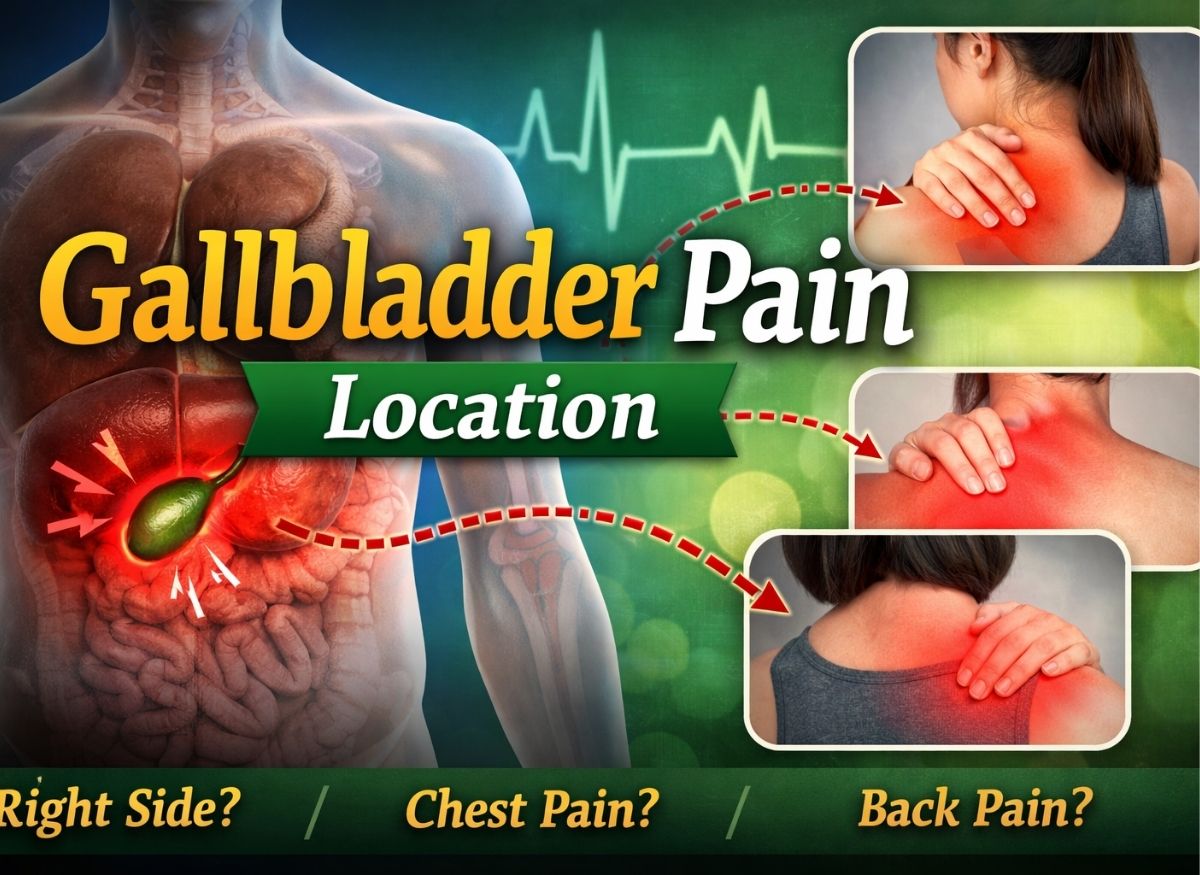
Pain in the upper abdomen can be difficult to understand, especially when it seems to move from one area to another. Discomfort may occur beneath the ribs, in the back, or even around the shoulder, without it being obvious that these sensations could be connected. Knowing the different gallbladder pain locations can make it easier to recognize possible signs of gallstones or other gallbladder problems.
The gallbladder is located on the upper-right side of the abdomen, just underneath the liver. However, pain caused by the gallbladder does not always remain in that area. Because several parts of the body share nerve pathways, gallbladder pain can travel to other locations and become difficult to identify.
The intensity and pattern of the pain can also vary. It may start as mild pressure after eating, particularly following a fatty meal, and later become sharp or persistent. In some cases, the discomfort develops suddenly and spreads quickly, making it easy to confuse with other conditions.
In this guide, we’ll look at the most common gallbladder pain locations and what each pattern may indicate. Understanding where the pain occurs, how it feels, and how long it lasts can help you recognize when medical attention may be needed.
The Typical Feeling of Gallbladder Pain
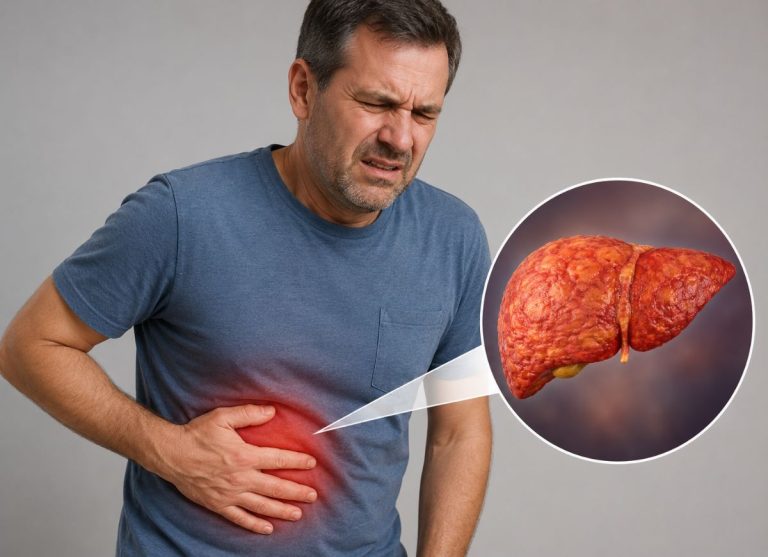
Gallbladder pain is often described as a sudden, intense, and steady ache or pressure in the upper abdomen, particularly beneath the right rib cage. The sensation may range from sharp or cramping discomfort to a deep, dull ache and can last from about 30 minutes to several hours.
This type of pain, known medically as biliary colic, can happen when the gallbladder contracts, often after a fatty meal, while a gallstone temporarily blocks the cystic duct. As the gallbladder attempts to push bile through the narrowed or blocked passage, pressure builds inside the organ, producing the characteristic pain.
One important feature of gallbladder pain is that it tends to remain steady rather than coming and going like typical intestinal cramps. Changing position, passing gas, or taking over-the-counter medications may not provide relief. Some people describe the sensation as gripping, squeezing, or severe pressure.
Although the discomfort begins around the gallbladder, it can spread to other areas, particularly the back or right shoulder. This happens because of shared nerve pathways.
The way the pain develops can also provide clues. A temporary blockage may produce a short-lived attack, while prolonged blockage can lead to inflammation or infection and cause more persistent symptoms.
Is Gallbladder Pain Sharp or Dull?
Gallbladder pain can feel either sharp or dull. It may begin as vague discomfort around the upper abdomen and gradually become more intense and clearly defined.
At first, the sensation may feel like a dull ache, fullness, or pressure in the upper abdomen, including the epigastric area just below the breastbone. Because this can resemble gas, bloating, or indigestion, it may be difficult to recognize at first.
As the gallbladder contracts against a blocked duct, pressure can increase and the pain may become sharper and more severe. It is often described as deep, gnawing, squeezing, or constant.
Unlike intestinal cramps, which often come in waves, gallbladder pain usually remains steady during an attack. Some people may find it difficult to sit still, get comfortable, or take a deep breath.
The discomfort may also spread toward the back, especially between the shoulder blades, or toward the right shoulder.
Once the stone moves and the blockage clears, the pain usually begins to settle. However, the area may remain tender for a while. Repeated episodes, especially after fatty meals, can be a sign that the discomfort is related to gallbladder dysfunction rather than ordinary indigestion.
How Long Does a Gallbladder Attack Last?
A typical gallbladder attack, or biliary colic, can last from approximately 30 minutes to several hours, with many episodes resolving within one to five hours.
The length of an attack is closely connected to how long a gallstone blocks the cystic duct. An attack often begins when the gallbladder contracts after eating, particularly following a fatty meal, and pushes a stone toward the duct.
As the duct becomes obstructed, pressure builds inside the gallbladder, causing intense and steady pain in the upper-right abdomen. Unlike some abdominal cramps, the discomfort usually does not come and go in waves.
The episode generally ends when the blockage is relieved. The stone may move back into the gallbladder or travel farther through the bile duct. Once the pressure decreases, the pain gradually improves, although some tenderness may remain for several hours.
When Does Gallbladder Pain Become a Serious Concern?
The amount of time the pain lasts can be an important clue. When pain continues for more than six hours, it may indicate something more serious than typical biliary colic.
Long-lasting, continuous pain can be a sign of acute cholecystitis, an inflammation of the gallbladder that may also involve infection. This can happen when the cystic duct stays blocked for an extended period, trapping bile inside the gallbladder.
As pressure continues to build, the gallbladder can become swollen and irritated, causing increasingly severe and persistent pain.
Additional symptoms may include:
- Fever and chills
- Nausea and vomiting
- Increased tenderness in the upper abdomen
- Pain that spreads toward the back or shoulder
These symptoms can indicate that the problem has progressed beyond a temporary blockage and needs urgent medical attention. Without treatment, serious complications such as infection, tissue damage, or gallbladder rupture can develop.
Why Duration Matters in Gallbladder Pain
Knowing how long an attack lasts can help distinguish a temporary blockage from a potentially more serious condition.
Shorter episodes that resolve within a few hours are often associated with temporary blockages. Pain that continues for much longer may suggest inflammation or infection.
Paying attention to both the duration and pattern of pain can help you recognize when symptoms may represent a typical gallbladder attack and when prompt medical evaluation may be necessary.
8 Gallbladder Pain Locations That Help Identify the Cause
The main gallbladder pain patterns include:
- Upper-right abdomen — commonly associated with biliary colic
- Center of the abdomen — epigastric pain
- Right shoulder — referred pain
- Between the shoulder blades — referred pain
- Chest — pain that radiates upward
- Right flank or back — radiating pain
- Localized upper-right tenderness — associated with Murphy’s sign and cholecystitis
- Generalized abdominal pain — potentially associated with severe complications such as rupture or peritonitis
Gallbladder problems may also cause related symptoms such as nausea, vomiting, bloating, and indigestion.
Each pain pattern can provide a useful clue. Shared nerve pathways can cause pain signals to be perceived in areas away from the gallbladder itself. This is why gallbladder discomfort may feel much more widespread than expected.
Understanding where the pain occurs, where it travels, and which other symptoms appear at the same time can help provide a clearer picture of what may be happening.
Upper Right Abdominal Pain as the Primary Gallbladder Pain Location
Pain in the upper-right quadrant (RUQ) is the classic gallbladder pain location because the gallbladder sits beneath the liver on the right side of the abdomen.
This pain is commonly associated with biliary colic, which can occur when a gallstone temporarily blocks the cystic duct. Because bile cannot flow normally through the blocked passage, pressure builds inside the gallbladder.
The process may begin after eating, especially after a meal containing a significant amount of fat. Fat stimulates the release of cholecystokinin (CCK), a hormone that signals the gallbladder to contract.
If a gallstone is present, the contraction can push the stone toward the narrow opening of the cystic duct and cause an obstruction.
As the gallbladder continues contracting against the blockage, pressure increases and stretches the gallbladder wall, activating pain receptors.
The resulting discomfort is often described as deep, steady, intense, or pressure-like. It may feel like squeezing or a persistent ache rather than pain that repeatedly comes and goes.
Epigastric Pain as a Secondary Gallbladder Pain Location
Pain in the center of the upper abdomen, directly below the breastbone, is known as epigastric pain. Although this area is often associated with stomach problems, it can also be a sign of gallbladder issues such as gallstones or biliary sludge.
Because epigastric gallbladder pain can resemble acid reflux, gastritis, or peptic ulcers, it may initially be mistaken for a stomach-related condition.
One reason is visceral referred pain. The gallbladder, stomach, and duodenum send sensory signals through related areas of the spinal cord. Because these pathways overlap, the brain may have difficulty identifying the exact source of the pain.
The discomfort may feel burning, gnawing, or like deep pressure. It can resemble severe indigestion.
Timing can provide an additional clue. Gallbladder-related epigastric pain may develop after eating, particularly after fatty or heavy meals. Unlike some acid-related discomfort, it may not improve with antacids or digestive remedies.
The pain may also be more intense, steady, and longer-lasting than ordinary indigestion and can continue for several hours.
Right Shoulder Pain as a Referred Gallbladder Pain Location
Pain that travels to the right shoulder is a well-known example of referred gallbladder pain.
This pattern is associated with irritation of the phrenic nerve, which carries sensory information from the diaphragm. The phrenic nerve originates from the cervical spine at C3, C4, and C5 and extends downward to the diaphragm.
The gallbladder lies beneath the liver, which sits close to the right side of the diaphragm. When the gallbladder becomes inflamed, particularly during acute cholecystitis, nearby tissues can also become irritated.
This irritation can affect the phrenic nerve. Because the nerve is connected to areas around the neck and shoulder, the brain may interpret the pain as coming from the right shoulder or the base of the neck rather than from the gallbladder itself.
Pain Between the Shoulder Blades as a Gallbladder Pain Location
Pain between the shoulder blades, also called interscapular pain, is another possible referred pain pattern associated with gallbladder problems.
When the gallbladder becomes inflamed or distended, nearby structures, including the diaphragm, may become irritated. This can activate nerve pathways that ultimately cause the brain to perceive discomfort in the upper back.
The pain may feel like a deep, dull ache, pressure, or a penetrating sensation traveling from the front of the body toward the back. In some cases, it may feel sharp or persistent and may not improve with movement or rest.
Pain between the shoulder blades can occur along with upper-right abdominal pain, although in some people it may become the most noticeable symptom.
Chest Pain as an Overlapping Gallbladder Pain Location
Gallbladder problems can sometimes cause discomfort that travels upward into the chest. Because chest pain can also be associated with heart problems, this pattern can be particularly difficult to distinguish without medical evaluation.
The pain may begin around the epigastric region below the breastbone and then spread upward. During a gallbladder attack or acute cholecystitis, it may feel heavy, tight, sharp, or pressure-like.
Shared nerve pathways can cause pain signals from different organs to overlap. As a result, discomfort originating in the gallbladder may be perceived in the chest.
Gallbladder-related chest discomfort can sometimes occur with symptoms such as shortness of breath, sweating, or anxiety, which can also accompany cardiac problems.
Because serious heart conditions can present with chest pain, severe or unexplained chest discomfort should be evaluated promptly rather than assumed to be caused by the gallbladder.
Right Flank and Back Pain as an Extended Gallbladder Pain Location
Pain in the right flank or back is less typical but can occur with more complicated gallbladder problems.
Gallbladder pain generally begins in the upper-right abdomen. However, significant inflammation can affect nearby tissues and irritate additional nerve pathways.
The discomfort may spread toward the right flank, the area below the ribs along the side of the body, or the middle of the back. It may feel sharper and more localized when surrounding tissues are involved.
This pattern can sometimes be confused with kidney problems because kidney stones and infections can also cause flank pain.
Gallbladder-related flank pain may occur alongside upper-right abdominal pain, tenderness, and symptoms that develop after eating, particularly following fatty meals.
Murphy’s Sign as a Critical Gallbladder Pain Indicator
Murphy’s sign is an important physical examination finding associated with acute cholecystitis. It is not a symptom that patients identify themselves but a sign that a healthcare professional checks during an examination.
To perform the test, the healthcare professional applies pressure to the upper-right abdomen while asking the patient to take a deep breath.
During inhalation, the diaphragm moves downward and causes the liver and gallbladder to move toward the examiner’s hand.
A positive Murphy’s sign occurs when the patient suddenly stops inhaling because of sharp pain. This reaction is known as inspiratory arrest.
The response occurs because pressure is placed over the inflamed gallbladder, producing a distinct and reproducible pain response.
Generalized Abdominal Pain as a Severe Gallbladder Pain Pattern
Pain that spreads throughout the abdomen can represent a serious and advanced gallbladder complication.
In a typical gallbladder attack, discomfort is usually concentrated in the upper-right abdomen. However, severe and prolonged inflammation can weaken the gallbladder wall and potentially lead to perforation or rupture.
If the gallbladder ruptures, bile and infected fluid can leak into the abdominal cavity. Bile can strongly irritate the peritoneum, the lining of the abdomen, triggering widespread inflammation known as peritonitis.
At this point, the pain may no longer remain limited to the usual gallbladder pain location. Instead, it can become severe, constant, and widespread.
The abdomen may also become extremely sensitive to touch, and the abdominal muscles may tighten or become rigid. This protective response is known as guarding.
Gallbladder Pain as a Potential Medical Emergency
Gallbladder pain can become a medical emergency when it occurs with signs of serious complications.
A typical biliary colic attack may cause intense pain in the upper-right abdomen but is not generally considered life-threatening on its own. However, prolonged blockage can progress to complications such as:
- Acute cholecystitis
- Cholangitis
- Gallbladder rupture
As these conditions develop, the pain may become more severe and persistent and may spread beyond the usual gallbladder pain location.
Recognizing these warning signs is important because untreated complications can potentially lead to serious conditions such as sepsis or peritonitis.
Red Flag Symptoms Associated with Gallbladder Pain
Certain symptoms occurring alongside gallbladder pain may indicate a more serious problem:
- High fever and chills: These may indicate an infection involving the gallbladder or bile ducts. In severe cases, infection can spread into the bloodstream and cause sepsis.
- Jaundice: Yellowing of the skin or eyes can occur when a gallstone blocks the common bile duct and prevents normal bilirubin removal.
- Persistent and severe pain: Gallbladder attacks generally resolve within several hours. Pain that remains severe and constant for more than six hours may indicate ongoing inflammation.
- Persistent vomiting: Repeated vomiting that prevents you from keeping fluids down can cause dehydration and electrolyte problems.
- Changes in vital signs: A rapid heart rate, low blood pressure, or significant weakness may indicate that the body is responding to a serious infection or other complication.
When to Seek Emergency Care for Gallbladder Pain
Emergency medical care may be necessary when gallbladder pain occurs with symptoms suggesting a serious or time-sensitive complication.
Severe, persistent pain that does not improve can indicate inflammation, infection, or an ongoing blockage. Delaying treatment can increase the risk of complications.
Emergency Warning Signs Associated with Gallbladder Pain
Seek immediate medical attention if gallbladder-type pain occurs with any of the following:
- Chest pain: Pain extending into the chest can resemble a heart attack. Severe chest pain should be evaluated immediately to rule out a heart-related cause.
- High fever and chills: A temperature above 38°C (100.4°F) together with chills can indicate an infection such as acute cholecystitis or cholangitis.
- Jaundice: Yellow skin or eyes may indicate a blockage of the main bile duct and require prompt evaluation.
- Severe, persistent pain: Constant, intense pain lasting longer than six hours can be a warning sign of ongoing inflammation or pressure.
- Persistent vomiting: Continued vomiting that prevents fluid intake can cause dehydration and electrolyte imbalance.
- Signs of systemic distress: Rapid heartbeat, weakness, dizziness, or low blood pressure may indicate that the body is under significant stress or dealing with a serious infection.
Persistent Pain After Gallbladder Removal Explained
Some people continue to experience digestive symptoms or abdominal discomfort even after having their gallbladder removed through cholecystectomy. This group of symptoms is often referred to as Post-Cholecystectomy Syndrome (PCS).
Symptoms can include upper-right abdominal pain, bloating, indigestion, gas, or diarrhea. They may occur soon after surgery or develop months or even years later.
Because the gallbladder has been removed, the pain is no longer coming directly from that organ. Instead, it may originate from another part of the biliary or digestive system.
For many people, gallbladder removal successfully resolves their symptoms. When discomfort returns, however, it can feel similar to the pain experienced before surgery, making further evaluation important.
Possible causes include:
- Retained bile duct stones: Small stones may occasionally remain in the common bile duct after surgery. These stones can interfere with bile flow and cause pain, nausea, jaundice, or digestive symptoms.
- Sphincter of Oddi dysfunction (SOD): The sphincter of Oddi controls the flow of bile and pancreatic juices into the small intestine. If it does not relax properly, pressure can build within the bile ducts and cause pain.
- Other gastrointestinal conditions: Conditions such as irritable bowel syndrome (IBS), gastritis, peptic ulcers, or chronic pancreatitis can produce symptoms similar to gallbladder pain, even after the gallbladder has been removed.
How to Prevent Gallbladder Pain Naturally
Reducing the risk of gallbladder discomfort starts with supporting healthy digestion and lowering the likelihood of gallstone formation. Not every gallbladder problem can be prevented, but consistent lifestyle habits may help reduce the risk of recurring symptoms and complications.
A balanced diet is an important part of maintaining healthy digestion. Diets high in saturated fats and low in fiber can increase cholesterol levels in bile, which may contribute to gallstone formation. A structured diet for gallstones can help support healthier eating habits and reduce strain on the gallbladder.
Choose nutrient-rich foods such as:
- Vegetables
- Fruits
- Whole grains
- Lean proteins
It can also be helpful to limit foods that trigger symptoms. Fried foods, processed snacks, and heavy meals may cause flare-ups for some people.
Meal timing and portion sizes can also matter. Eating smaller meals more regularly encourages regular gallbladder contractions. Skipping meals or eating excessively large meals may disrupt this pattern and contribute to discomfort.
Maintaining a healthy weight is another important consideration. Rapid weight loss can increase the risk of gallstones by causing more cholesterol to enter the bile. A gradual and steady approach to weight management is generally preferable.
Regular physical activity can also support overall digestive health. Consistent movement, such as walking, can support metabolism and help the body process fats.
Conclusion
Understanding the different gallbladder pain locations can help you recognize possible gallbladder problems earlier. Although the pain often begins in the upper-right abdomen, it may also spread to the back, shoulder, chest, or center of the abdomen.
The location of the discomfort is only one part of the picture. How the pain feels, when it occurs, how long it lasts, and which other symptoms appear alongside it can provide additional clues.
Repeated pain, particularly after meals or during the night, may indicate an underlying gallbladder issue rather than simple indigestion.
However, understanding gallbladder pain patterns does not replace professional medical evaluation. Persistent, severe, or worsening pain should be assessed by a healthcare professional, particularly when warning signs such as fever, jaundice, vomiting, chest pain, or prolonged pain are present.
Paying attention to where the pain occurs, how it develops, and when it appears can help you better understand what your body may be signaling. Recognizing concerning symptoms early can help reduce the risk of serious gallbladder complications.
Common Questions About Gallbladder Pain Location
Can gallbladder pain come and go?
Yes. Gallbladder pain can come and go, particularly during the early stages of gallstones. A stone may temporarily block the bile duct and then move away, allowing pressure to decrease.
Although these episodes may be intermittent, they can become more frequent over time.
Does gallbladder pain often happen at night?
Gallbladder attacks may occur at night because they are often associated with meals, particularly meals high in fat. Since dinner may be the largest meal of the day, symptoms can develop several hours afterward and become noticeable in the evening or while lying down.
Can gallbladder pain last for hours but not usually days?
Typical gallbladder pain may last from about 30 minutes to several hours. Pain that continues beyond six hours or lasts for days may indicate a complication such as inflammation or infection and should receive medical attention.
Can stress make gallbladder pain worse?
Stress does not directly cause gallstones, but it may worsen digestive symptoms and discomfort. Stress can affect digestion and may influence how the gallbladder contracts, potentially triggering or intensifying symptoms.
Is gallbladder pain often triggered by fatty foods?
Fatty or greasy foods are a common trigger for gallbladder discomfort. They stimulate stronger gallbladder contractions, which can cause pain when a blockage is present.