
6 Warning Signs of HER2-Positive Breast Cancer to Watch for
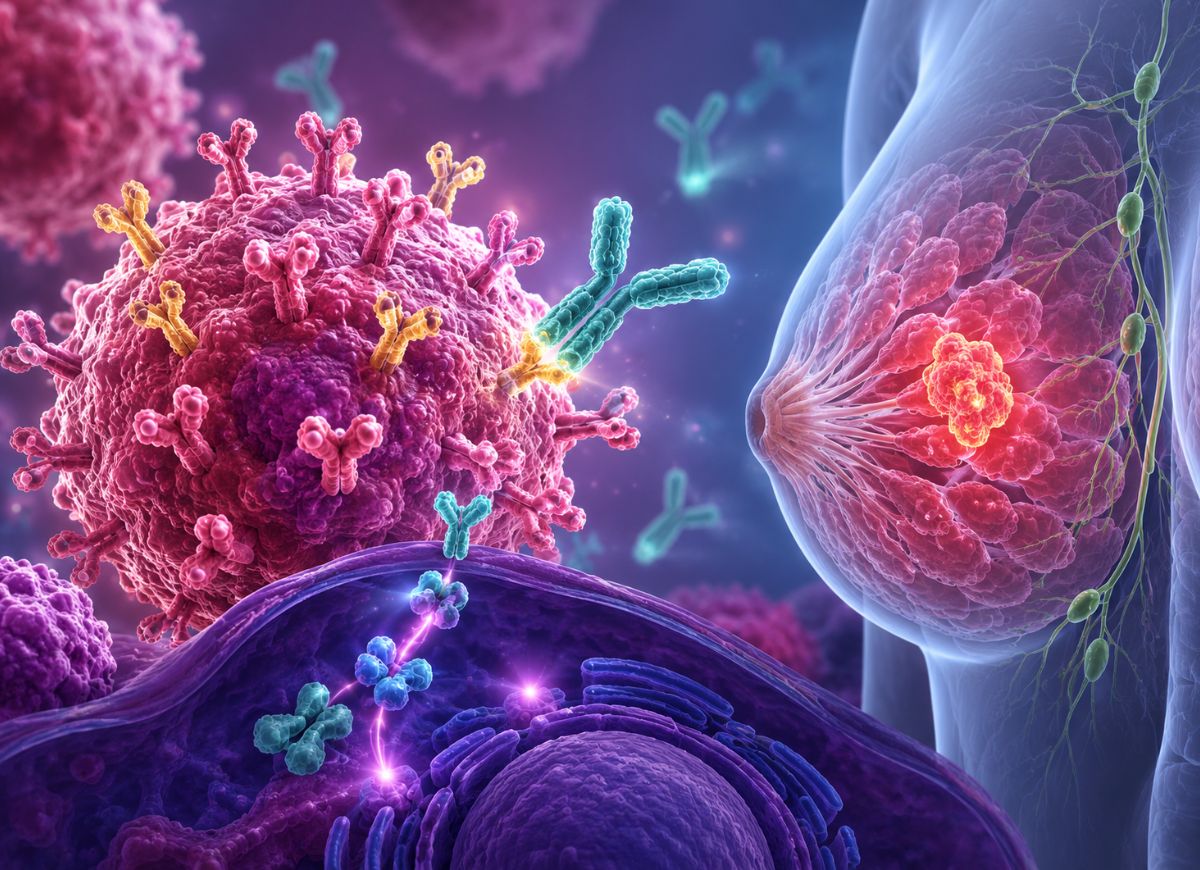
HER2-positive breast cancer accounts for roughly 15% to 20% of breast cancer cases. This type of cancer has unusually high levels of a protein called human epidermal growth factor receptor 2 (HER2). Extra HER2 activity can encourage cancer cells to grow and spread more quickly than some other breast cancer types.
HER2-positive breast cancer does not always cause obvious symptoms at first. Early changes may look like common breast concerns, including a new lump, swelling, skin changes, nipple changes, or unusual discharge. Some people may also notice breast discomfort, changes in breast shape, or areas of thickened skin.
The good news is that treatment for HER2-positive breast cancer has improved considerably. Targeted therapies specifically designed to block HER2 activity have changed treatment and outcomes for many patients. Finding and evaluating the disease early can help doctors determine the most appropriate treatment approach.
This article covers 6 warning signs of HER2-positive breast cancer to watch for. These symptoms do not necessarily mean you have cancer, and they cannot determine whether a tumor is HER2-positive. HER2 status can only be confirmed through medical testing, including analysis of tumor tissue. Still, knowing which changes deserve attention can encourage earlier medical evaluation.
Definition of HER2-Positive Breast Cancer
A HER2-positive diagnosis means that breast cancer cells have an unusually high amount of the HER2 protein or extra copies of the HER2 gene. This protein can send signals that encourage cancer cells to grow and divide.
Doctors determine HER2 status by testing tumor tissue collected during a biopsy or surgery. Knowing whether a tumor is HER2-positive is important because it can help doctors decide whether HER2-targeted treatments may be appropriate.
To understand why HER2 status matters, it helps to look at what this protein normally does and what happens when too much of it is present.
The Role of The HER2 Protein In The Body
HER2 is a receptor found on the surface of cells, including breast cells. It belongs to a family of receptors involved in controlling important processes such as cell growth, division, and repair.
The HER2 gene, also called ERBB2, contains the instructions cells use to produce the HER2 protein. These receptors act somewhat like communication points on the cell surface. They interact with growth-related signals and help regulate when cells should grow or divide.
In healthy breast tissue, this signaling system is carefully controlled. Cells receive growth signals when needed and stop dividing when those signals are no longer necessary. This balance helps maintain normal tissue structure and function.
When HER2 activity becomes excessive, however, the normal growth-control system can become disrupted.
How Does an Overabundance of HER2 Protein Lead to Cancer?
Too much HER2 protein can cause cancer cells to receive unusually strong and persistent growth signals. One reason this happens is HER2 gene amplification, in which cancer cells contain extra copies of the HER2 gene.
These additional gene copies can lead to the production of much larger amounts of HER2 protein on the surface of the cells. As a result, the cells may receive stronger signals telling them to grow and divide.
Cancer cells can also become less responsive to the normal controls that limit cell division. They may continue multiplying instead of following the usual process that removes damaged or abnormal cells.
This uncontrolled growth can lead to the formation of a breast tumor. In some cases, cancer cells can also invade nearby tissue or travel to other parts of the body, including lymph nodes and distant organs.
6 Warning Signs of HER2-Positive Breast Cancer
New Breast Lump
A new lump in the breast or underarm can be an important warning sign of breast cancer. Cancerous lumps may feel hard or firm and can have an irregular shape. However, breast lumps can have many causes, and their texture alone cannot determine whether they are cancerous.
Some cancerous breast lumps are painless, which can make them easy to overlook. A painless lump should still be evaluated, especially if it is new or continues to grow.
Lumps can develop anywhere in the breast or in the underarm area. A lump in the armpit may involve a lymph node, although enlarged lymph nodes can occur for many reasons besides cancer.
Because HER2-positive tumors can grow quickly, a noticeable change in the size of a breast lump should not be ignored. A healthcare professional can perform an examination and determine whether diagnostic imaging or a biopsy is needed.
Swelling or Changes in Breast Shape
An unexplained change in breast size or shape can also deserve medical attention. This may include swelling, increased fullness, unusual firmness, or a noticeable difference between the breasts that was not present before.
Swelling may affect part or all of the breast. In some cases, the breast may feel heavy, tight, firm, or tender. A person may notice swelling even when there is no obvious lump.
Inflammatory breast cancer is a rare form of breast cancer that can cause rapid swelling and changes in the breast. It can sometimes be HER2-positive and may develop without a clearly defined lump.
A sudden change in breast symmetry can also be worth discussing with a doctor. Although some natural difference between breasts is common, a new or noticeable change in shape should be evaluated.
Paying attention to what is normal for your breasts makes it easier to recognize changes. Any new or persistent swelling or shape change should be brought to the attention of a healthcare professional.
Specific Skin Alterations
Changes to the skin of the breast can sometimes be associated with breast cancer. These may include dimpling, puckering, redness, warmth, rash-like changes, or thickening.
One notable change is peau d’orange, which means the skin takes on an appearance similar to an orange peel. This can happen when cancer affects lymphatic drainage in the breast, causing swelling and changes in the skin’s texture.
Persistent redness, warmth, or swelling can also occur with inflammatory breast cancer. In this condition, cancer cells can affect lymphatic vessels in the skin, producing widespread changes rather than a single obvious lump.
Another possible sign is thickened or hardened skin around the breast or areola. The area may feel different from the surrounding tissue.
Skin changes do not automatically mean cancer, since infections, inflammation, and other conditions can cause similar symptoms. However, new or persistent changes should be evaluated rather than ignored.
Nipple Changes Like Retraction or Discharge
Changes involving the nipple can be another warning sign. These may include a nipple that newly turns inward, unusual discharge, or persistent scaling, crusting, or sores around the nipple and areola.
Nipple retraction occurs when a nipple that previously pointed outward begins pulling inward. A newly inverted nipple can sometimes be related to changes in the tissue beneath it and should be checked by a healthcare professional.
Nipple discharge can have several causes. Discharge is more concerning when it happens without squeezing, affects only one breast, or is clear, bloody, or blood-tinged.
Skin changes around the nipple may also require evaluation. Persistent dryness, scaling, crusting, or eczema-like changes that do not improve can sometimes be associated with Paget’s disease of the breast, a rare form of breast cancer that affects the nipple and areola.
These symptoms do not confirm HER2-positive cancer, but they should be discussed with a doctor when they are new, persistent, or unusual for you.
Rapid Progression of Symptoms
A breast change that develops or worsens quickly deserves prompt medical attention. Some HER2-positive cancers can grow rapidly, although the speed at which a symptom changes cannot determine HER2 status by itself.
For example, a lump that noticeably increases in size over a short period should be evaluated. Similarly, rapidly developing breast swelling, redness, or changes in breast shape should not be ignored.
Inflammatory breast cancer can cause breast changes that develop over a relatively short period. Symptoms may include swelling, redness, warmth, skin thickening, and changes in breast size or shape.
Rather than waiting to see whether a rapidly changing symptom disappears, it is safer to arrange a medical evaluation. Early assessment can help identify the cause and determine whether further testing is necessary.
Persistent Pain
Breast cancer is often painless, but persistent breast or nipple pain can sometimes occur. Pain that remains in one particular area, does not follow a person’s usual menstrual pattern, or continues over time should be evaluated.
Breast pain is common and can result from hormonal changes, injury, infection, cysts, or other noncancerous causes. However, unexplained pain that persists should not simply be dismissed.
Inflammatory breast cancer may cause tenderness, soreness, or a general aching sensation because of inflammation within the breast.
Pain becomes more important to evaluate when it occurs alongside another breast change, such as a lump, swelling, nipple abnormality, or skin change. A healthcare provider can determine whether imaging or other testing is appropriate.
When to Seek Medical Help?
If you notice a new or unusual change in your breast, make an appointment with a healthcare professional for an evaluation. A new lump, persistent swelling, skin changes, nipple retraction, unusual discharge, or ongoing localized pain can all be reasons to seek medical advice.
Do not assume that a symptom is harmless simply because it is painless or seems minor. At the same time, remember that many breast changes are caused by conditions other than cancer.
It is especially important to seek prompt medical attention when a symptom appears suddenly or changes noticeably over a short period. Rapidly developing swelling, redness, skin changes, or a growing lump should be assessed rather than monitored at home for an extended period.
You do not need to wait until your next routine screening appointment to mention a new breast change. Contact your primary care doctor, gynecologist, or another healthcare professional and explain what you have noticed.
A medical evaluation can provide clarity even when the underlying cause is benign. Conditions such as cysts, fibroadenomas, infections, and hormonal changes can also produce breast symptoms. Only an appropriate clinical assessment can help determine the cause.
What to Expect During a Clinical Examination?
When you visit a healthcare professional because of a breast concern, the appointment will usually begin with questions about your symptoms and medical history.
Your doctor may ask when you first noticed the change, whether it has become larger or changed in appearance, whether it causes pain, and whether you have noticed other symptoms such as nipple discharge or skin changes.
They may also ask about your personal and family history, including previous breast problems and a family history of breast or ovarian cancer.
A clinical breast examination may follow. During the examination, the healthcare professional may visually inspect the breasts for differences in size, shape, symmetry, skin texture, or other visible changes.
You may then lie down while the doctor carefully examines the breast tissue using their fingers. They may also check the areas around the armpits and collarbones for enlarged lymph nodes or other abnormalities.
Depending on the findings, your doctor may recommend diagnostic imaging. This can include a diagnostic mammogram, breast ultrasound, or other imaging based on your age, symptoms, and clinical findings.
If imaging identifies a suspicious area, a biopsy may be recommended. A biopsy allows a pathologist to examine breast tissue and determine whether cancer is present and, if so, which characteristics the cancer has.
HER2-Positive Breast Cancer Diagnosis
HER2-positive breast cancer is diagnosed by examining tumor tissue collected through a biopsy or surgery. Testing determines how much HER2 protein is present and whether the HER2 gene is amplified.
Two commonly used tests are Immunohistochemistry (IHC) and Fluorescence In Situ Hybridization (FISH).
IHC measures the amount of HER2 protein found on the surface of cancer cells. Results are generally reported on a scale from 0 to 3+.
A result of 0 or 1+ is generally considered HER2-negative, while a result of 3+ is considered HER2-positive. A result of 2+ is considered equivocal, meaning the result is not clearly positive or negative.
When an IHC result is 2+, additional testing such as FISH may be performed to clarify the tumor’s HER2 status.
FISH looks at the HER2 gene itself. The test uses fluorescent probes that attach to specific genetic material, allowing pathologists to evaluate HER2 gene copies within the cancer cells.
Together, these tests help doctors determine whether HER2-targeted treatment may be appropriate.
HER2-positive Breast Cancer vs. HER2-negative or triple-negative Types
Breast cancer can be divided into different biological subtypes based on receptors and other characteristics found in the cancer cells. These differences can affect how the cancer grows and which treatments may be useful.
HER2-positive breast cancer has an excess of HER2 protein or amplification of the HER2 gene. It may also be positive for hormone receptors, including estrogen receptors (ER) and progesterone receptors (PR).
HER2-negative hormone receptor-positive breast cancer does not have excess HER2 but has receptors for estrogen and/or progesterone. Hormone signals can contribute to the growth of these tumors, so hormone-based treatments may be part of the treatment plan.
Triple-negative breast cancer (TNBC) tests negative for estrogen receptors, progesterone receptors, and HER2. Because these cancers do not have these three standard targets, treatment approaches differ from those used for hormone receptor-positive or HER2-positive disease.
Each subtype has different biological characteristics, and treatment decisions are also influenced by factors such as tumor size, stage, grade, lymph node involvement, and overall health.
Targeted Treatments for HER2-positive Breast Cancer
HER2-targeted therapy has significantly changed the treatment of HER2-positive breast cancer. These medicines are designed to interfere with HER2-related signals and target cancer cells that have high levels of HER2.
One of the best-known HER2-targeted medicines is Trastuzumab (Herceptin). This monoclonal antibody attaches to HER2 receptors and interferes with signals that promote cancer growth. It can also help the immune system recognize and attack cancer cells.
Pertuzumab (Perjeta) is another HER2-targeted antibody. It attaches to a different part of the HER2 receptor and may be used with trastuzumab in certain treatment plans.
Antibody-drug conjugates (ADCs) combine an antibody that targets HER2 with a cancer-killing drug. Examples include Ado-trastuzumab emtansine (Kadcyla) and Trastuzumab deruxtecan (Enhertu). These medicines are designed to deliver treatment more directly to HER2-expressing cancer cells.
Kinase inhibitors are another type of HER2-targeted treatment. Medicines such as Lapatinib (Tykerb) and Neratinib (Nerlynx) work inside cancer cells to interfere with signaling pathways involved in growth and division.
The specific combination of treatments depends on factors such as cancer stage, tumor characteristics, previous treatment, and whether the cancer is newly diagnosed or has returned.
The Connection Between HER2 Status and Cancer Recurrence
HER2-positive breast cancer was historically associated with a higher risk of recurrence because of its tendency to grow and spread more quickly. Before effective HER2-targeted therapies became available, treatment options were more limited for this subtype.
The introduction of Trastuzumab (Herceptin) and other HER2-targeted medicines significantly changed the treatment landscape. These therapies specifically target the HER2 pathway and have improved outcomes for many people with HER2-positive breast cancer.
Today, patients with early-stage HER2-positive breast cancer can benefit from several effective treatment options. Depending on the situation, treatment may include surgery, chemotherapy, HER2-targeted therapy, radiation, hormone therapy, or a combination of these approaches.
The risk of recurrence still varies from person to person. Factors such as cancer stage, tumor size, lymph node involvement, hormone receptor status, response to treatment, and other tumor characteristics all play a role.
For metastatic HER2-positive breast cancer, several targeted therapies are also available. These treatments can help control the disease and may allow some patients to live longer while maintaining quality of life.
Because treatment and outcomes vary considerably, an individual’s prognosis should be discussed with their oncology team rather than based on HER2 status alone.
FAQs
1. Is HER2 cancer aggressive?
HER2-positive breast cancer can grow and spread more quickly than some other breast cancer types because of increased HER2 activity. However, targeted therapies have significantly improved treatment options and outcomes for many patients.
2. What does HER2-positive mean in breast cancer?
HER2-positive means that breast cancer cells have unusually high levels of HER2 protein or extra copies of the HER2 gene. Doctors test tumor tissue to determine HER2 status, which can help guide treatment decisions.
3. What is the deadliest type of breast cancer?
Triple-negative breast cancer is often described as an aggressive breast cancer subtype because it does not have estrogen, progesterone, or HER2 receptors that can be targeted with standard hormone or HER2 therapies. However, outcomes vary widely, and treatment options continue to develop.
4. Is it better to have HER2-positive or negative cancer?
Neither result is simply better or worse in every situation. HER2-positive cancers may grow more quickly, but they also have specific targeted treatment options. HER2-negative cancers can behave differently depending on hormone receptor status, tumor grade, stage, and other characteristics.
5. What foods should you avoid if you have HER2-positive breast cancer?
There is no specific food that directly causes or cures HER2-positive breast cancer. In general, limiting alcohol, highly processed foods, sugary drinks, and excess saturated fat may support overall health. A balanced eating pattern that includes vegetables, fruits, whole grains, lean proteins, and healthy fats can also be helpful during treatment.
6. Do you need chemo if you are HER2-positive?
Chemotherapy is used in many HER2-positive breast cancer treatment plans, often alongside HER2-targeted therapy. However, it is not automatically required for every patient. Treatment depends on factors such as tumor size, cancer stage, lymph node involvement, hormone receptor status, overall health, and the recommendations of the oncology team.
7. How long will I live with HER2-positive breast cancer?
Life expectancy varies significantly between individuals. Important factors include the stage at diagnosis, whether the cancer has spread, how it responds to treatment, and overall health.
Many people with early-stage HER2-positive breast cancer respond well to modern treatments. For advanced disease, several targeted therapies can help control the cancer and may extend survival. An oncology team can provide a more individualized outlook based on the specific cancer.
Conclusion
HER2-positive breast cancer can grow more quickly than some other breast cancer types, but major advances in targeted treatment have improved the outlook for many patients. Recognizing unusual breast changes can help encourage timely medical evaluation.
A new lump, unexplained swelling, changes in breast shape, skin dimpling or redness, nipple changes, unusual discharge, or persistent discomfort should be discussed with a healthcare professional.
These symptoms do not automatically mean cancer, and they cannot determine whether a cancer is HER2-positive. Diagnostic imaging, biopsy, and HER2 testing are needed to establish a diagnosis and understand the characteristics of the tumor.
Being aware of changes in your breasts does not mean living in fear. It means knowing what is normal for you, paying attention to changes, and seeking medical advice when something seems different. Early evaluation can help doctors identify the cause and, when cancer is present, develop an appropriate treatment plan.