
7 Emergency Symptoms of Testicular Torsion Every Man Should Know
Testicular pain is something no man should simply wait out. It can feel uncomfortable to discuss, and it is easy to blame it on exercise, tight clothing, a minor injury, or sleeping in an awkward position. But when pain starts suddenly, becomes severe, or occurs with swelling and nausea, it may be a sign of testicular torsion, a medical emergency.
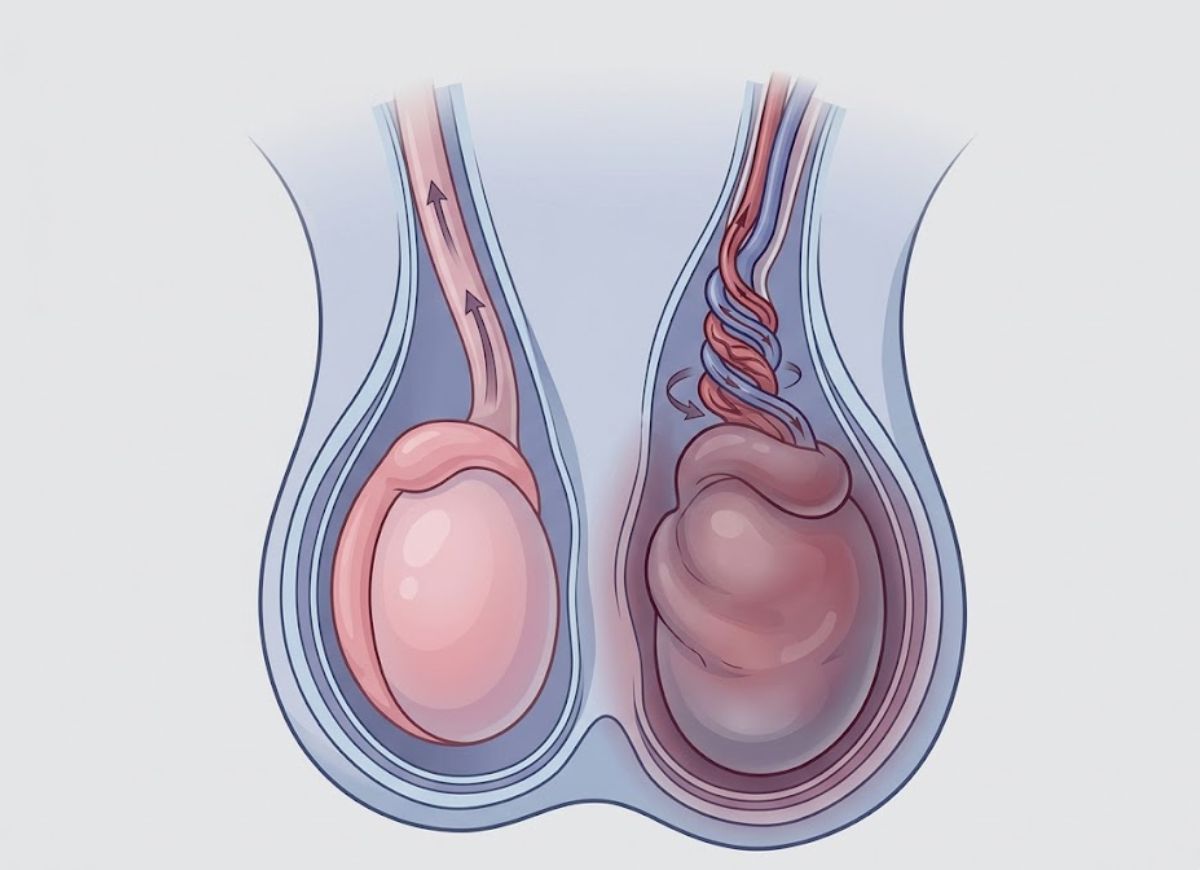
Testicular torsion occurs when the testicle twists around the spermatic cord and cuts off its blood supply. Without enough blood and oxygen, testicular tissue can become permanently damaged within hours. Treatment is most successful when it happens as soon as possible, particularly within the first 6 hours after symptoms begin.
Although testicular torsion is relatively uncommon, it is important for men, parents, and caregivers to recognize the warning signs. It is most common in newborns and adolescents, but it can happen at any age.
The condition can develop without warning. Someone may wake up with intense scrotal pain, develop symptoms while resting, or experience pain during or after physical activity. Swelling, nausea, vomiting, abdominal pain, or a testicle sitting higher than usual may occur at the same time.
In this article, you will learn about 7 emergency symptoms of testicular torsion, what causes it, who is at greater risk, and why getting medical attention quickly is so important.
7 Critical Signs of Testicular Torsion
Sudden, Severe Pain in One Testicle
Sudden pain in one testicle is one of the most important warning signs of testicular torsion. The pain can be sharp, intense, and difficult to ignore. It usually develops quickly rather than gradually over several days.
The pain may remain concentrated in the affected testicle and scrotum, but it can also spread toward the groin or lower abdomen. In some cases, it may be severe enough to wake someone from sleep.
Swelling of the Scrotum (Scrotal Edema)
Swelling can develop soon after the testicle twists. The affected side of the scrotum may become noticeably larger, tender, red, or darker than usual.
The swelling occurs because the twisted spermatic cord interferes with normal blood circulation. As pressure and inflammation increase, the scrotal tissue can become increasingly uncomfortable.
Abdominal Pain
Testicular torsion can sometimes cause pain in the lower abdomen or groin instead of being felt mainly in the scrotum.
This is especially important in children and younger teenagers, who may describe their symptoms as stomach pain. Because abdominal discomfort can have many causes, torsion may occasionally be overlooked unless the scrotum is also examined.
Nausea and Vomiting
Severe pain from testicular torsion can trigger nausea and vomiting. These symptoms may appear alongside sudden scrotal or abdominal pain.
Nausea and vomiting do not prove that torsion is present, but when they occur together with sudden one-sided testicular pain, they are an important warning sign that requires urgent evaluation.
A Testicle That’s Positioned Higher than Normal or at an Unusual Angle
A twisted spermatic cord can pull the affected testicle upward. As a result, one testicle may appear higher than the other or sit at an unusual angle.
The testicle may also become more horizontal instead of maintaining its usual vertical position. This is an important physical finding that doctors look for when evaluating possible torsion.
Frequent Urination
Urinary symptoms are not among the most typical signs of testicular torsion, but some people may notice an increased urge to urinate.
Because frequent urination is more commonly associated with urinary or reproductive infections, it should be considered alongside the other symptoms rather than used to rule torsion in or out.
Fever
Fever is more commonly associated with infections such as epididymitis, but it can occasionally occur with inflammation and tissue injury related to torsion.
The presence of a fever does not automatically rule out torsion. Sudden severe testicular pain, swelling, nausea, or a high-riding testicle still requires urgent medical assessment.
What Is Testicular Torsion?
Testicular torsion is a urological emergency in which the spermatic cord twists and restricts or completely cuts off the blood supply to the testicle.
The spermatic cord contains the blood vessels, nerves, lymphatic vessels, and vas deferens that connect the testicle with the rest of the body. When the cord twists, blood cannot circulate normally.
Without adequate oxygen, testicular tissue can become damaged and eventually die. This is why suspected testicular torsion requires immediate medical attention rather than observation at home.
What Does Testicular Torsion Pain Feel Like?
Testicular torsion usually causes sudden pain affecting one testicle. The pain may be severe and can involve the surrounding scrotum, groin, or lower abdomen.
For some people, the pain begins while they are sleeping or resting, without any obvious injury or activity to explain it. It may also occur after exercise, sudden movement, or minor trauma.
The pain often continues rather than gradually disappearing with rest or a change in position. However, symptoms can vary, and intermittent torsion can cause pain that temporarily improves when the testicle untwists on its own.
The underlying problem is ischemia, which means that the testicular tissue is not receiving enough blood and oxygen. When the spermatic cord twists, the veins may become compressed first, causing congestion and swelling. As the twisting continues, arterial blood flow can also become restricted.
Because the symptoms can develop rapidly, sudden unexplained pain in one testicle should always be treated seriously.
What Mechanically Happens During Testicular Torsion?
Testicular torsion occurs when the testicle rotates around the spermatic cord. This cord acts as the testicle’s connection to the body’s blood supply and contains the vessels, nerves, lymphatic vessels, and vas deferens.
When the cord twists, the veins can become compressed first. Blood has difficulty leaving the testicle, causing congestion and swelling. Continued twisting can then reduce arterial blood flow, preventing oxygen-rich blood from reaching the tissue.
A simple way to picture this is to imagine twisting a hose. As the hose becomes tightly twisted, water can no longer move through it normally. Similarly, a twisted spermatic cord can restrict blood circulation to the testicle.
If blood flow remains blocked, the tissue can become ischemic and eventually die. The amount of twisting and how long the blood supply remains restricted affect how quickly permanent damage can develop.
An anatomical variation known as the “bell clapper” deformity can make the testicle more mobile within the scrotum and increase the risk of twisting.
Is Testicular Torsion a Life-threatening Condition?
Testicular torsion is generally not considered a life-threatening emergency in the same way as conditions affecting the heart, lungs, or brain. However, it is a serious organ-threatening emergency because the affected testicle can be permanently damaged or lost if treatment is delayed.
The testicles are responsible for producing sperm and testosterone. Losing one testicle does not necessarily prevent a person from producing testosterone or having children, but preserving the testicle when possible remains an important treatment goal.
Time is the most important factor. The longer the blood supply remains blocked, the greater the risk of permanent tissue damage. Treatment within the first several hours provides the best opportunity for saving the testicle.
If the testicle has become non-viable because of prolonged loss of blood flow, surgery may be required to remove it. This procedure is called an orchiectomy.
For this reason, sudden testicular pain should never be treated as something that can safely wait until the next day.
Testicular Torsion Risk Factors: Who Is Most Likely to Experience It?
Age Groups At The Highest Risk for Testicular Torsion
Testicular torsion can occur at any age, but it is particularly common during two periods of life: the newborn period and adolescence.
Adolescents, especially those around puberty, have a higher risk of the form of torsion that occurs when the testicle twists inside the scrotum. Rapid growth of the testicles during puberty may contribute to increased mobility in people with an underlying anatomical risk factor.
Testicular torsion can also occur in newborns. Neonatal torsion usually develops when the testicle and surrounding tissues twist together because the attachments within the developing scrotum are not yet firmly established.
In newborns, the condition may be noticed as a firm, swollen, or discolored scrotum. In some cases, the torsion occurred before birth, which means the testicle may already have sustained significant damage when it is discovered.
Although torsion is less common in older adults, age does not completely rule it out. Adult men can still develop testicular torsion and should seek urgent care for sudden unexplained testicular pain.
The “Bell Clapper” Deformity
The “bell clapper” deformity is an anatomical variation that can increase the risk of testicular torsion. It occurs when the testicle is not securely attached within the scrotum in the usual way.
Normally, the testicle has attachments that help keep it in a relatively stable position. With a bell clapper deformity, the testicle can move more freely and may lie in a more horizontal position.
This extra mobility allows the testicle to rotate around the spermatic cord. Torsion may occur spontaneously or after exercise, sudden movement, minor trauma, or other situations that cause the testicle to move.
The anatomical variation can affect both testicles. Because of this, when someone undergoes surgery for torsion, doctors commonly secure the opposite testicle as well. This preventive procedure is called orchiopexy and helps reduce the risk of torsion on the unaffected side.
How to Manage Testicular Torsion
Can you Fix Testicular Torsion Yourself at Home?
No. Testicular torsion should never be treated at home.
Trying to manually twist or reposition the testicle can make the situation worse, particularly if the testicle is rotated in the wrong direction. More importantly, even if the pain temporarily improves, the underlying problem may still be present.
A doctor may sometimes perform manual detorsion in an emergency setting while preparing the patient for surgery. This is a temporary measure performed by a trained medical professional. It does not replace definitive surgical treatment.
The most important step for someone with sudden testicular pain is to seek emergency medical care immediately. Do not spend valuable time attempting to fix the problem yourself.
Standard Medical Procedure for Testicular Torsion
The definitive treatment for testicular torsion is emergency surgery. The procedure generally involves opening the scrotum, untwisting the spermatic cord, checking whether the testicle is still viable, and securing the testicle in place.
If the testicle recovers after blood flow is restored, the surgeon performs an orchiopexy. This involves attaching the testicle securely to the inside of the scrotum so it is much less likely to twist again.
Because the underlying anatomical risk may be present on both sides, the other testicle is commonly secured during the same operation.
If the affected testicle has suffered irreversible damage and cannot be saved, the surgeon may need to perform an orchiectomy to remove it.
The earlier treatment begins, the better the chance of preserving the affected testicle.
The Differences Between Testicular Torsion and Epididymitis
Testicular torsion and epididymitis can both cause testicular or scrotal pain, but they have different causes and often develop in different ways.
Testicular torsion occurs when the spermatic cord twists and restricts blood flow. It usually causes sudden pain that can become severe very quickly. Swelling, nausea, vomiting, and a high-riding or unusually positioned testicle may also occur.
Epididymitis involves inflammation of the epididymis, the small tube located behind the testicle. It is often related to an infection, including sexually transmitted infections in some younger adults.
Epididymitis commonly develops more gradually than torsion. It may also cause urinary symptoms such as burning during urination, frequent urination, or penile discharge.
However, symptoms can overlap, and it is not safe to diagnose the cause of scrotal pain based on symptoms alone. A person with sudden or severe testicular pain needs urgent medical evaluation to rule out torsion.
Testicular Torsion Diagnosis
When testicular torsion is suspected, doctors begin with a medical history and physical examination. They look for sudden pain, swelling, tenderness, an unusually positioned testicle, and other signs that may indicate a loss of blood flow.
Doctors may also check the cremasteric reflex, which normally causes the testicle to rise when the inner thigh is gently stimulated. This reflex may be absent in people with torsion, although no single physical finding can reliably rule the condition in or out.
A Doppler ultrasound may be used to examine blood flow to the testicle. Reduced or absent blood flow can support the diagnosis.
However, suspected torsion is a time-sensitive emergency. If the symptoms and physical examination strongly suggest torsion, doctors may recommend immediate surgical exploration rather than delaying treatment for additional testing.
The goal is not simply to confirm the diagnosis. It is to restore blood flow as quickly as possible and give the testicle the best chance of survival.
Recovery From Testicular Torsion Surgery
Recovery after orchiopexy generally focuses on controlling discomfort, protecting the surgical site, and gradually returning to normal activities.
Many patients can go home the same day or after a short period of observation, depending on their condition and the type of procedure performed.
Pain and swelling are usually managed with medication, supportive underwear, rest, and other instructions provided by the surgical team. Cold packs may also be recommended for short periods to help with swelling.
During the first several days, rest and gentle movement are usually encouraged while strenuous activity is avoided. Walking may be allowed, but running, heavy lifting, and contact sports should wait until the surgeon says they are safe.
The exact recovery schedule varies from person to person. Some people can return to school or desk-based work relatively quickly, while activities that place more strain on the groin may require several additional weeks.
Patients should follow their surgeon’s instructions about bathing, wound care, exercise, sexual activity, and follow-up appointments.
Signs such as increasing redness, worsening swelling, drainage, significant fever, or increasing pain should be reported to a healthcare professional.
Can Testicular Torsion Happen Again After Surgery?
A properly performed orchiopexy is designed to prevent the testicle from twisting again. During the procedure, the surgeon secures the testicle to the scrotal wall so it cannot move as freely.
The opposite testicle is commonly secured during the same operation because the anatomical risk for torsion may exist on both sides.
This significantly reduces the risk of another torsion event. However, patients should still follow their urologist’s advice and seek medical attention for new or unusual scrotal pain.
The purpose of orchiopexy is not only to treat the current emergency but also to reduce the risk of future torsion.
FAQs
1. Will testicle torsion fix itself?
Testicular torsion should never be expected to resolve safely on its own. When the testicle twists, blood flow can become restricted, allowing permanent damage to develop.
Some people experience intermittent torsion, in which the testicle twists and then untwists temporarily. The pain may disappear, but this does not mean the problem is resolved permanently. Another episode can occur and may not untwist on its own.
Any sudden testicular pain should be evaluated urgently, even if it improves before medical care is reached.
2. Can testicular torsion hurt mildly?
Yes. Although severe, sudden pain is a classic symptom, not every case begins with unbearable pain.
Some people may initially notice a dull ache, lower abdominal discomfort, or pain that comes and goes. This can make it easier to dismiss the symptoms.
Sudden one-sided testicular pain, particularly when accompanied by swelling, nausea, vomiting, or an unusually positioned testicle, should be treated as an emergency regardless of how severe the pain feels.
3. What is the golden hour of testicular torsion?
The first few hours are extremely important. The best chance of saving the testicle is generally associated with treatment within the first 6 hours after symptoms begin.
As time passes, the risk of irreversible damage increases. Treatment after 12 or 24 hours may have a substantially lower chance of preserving the affected testicle.
There is no safe waiting period for suspected torsion. The goal is to restore blood flow as quickly as possible.
4. How do I know if my testicle is twisted?
You cannot reliably confirm testicular torsion at home.
Warning signs include sudden pain in one testicle, swelling of the scrotum, nausea or vomiting, lower abdominal pain, and a testicle that appears higher or sits differently than usual.
Symptoms can begin during sleep, rest, exercise, or without an obvious trigger. If torsion is possible, go to emergency care immediately rather than trying to diagnose or treat it yourself.
4. How long can you wait with torsion?
You should not wait. Testicular torsion can block the blood supply to the testicle, and permanent damage may occur as time passes.
The likelihood of saving the testicle is highest when treatment begins within the first several hours. Delaying care can greatly reduce the chance of successful salvage.
Even if the pain suddenly improves, medical evaluation is still important because intermittent torsion can temporarily resolve before happening again.
5. Can ejaculating cause testicular torsion?
Ejaculation is not considered a typical direct cause of testicular torsion.
Torsion is usually related to the ability of the testicle to move and rotate within the scrotum. An anatomical variation such as the bell clapper deformity can increase this risk.
Torsion can happen during sleep, rest, exercise, or after minor trauma, and sometimes there is no obvious trigger.
If sudden or severe testicular pain occurs during or after sex, masturbation, or ejaculation, it should not be ignored. Several conditions can cause pain in this area, including infection, inflammation, injury, and torsion.
6. Do most men get testicular torsion?
No. Most men will never experience testicular torsion.
It is relatively uncommon, but it is particularly important to recognize because delayed treatment can result in permanent damage. The condition occurs most often in newborns and adolescents, although adult men can also be affected.
Its relatively low frequency should not be a reason to ignore sudden testicular pain. When torsion occurs, rapid treatment is critical.
7. How to avoid testicular torsion?
There is no guaranteed way to prevent an initial episode of torsion in someone who has an anatomical predisposition to it.
Torsion is not caused by poor hygiene, diet, or ordinary daily habits. Protective equipment can help reduce some sports-related injuries, but it cannot completely prevent torsion.
After torsion has occurred, or in certain cases of intermittent torsion, a procedure called orchiopexy can secure the testicle in place and greatly reduce the risk of another twisting episode. Doctors commonly secure both testicles when appropriate because the anatomical risk may affect both sides.
8. How much force is needed to cause testicular torsion?
Testicular torsion does not necessarily require a strong impact. It can occur after exercise, sudden movement, minor trauma, or even during sleep.
In many cases, there is no clear event that caused the testicle to twist. The underlying ability of the testicle to rotate freely within the scrotum is often more important than the amount of force involved.
A direct blow to the groin can also cause pain and swelling and may sometimes occur around the same time as torsion. Because these conditions cannot be reliably distinguished at home, sudden or severe testicular pain after an injury should be evaluated urgently.
Conclusion
Testicular torsion is a condition that should never be ignored. Sudden pain in one testicle, scrotal swelling, nausea, vomiting, lower abdominal pain, or a testicle that sits higher than usual can be warning signs of a blocked blood supply.
The most important factor is time. The chance of saving the testicle is highest when treatment begins within the first few hours. Waiting to see whether the pain disappears can be dangerous, particularly when intermittent torsion causes symptoms to improve temporarily.
Testicular pain may feel embarrassing to discuss, but seeking urgent medical care is far more important than feeling uncomfortable about the situation. If sudden or unusual testicular pain develops, get medical attention immediately. Fast treatment can reduce the risk of permanent damage and may save the affected testicle.